Saint-Lambert-des-Bois — History & Facts
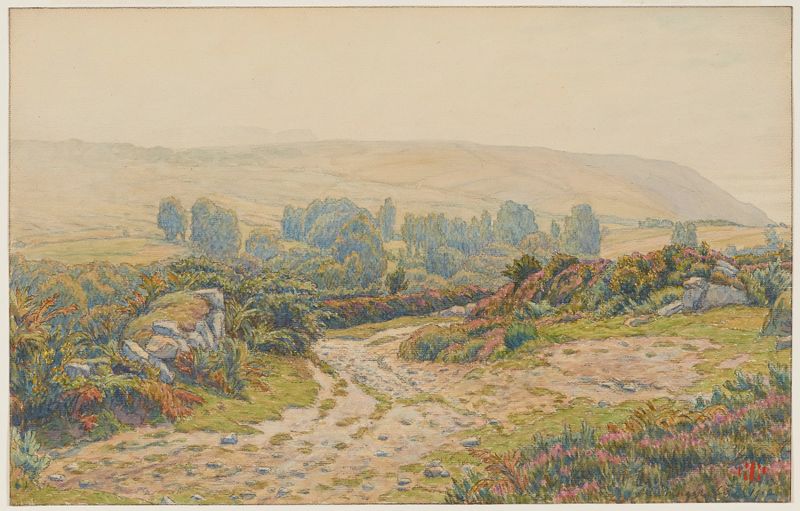
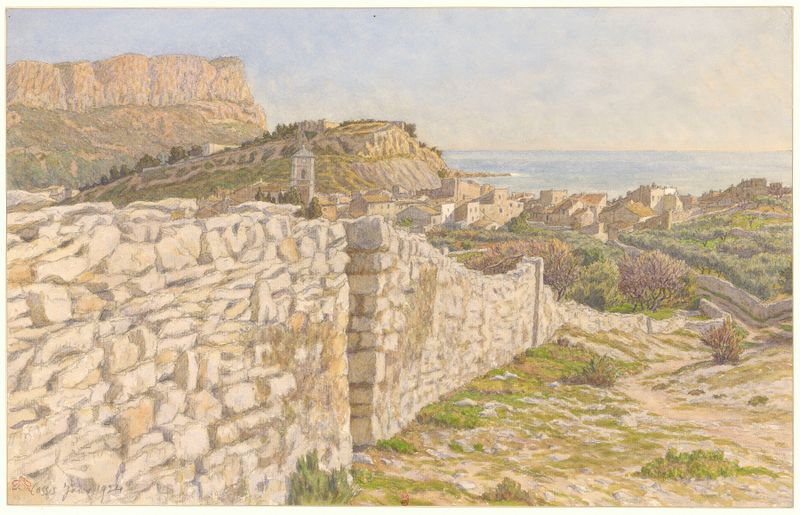
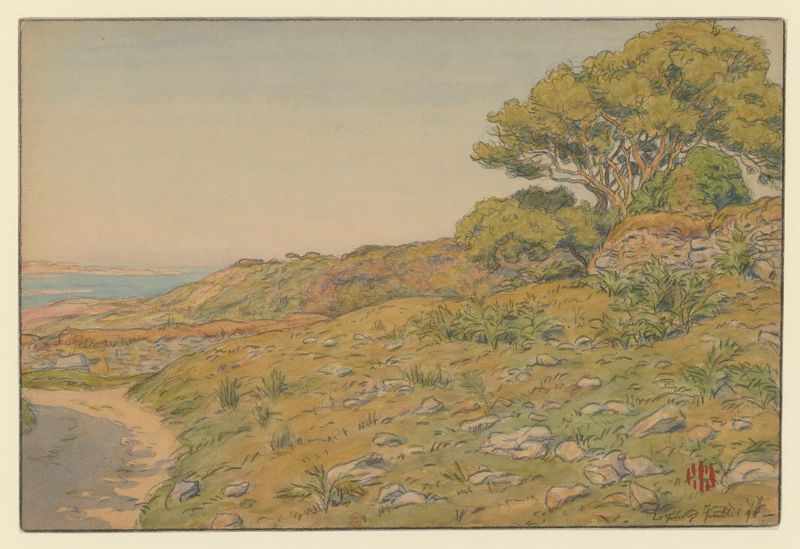
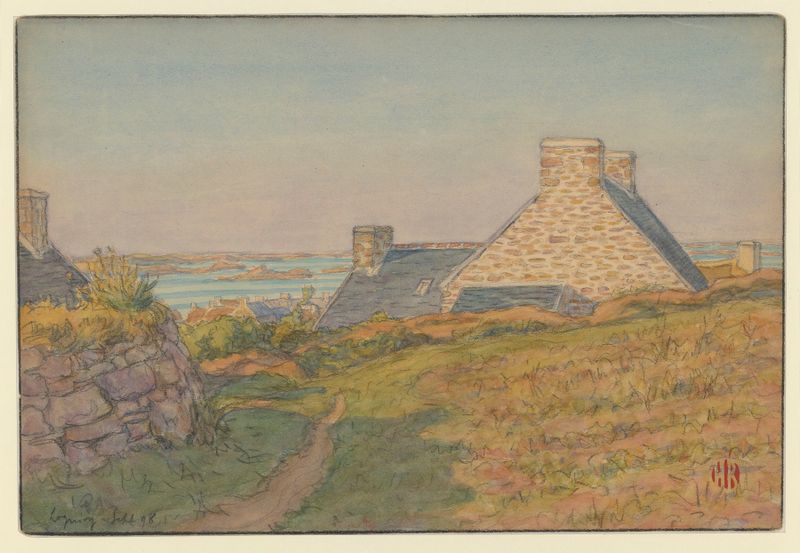
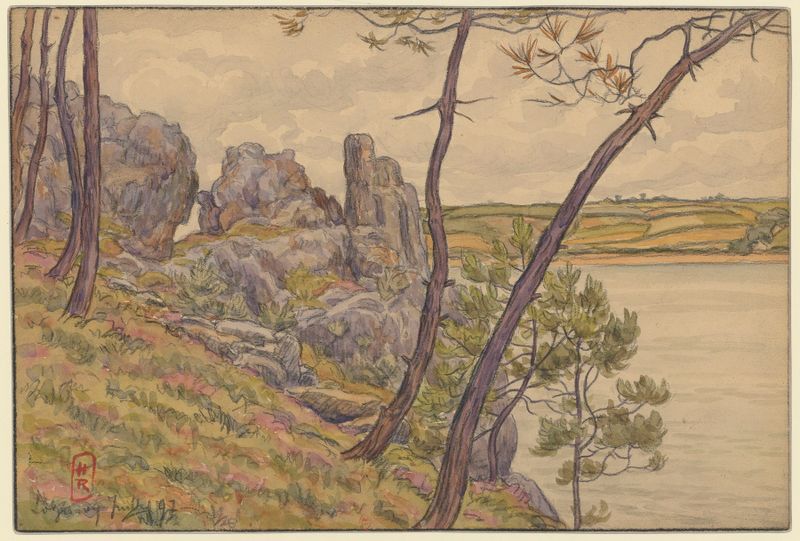
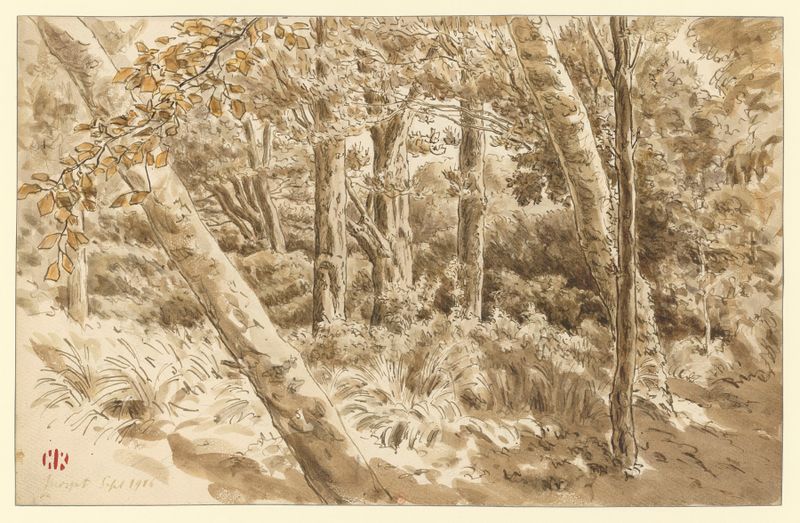
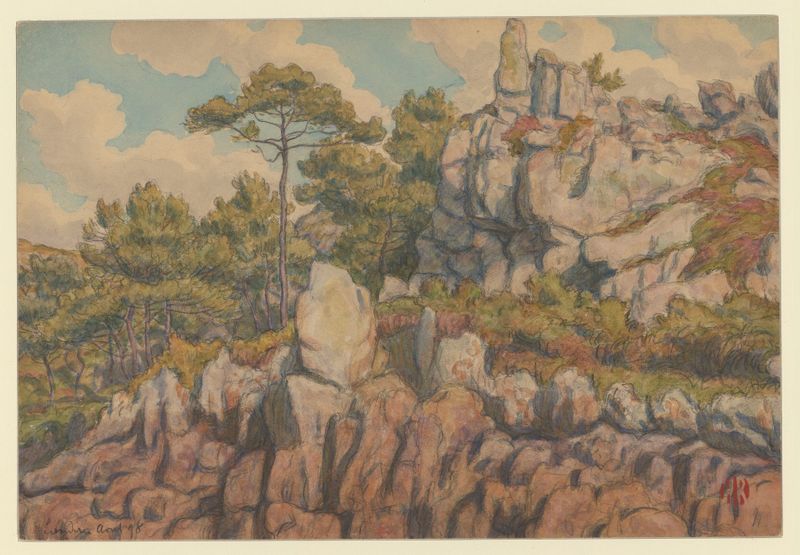
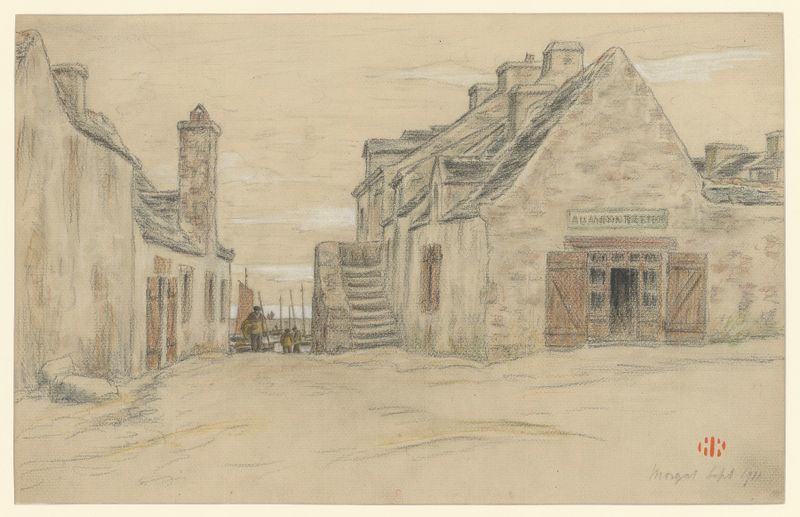
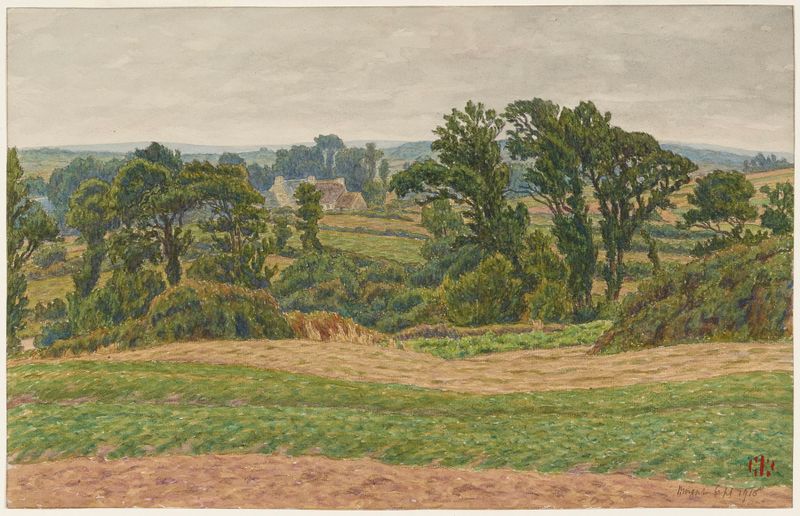
Where does light end, and longing begin? In the delicate interplay of shadow and illumination, we are drawn into a world that feels both intimate and distant. Look to the left at the tranquil expanse of the landscape, where soft, muted colors blend seamlessly into the horizon. The barn stands in serene stillness, its weathered wood absorbing the fading light, while the trees, crafted with fine strokes, create a gentle frame. Notice how the subtle gradients of blue and gold suggest the encroaching dusk, inviting you to linger in the moment, as shadows stretch towards the viewer, blurring the lines between reality and memory. The painting evokes a profound sense of nostalgia, capturing the bittersweet nature of time passing.
The shadows are not merely dark areas; they embody yearning, the longing for a past that feels just out of reach. The contrast between the illuminated spaces and the enveloping shadows reflects the duality of life—joy and sorrow intertwined, inviting the viewer to ponder their own experiences within this quiet scene. In 1923, Rivière painted Saint-Lambert-des-Bois during a period marked by a shift in French art toward more contemplative and emotional landscapes. Living in France, he was influenced by the Symbolist movement, which sought to convey deeper meanings through subtle imagery.
This work exemplifies his mastery in portraying the nuances of light and shadow, drawing on personal reflections while contributing to the evolving narrative of modern art.