
Saints Wrestling in the Trees after Dark — History & Facts
What if beauty was never meant to be finished? In Saints Wrestling in the Trees after Dark, the tension between the ethereal and the earthly beckons us into a realm where obsession dances with divine struggle. Focus your gaze on the swirling forms in the foreground, where the saints seem to intertwine with the branches around them. Notice the rich, dark hues of deep blues and greens that frame their bodies, accentuating the surreal quality of the scene. The fluid brushstrokes evoke a sense of movement, as if the figures are caught in an eternal embrace, while ethereal light spills over them, highlighting the contours of their limbs.
The contrasting shadows deepen the sense of night, inviting contemplation about what lies beyond the visible. Within this dreamlike tableau, contrasts abound: the celestial versus the terrestrial, struggle against serenity. The entwined bodies of the saints convey both strength and vulnerability, suggesting a deeper dialogue about the nature of faith and the burdens carried by those who grapple with the divine. Each figure embodies an obsession, not just with one another, but with the idea of transcendence—a pursuit that is as beautiful as it is tormenting. The work emerged from Gifford’s creative explorations during a time when American landscape painting was evolving rapidly.
Working in the late 19th century, Gifford painted in a period marked by both artistic experimentation and a search for identity in a burgeoning nation. His fascination with the interplay of light and nature not only reflects his personal quest but also aligns with broader movements that sought to capture the sublime in the American landscape.
More Artworks by Robert Swain Gifford
Browse all →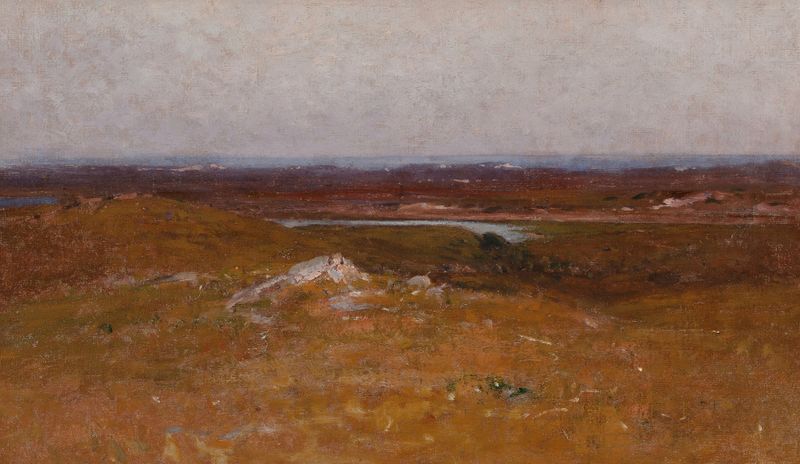
Menemsha Bight
Robert Swain Gifford
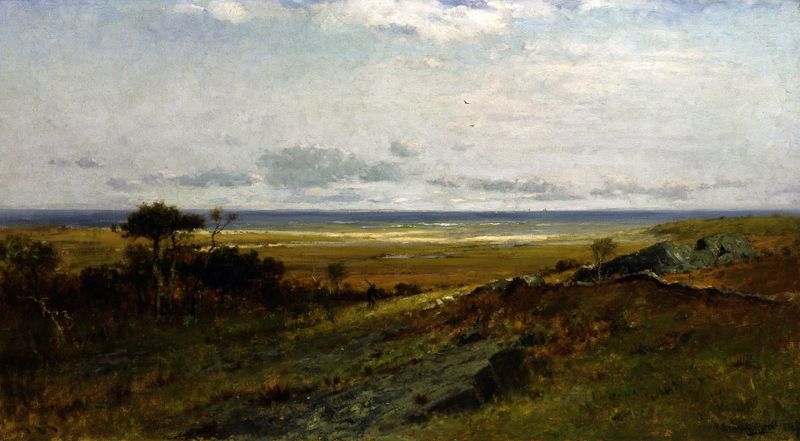
Near the Ocean
Robert Swain Gifford

Seconnet Rock, New Bedford, Massachusetts
Robert Swain Gifford

Mountain Stream
Robert Swain Gifford

Path in a Landscape
Robert Swain Gifford

Tide flats and windmills.
Robert Swain Gifford
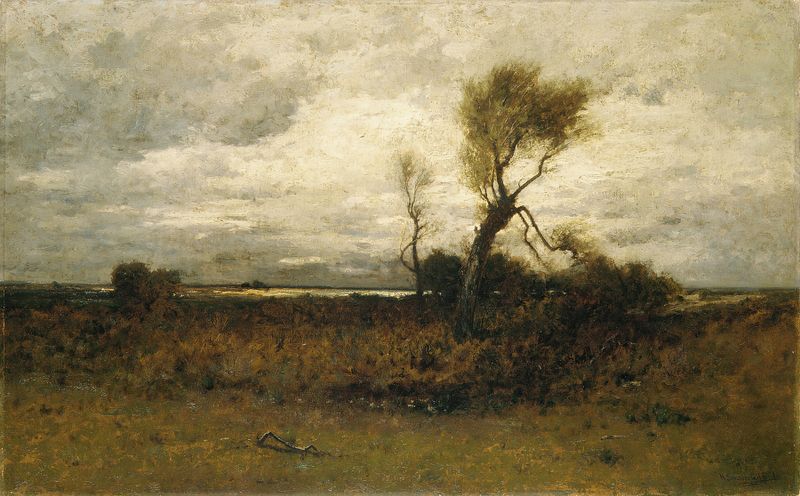
Near the Coast
Robert Swain Gifford
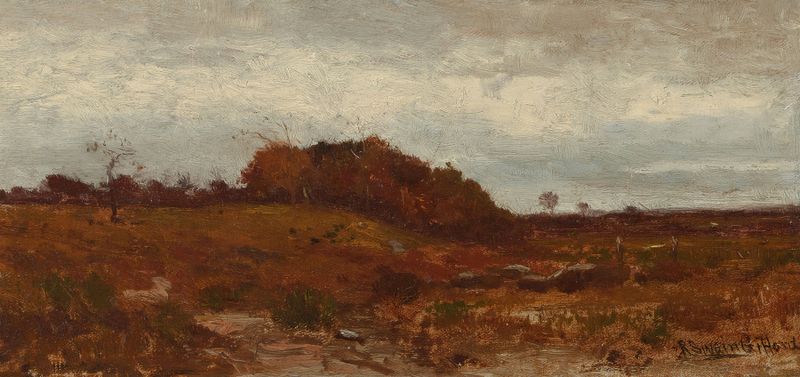
Autumn Landscape
Robert Swain Gifford
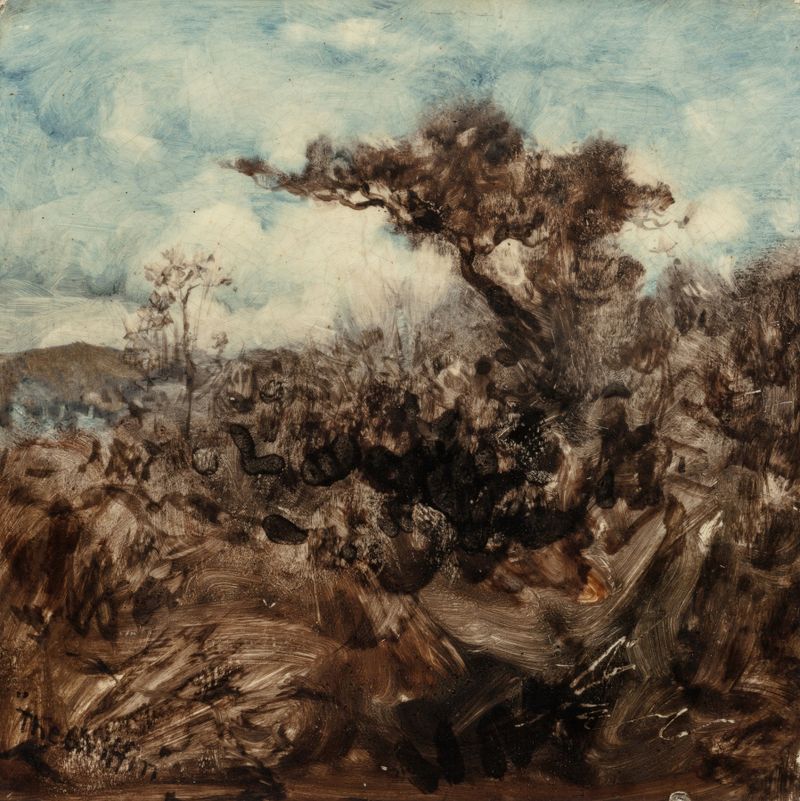
Figure in Tree
Robert Swain Gifford

Barney’s Joy Cliff
Robert Swain Gifford
More Religious Art
Browse all →
The Return of the Prodigal Son
Rembrandt van Rijn

The Garden of Earthly Delights
El Bosco

Count Orgaz’ funeral
El Greco

The Hundred Guilder Print: the central piece with Christ preaching, the plate arched
Rembrandt van Rijn

The Descent from the Cross
Rogier van der Weyden

The return of the prodigal son
Rembrandt van Rijn