
Figure in Tree — History & Facts
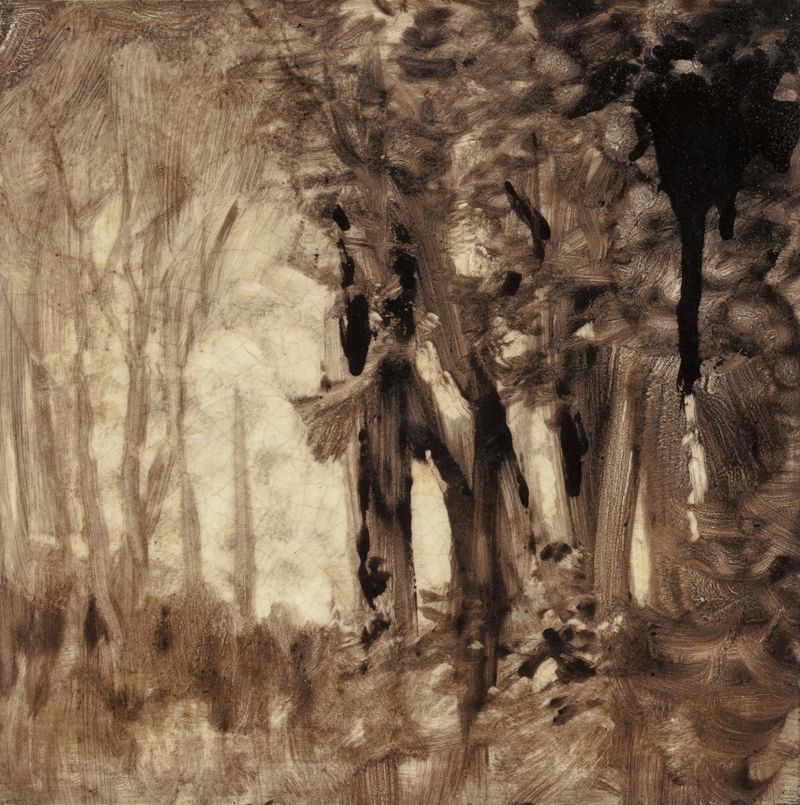
This poignant reflection echoes through Figure in Tree, where truth intertwines with the ephemeral. The painting invites us to explore not just the visual, but the essence of existence nestled within nature's embrace. Look to the center, where the figure, clad in muted earthy tones, rests among the branches of a mighty tree. The foliage creates a canopy, dappling the sunlight onto the figure's serene face, nearly blending them into the surrounding bark and leaves.
Gifford expertly utilizes a palette rich in greens and browns, infusing the scene with a sense of tranquility while underscoring the figure's isolation, as if nature itself cradles an intimate secret. Beneath the surface, layers of meaning emerge. The juxtaposition of the human form against the towering tree speaks to the delicate balance between humanity and nature, a reminder of our fleeting presence within the grandeur of the natural world. The stillness captured in this moment hints at solitude, yet there is an underlying vibrancy, a whisper of life pulsating through the scene, suggesting a deeper connection to the earth.
Every brushstroke serves as a testament to both memory and transience. In 1879, Robert Swain Gifford painted this work during a time of burgeoning exploration in American art, as artists were increasingly drawn to the majesty of landscapes. Gifford, having moved to the Hudson River Valley, embraced the Romantic ideals of nature, reflecting both personal and collective themes of identity and belonging within the American landscape. The painting embodies a moment of introspection amid a transformative period in his life, revealing a deep understanding of both the natural world and human experience.
More Artworks by Robert Swain Gifford
Browse all →
Menemsha Bight
Robert Swain Gifford
Near the Ocean
Robert Swain Gifford

Seconnet Rock, New Bedford, Massachusetts
Robert Swain Gifford

Mountain Stream
Robert Swain Gifford

Path in a Landscape
Robert Swain Gifford

Tide flats and windmills.
Robert Swain Gifford
Near the Coast
Robert Swain Gifford
Autumn Landscape
Robert Swain Gifford
Saints Wrestling in the Trees after Dark
Robert Swain Gifford

Barney’s Joy Cliff
Robert Swain Gifford





