
Near the Coast — History & Facts
In Near the Coast, the fleeting beauty of nature and the inevitable passage of time converge in a hauntingly serene tableau. Look to the center of the painting, where gentle waves kiss a rocky shore, their rhythmic embrace captured in delicate brushstrokes. Notice how the light dances across the water, creating glimmers that contrast starkly with the dark, craggy rocks. The muted palette, dominated by earth tones and soft blues, evokes both tranquility and an underlying sense of decay, as if the landscape itself is caught in a moment of fleeting glory. Beneath the visible beauty lies a poignant tension between vitality and decline.
The soft clouds overhead, painted in languid strokes, suggest an encroaching twilight, the end of day—symbolic of the transience of all things. The rocks, weathered and worn, whisper of resilience yet acknowledge the slow, inevitable march of nature’s reclamation. This duality invites contemplation on the fragility of existence and the beauty that persists even as it fades. Robert Swain Gifford created this work in 1885, during a period marked by a growing interest in realism and the sublime in American landscape painting.
Living in New York, Gifford was influenced by the Hudson River School tradition, yet he sought to capture a raw, unrefined beauty that depicted nature’s quiet decay rather than its triumphant grandeur. His exploration of coastal scenes reflected both personal fascination and broader artistic dialogues of the time, emphasizing the changing relationship between humans and the natural world.
More Artworks by Robert Swain Gifford
Browse all →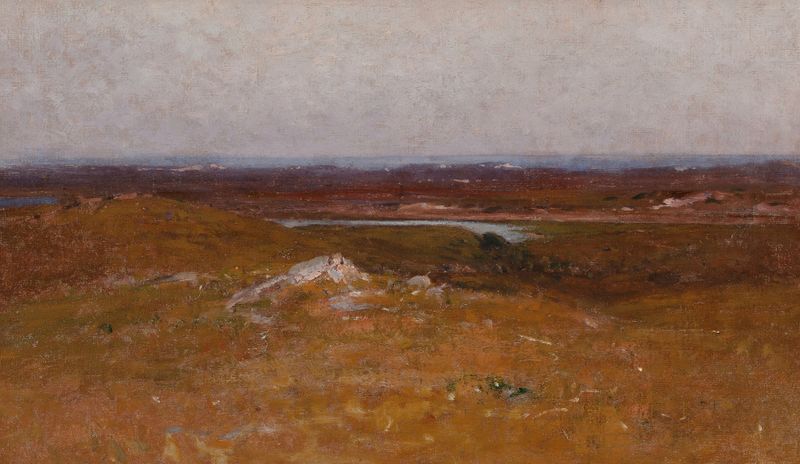
Menemsha Bight
Robert Swain Gifford
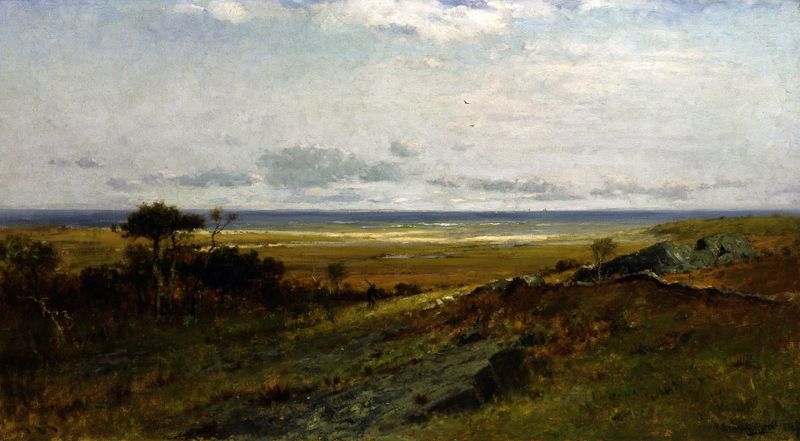
Near the Ocean
Robert Swain Gifford

Seconnet Rock, New Bedford, Massachusetts
Robert Swain Gifford

Mountain Stream
Robert Swain Gifford

Path in a Landscape
Robert Swain Gifford

Tide flats and windmills.
Robert Swain Gifford
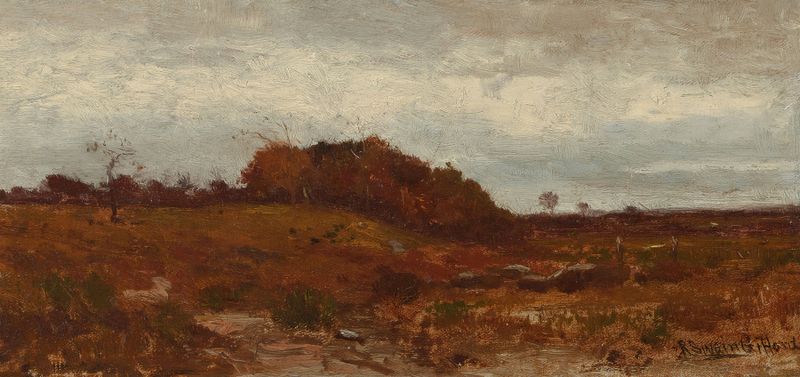
Autumn Landscape
Robert Swain Gifford
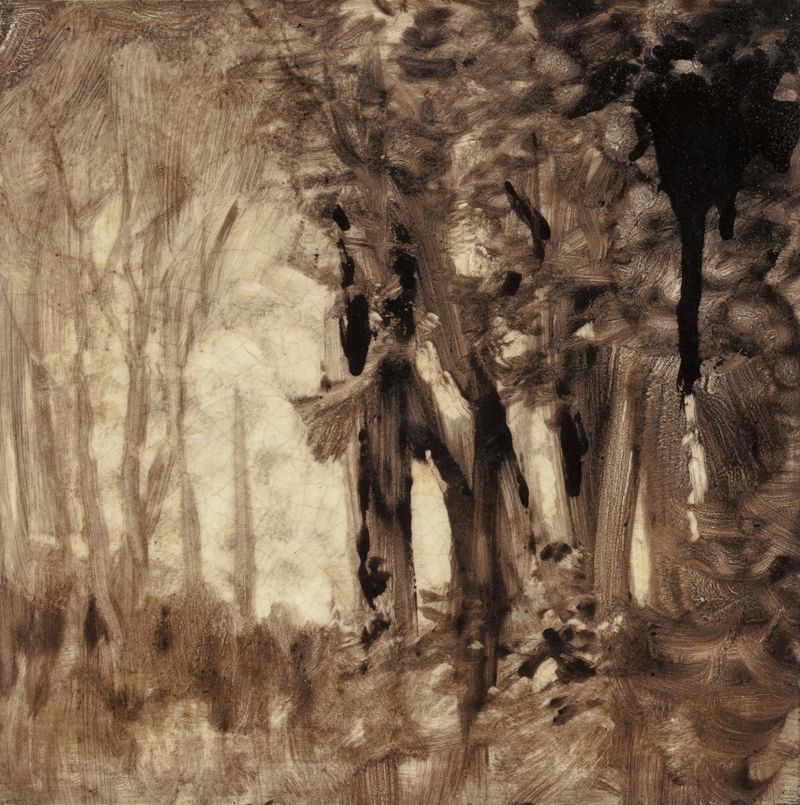
Saints Wrestling in the Trees after Dark
Robert Swain Gifford
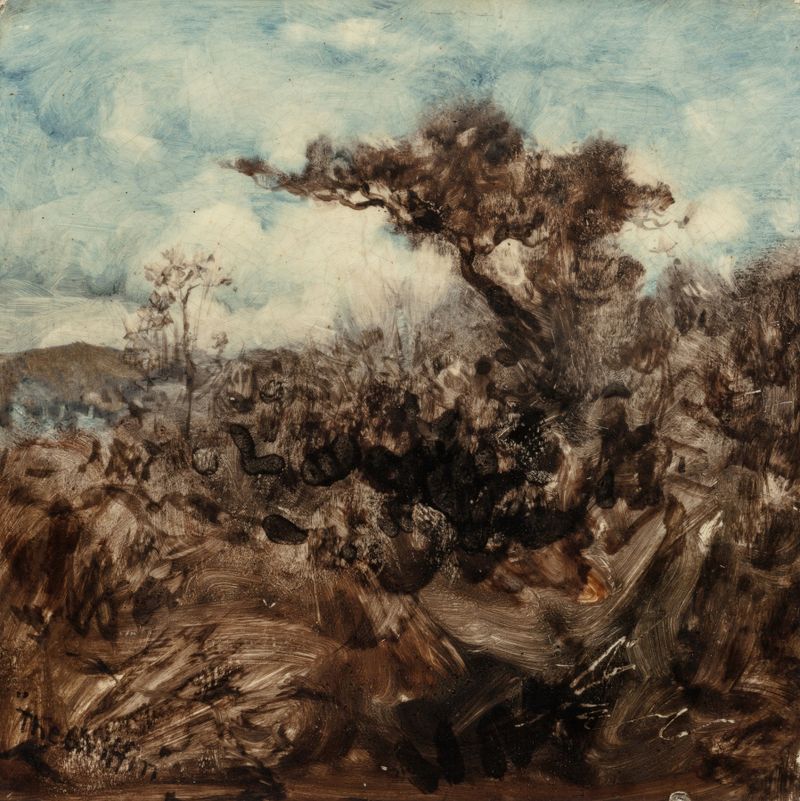
Figure in Tree
Robert Swain Gifford

Barney’s Joy Cliff
Robert Swain Gifford





