
Salmannsdorf — History & Facts
In a world that often clamors for attention, this painting beckons us into a profound void, one that invites introspection and contemplation. Focus on the delicate palette that envelops the canvas; muted earth tones blend seamlessly with subtle blues and grays, evoking a sense of tranquility yet hinting at an underlying tension. Notice how Laske masterfully balances light and shadow, creating a soft glow that dances across the surface, drawing the eye toward the horizon. The simplicity of the composition, with its sparse forms, allows the viewer’s imagination to roam freely, contemplating what lies just beyond the canvas. Within this stillness, the work resonates with deeper themes of isolation and the weight of absence.
Each brushstroke seems to whisper of memories long faded, evoking feelings of longing and unspoken emotions. The apparent emptiness might represent both a physical space and an emotional void, suggesting that what is not depicted can be as powerful as what is, echoing the complexities of human experience. In 1949, the artist was navigating a post-war landscape, reflecting on themes of displacement and renewal. Working in a tumultuous period of European history, the artist sought to encapsulate the quiet aftermath of conflict through this evocative piece.
This work stands not only as a testament to Laske's technical prowess but also as a poignant commentary on the human condition in a world striving for peace amidst echoes of the past.
More Artworks by Oskar Laske
Browse all →
Faschingsumzug am Stock im Eisen Platz
Oskar Laske

Schönbrunn (Winter)
Oskar Laske
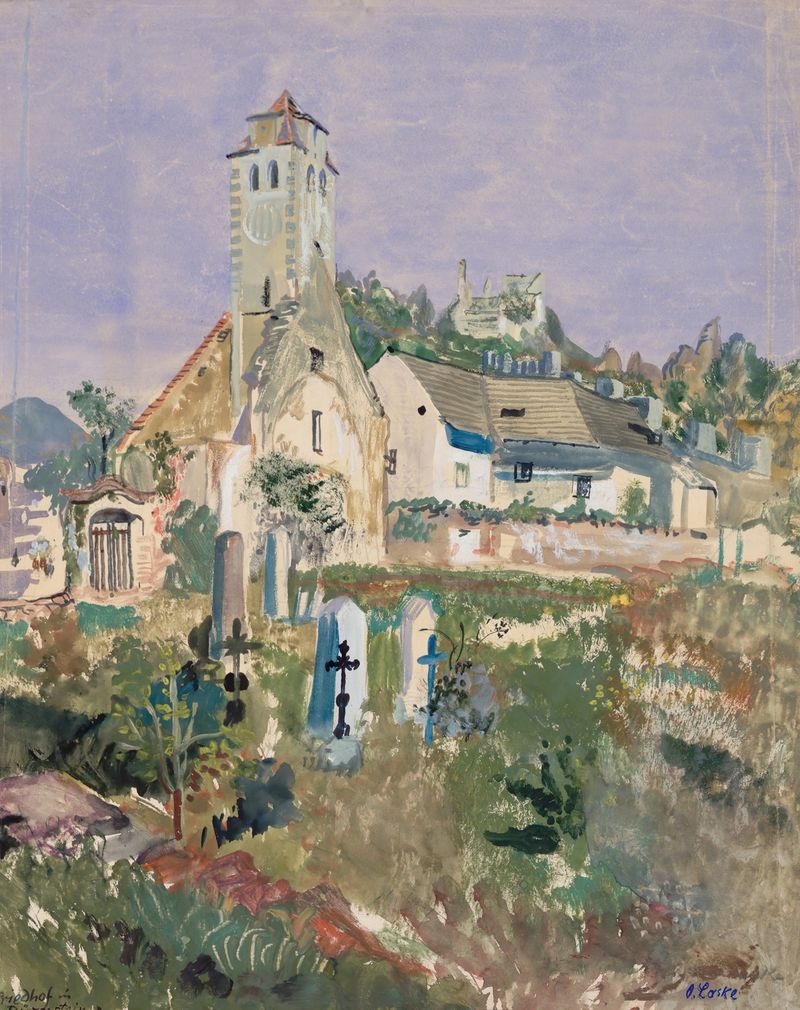
Friedhof in Dürnstein
Oskar Laske

Pratermotiv an der alten Donau
Oskar Laske

Frühjahrsnebel in Niederösterreich
Oskar Laske

Begräbnis des Wiener Bürgermeisters Dr. Karl Lueger
Oskar Laske

Maria Theresien-Denkmal mit Blick gegen das Burgtor
Oskar Laske
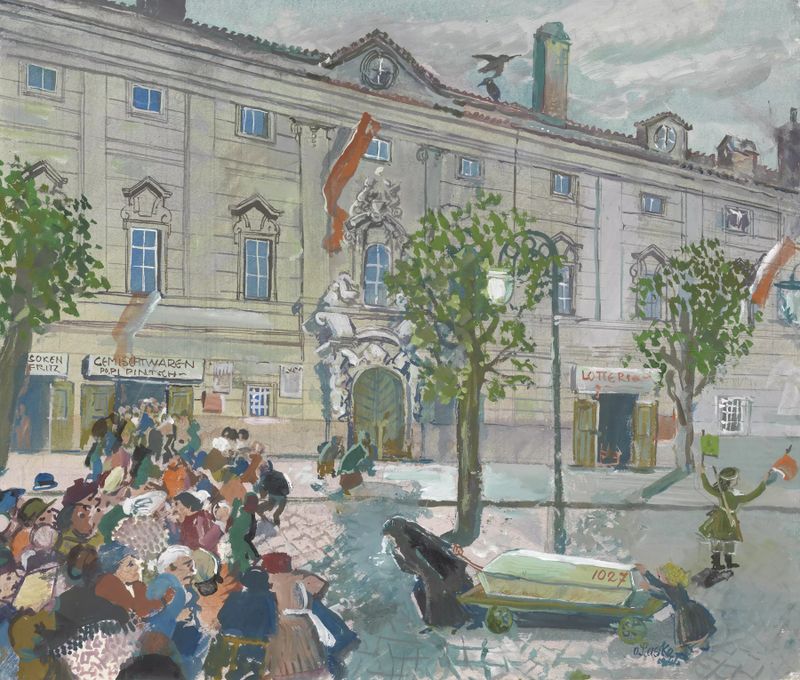
Wiener Straßenbild vom Mai 1945
Oskar Laske

Winterlandschaft in Pressbaum
Oskar Laske

Ansicht von Positano
Oskar Laske





