Schandau with the Lilienstein — History & Facts
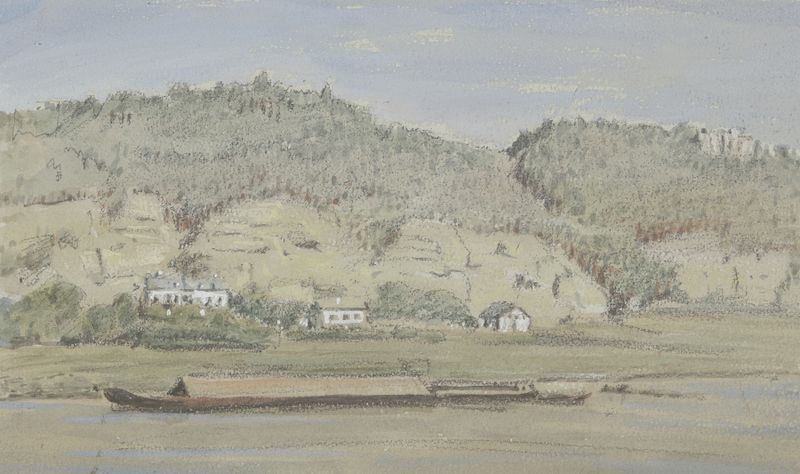
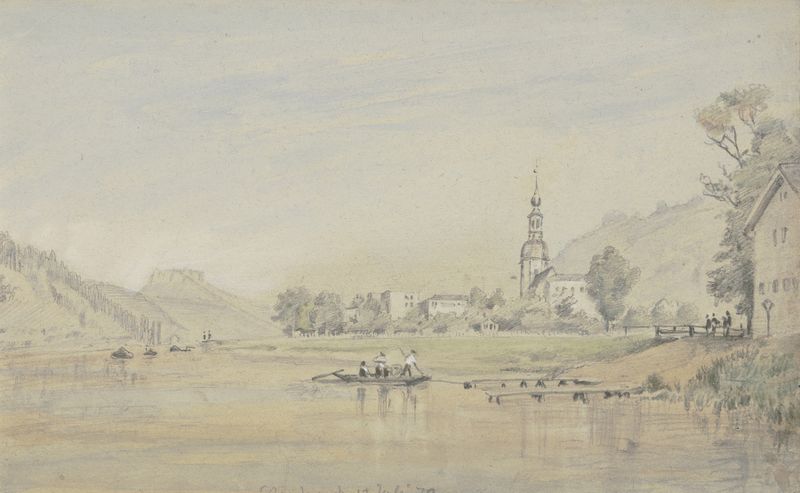
In a world where vibrant hues often mask deeper emotional currents, the layers of betrayal linger just beneath the surface, waiting to be unearthed. Look to the sweeping expanse of the canvas, where the foreground is enriched with rich greens and tranquil blues. Notice how the dappled light filters through the trees, illuminating the serene river below, inviting the viewer to a moment of peace. This tranquil landscape stands in stark contrast to the jagged silhouette of the Lilienstein that looms in the background, its rocky prominence and dark shadows suggesting the hidden turmoil lurking beneath the calm exterior. Peipers skillfully juxtaposes the warmth of the landscape with the cold, imposing presence of the mountain, hinting at the tension between serenity and betrayal.
The river, a symbol of life’s journey, appears to flow effortlessly, yet the darkened cliffs create a sense of foreboding, reminding us that beauty can often be accompanied by hidden dangers. Look closer at the brushstrokes, where the gentle ripples of water are disrupted by unseen forces, echoing the tumult of one's unseen emotional struggles. In 1873, Friedrich Eugen Peipers was immersed in the Romantic movement, painting in Germany during a time of social change and environmental awareness. The landscapes he created reflected both a personal connection to nature and a broader response to the evolving artistic landscape, capturing the duality of tranquility and unrest that permeated the world around him.
This painting resonates with the complexities of human experience, encapsulating not just a moment in time, but an enduring exploration of the hidden truths that color our lives.