Tetschen an der Elbe — History & Facts
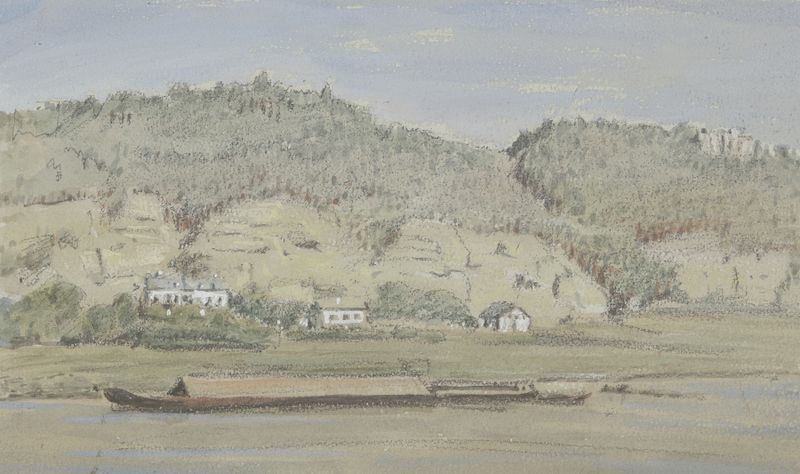
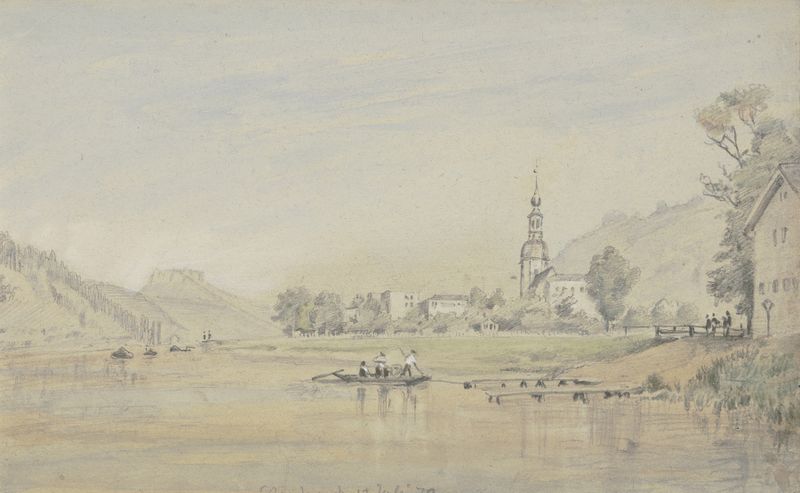
When did color learn to lie? In a world wrapped in the nostalgia of memory, hues can evoke longing and a sense of time lost. Focus on the tranquil river that gently meanders through the canvas. The soft blues and greens draw you in, while the sun-kissed reflections ripple across the water's surface. Look to the left to see the quaint architecture of Tetschen, standing proud against the backdrop of lush hills.
The artist's delicate brushwork captures both the vibrancy of life and the quietude of nature, creating a harmonious balance that invites contemplation. Within this serene landscape lie hidden tensions: the contrast between the sturdy structures and the ephemeral quality of light on the water creates a poignant dialogue. The soft, almost ethereal quality of the palette evokes a sense of fleeting moments, suggesting memories that flicker like shadows. Each stroke speaks of a yearning for permanence in an ever-changing world, reminding us how our recollections shape our perception of beauty and place. Painted in 1873, this work emerged during a pivotal moment in the artist's life, as he explored the interplay between nature and memory.
Working in Germany during a time of burgeoning artistic movements, he sought to capture the sublime and tranquil essence of his surroundings. This piece reflects the broader Romantic fascination with landscape and the personal connection to the places that mold our identities.