
Schäfer mit seiner Herde am Dorfrand — History & Facts
In a world often drowned in noise, silence can weave a profound narrative, capable of capturing the essence of life itself. This artwork whispers tales of solitude and serenity, inviting us to ponder what lies hidden in the stillness. Look to the left at the shepherd’s stoic figure, standing resolutely at the edge of the village. The gentle curve of his back mirrors the undulating hills, while warm earth tones evoke the tranquility of the countryside.
Notice how the sunlight bathes the herding flock in a golden hue, creating a radiant contrast with the cool shadows cast by the trees. Each stroke conveys a sense of space, as if the canvas breathes along with the sheep, tethered together by the invisible threads of their collective presence. The juxtaposition of the shepherd and his herd against the backdrop of the village speaks to a deeper connection between humankind and nature. While the shepherd embodies a life of quiet responsibility, the distant houses hint at the encroaching modernity, urging us to reflect on the delicate balance between tradition and progress.
Silently, the painting unfolds an emotional tension — the yearning for simplicity amidst the complexities of an evolving world. In 1900, when this piece was created, Thomassin was immersed in a landscape of artistic transformation. He was in France, a country buzzing with Post-Impressionism's vibrant experimentation, yet he chose to depict a pastoral scene steeped in timelessness. This choice signifies a poignant resistance to rapid change, capturing the essence of rural life as it faced the inevitable tide of modernity.
More Artworks by Désiré Thomassin
Browse all →
Fishermen On The Beach
Désiré Thomassin
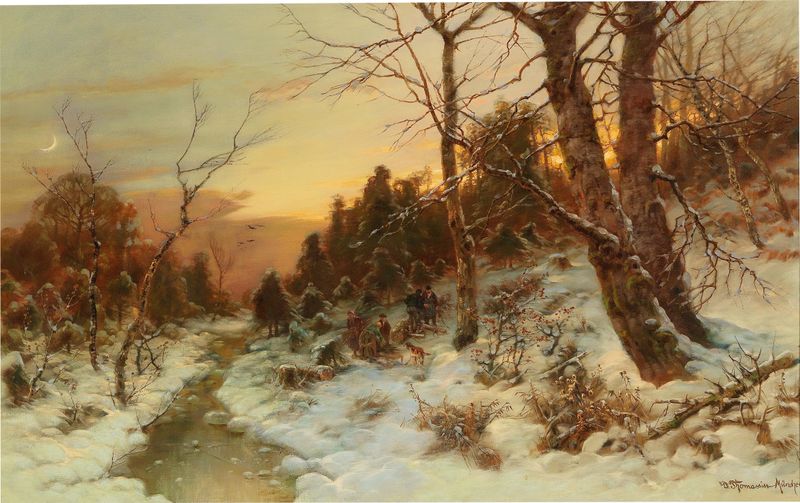
Woodworkers In A Winter Woodland
Désiré Thomassin
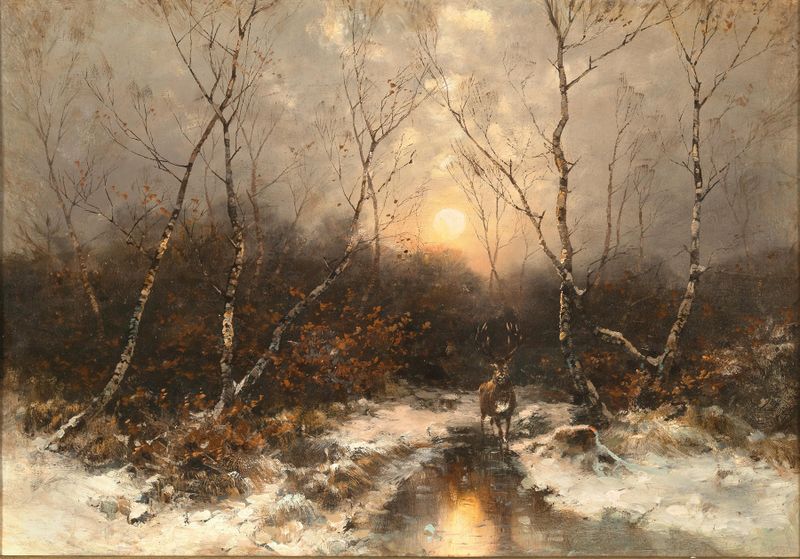
A Deer in a Forest by Moonlight
Désiré Thomassin
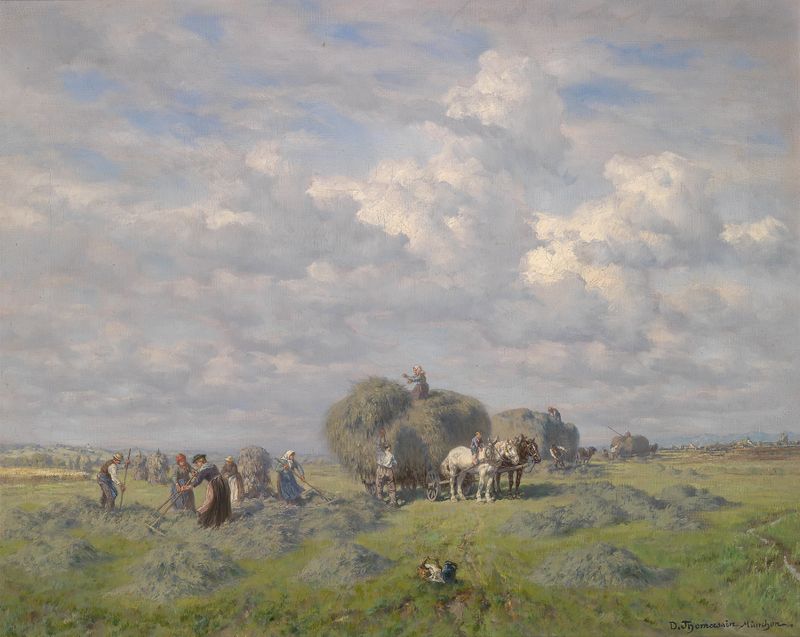
Heuernte an einem Sommertag
Désiré Thomassin

Rehe in Winterlandschaft
Désiré Thomassin
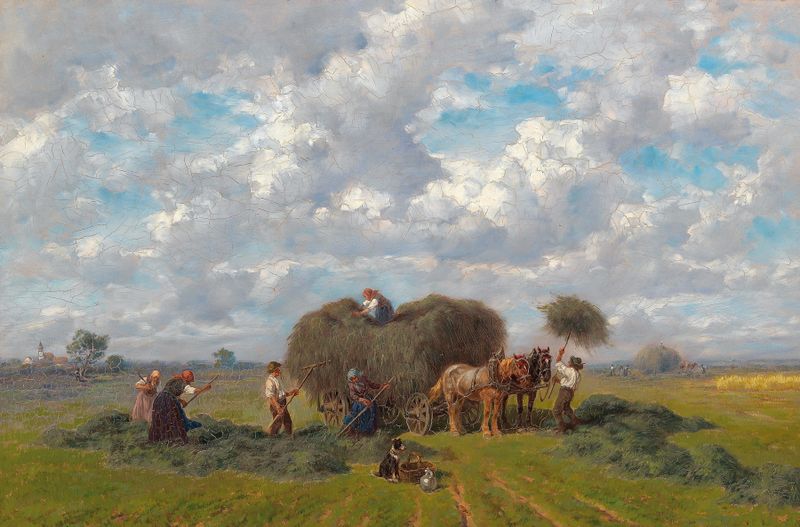
Harvesting
Désiré Thomassin
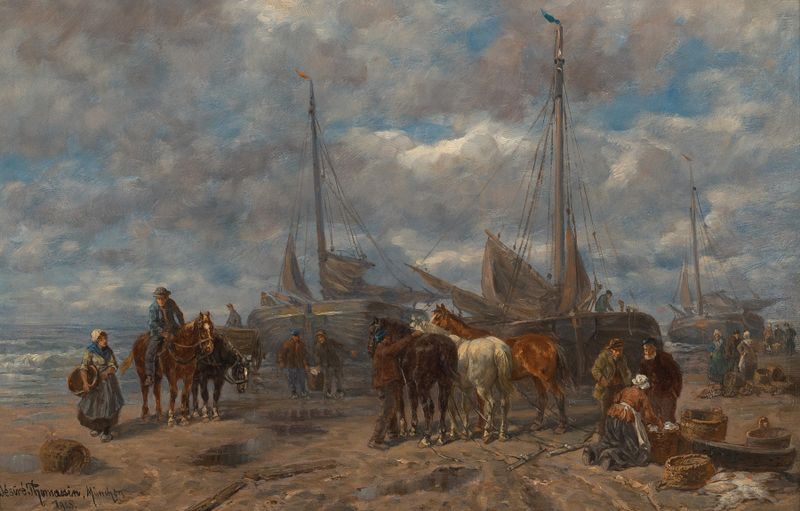
The Homecoming of the Fishermen, Market on the Beach
Désiré Thomassin
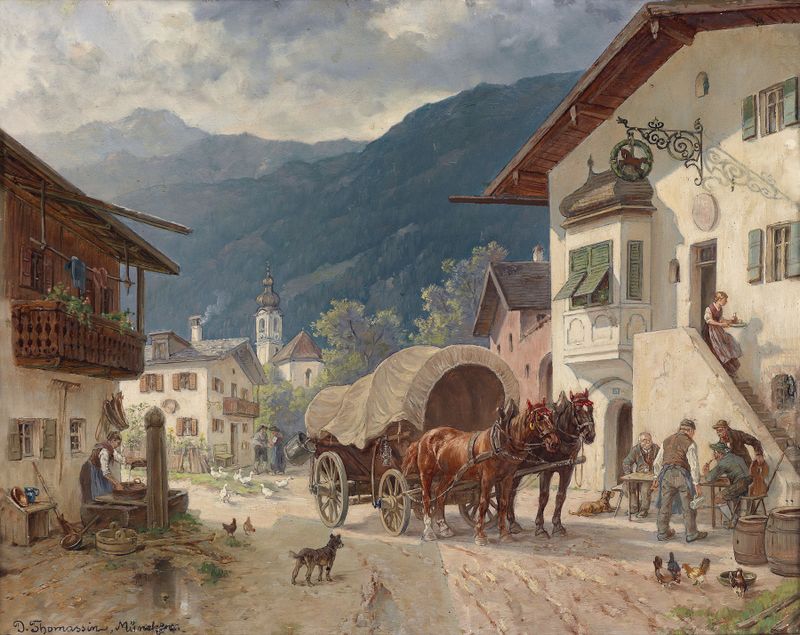
Rast vor dem Wirtshaus
Désiré Thomassin

Returning Home From The Hunt At Sunset
Désiré Thomassin

Returning Home At Sunset
Désiré Thomassin





