
Schipbreuk van de ‘Eugenie Borda’, gered door het passagiersstoomschip ‘Vaderland’ — History & Facts
Can beauty exist without sorrow? The tumultuous sea, with its swirling waves and darkened skies, captures an emotional paradox reflective of human experience — a struggle against nature tempered by the hope of salvation. At the forefront of the canvas, the distressed ship, Eugenie Borda, tilts precariously, its hull stark against the bruised blue of the ocean. Focus on the dynamic interplay of light breaking through the tumultuous clouds, illuminating the heroic vessel, Vaderland, that moves to rescue it. The artist's palette of dark, moody colors evokes the storm's intensity, while the deft brush strokes convey movement and urgency, inviting the viewer to feel the tension in every crashing wave. This piece encapsulates the duality of despair and hope.
The chaos of the sea mirrors the emotions of the crew and passengers aboard the Eugenie Borda, while the steady, reassuring presence of the Vaderland symbolizes humanity's resilience against nature’s fury. Subtle details like the white-capped waves and the expressions of urgency on the sailors’ faces speak volumes about the deeper narrative of survival and kinship amidst chaos. In 1910, John-Henry Mohrmann was navigating the complex world of maritime art while living in the Netherlands. The age was marked by technological advancements in transportation and a fascination with nature’s power, both of which influenced his work.
During this period, the artist sought to depict not just the physical realities of maritime disasters but the emotional landscapes they evoke, creating an enduring connection with viewers through shared human experiences.
More Artworks by John-Henry Mohrmann
Browse all →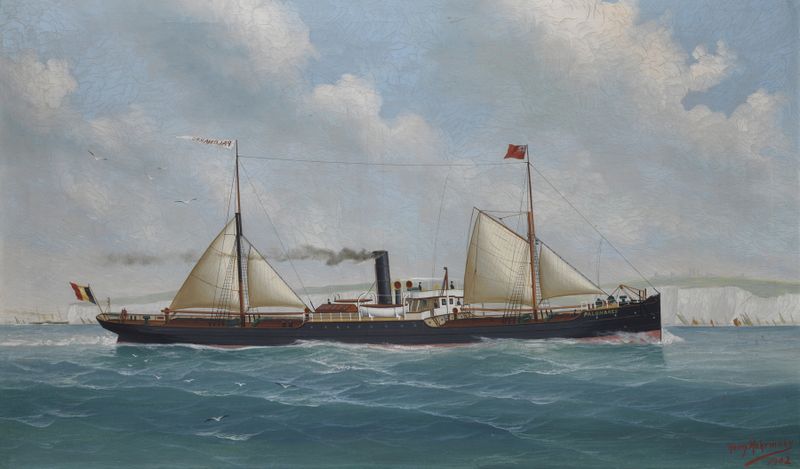
Stoomschip met hulpzeilvermogen ‘Palomares’
John-Henry Mohrmann

Het stoomschip ‘Leopoldville’ voor de Antwerpse rede
John-Henry Mohrmann
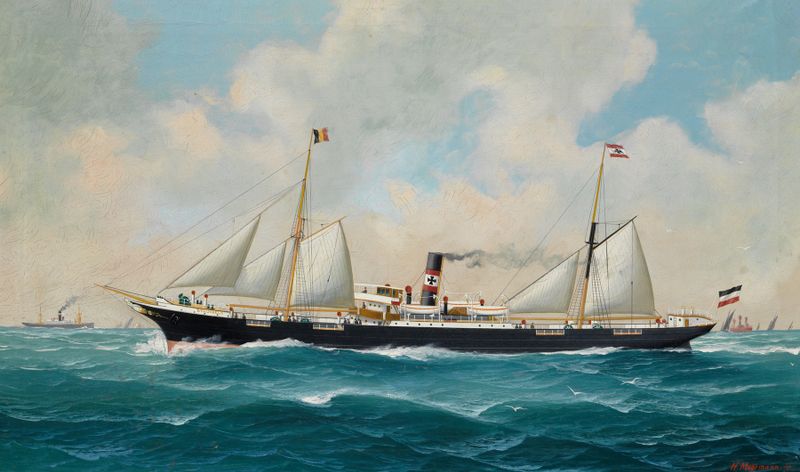
Het stoomschip met hulpzeilvermogen ‘Braunfels’
John-Henry Mohrmann
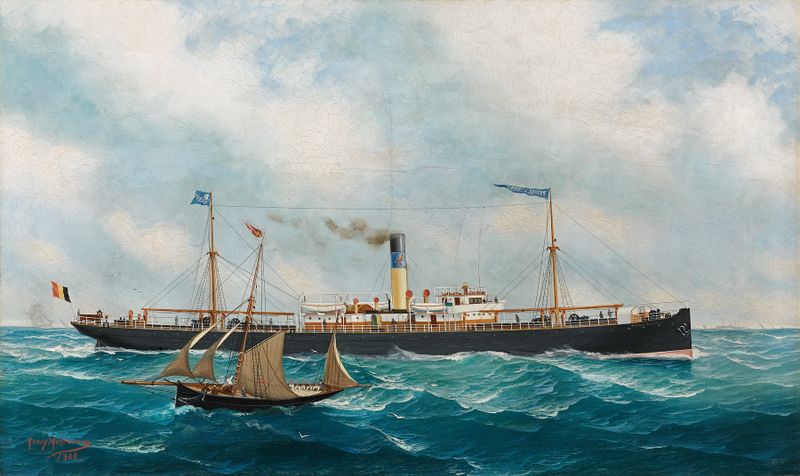
Het stoomschip Prince Albert met vooraan een kotter onder zeil
John-Henry Mohrmann
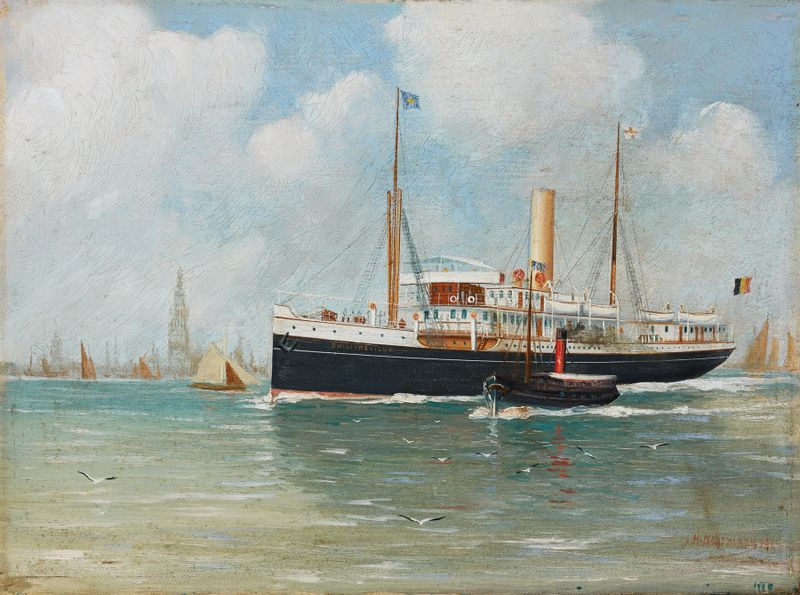
Het stoomschip ‘Philippeville’ voor de rede van Antwerpen
John-Henry Mohrmann

Het stoomschip ‘Stanleyville’ voor de rede van Antwerpen
John-Henry Mohrmann
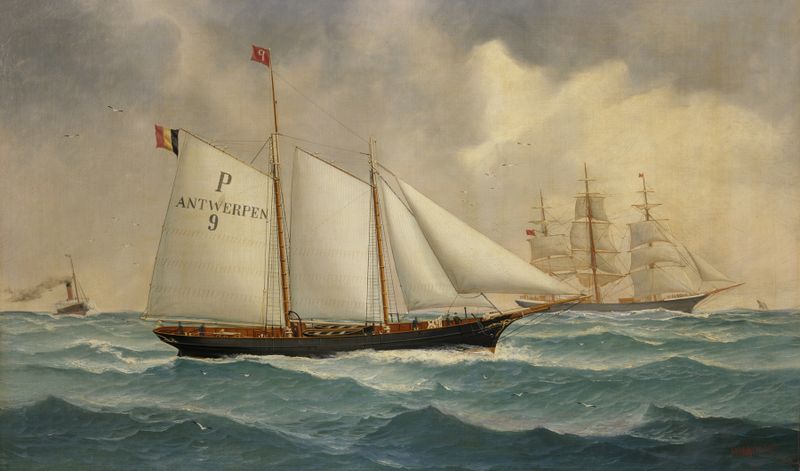
Loodsschoener 9 van het Belgisch loodswezen
John-Henry Mohrmann

Viermastbark en opleidingsschip ‘L’Avenir’
John-Henry Mohrmann
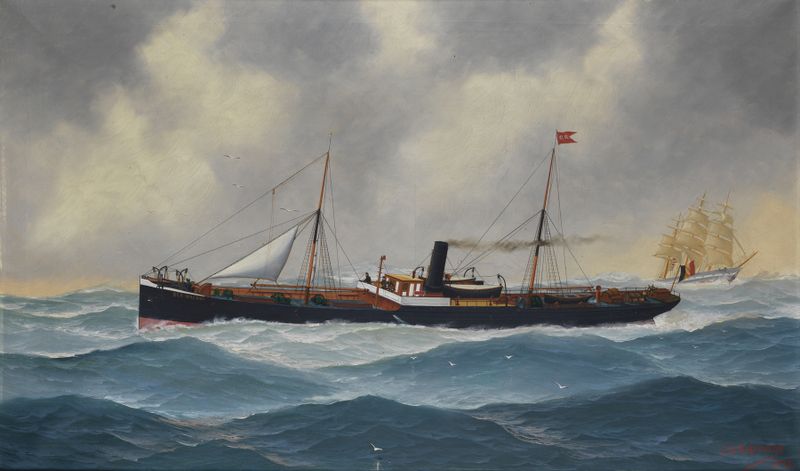
Het stoomschip ‘Ben Macdui’ op woelige zee
John-Henry Mohrmann
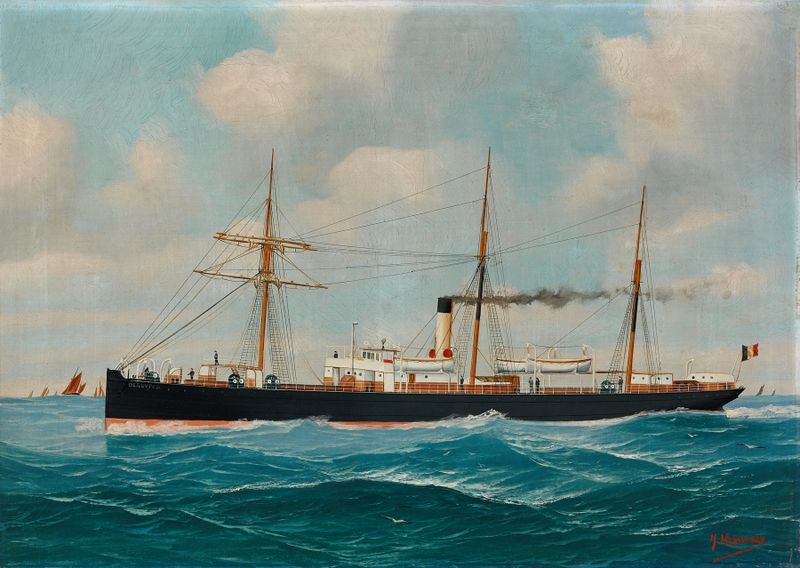
Het stoomschip met hulpzeilvermogen ‘De Ruyter’
John-Henry Mohrmann





