Schloss Tirol bei Meran — History & Analysis
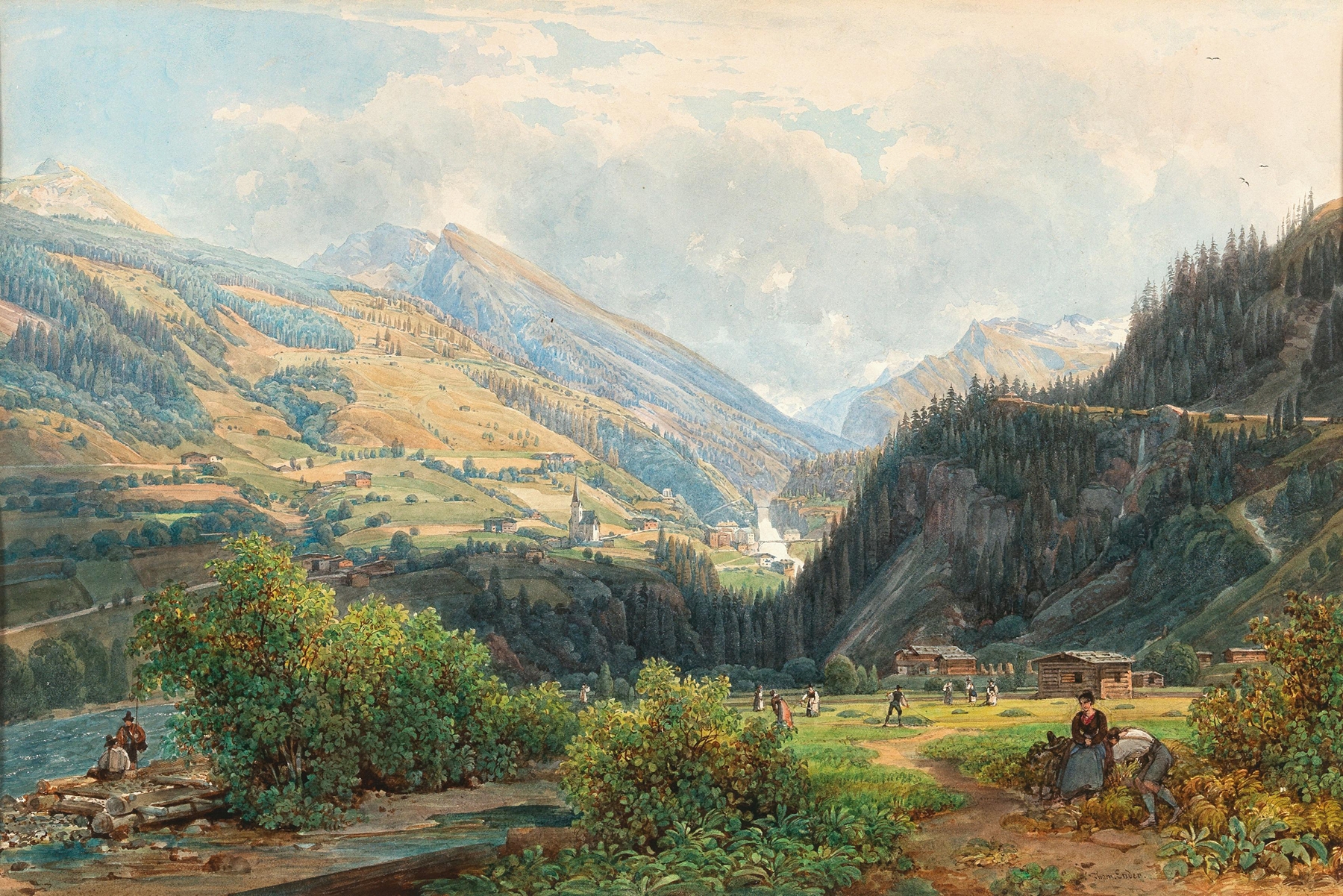
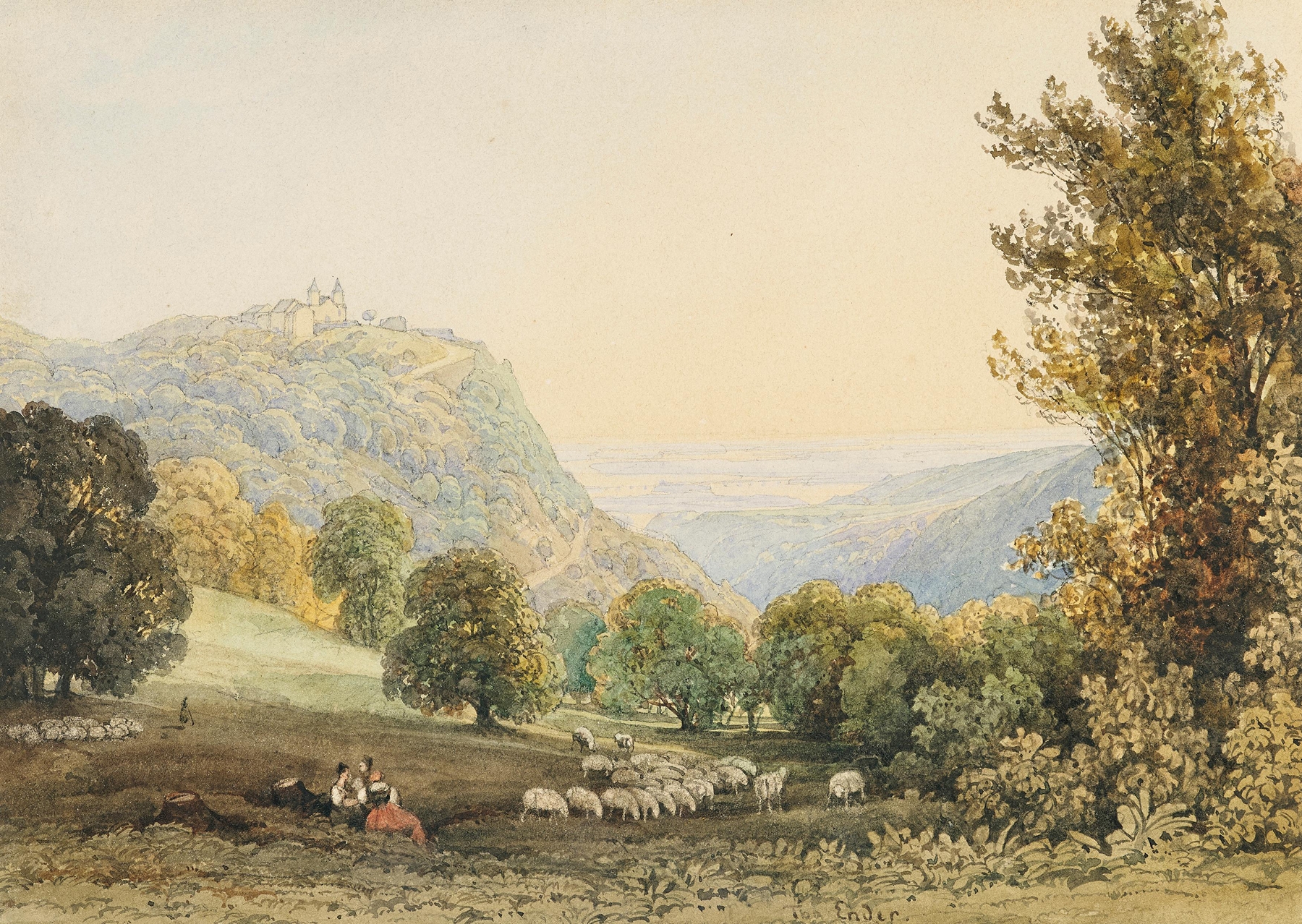
Could beauty survive in a century of chaos? In Schloss Tirol bei Meran, the distant fortress stands resolute against a backdrop of turbulent skies, a silent testament to the fragility of peace and trust. Look to the lower right corner, where the lush greenery meets the serene waters reflecting the castle's stone façade. The artist employs a delicate palette of greens and blues that blend harmoniously, allowing the castle to emerge like a beacon of strength amidst nature’s undulating chaos.
Notice the soft brushstrokes that highlight the clouds above, imbuing the sky with a sense of impending change, while sunlight bleeds through, casting an ethereal glow over the entire scene. These choices create a striking contrast with the solidity of the fortress, a symbol of stability in an ever-shifting world. The composition speaks of emotional tensions: the looming shadows in the sky suggest an omnipresent threat, while the vibrant landscape below hints at life's resilience. This duality of beauty and foreboding encapsulates themes of betrayal—nature may thrive, but the darkness overhead suggests that trust in peace could be broken at any moment.
Each element, from the rippling water to the fortified walls, encapsulates a narrative of contrasts, revealing the underlying anxiety of an era caught between stability and chaos. In 1843, Thomas Ender was deeply engaged with the Romantic movement, capturing landscapes that conveyed not just beauty, but the emotional weight of their times. During this period, Europe was undergoing significant political upheaval, with revolutions and societal shifts redefining identities. Ender's focus on the majestic yet vulnerable landscape reflects his own struggles as an artist striving to find serenity amidst the tumult of a rapidly changing world.