
Schönbrunn, Herbst — History & Facts
In a world that rushes forward, decay becomes the quiet testament of time’s passage, urging us to embrace the beauty found in endings. Focus on the center, where golden leaves whisper stories of autumn’s embrace. The rich, earthy palette of browns and yellows envelops the scene in warmth, while soft strokes create an ethereal haze reminiscent of fading memories. Notice how the light filters through the canopy—each ray a gentle caress, as if the sun mourns the inevitable decline of life.
Your eyes are led through the winding paths, inviting you to wander deeper into this moment, where beauty and transience dance together. Hidden within this serene landscape lies a poignant contrast: the vibrancy of nature in its final flourish against the backdrop of an impending winter. Look closely at the delicate details—the crumbling bark of a tree or the withering petals scattered across the ground. These elements evoke a sense of nostalgia, reminding us that decay holds its own kind of beauty, a bittersweet reminder of what was and what is yet to come. In 1930, Oskar Laske painted this work amidst a rapidly changing Europe, where the shadows of economic instability loomed large.
His exploration of nature reflected not only his personal circumstances but also an artistic shift toward expressing the complexities of human experience through landscape. This piece, woven with threads of melancholy and warmth, encapsulates a moment in time where the world felt both fragile and full of promise.
More Artworks by Oskar Laske
Browse all →
Faschingsumzug am Stock im Eisen Platz
Oskar Laske

Schönbrunn (Winter)
Oskar Laske
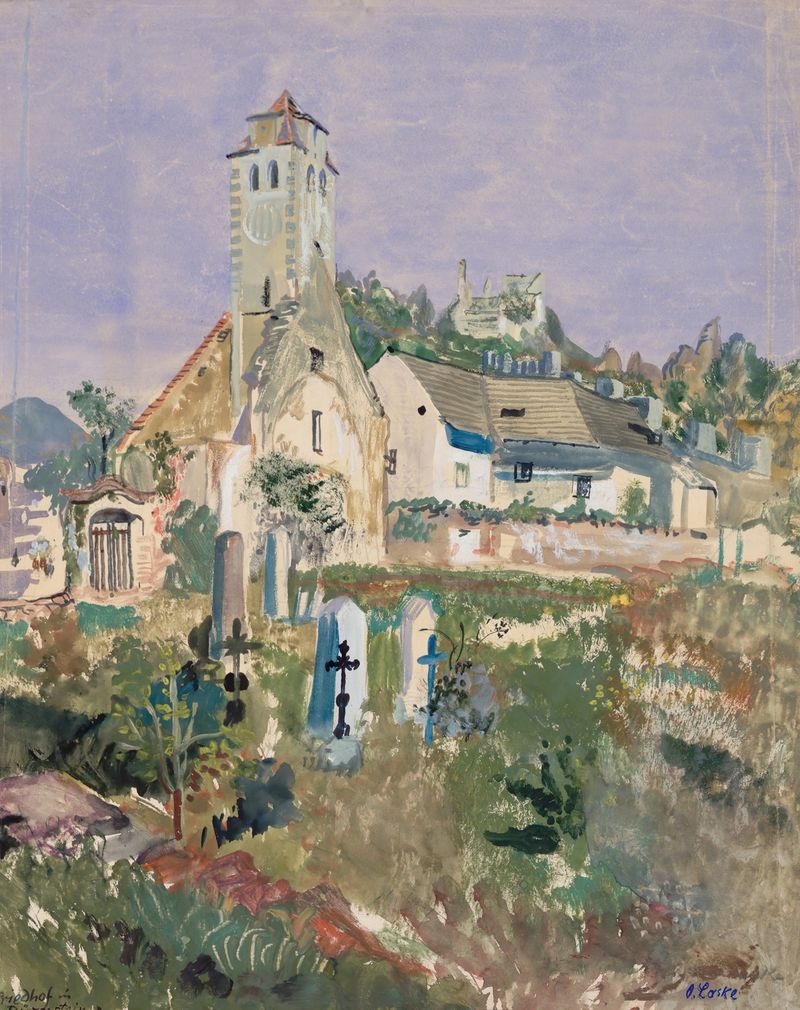
Friedhof in Dürnstein
Oskar Laske

Pratermotiv an der alten Donau
Oskar Laske

Frühjahrsnebel in Niederösterreich
Oskar Laske

Begräbnis des Wiener Bürgermeisters Dr. Karl Lueger
Oskar Laske

Maria Theresien-Denkmal mit Blick gegen das Burgtor
Oskar Laske
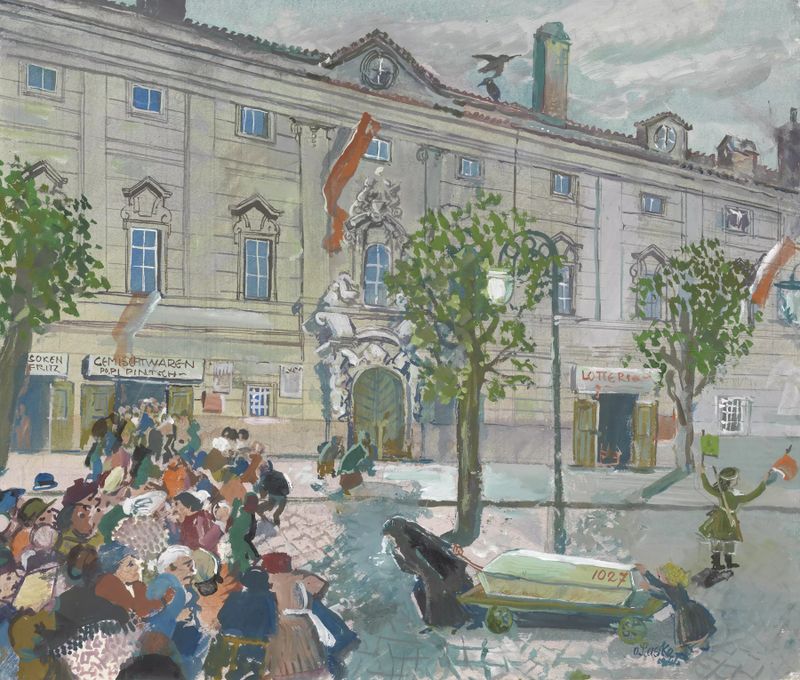
Wiener Straßenbild vom Mai 1945
Oskar Laske

Winterlandschaft in Pressbaum
Oskar Laske

Ansicht von Positano
Oskar Laske





