
Schönbusch Castle near Aschaffenburg — History & Facts
In the quiet interplay of light and shadow, we find a sanctuary of serenity and contemplation; a window into the artist’s inner world. Focus on the gentle illumination cascading over the structured facade of Schönbusch Castle, the central subject of the piece. Notice how the sunlight bathes the stone walls, creating a harmony of warm ochres and cool grays. The careful brushstrokes reveal not just the physicality of the castle, but also the emotions it evokes — a blend of grandeur and tranquility that invites the viewer to linger, to explore the details of the surrounding landscape that cradle this architectural gem. Delve deeper into the painting’s essence to uncover the contrasts at play.
The sturdy structure of the castle stands resilient against the softness of the lush greenery, suggesting a dialogue between nature and human creation. The dispersing light hints at transience, reminding us that even the most monumental of edifices are subject to time’s passage. Here, the interplay of light not only illuminates but also narrates the silent stories of those who once walked the grounds, reflecting a timeless beauty that resonates with our own experiences. Created in 1786, this work emerged during Schütz’s steady establishment as a prominent artist in the German landscape painting tradition.
Living in a period marked by both the Enlightenment and burgeoning Romanticism, he was influenced by a growing appreciation for nature and historical architecture. As Europe moved towards the complexities of the modern age, Schütz found solace in capturing the idyllic, creating a sense of permanence amidst the changing tides of society.
More Artworks by Christian Georg Schütz the elder
Browse all →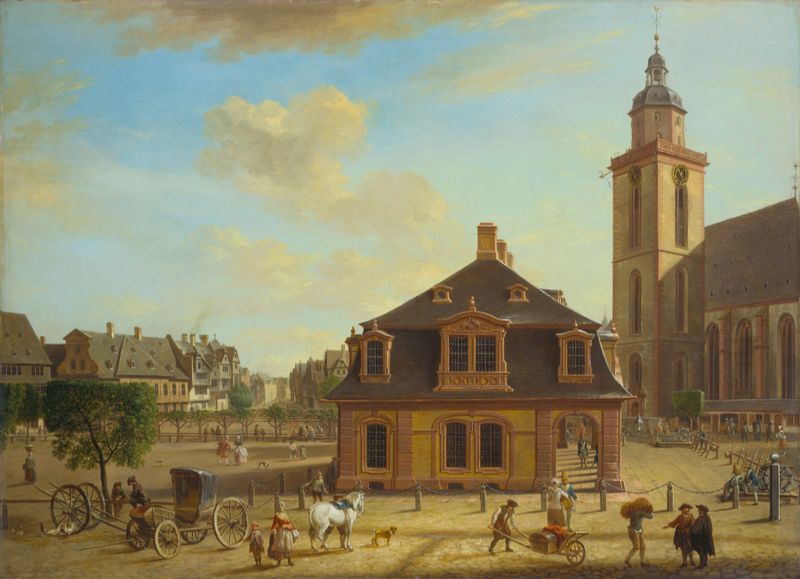
The Rossmarkt in Frankfurt
Christian Georg Schütz the elder
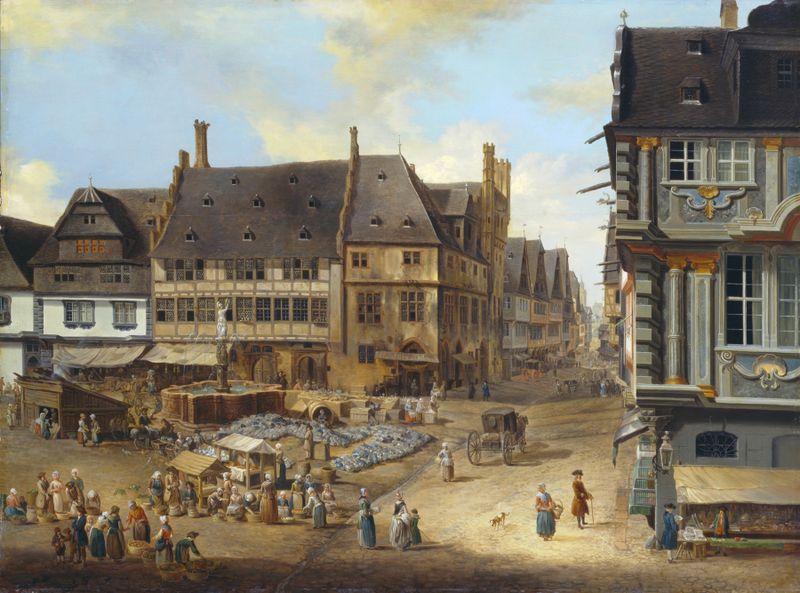
The Liebfrauenberg in Frankfurt
Christian Georg Schütz the elder
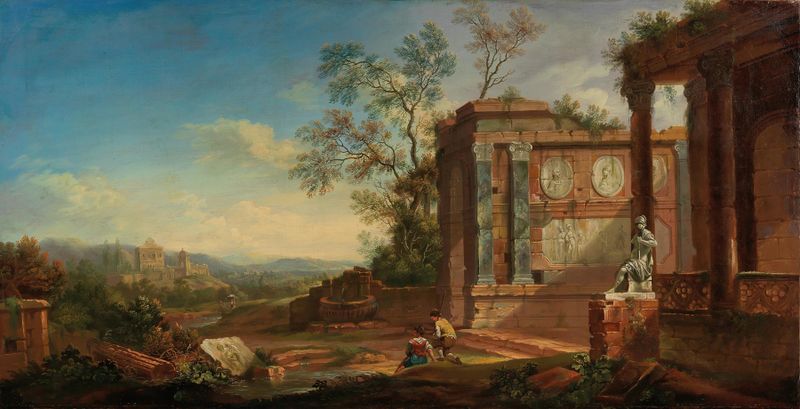
Gebirgige Flusslandschaft
Christian Georg Schütz the elder
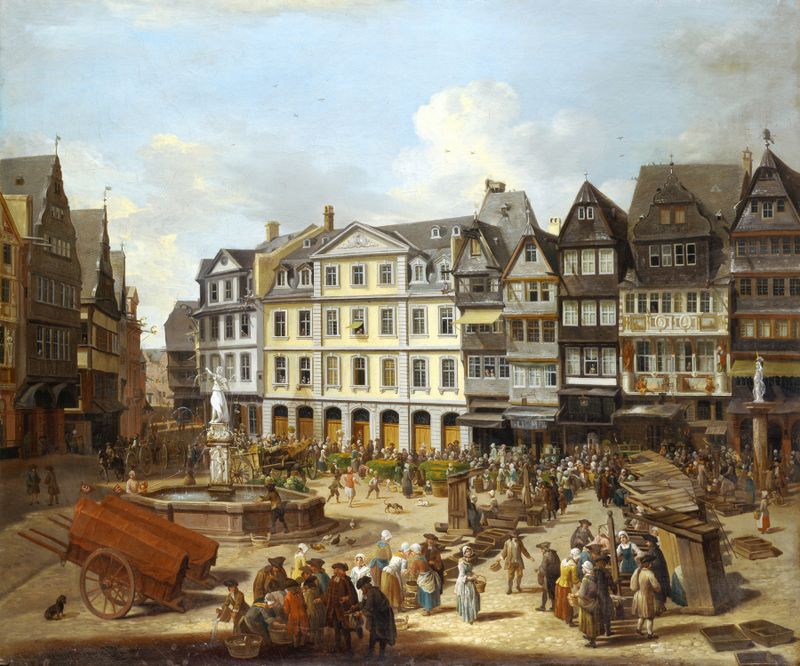
A Market on the Römerberg in Frankfurt
Christian Georg Schütz the elder
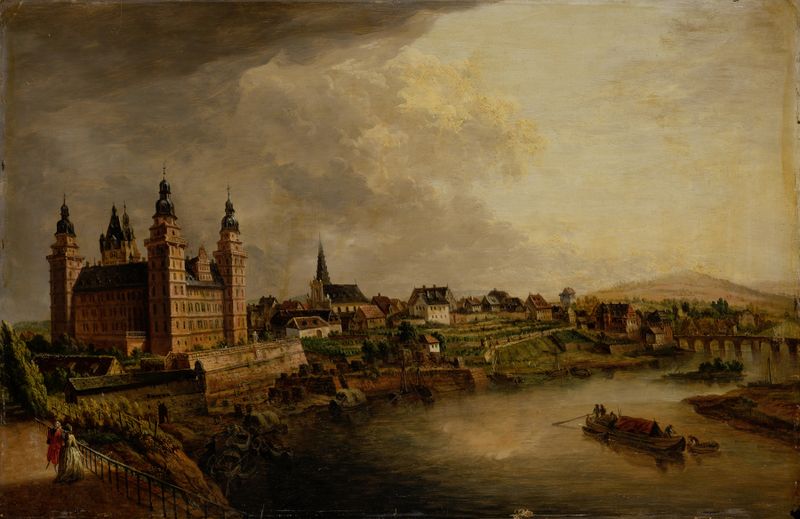
View of Aschaffenburg
Christian Georg Schütz the elder

Landscape with River.
Christian Georg Schütz the elder

River Landscape in the Morning Light
Christian Georg Schütz the elder

A Rhine landscape with a ferry, near Bonn with the Rolandsbogen, Drachenfels and the island of Nonnenwerth beyond
Christian Georg Schütz the elder
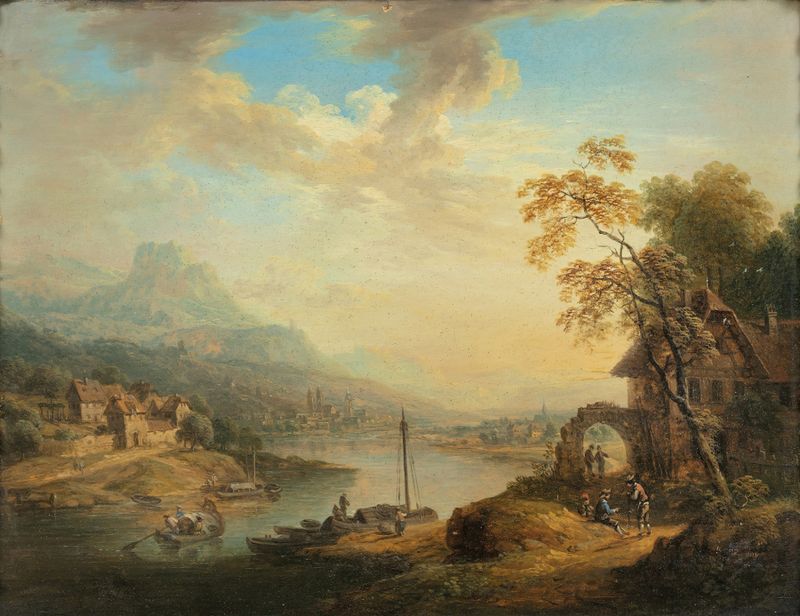
River Landscape
Christian Georg Schütz the elder

Flooded Woodlands near Oberrad
Christian Georg Schütz the elder
More Architecture Art
Browse all →
The statue of Liberty
Frédéric Auguste Bartholdi

View of Houses in Delft, Known as ‘The Little Street’
Johannes Vermeer

View of Houses in Delft, Known as ‘The Little Street’
Johannes Vermeer

The Cathedral in Rouen. The portal, Grey Weather
Claude Monet

The yellow house
Vincent van Gogh

The Church in Auvers-sur-Oise, View from the Chevet
Vincent van Gogh