Self-Portrait — History & Facts
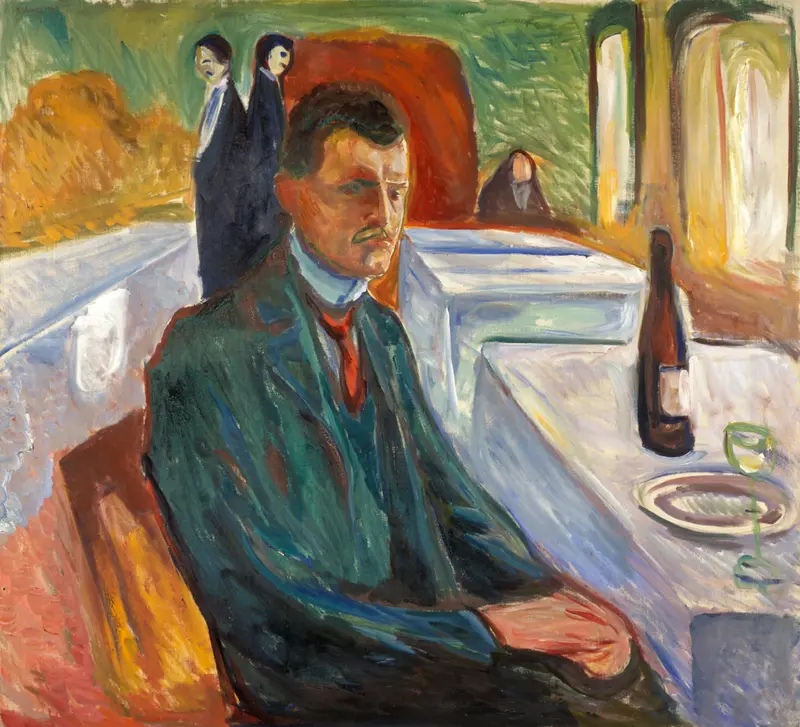
In Self-Portrait, Edvard Munch presents a striking image of himself, characterized by bold and contrasting colors. The background is dark, which enhances the vividness of his face, painted with expressive brushstrokes. His eyes seem to reflect a deep emotional turmoil, while his expression conveys a sense of introspection.
The overall composition is dynamic, drawing the viewer's attention to the artist's inner world. The painting is executed in oil on canvas, a medium that allows Munch to explore texture and color intensity. The brushwork is loose and energetic, contributing to the emotional impact of the piece. Munch's use of color is particularly notable; he employs a palette that ranges from deep blues and blacks to vibrant reds and yellows.
This contrast not only highlights his features but also evokes a sense of psychological depth. Edvard Munch was a key figure in the Expressionist movement, and this self-portrait reflects his exploration of personal emotions and existential themes. Created around 1895, it showcases the artist's struggle with his identity and mental health. An interesting fact about this work is that Munch often painted multiple self-portraits throughout his career, each revealing different facets of his psyche.
This particular piece stands out for its raw emotional intensity.