
Self-Portrait with Splayed Fingers — History & Facts
In Self-Portrait with Splayed Fingers, Egon Schiele presents himself with vivid colors and exaggerated forms. The background is a muted tone that contrasts sharply with the bright hues of his skin. His fingers are splayed wide, creating a sense of tension and urgency.
The overall composition conveys a raw emotional intensity that is characteristic of Schiele's work. This painting is executed in oil on canvas, a medium that allows for rich color application and texture. The dimensions are approximately 60 x 80 cm, making it a relatively intimate piece. Schiele's brushwork is dynamic, with visible strokes that add to the emotional impact.
The use of color is striking, with bold contrasts that highlight the figure's expression. Egon Schiele was a key figure in the Expressionist movement, known for his raw and often provocative style. This self-portrait, created around 1910, reflects his exploration of identity and the human condition. An interesting fact about this work is that Schiele often used himself as a model, allowing him to delve deeply into personal themes.
His unique approach to portraiture continues to influence artists today.
More Artworks by Egon Schiele

Lovers
Egon Schiele
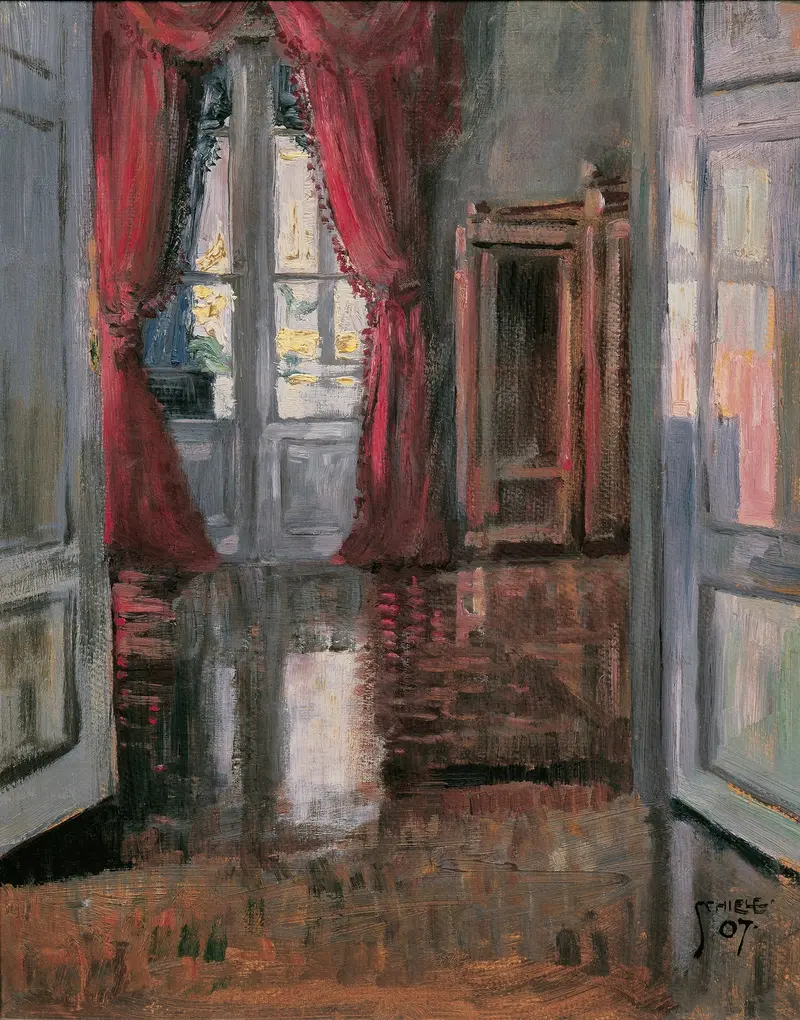
Blick in die Wohnung von Leopold und Marie Czihaczek
Egon Schiele
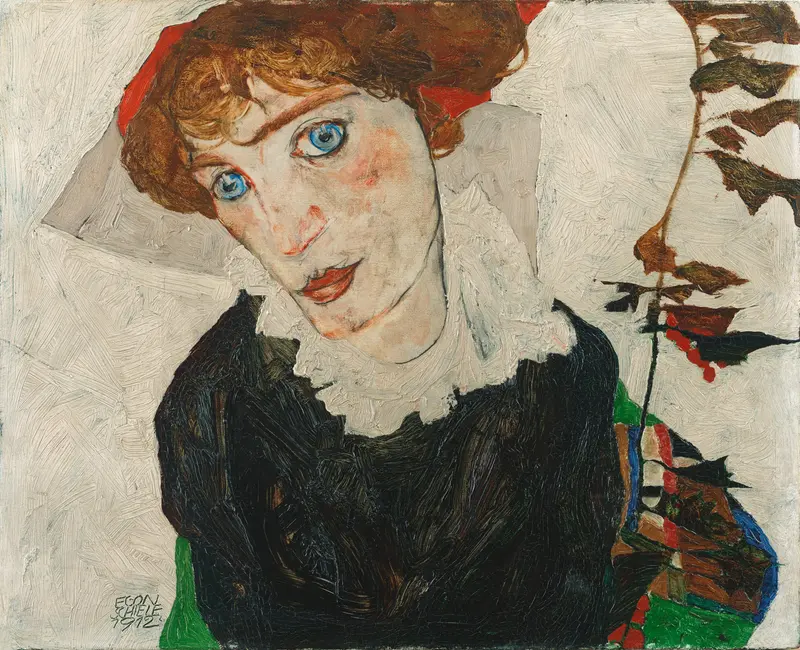
Portrait Of Wally Neuzil
Egon Schiele
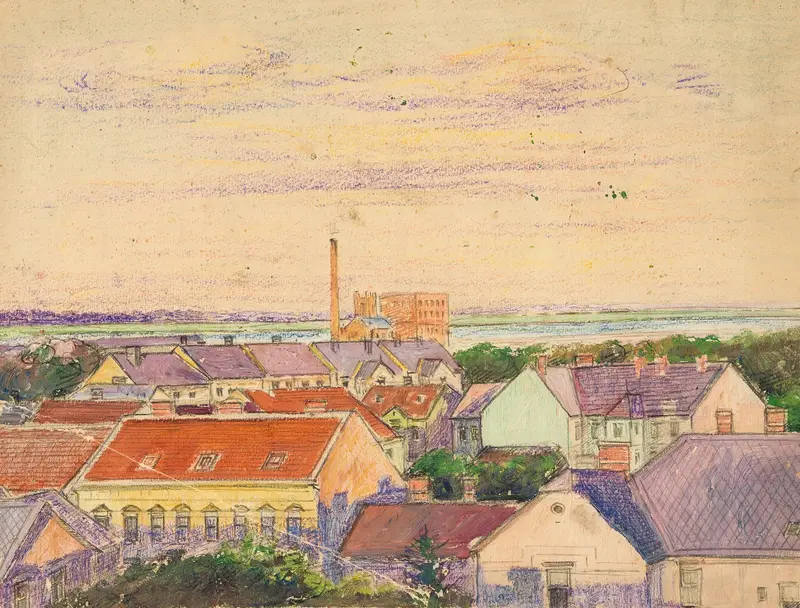
Stadtansicht
Egon Schiele
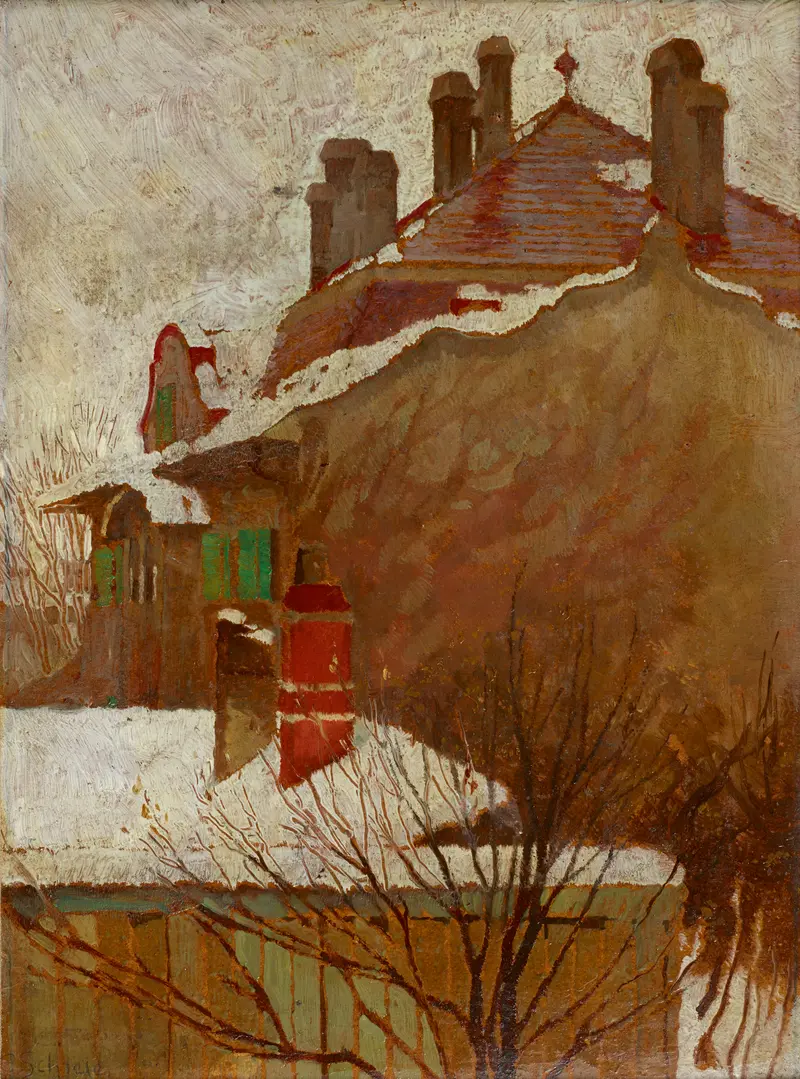
Häuser im Winter (Blick aus dem Atelier)
Egon Schiele
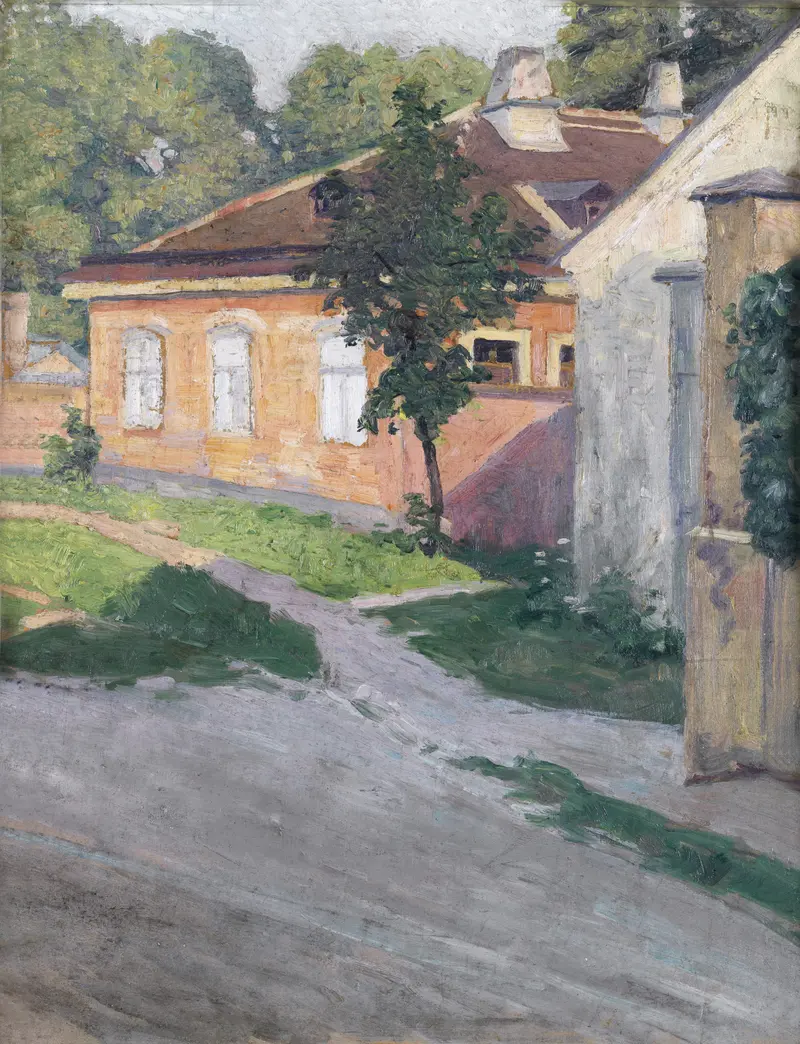
Haus In Hütteldorf (House In Hütteldorf)
Egon Schiele
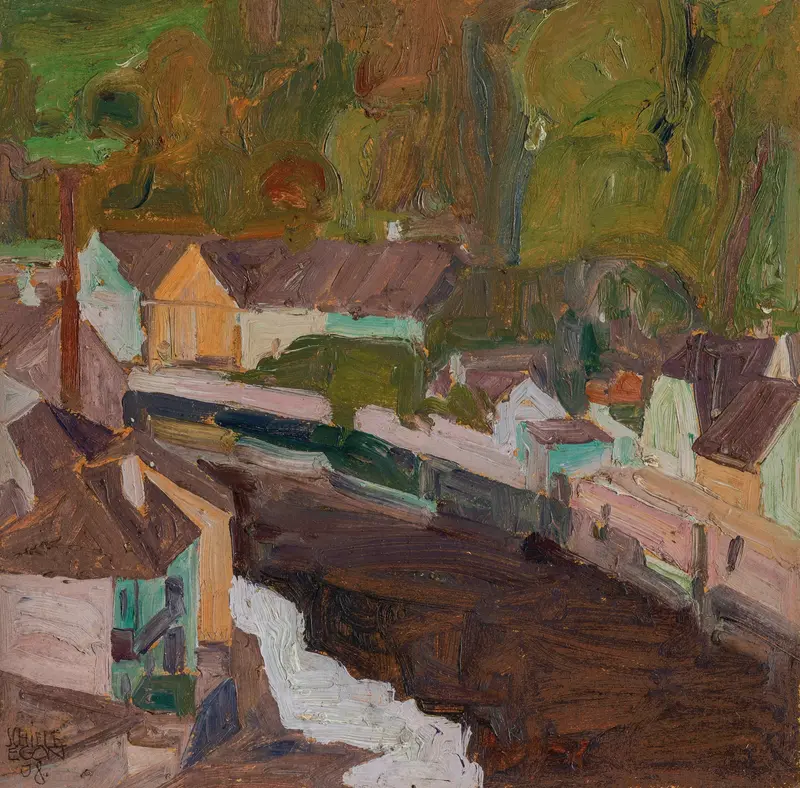
Dorf am Fluss II
Egon Schiele
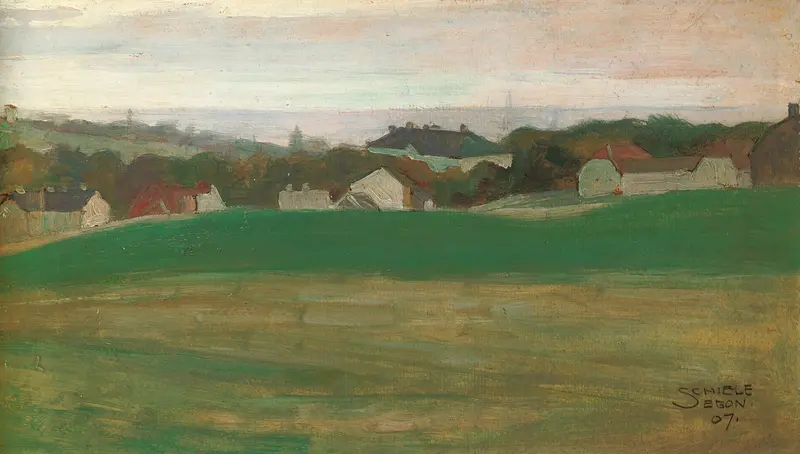
Wiese mit Dorf im Hintergrund II
Egon Schiele
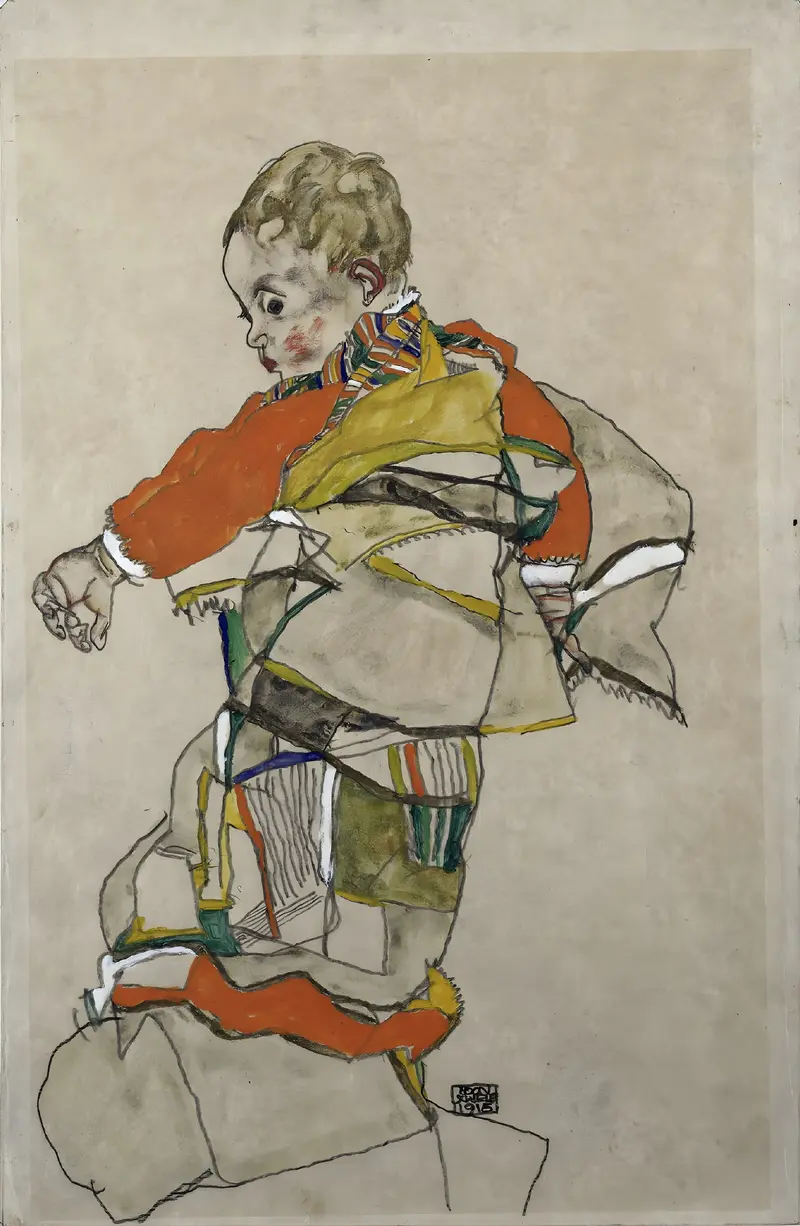
Portrait of a Child (Anton Peschka, Jr.)
Egon Schiele
The Embrace
Egon Schiele





