
Shato no yuki, Hie jinja (Snow at Hie Shrine) — History & Facts
In the quiet of winter’s embrace, something deeper beckons us to linger, revealing the artist's obsession with capturing the fleeting beauty of nature. Look closely at the vibrant hues of blue and white swirling across the canvas. The snowflakes, delicately rendered, seem to dance as they descend upon the tranquil shrine, creating a mesmerizing contrast against the dark, stoic wooden beams. Notice how the soft light filters through the branches above, casting gentle shadows that play upon the ground, inviting viewers to step closer into this serene moment.
The meticulous detail within the shrine's architecture and the subtle gradations of color evoke a profound sense of peace, almost as if time itself has paused. Beneath the surface, this artwork resonates with themes of impermanence and solitude. The juxtaposition of the delicate snow against the robust shrine embodies the fragile nature of existence. The emptiness of the scene speaks volumes; it whispers of isolation, yet it also conveys an invitation to reflect and find solace in stillness.
Each brushstroke not only captures a snapshot of nature but also serves as a testament to a deep-seated yearning for tranquility amidst the chaos of modern life. Created in 1931, this piece emerged during a period of significant change in Japan. Kawase Hasui, a prominent figure of the shin-hanga movement, sought to blend traditional Japanese aesthetics with Western influences. At a time when the country was rapidly modernizing, Hasui's focus on serene landscapes provided a counter-narrative—a reminder of the beauty found in nature’s quiet moments.
More Artworks by Kawase Hasui
Browse all →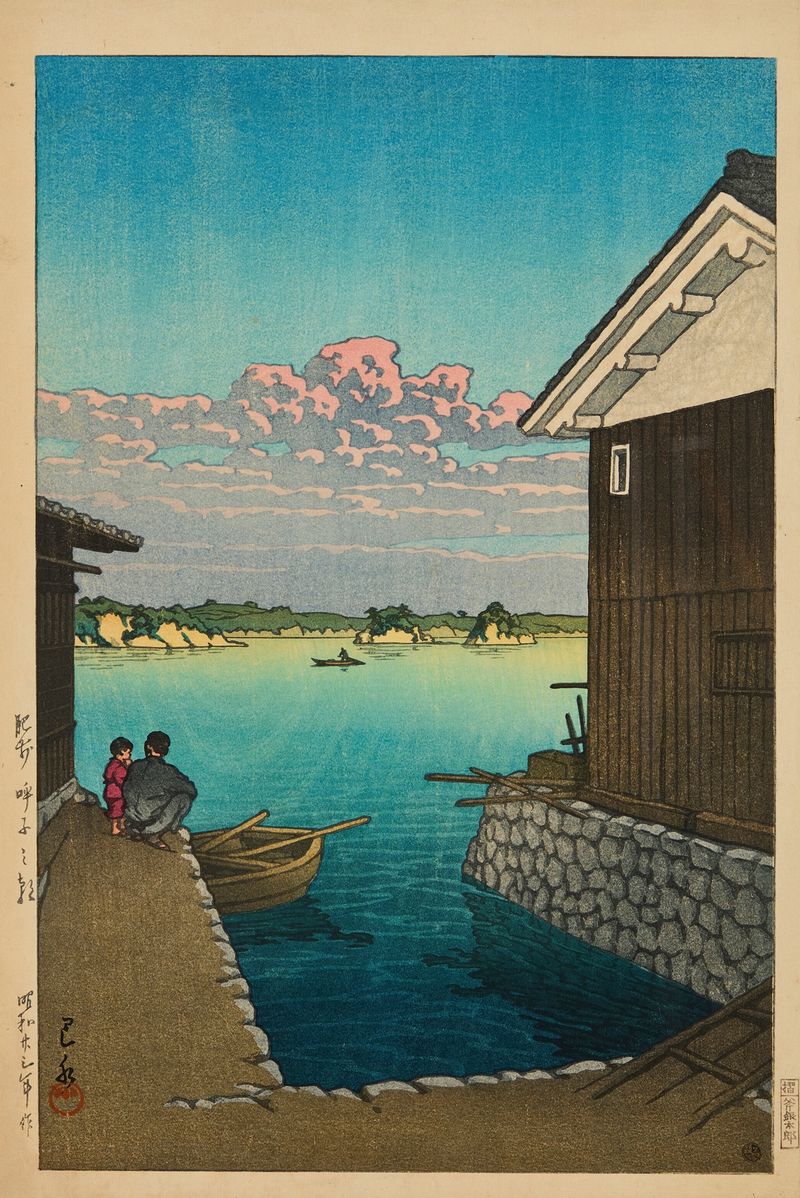
Hizen Yobuko no asa (Morning in Yobuko, Hizen)
Kawase Hasui
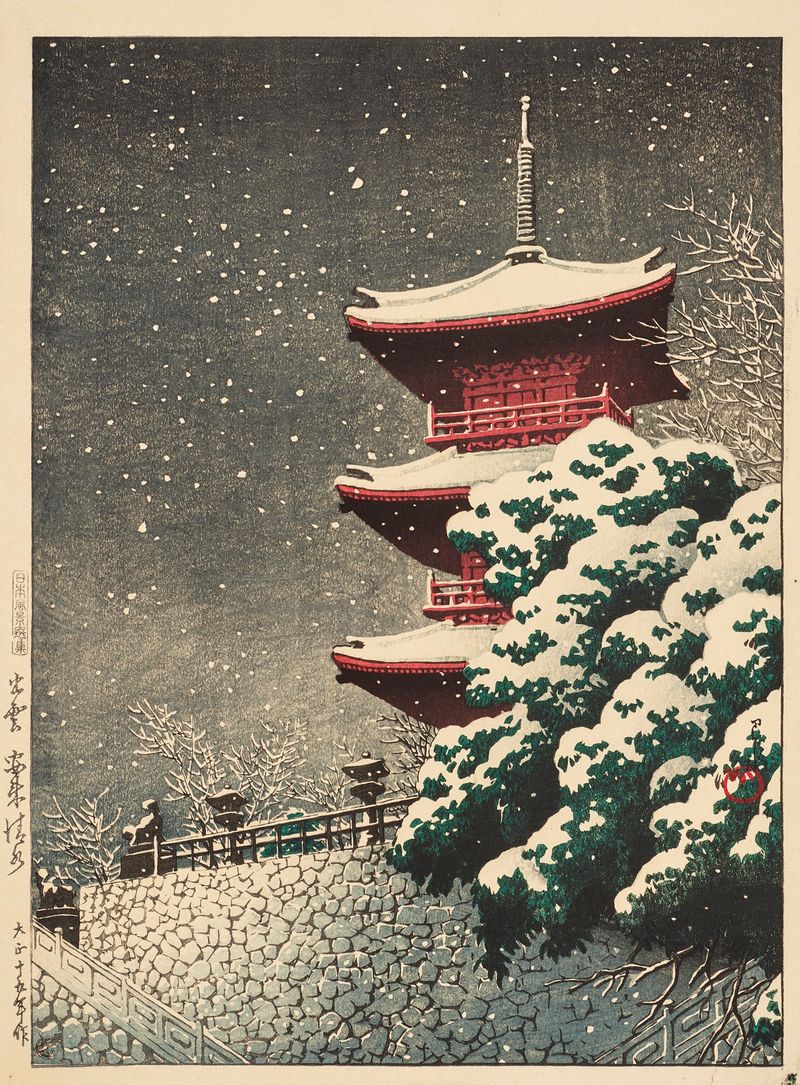
Izumo, Yasugi Kiyomizu (Yasugi Kiyomizu Temple at Izumo)
Kawase Hasui
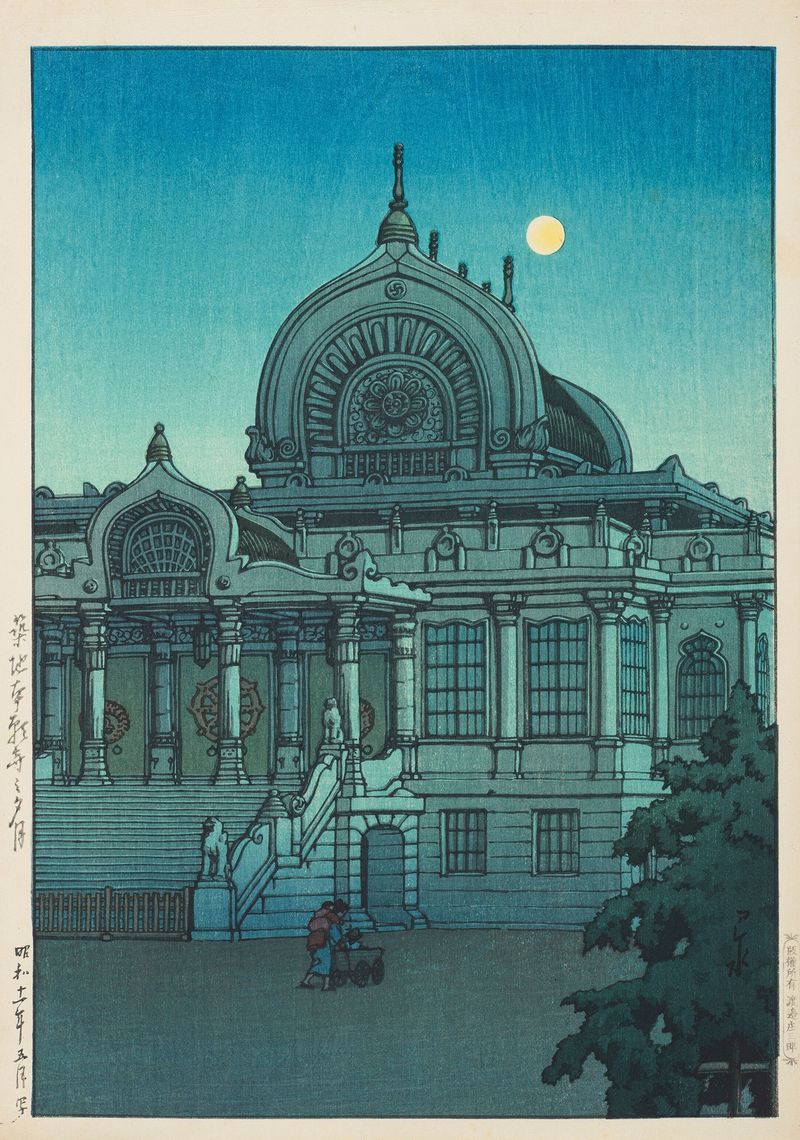
Tsukiji Honganji no yuzuki (Evening moon at Honganji Temple in Tsukiji)
Kawase Hasui
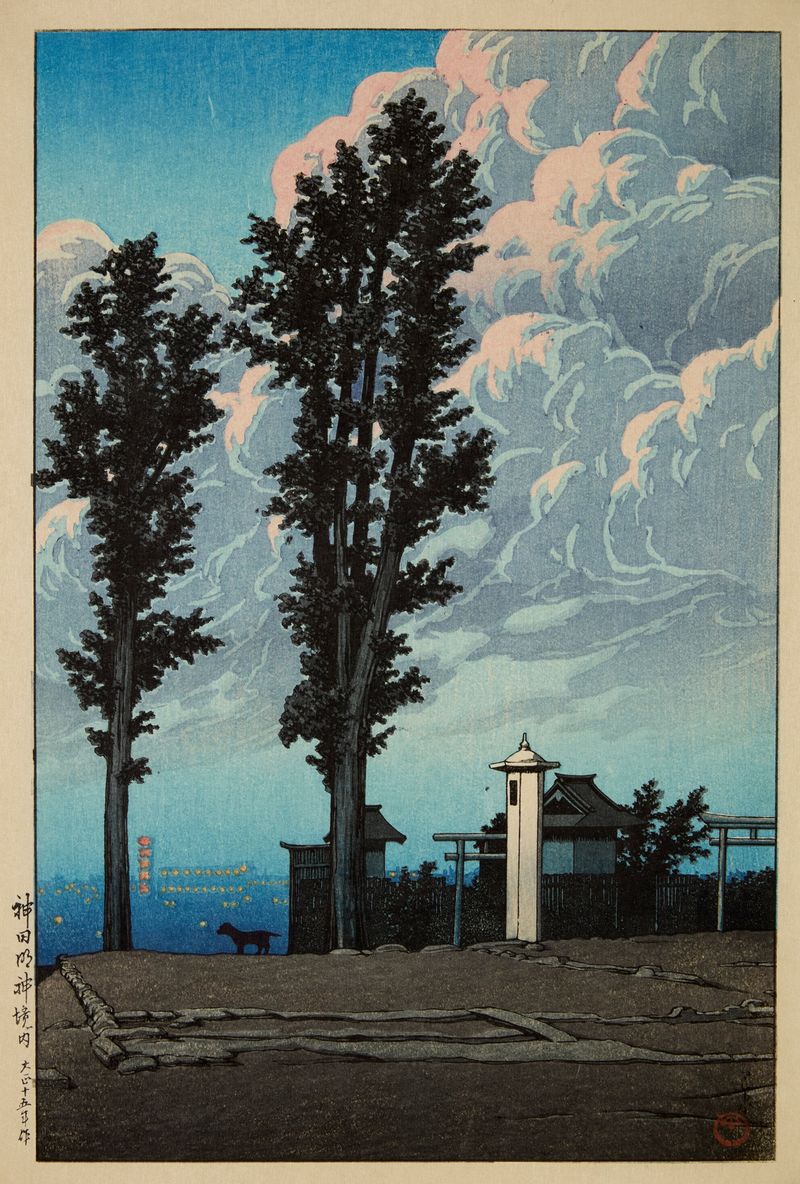
Kanda Myojin keidai (Kanda Myojin Shrine precent)
Kawase Hasui
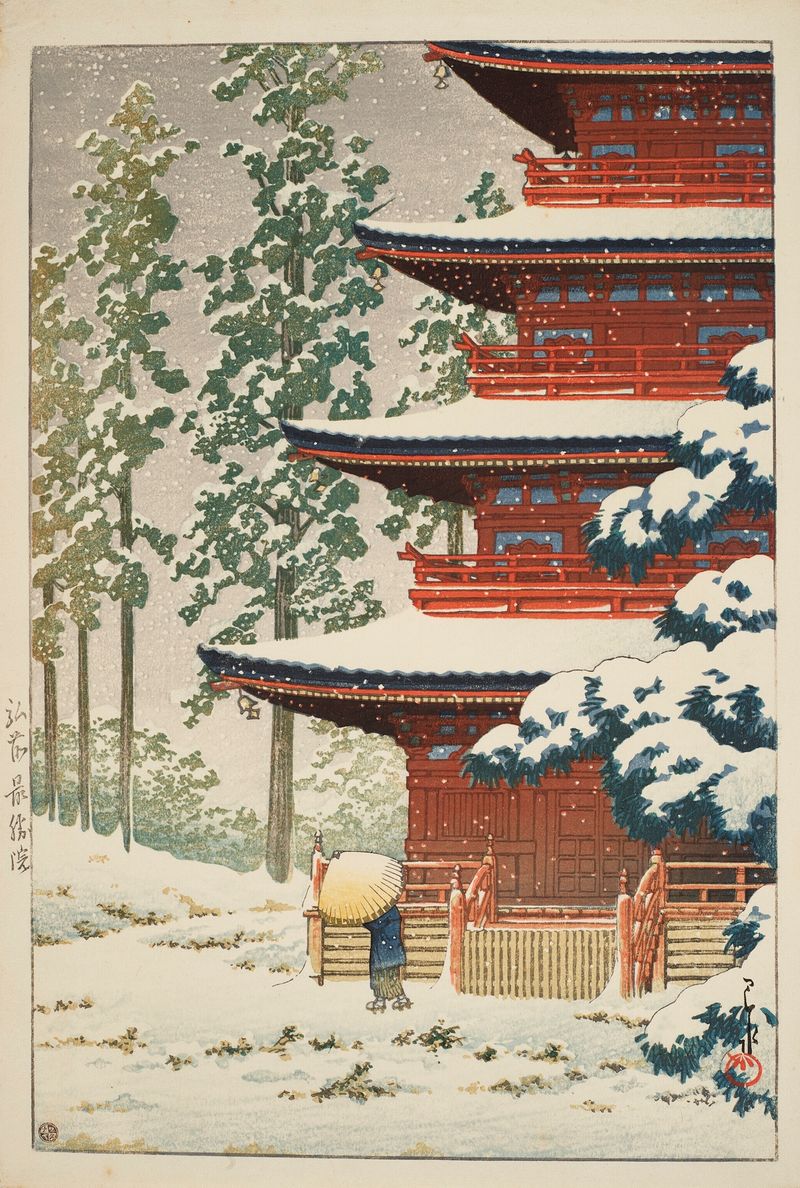
Saisho-in Temple, Hirosaki
Kawase Hasui
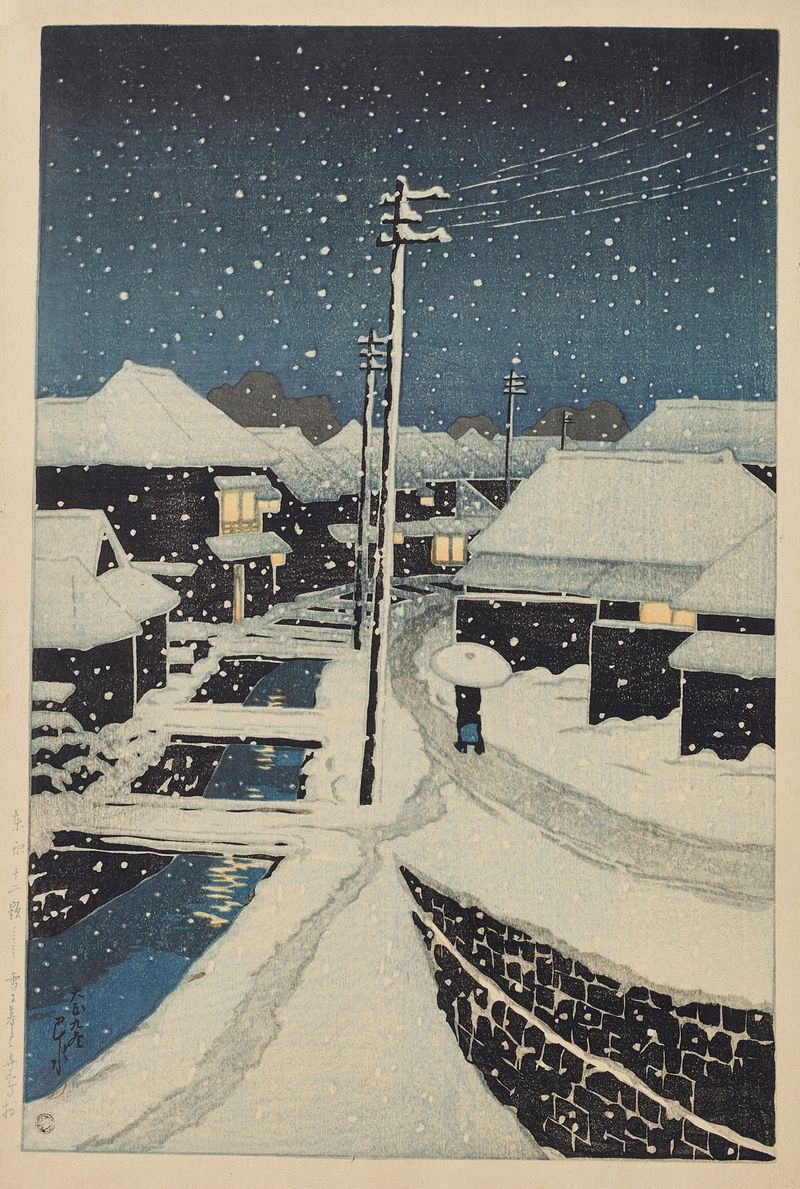
Yuki ni fururu Terajima mura (Evening snow at Terajima Village)
Kawase Hasui
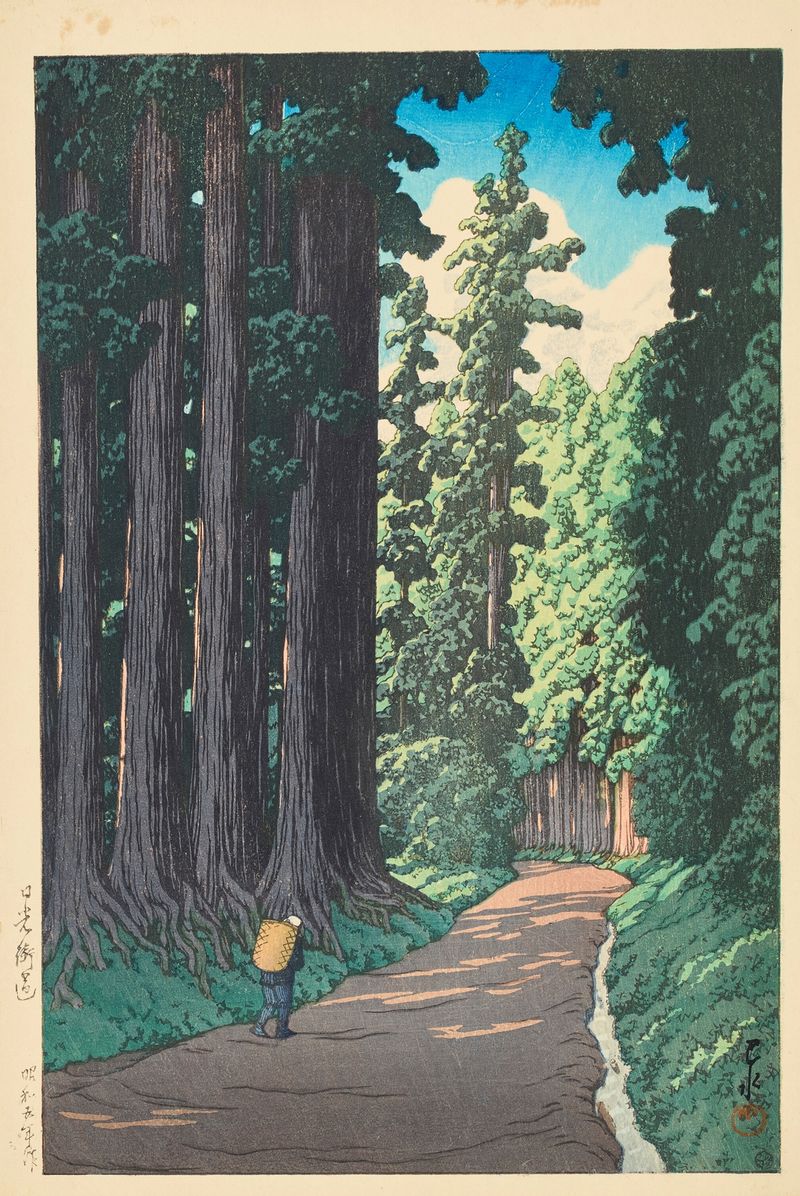
Nikko gaido (The Road to Nikko)
Kawase Hasui
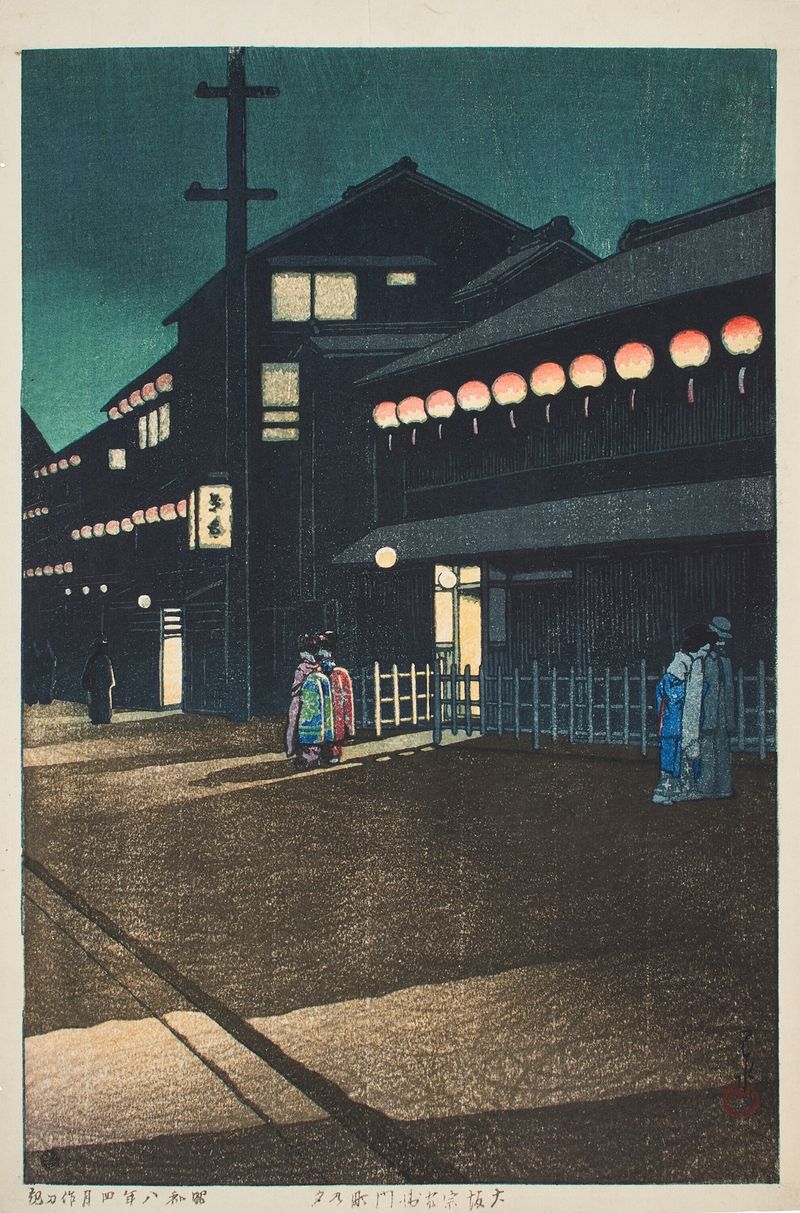
Osaka Soemon-cho no yu (Evening in Soemon-cho, Osaka)
Kawase Hasui
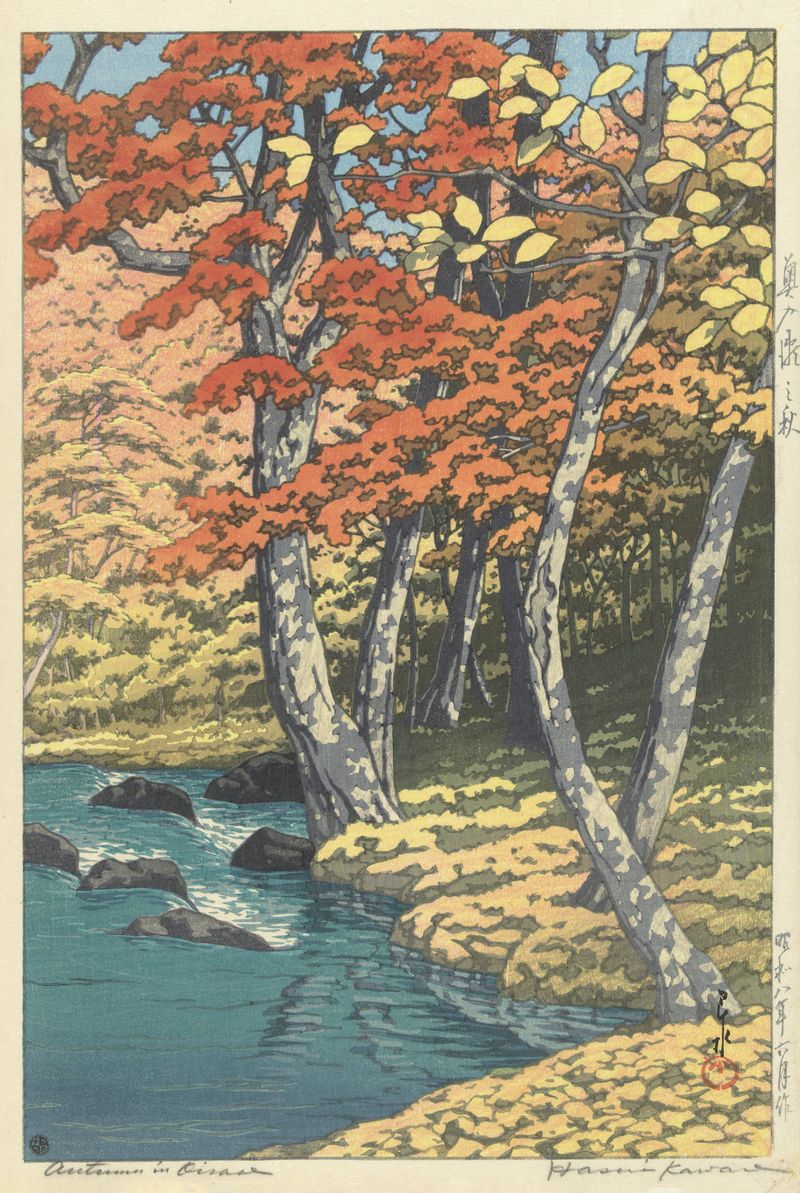
Autumn In Oirase
Kawase Hasui
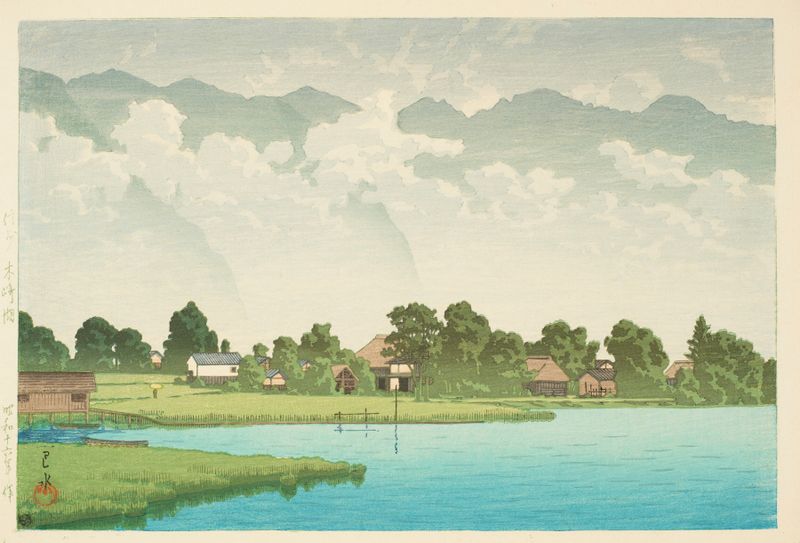
Shinshu Kizakiko (Kizaki Lake in Shinshu)
Kawase Hasui





