Sheep in a Dell — History & Facts
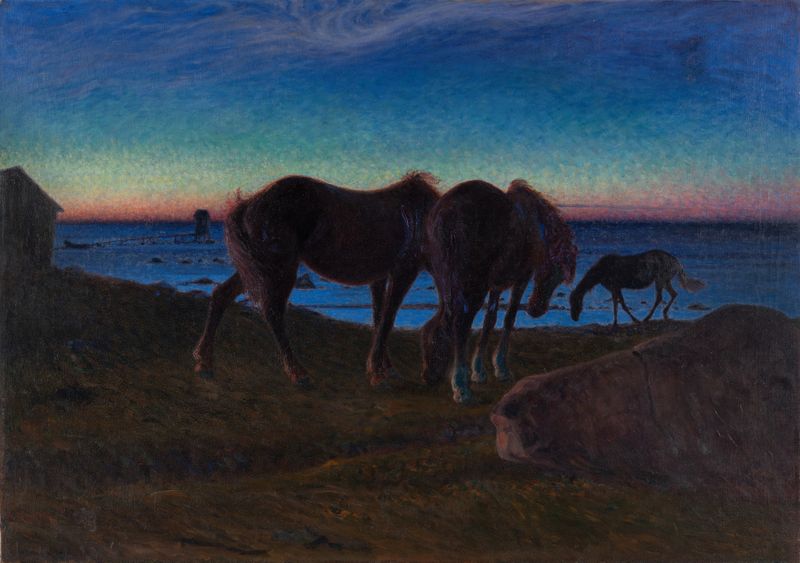
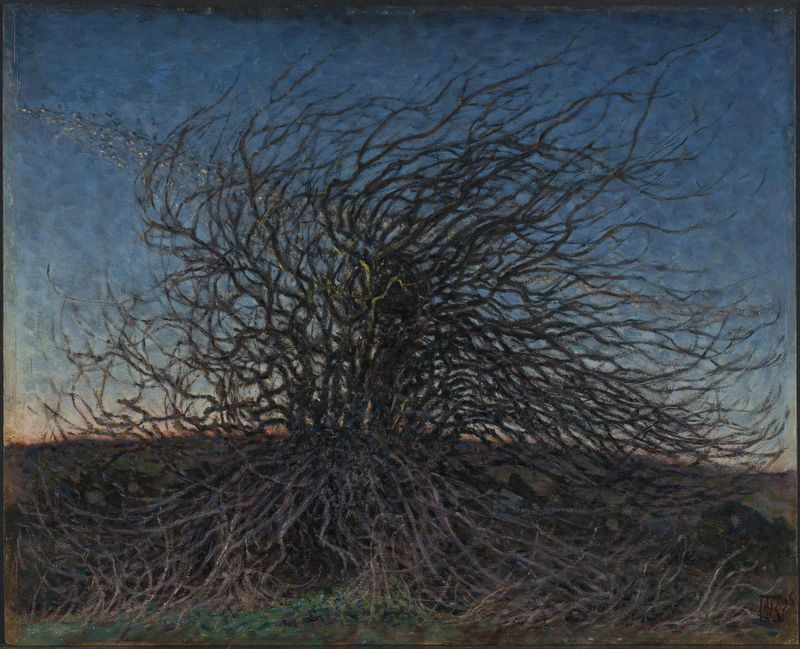
Is this a mirror — or a memory? The gentle sway of sheep in a dell evokes a nostalgia that lingers like the last light of dusk, where the boundary between reality and a fading dream blurs. Look to the left at the sheep clustered beneath a sprawling oak, their woolly forms softening the starkness of the landscape. The earthy tones of ochre and green meld seamlessly, while the brushstrokes breathe life into the tranquil scene, capturing the play of dappled sunlight filtering through the leaves. Notice how the distant hills cradle the horizon, suggesting both serenity and a quiet inevitability of decay, as nature’s cycles unfold in a whisper. The composition holds a tender tension; the stillness of the sheep contrasts with the ephemeral moment of their grazing.
The oak, grand yet withering, stands as a sentinel of time, representing both life and the gradual fading of vigor. Delicate details, like the wisps of grass beneath their feet or the faint shadows cast around them, reveal an underlying fragility — a reminder that all beauty is transitory, caught in the delicate web of existence. In 1907, Kreuger painted this work during his stay in Sweden, a time when he was deeply influenced by the natural landscapes around him. The artist was part of the Swedish art movement that emphasized realism and the emotional connection to nature, reflecting both the beauty and the impermanence inherent in the world.
This piece embodies the echoes of a moment, inviting viewers to reflect on their own memories intertwined with the passage of time.