
Ships off IJselmonde — History & Facts
What first catches the eye in Ships off IJselmonde is the sense of bustling movement set against a world held in delicate balance. The sails billow with a wind that seems to draw every vessel—large and small—into a silent choreography across the shimmering water. Flags snap in the breeze, each one a coded signal of allegiance or purpose, while the light glances off the hulls and rigging, guiding the viewer’s gaze from the busy foreground to the orderly town beyond.
The low horizon allows the sky to dominate, lending the scene a feeling of openness and possibility, yet the dark, churning water in the foreground hints at the ever-present risks of seafaring life. Painted in 1617, this work belongs to the world of the early Dutch Republic, when maritime trade was transforming both the economy and the imagination of the Netherlands. Scenes like this were often commissioned by city councils, proud merchants, or shipping companies eager to record their prosperity and the security of their harbors. The artist, Aert Anthonisz, was one of many painters who specialized in marine subjects during this period, capturing the new prominence of ships and seafaring in Dutch daily life.
Today, Ships off IJselmonde resides in the collection of the Rijksmuseum, a reminder of a time when the fortunes of a nation were carried on the tide—inviting us to linger over every detail, from the distant spires to the smallest figure on deck.
More Artworks by Aert Anthonisz

Sea battle
Aert Anthonisz
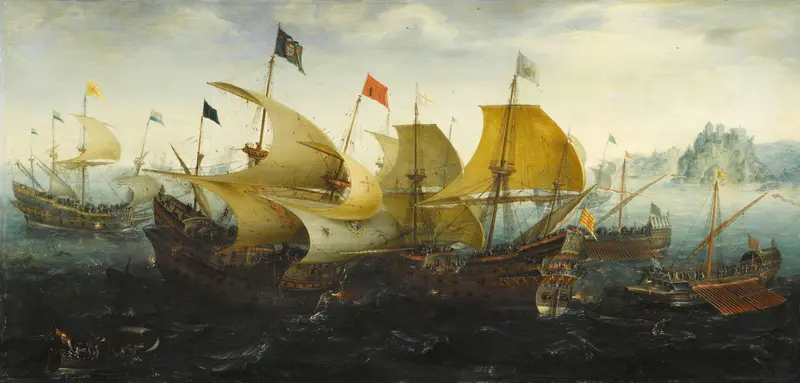
The Battle of Cadiz (Dutch and English Ships Attack the Spanish Armada)
Aert Anthonisz
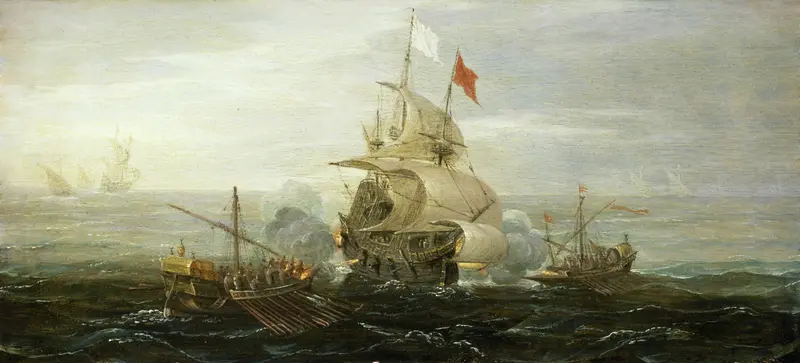
A French Ship and Barbary Pirates
Aert Anthonisz
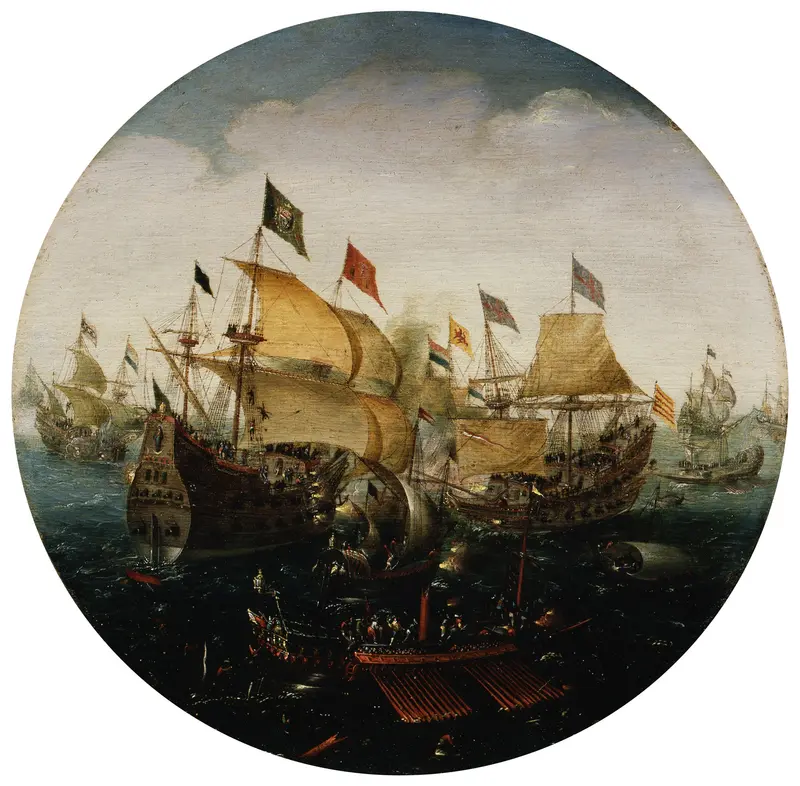
Sea Battle between Dutch and Spanish Ships
Aert Anthonisz
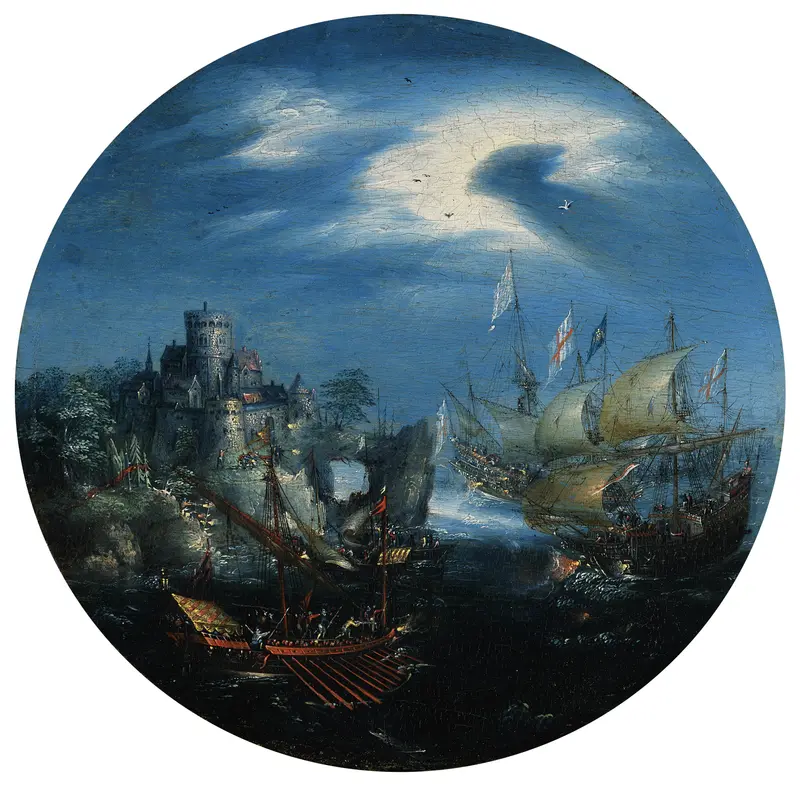
Seegefecht vor felsiger Küste 1822 Gemäldegalerie
Aert Anthonisz
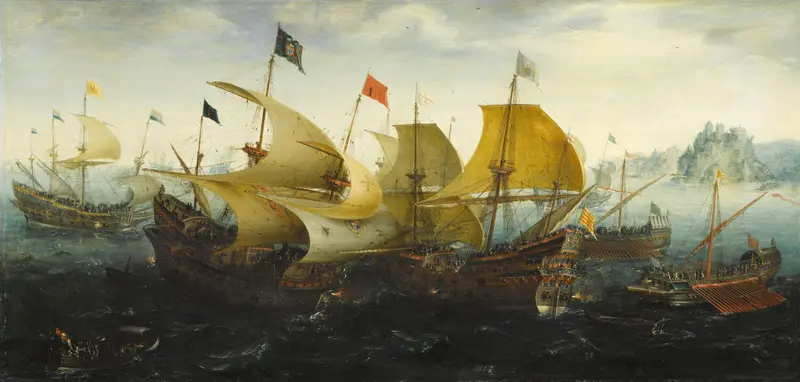
The battle of Cadix
Aert Anthonisz
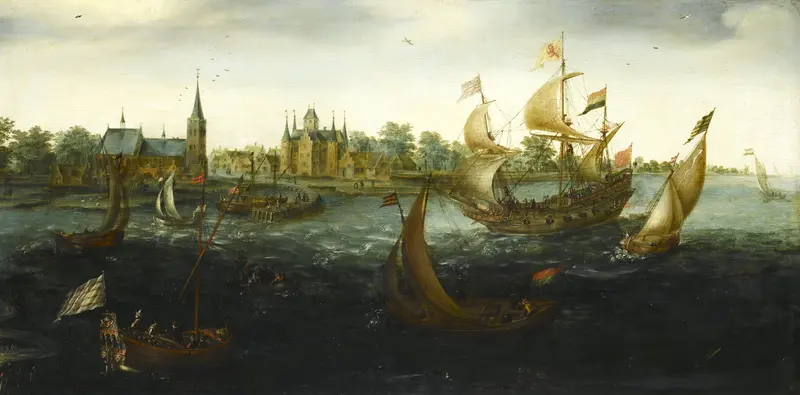
Ships off IJsselmonde
Aert Anthonisz





