
The battle of Cadix — History & Facts
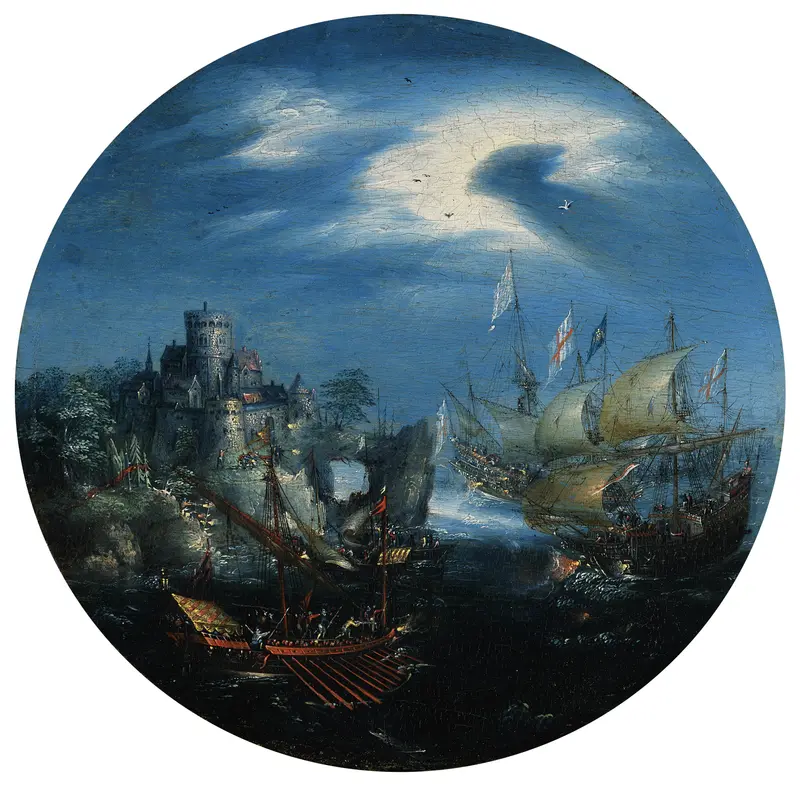
The eye is immediately caught by the clash of towering ships, sails billowing like wounded wings, locked in a moment of chaos and grandeur. Flags of many nations punctuate the scene, their colors and emblems marking shifting allegiances and the high stakes of this watery battlefield. The artist, Aert Anthonisz, draws us into the heart of the action: cannon smoke drifts across the decks, and the crowded ships bristle with soldiers and sailors, each figure a thread in the tapestry of conflict.
The light glances off the golden sails and the white crests of the waves, guiding the gaze from the dense tangle of rigging and masts to the distant, misty coastline—a reminder of land just out of reach. Every detail, from the rippling standards to the subtle reflections in the water, signals not just a battle, but a contest for power and survival. Works like this, painted in 1608, belong to a world where naval battles were both real and symbolic, commissioned to commemorate victory, valor, or national pride. In the wake of the Spanish Armada’s defeat, scenes of maritime warfare became a genre unto themselves in the Dutch Republic, where artists like Anthonisz found eager patrons among merchants and admirals.
These paintings were more than records; they were arguments in oil, staking claims to history and heroism. The presence of Dutch, English, and Spanish flags, along with the careful rendering of ships and armaments, speaks to a time when control of the seas meant the difference between empire and obscurity. Few traces remain of the individual stories behind each canvas, but the Rijksmuseum’s collection preserves this one as a vivid testament to the ambitions and anxieties of its age—inviting us to look closer, and imagine the thunder of guns and the cries of men echoing across the water.
More Artworks by Aert Anthonisz

Sea battle
Aert Anthonisz
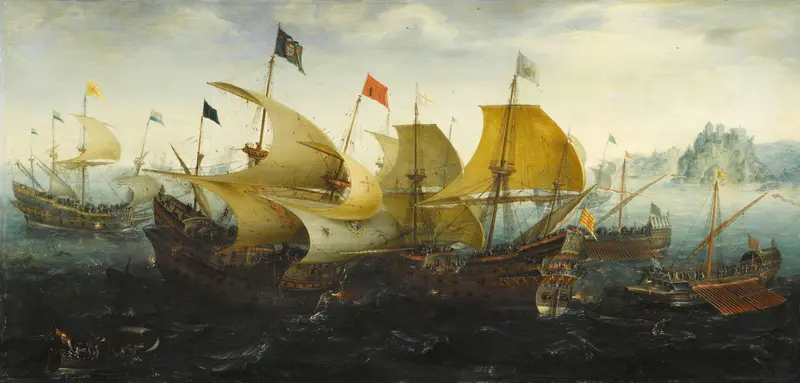
The Battle of Cadiz (Dutch and English Ships Attack the Spanish Armada)
Aert Anthonisz
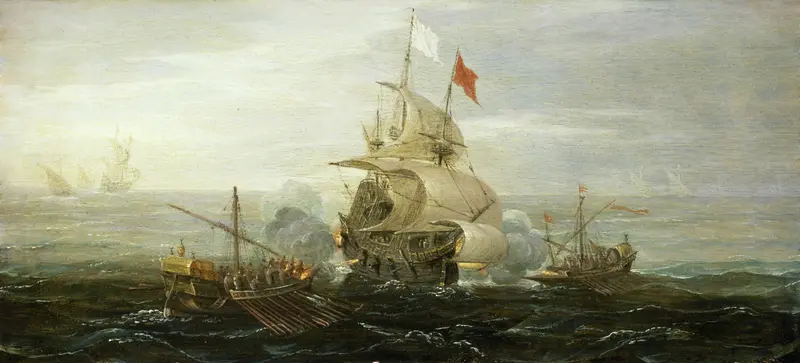
A French Ship and Barbary Pirates
Aert Anthonisz
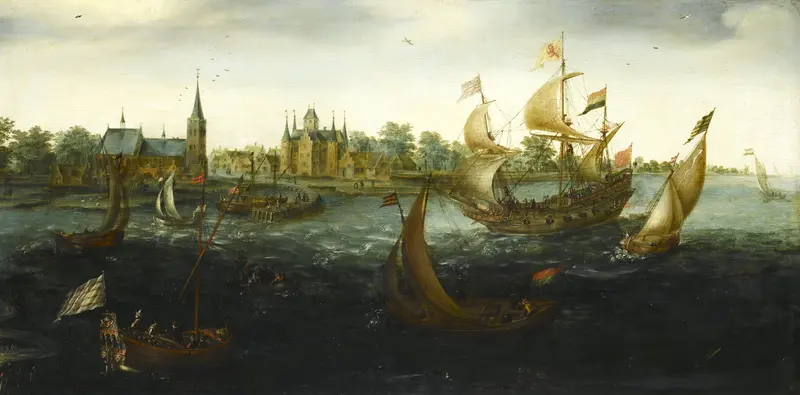
Ships off IJselmonde
Aert Anthonisz
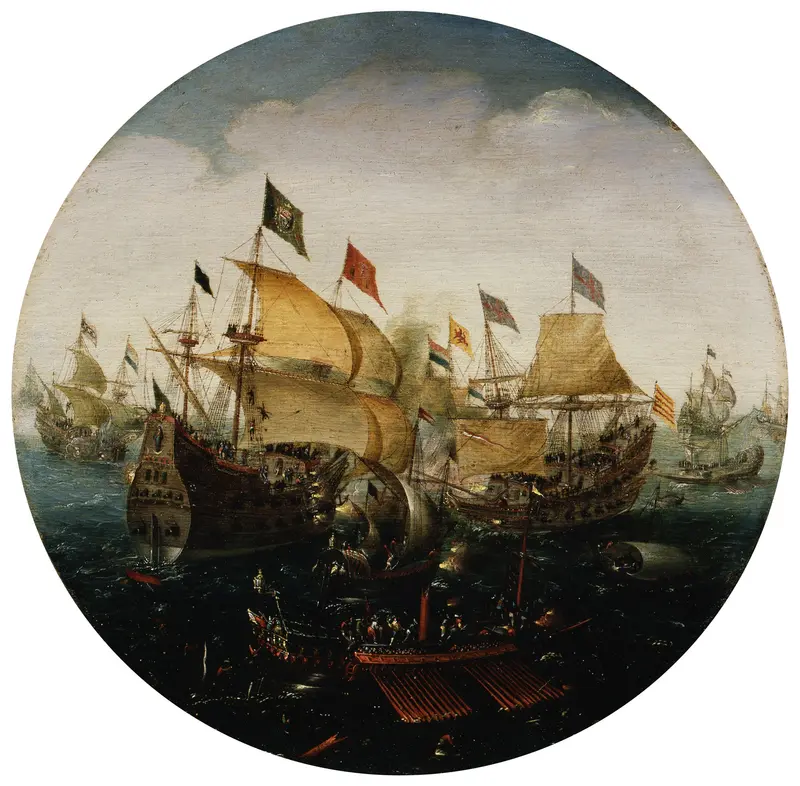
Sea Battle between Dutch and Spanish Ships
Aert Anthonisz
Seegefecht vor felsiger Küste 1822 Gemäldegalerie
Aert Anthonisz
Ships off IJsselmonde
Aert Anthonisz





