
Siedlung Sandleiten — History & Facts
When did color learn to lie? Beneath the vibrant hues of a world that appears so alive, there lies an unsettling truth, an aching solitude that permeates the very fabric of existence. Look to the left at the striking contrast between the bold reds and deep blues that dominate the canvas. Notice how these colors intermingle, creating an illusion of warmth and community, while simultaneously hinting at emotional isolation. The composition invites the eye to wander through a labyrinth of fragmented shapes, representing the disjointed lives of individuals within an urban landscape.
Each brushstroke seems deliberate, yet chaotic, as if echoing the tumultuous emotions of the post-war era. Upon deeper inspection, one can discover the subtle tensions woven into the architecture depicted. The buildings loom large but feel detached, their facades stark against a bright sky that, paradoxically, seems to mock the inhabitants below. It reveals a duality—safety and confinement, connection and loneliness, as if the very structures meant to bring people together only serve to entrap them in their solitude.
The whispers of voices may be felt in the air, yet they remain unheard, echoing the spirit of a society grappling with the aftermath of conflict. In 1946, Oskar Laske created this piece amidst a world recovering from the ravages of World War II. Living in post-war Vienna, he experienced the emotional and physical scars left by the conflict, which deeply influenced his work. This period in his life marked a turning point, where the tension between hope and despair became infused in his artistic vision, reflecting a society striving to rebuild while grappling with its own collective loneliness.
More Artworks by Oskar Laske
Browse all →
Faschingsumzug am Stock im Eisen Platz
Oskar Laske

Schönbrunn (Winter)
Oskar Laske
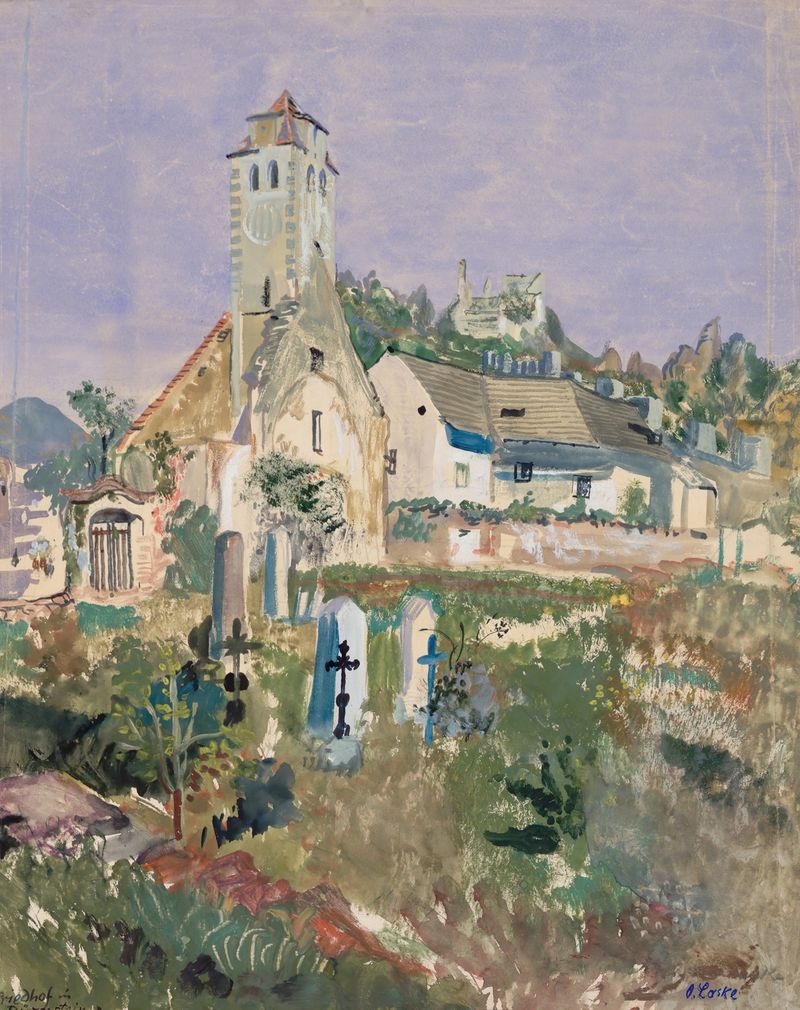
Friedhof in Dürnstein
Oskar Laske

Pratermotiv an der alten Donau
Oskar Laske

Frühjahrsnebel in Niederösterreich
Oskar Laske

Begräbnis des Wiener Bürgermeisters Dr. Karl Lueger
Oskar Laske

Maria Theresien-Denkmal mit Blick gegen das Burgtor
Oskar Laske
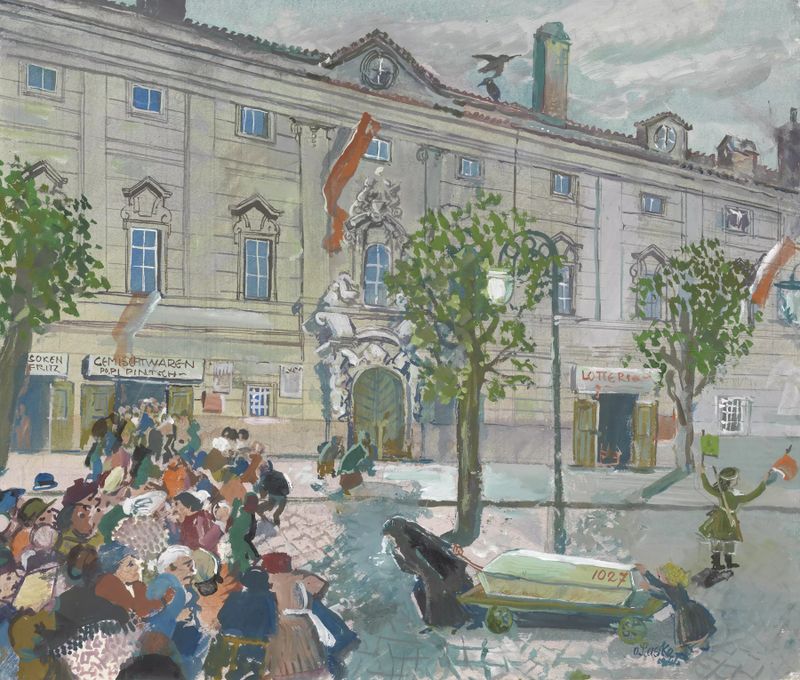
Wiener Straßenbild vom Mai 1945
Oskar Laske

Winterlandschaft in Pressbaum
Oskar Laske

Ansicht von Positano
Oskar Laske





