
Sigismund Augustus and Barbara Radziwiłł — History & Facts
Few paintings have so vividly reignited national memory as Sigismund Augustus and Barbara Radziwiłł by Jan Matejko, completed in 1864 at a moment when Poland’s identity was under threat. The work’s subject—a king’s forbidden love—was considered so controversial in its own time that it echoed the political tensions of the 19th century, when Matejko painted it just after the January Uprising against Russian rule. The union of Sigismund II Augustus, King of Poland, and Barbara Radziwiłł, a Lithuanian noblewoman, scandalized the royal court in the 16th century and was fiercely opposed by the king’s mother, Bona Sforza.
Their secret marriage in 1547 and Barbara’s subsequent coronation as queen set off a storm that still fascinates historians and artists alike. Matejko captures the lovers in a moment of private anguish, likely after Barbara’s coronation but before her untimely death in 1551. The king, dressed in somber royal attire, clasps Barbara’s hand as she reclines, her pallor already hinting at the illness that would soon claim her life. The heavy drapery and dim candlelight close in around the pair, amplifying the sense of isolation and doomed intimacy.
Matejko’s attention to historical costume and psychological detail invites comparison to Delaroche’s scenes of tragic royalty, yet here the Polish painter’s focus is on the tension between personal love and public duty. The chain around Barbara’s neck, a symbol of her new status, seems almost to weigh her down, while Sigismund’s gaze is fixed on her face, torn between hope and despair. The painting marks an early high point in Matejko’s career, created when he was only in his mid-twenties and already gaining recognition for his sweeping historical canvases. While the exact patron of this work is not certain, it quickly became part of the Polish national conversation, admired for its emotional intensity and historical accuracy.
Today, Sigismund Augustus and Barbara Radziwiłł is housed in the National Museum in Warsaw, where it remains a touchstone of 19th-century Polish painting. Its journey has mirrored Poland’s own turbulent history, surviving wars and occupations, and continuing to inspire debate about the intersection of love, power, and nationhood.
More Artworks by Jan Matejko
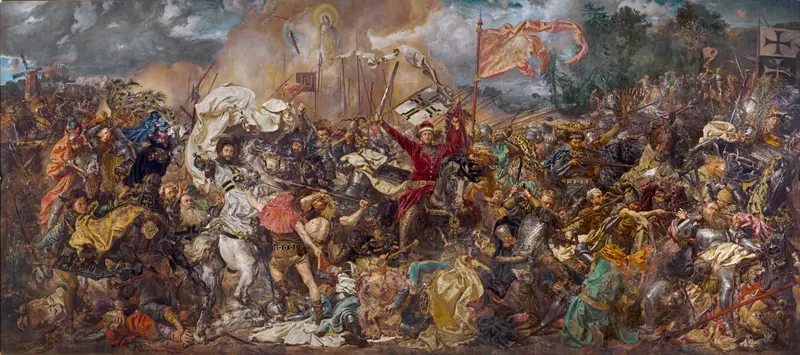
Battle of Grunwald
Jan Matejko

Stańczyk
Jan Matejko

Battle of Raclawice
Jan Matejko
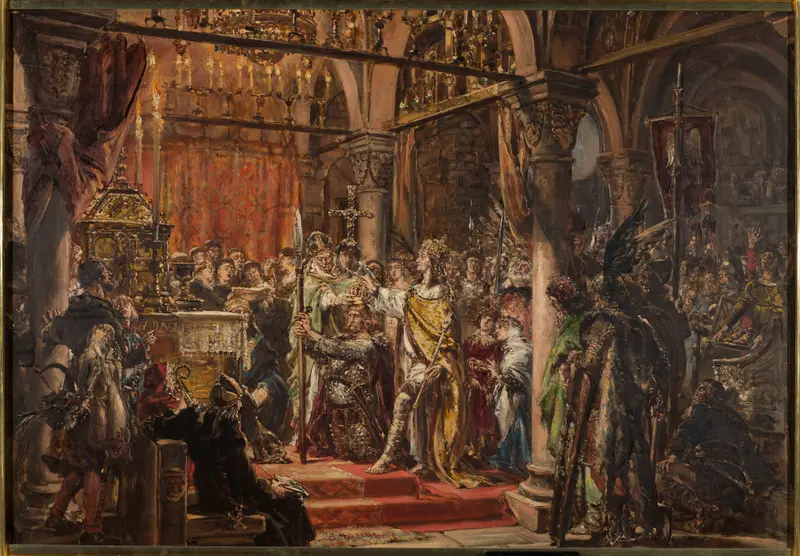
Coronation of the First King, 1001 AD, from the series “History of Civilization in Poland”
Jan Matejko
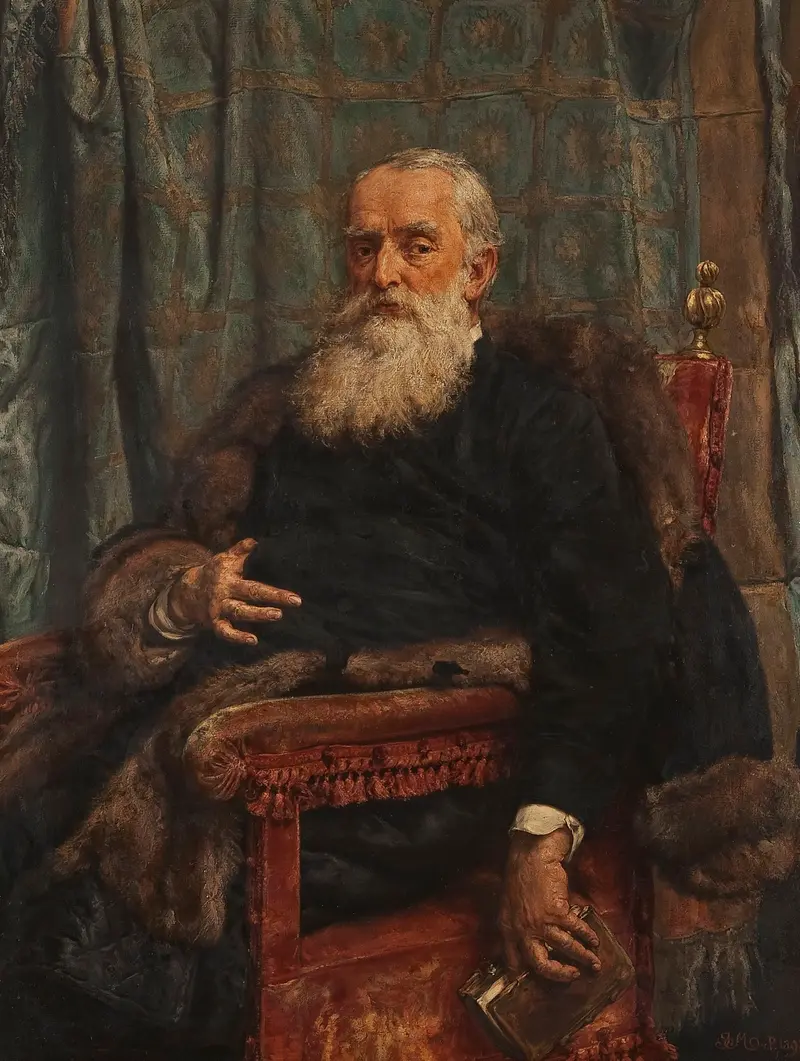
Portrait of Henryk Krajewski
Jan Matejko
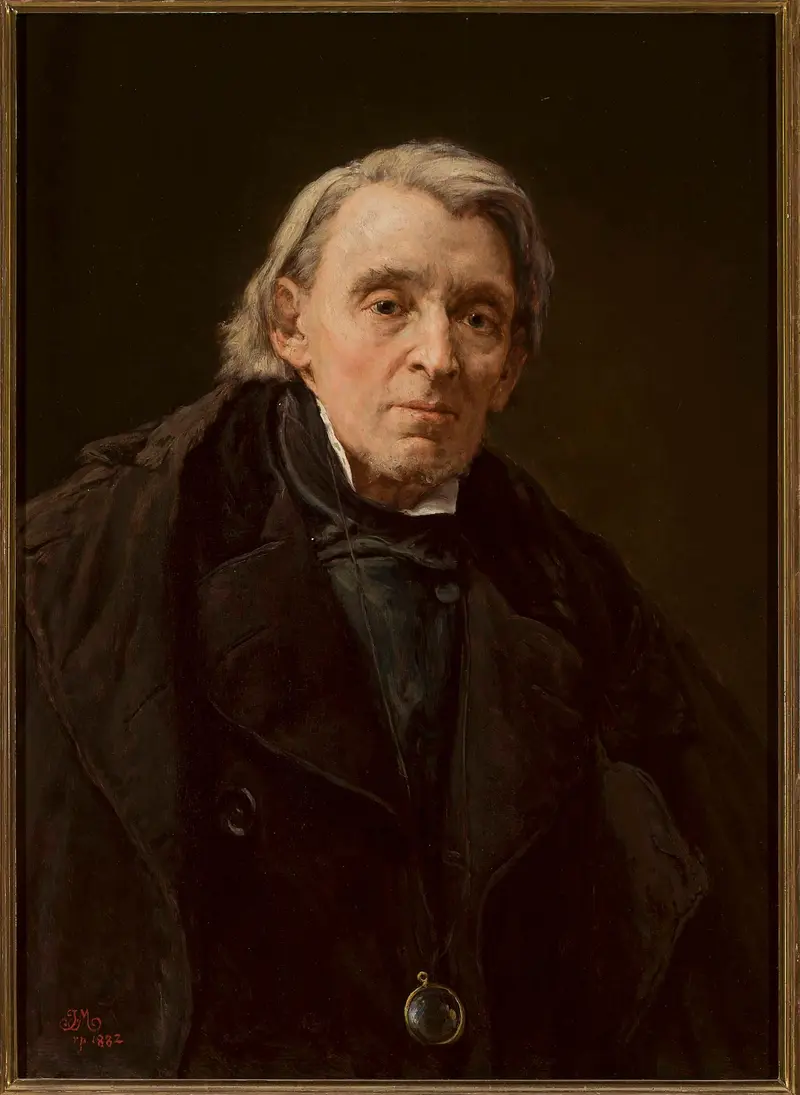
Portrait of Karol Podlewski
Jan Matejko
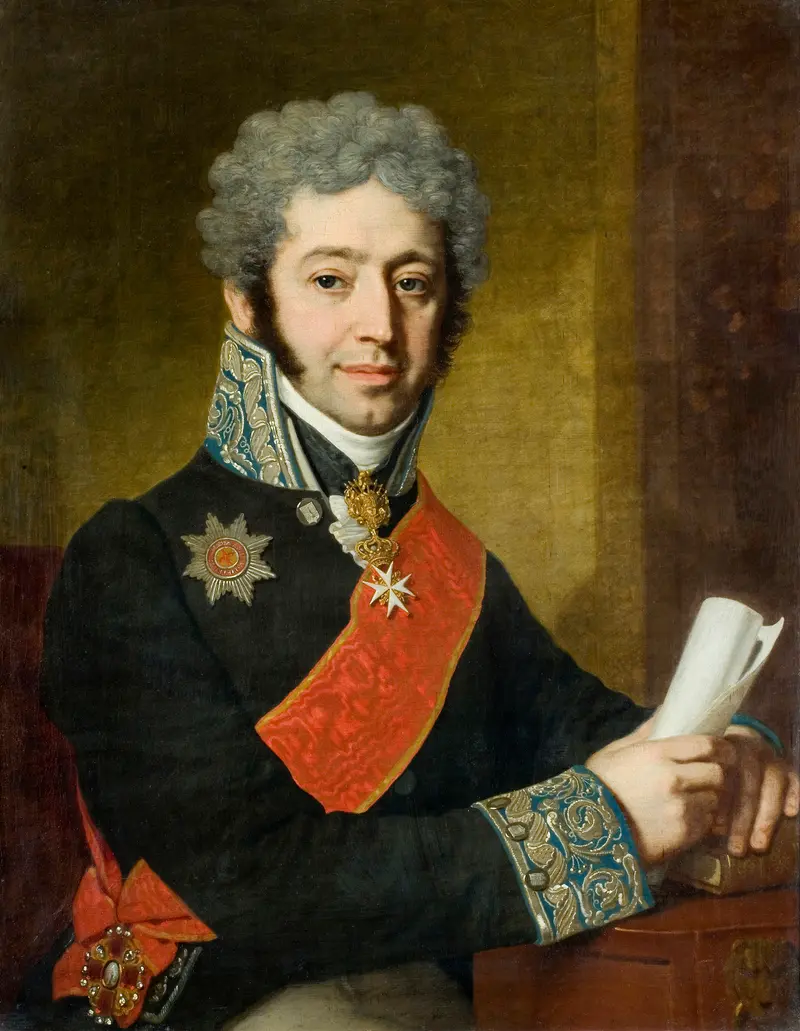
Portrait of Potocki and Poninski
Jan Matejko
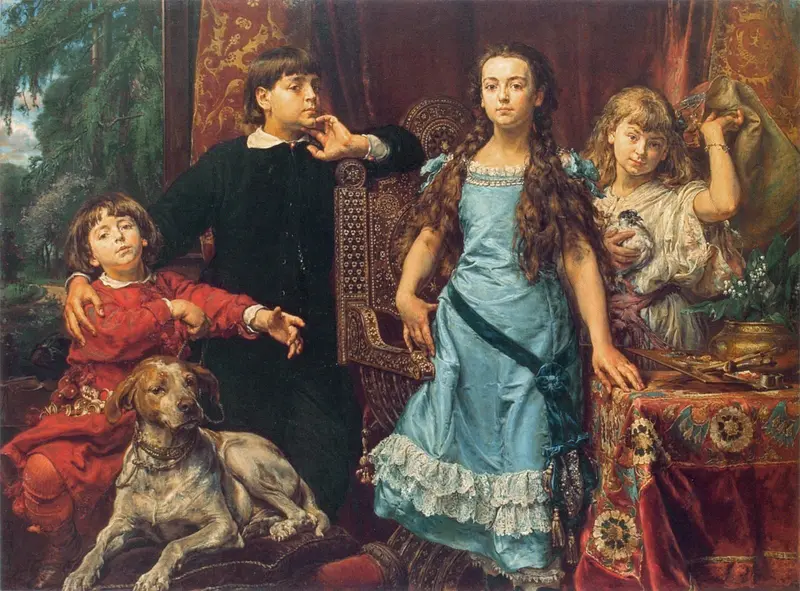
Portrait of the artist's four children
Jan Matejko
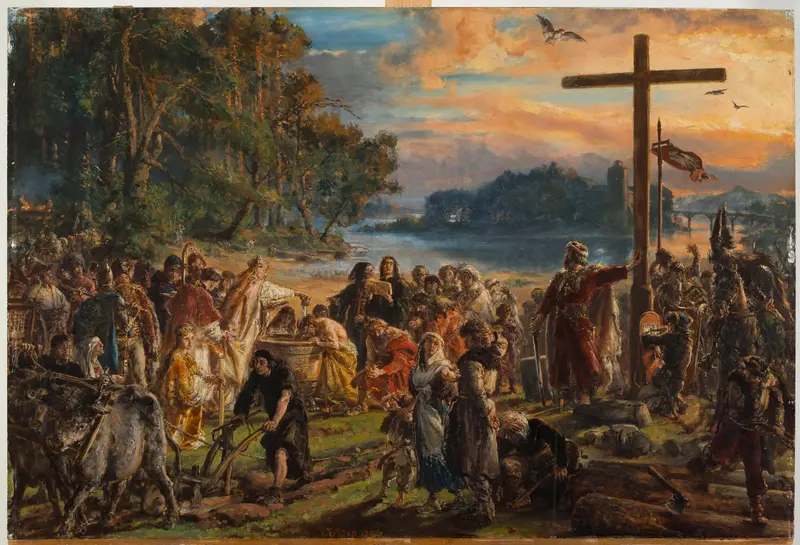
Introduction of Christianity in Poland
Jan Matejko
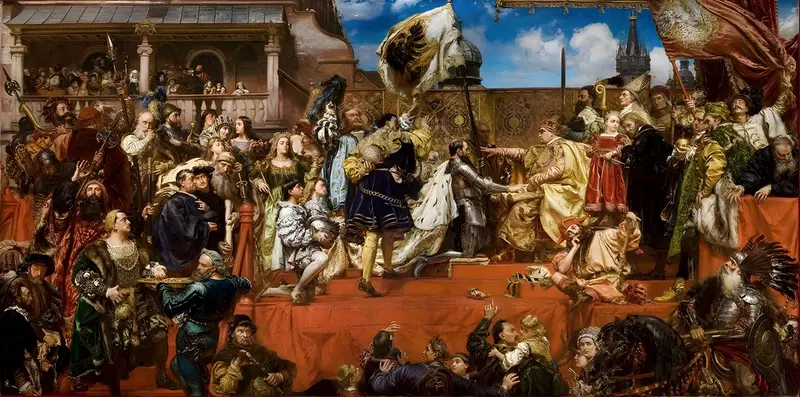
Prussian Homage
Jan Matejko





