
Självporträtt — History & Facts
What first arrests the eye in Självporträtt is the unwavering, almost challenging gaze of the sitter, who meets the viewer with a steady confidence. The crisp, direct light carves out the planes of his face, illuminating the high cheekbones and the sharp line of the jaw, while the background recedes into a soft, enveloping darkness. Every detail—the carefully parted hair, the neatly trimmed mustache and goatee, the crisp bow tie—signals a young man intent on presenting himself not just as a subject, but as an artist conscious of his own image.
The brushwork is precise, yet there is a quiet energy in the modeling of the flesh and the subtle gradations of shadow, inviting us to wonder what thoughts lie behind those watchful eyes. Painted in 1855, this self-portrait belongs to a moment when artists across Europe were turning the lens upon themselves, exploring identity and ambition through the act of painting. In the mid-19th century, self-portraits often served as calling cards or statements of arrival, especially for those seeking recognition in the academies or among patrons. The work now resides in the Nationalmuseum, a testament to the enduring fascination with the artist’s own face as both subject and statement.
History has kept few traces of the circumstances behind this particular canvas, but its presence draws us back to the intensity of that gaze—a silent conversation across time, asking us to look again.
More Artworks by August Jernberg
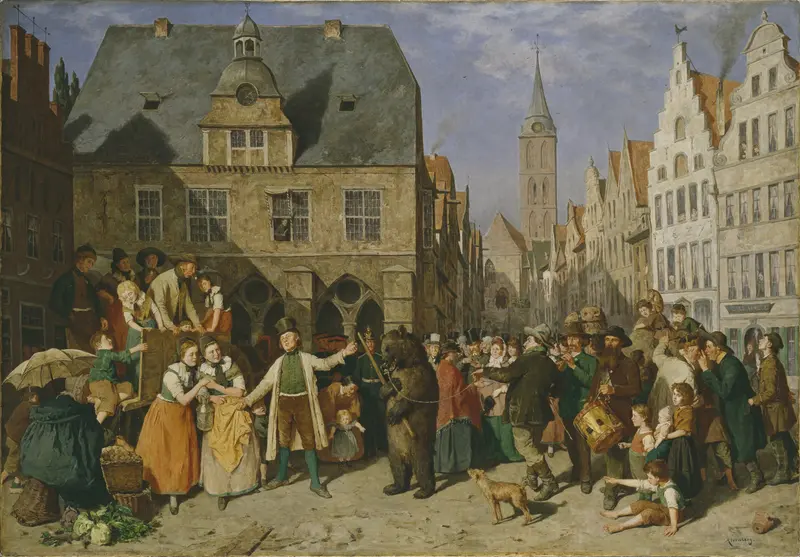
A Dancing Bear
August Jernberg

Nymfi kukkauurnan vierellä, harjoitelma
August Jernberg
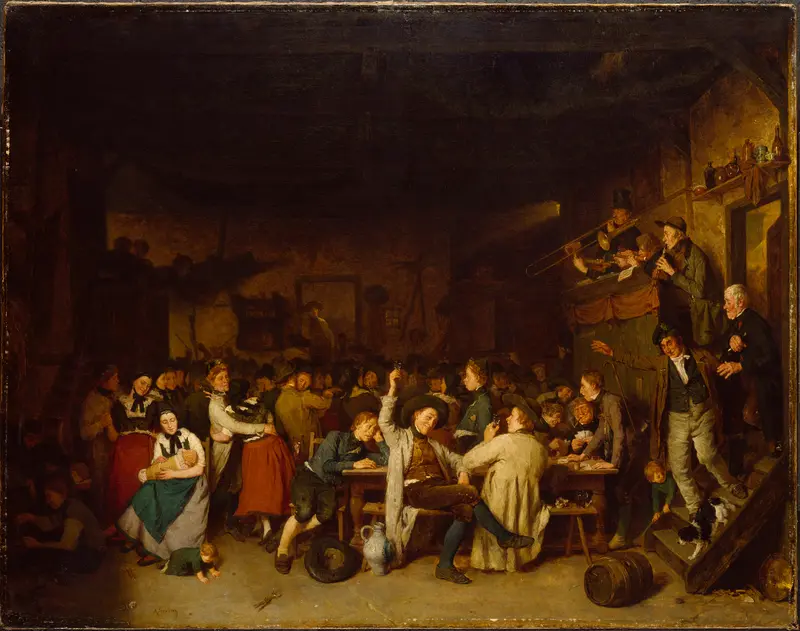
Westphalian Peasants' Revels
August Jernberg
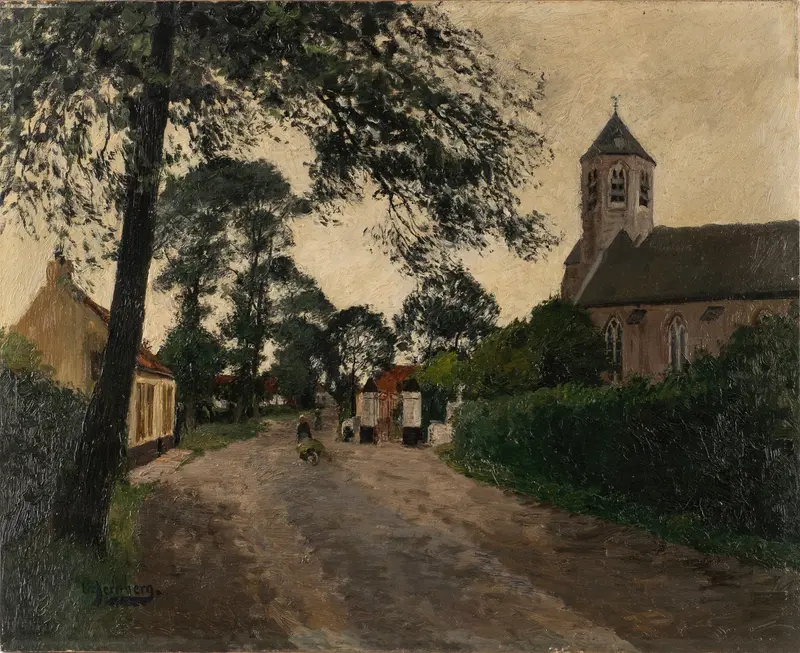
Village street with church
August Jernberg
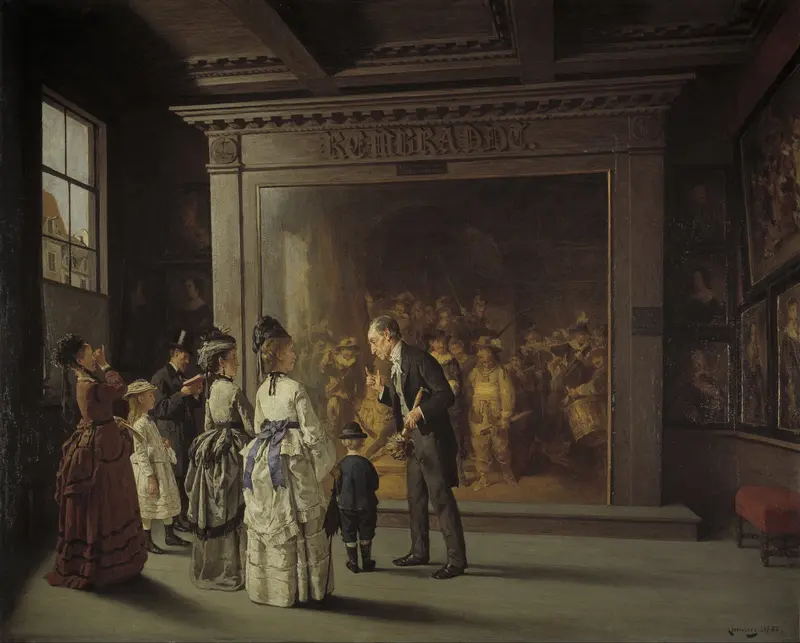
Trippenhuis
August Jernberg
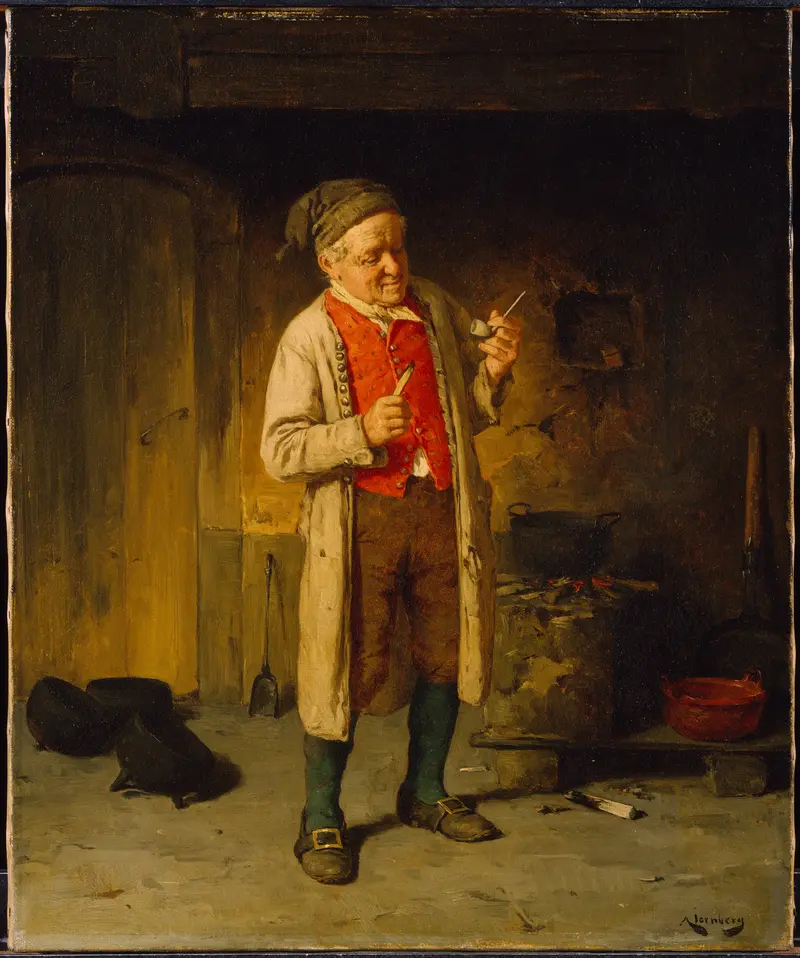
The New Pipe
August Jernberg

Cottage by the wayside
August Jernberg
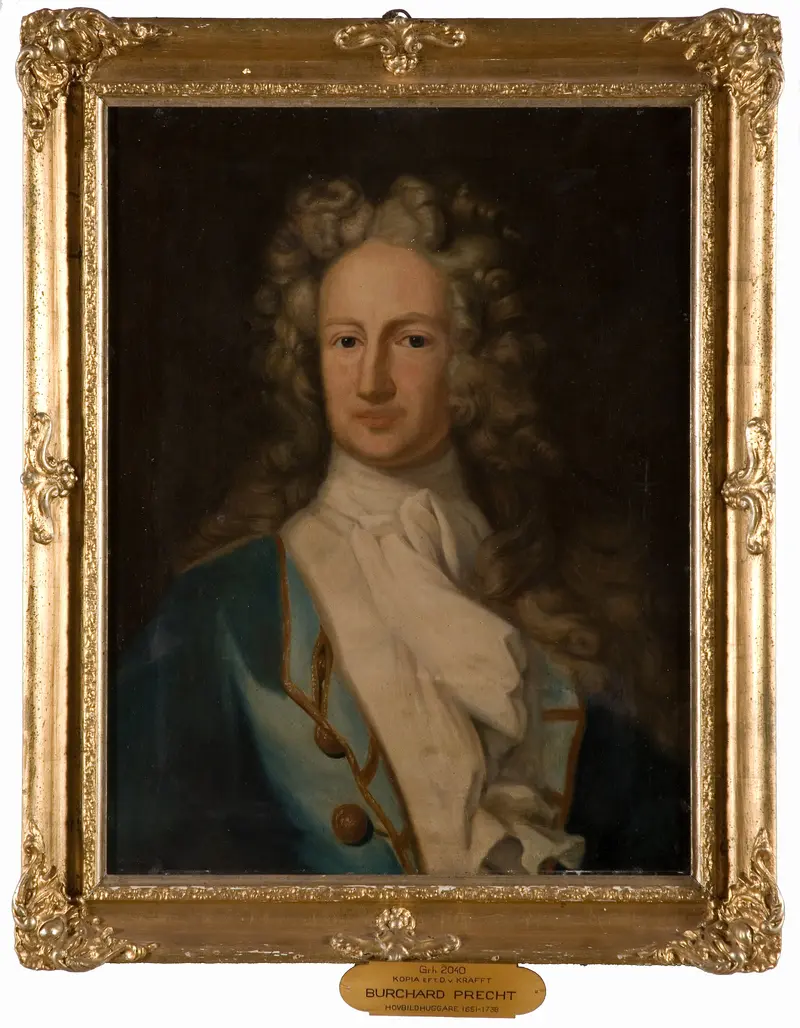
Burchard Precht (1651-1738), court sculptor, married to 1. Brita Standoph, 2. Susanna Nilsdotter Kröger
August Jernberg
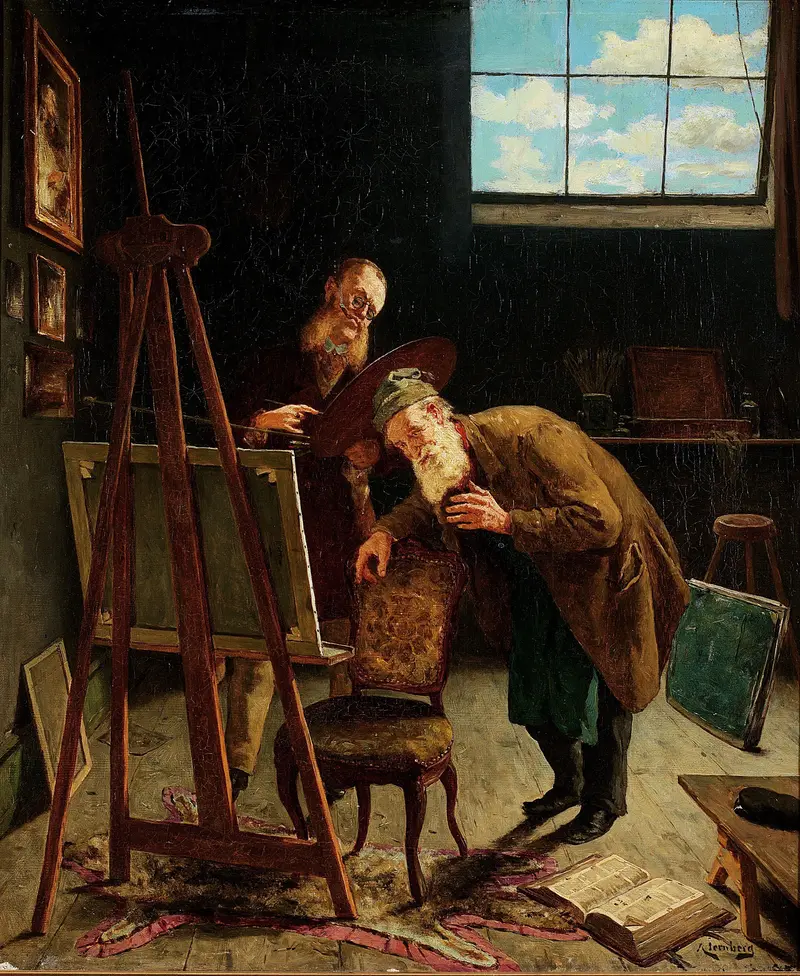
Interior of a Studio
August Jernberg
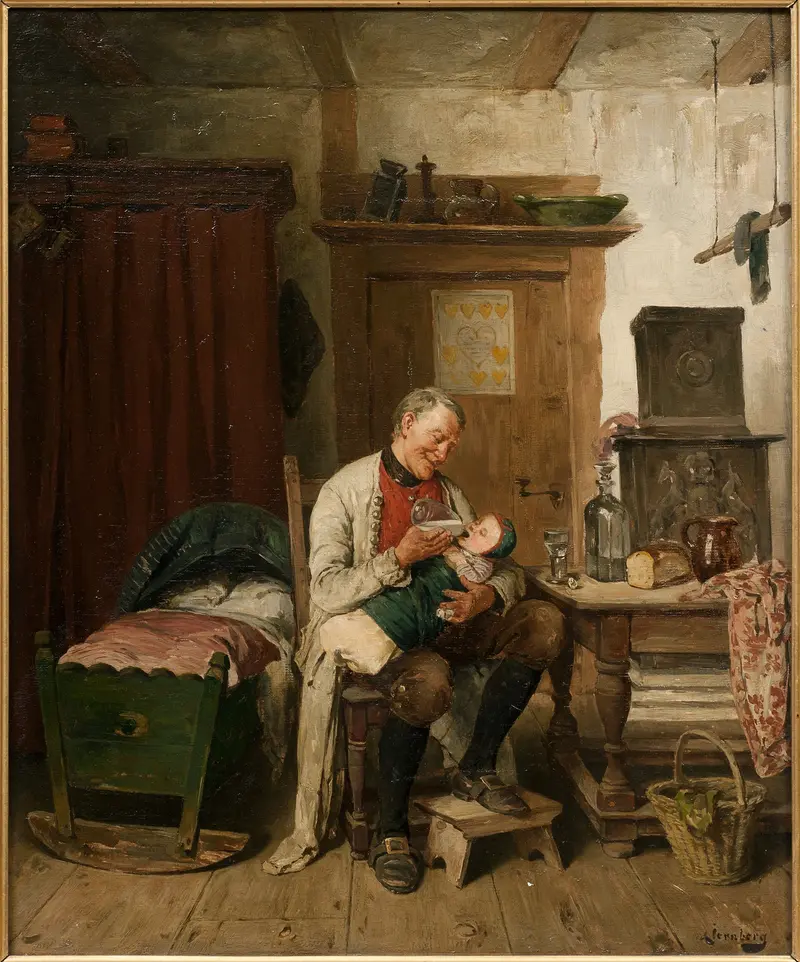
Farfar
August Jernberg





