
Skaters on a Canal with a Pathway alongside — History & Facts
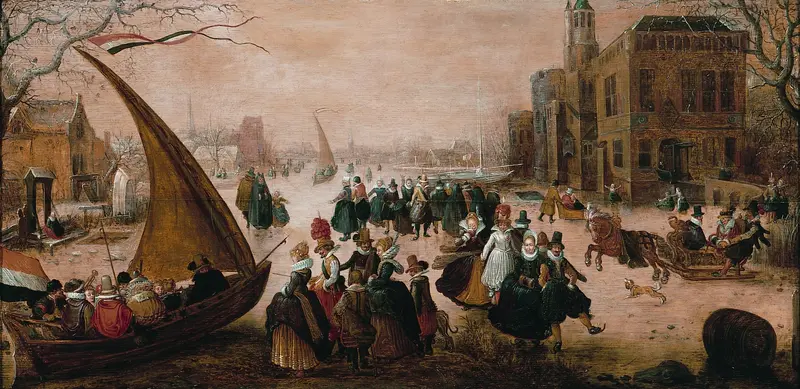
What first draws the eye in Skaters on a Canal with a Pathway alongside is the gentle bustle of winter life, frozen mid-movement on the ice. The low, pale sky stretches above a canal alive with figures—skaters gliding in pairs, children and dogs darting, and walkers wrapped in dark coats pacing the snowy path. Every detail feels chosen to invite the viewer into the scene: the bare, twisting trees frame the left, their branches echoing the skaters’ own gestures, while the houses and windmills in the distance root this lively gathering in a distinctly Dutch landscape.
The palette is restrained, dominated by cool whites and browns, but the artist uses these tones to create a sense of crisp air and communal warmth. Notice how the figures at the lower right, richly dressed and mid-conversation, seem to anchor the composition, their dark clothes setting off the icy expanse. Painted in the 1620s, this work belongs to a golden age of Dutch winter scenes, when artists like Adam van Breen captured the pleasures and rituals of life along the frozen waterways. Such paintings were prized by a new class of urban patrons who delighted in images of daily life, especially those that celebrated the resilience and sociability of their communities in the face of harsh winters.
The canal, both a thoroughfare and a playground, becomes a stage for all ages and classes, reflecting the social mingling that defined the Dutch Republic. Though little is recorded about this specific painting beyond its date and current collection, it stands as a testament to the era’s fascination with the rhythms of ordinary life—inviting us, centuries later, to imagine the cold on our cheeks and the sound of skates on ice.
More Artworks by Adam van Breen
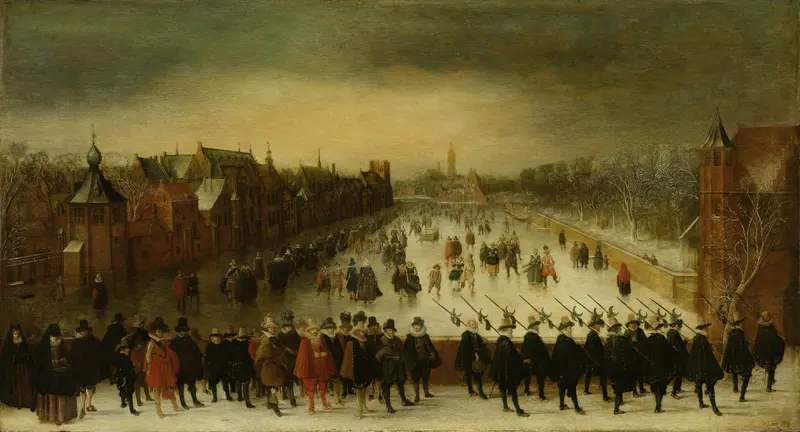
The Vijverberg, The Hague, in Winter, with Prince Maurits and his Retinue in the Foreground
Adam van Breen
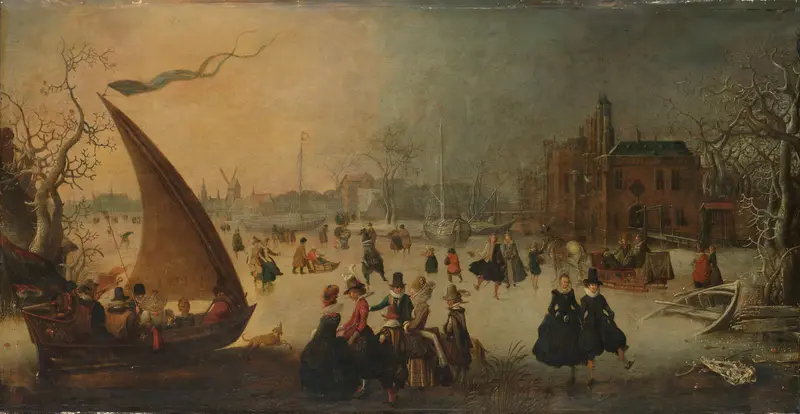
Landscape with frozen Canal, Skaters and an Ice-Boat
Adam van Breen
The Vijverberg, The Hague, in Winter, with Prince Maurits and his Retinue in the Foreground
Adam van Breen
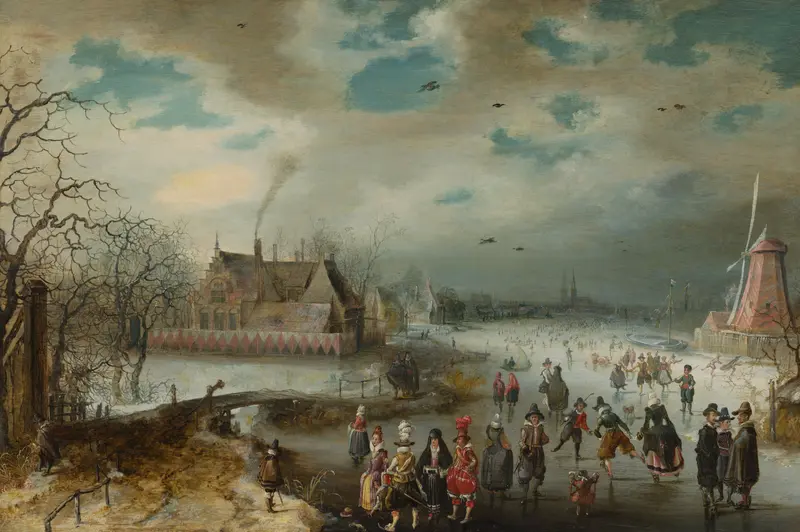
Skating on the Frozen Amstel River
Adam van Breen
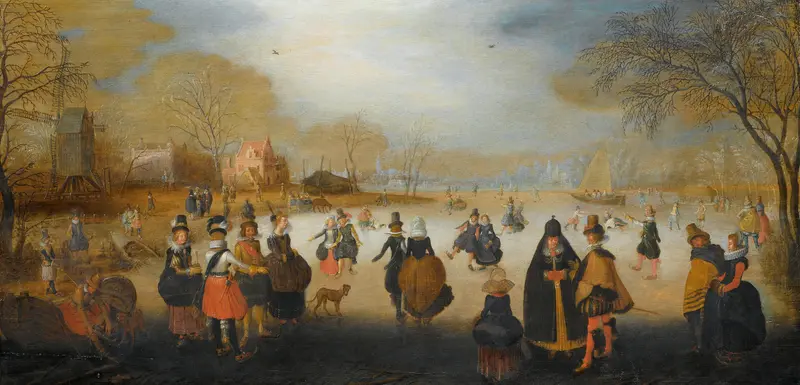
Winter Landscape with Skaters
Adam van Breen
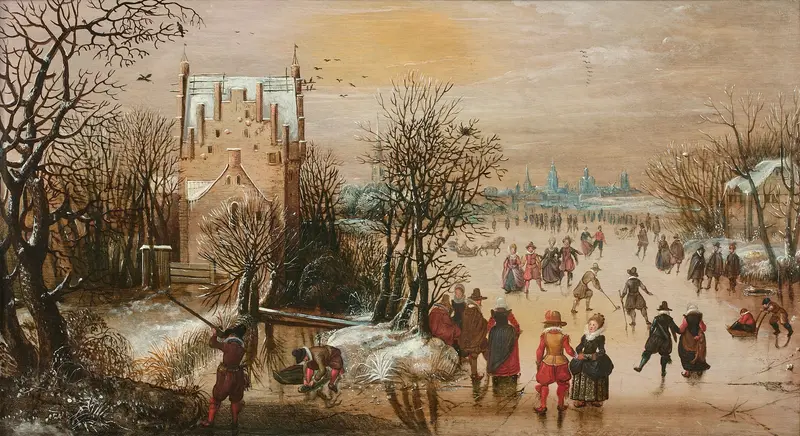
Paysage d’hiver avec patineurs et chasseurs, une ville dans le lointain
Adam van Breen
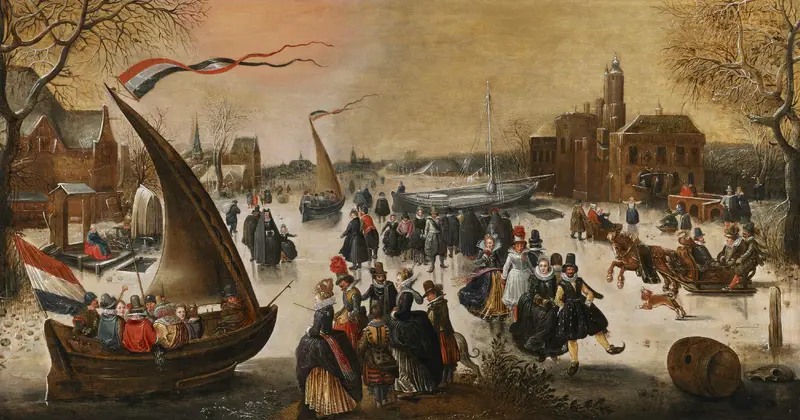
Winter landscape with elegant skaters on a frozen lake, ice-breakers and a town in the distance
Adam van Breen
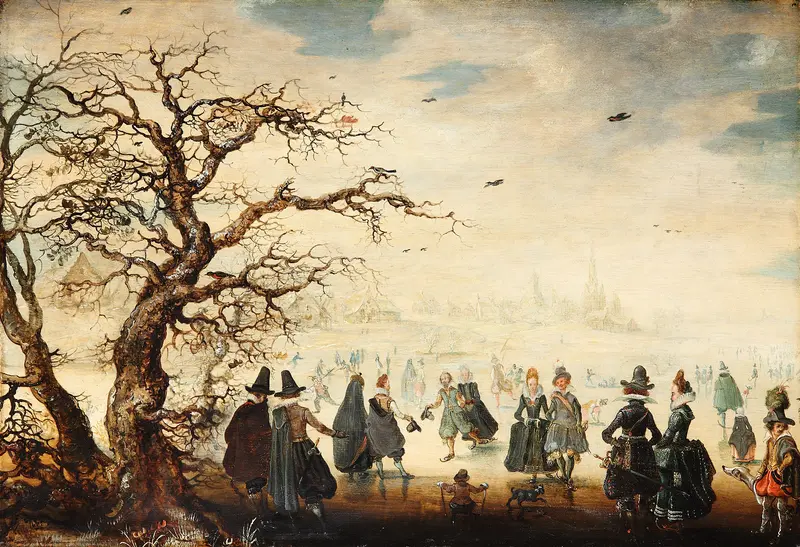
Winter landscape with elegant figures ice-skating
Adam van Breen
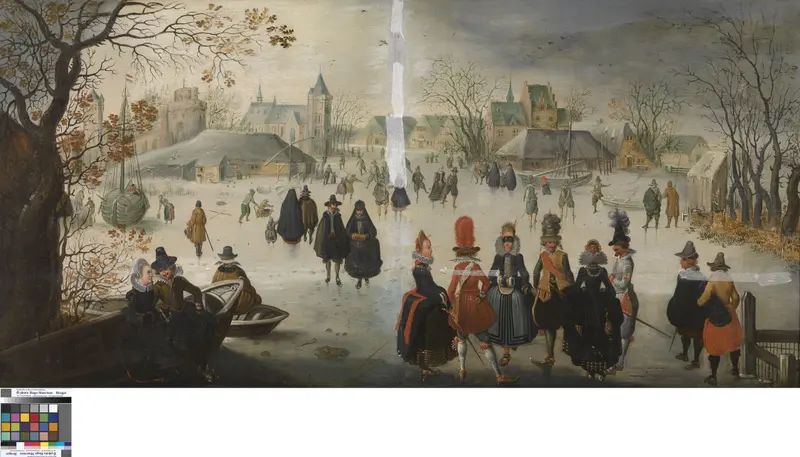
winter landscape with skating
Adam van Breen
Winter landscape with numerous elegantly-dressed figures skating on a frozen river, with an ice yacht
Adam van Breen
More Genre Scene Art

Banquet of the Officers of the St George Civic Guard
Frans Hals

Rembrandt and Saskia in the Scene of the Prodigal Son
Rembrandt van Rijn

Bal du moulin de la Galette
Pierre-Auguste Renoir

Quadrille at the Moulin Rouge
Henri de Toulouse-Lautrec

A Burial at Ornans
Gustave Courbet

When Will You Marry?
Paul Gauguin