
Sloepen — History & Facts
What secret hides in the quiet of the canvas? In the stillness of Sloepen, a compelling narrative unfolds, inviting viewers to unearth layers of meaning beneath its calm surface. Look to the foreground where the muted colors of the boats blend with the soft, embracing strokes of the water. The gentle ripples reflect a world caught between reality and reverie, while the dim light imbues the scene with a melancholic warmth. Notice how the shapes of the boats, with their slight tilt, suggest a moment frozen in time, poised precariously on the brink of departure or arrival, embodying the tension between movement and stillness. As you gaze deeper, consider the interplay of light and shadow representing the duality of existence—serenity accompanied by an undertow of uncertainty.
The colors evoke a sense of nostalgia, perhaps hinting at the artist's personal reflections on legacy and the transient nature of life. Each element, from the tranquil waters to the indistinct horizon, speaks to the quiet complexity of human experience, suggesting that what seems ordinary may hold profound significance. Created in 1888, this work reflects James Ensor's transition from his early influences toward a more personal expression. Living in Ostend, Belgium, during a time when Impressionism was flourishing, he began to carve out his unique voice, blending realism with abstract elements.
This period marked a turning point in his career, as he sought to explore the emotional resonance of the everyday, establishing a legacy that would inspire future generations of artists.
More Artworks by James Ensor
Browse all →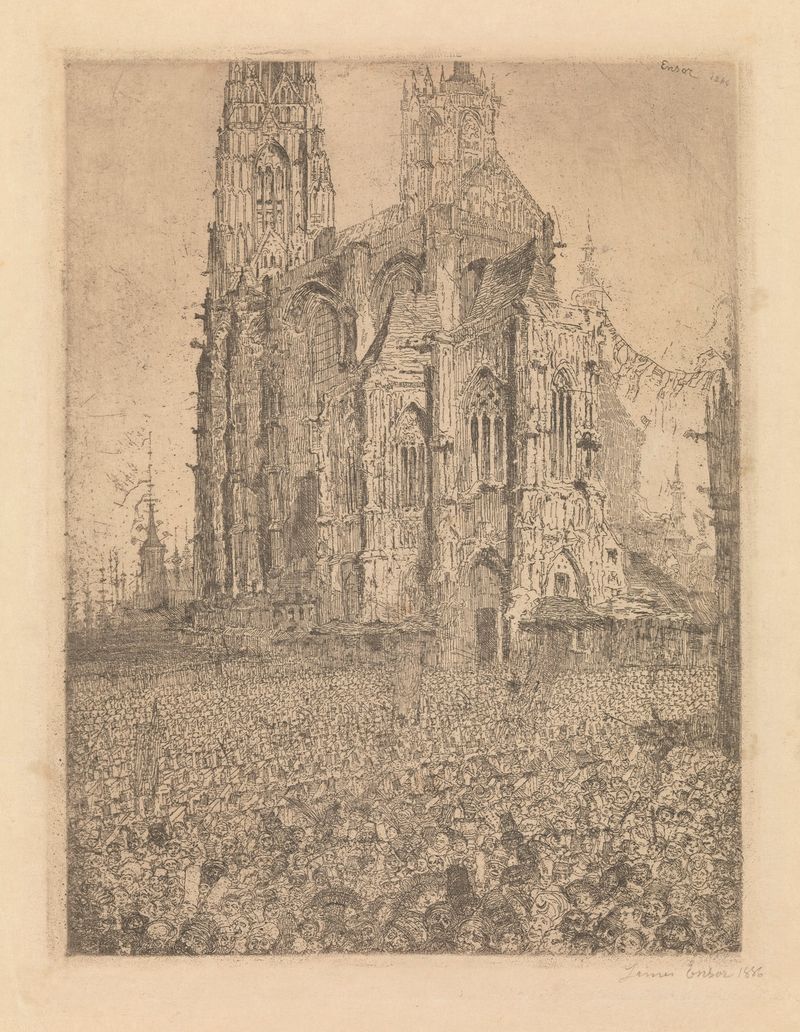
The Cathedral
James Ensor
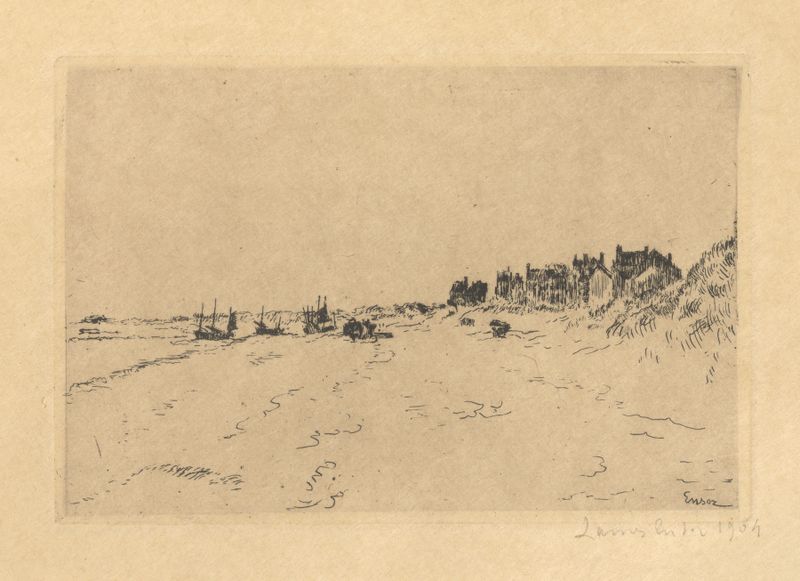
Het strand van De Panne
James Ensor
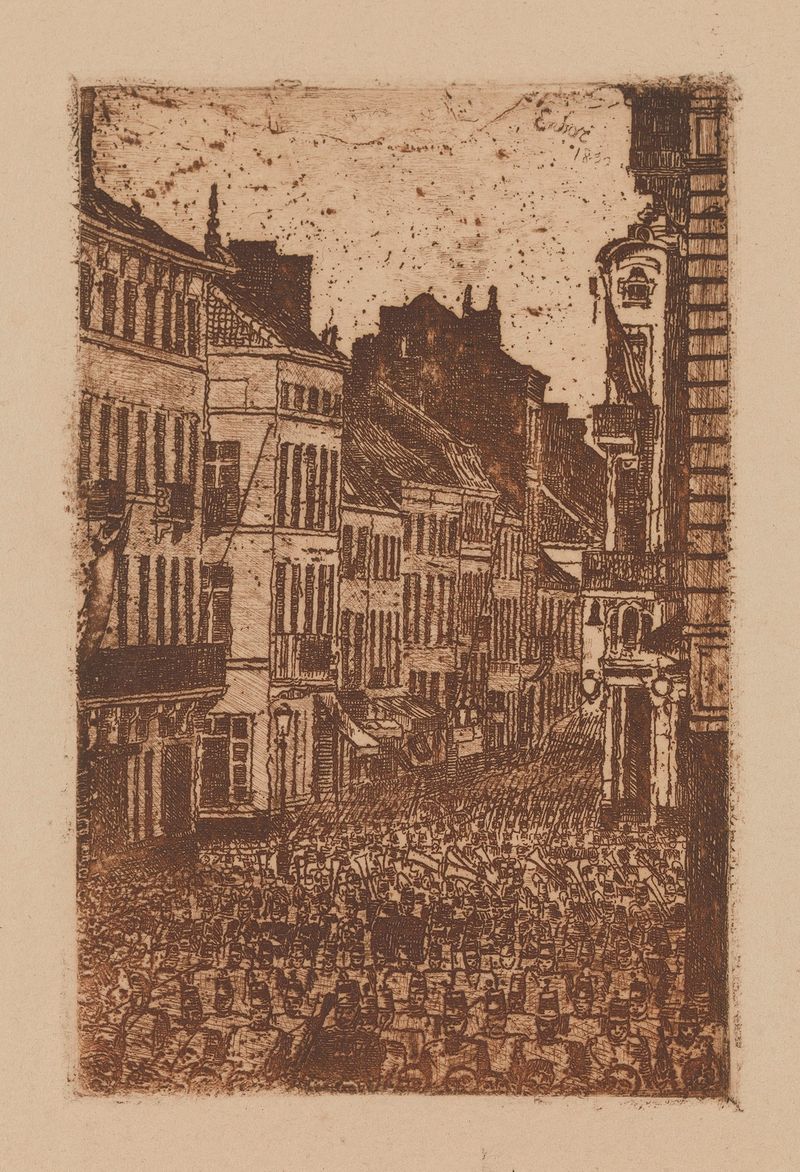
The Music in the rue de Flandre, Ostend
James Ensor
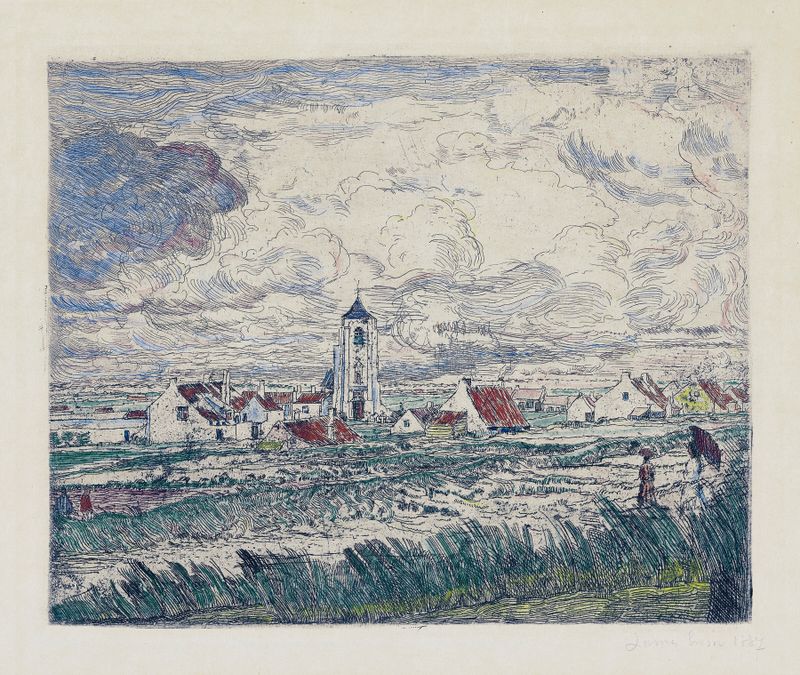
Grande vue de Mariakerke
James Ensor
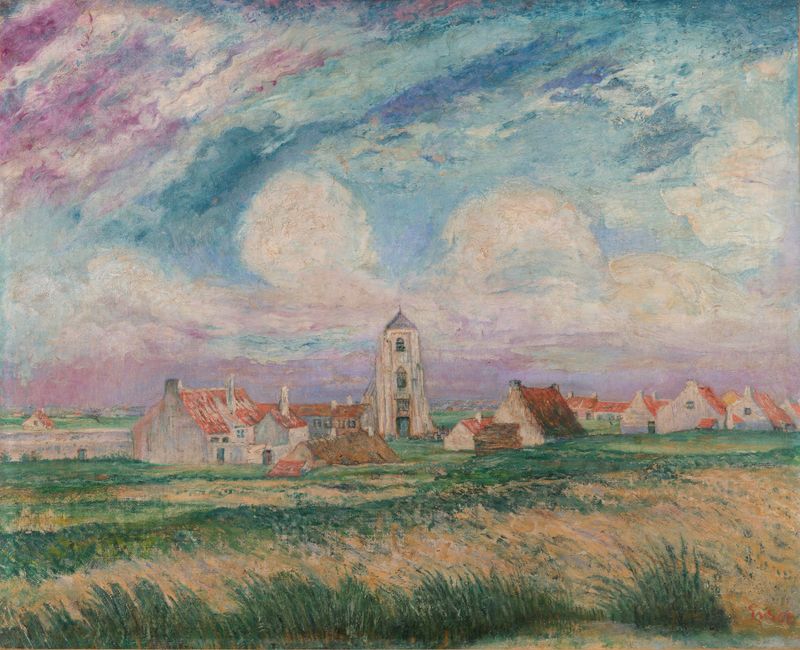
View of Mariakerke
James Ensor
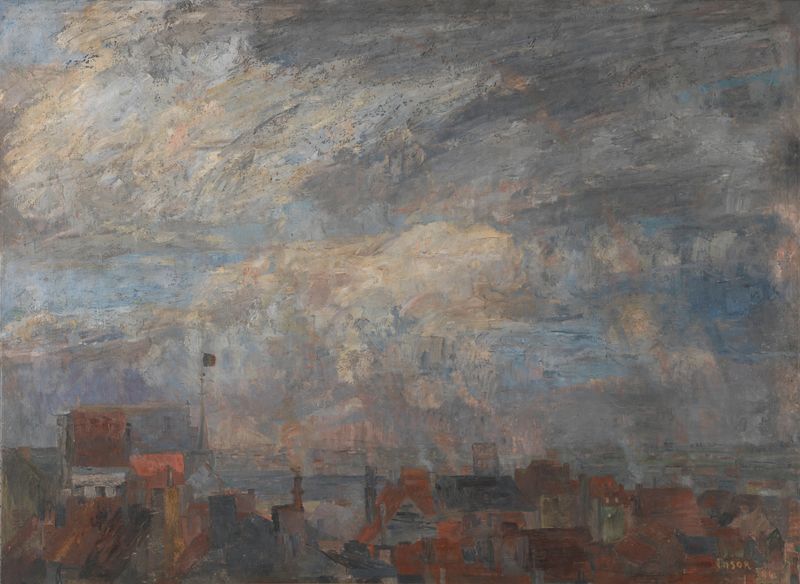
The Rooftops of Ostend
James Ensor
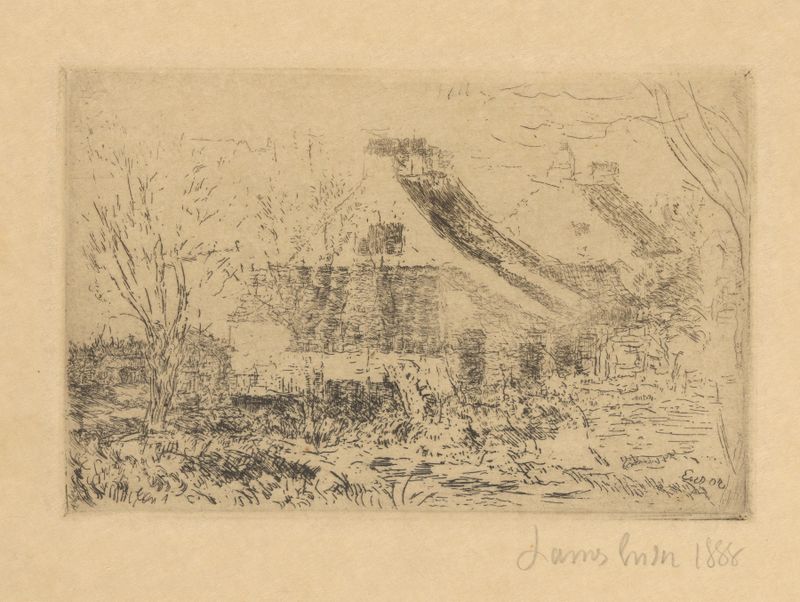
Huisjes in Mariakerke
James Ensor
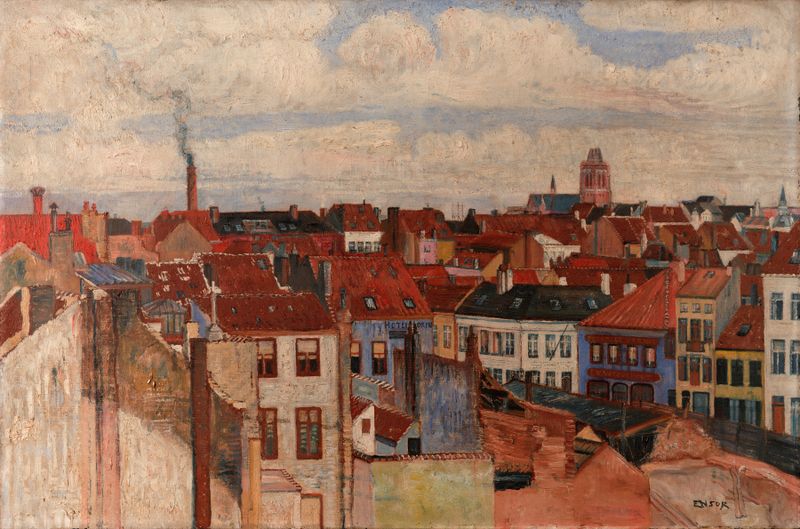
The rooftops of Ostend
James Ensor
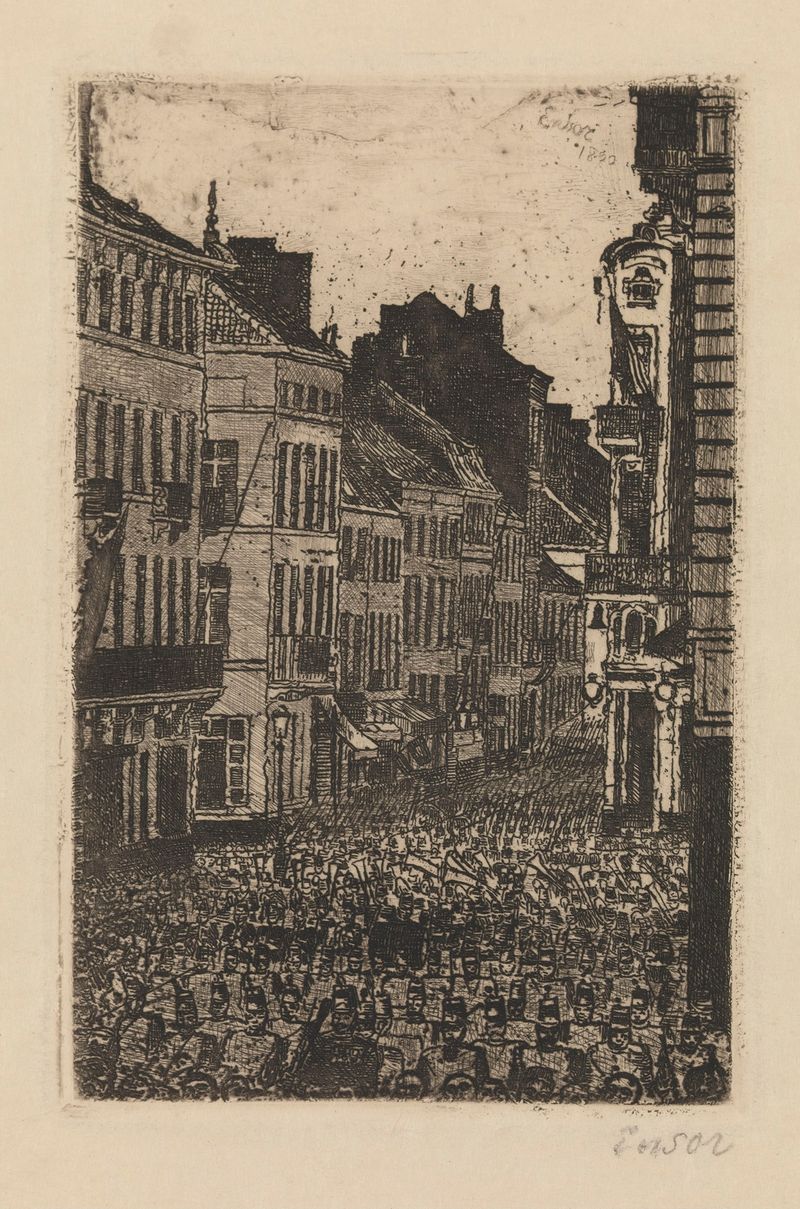
The Music in the rue de Flandre, Ostend
James Ensor
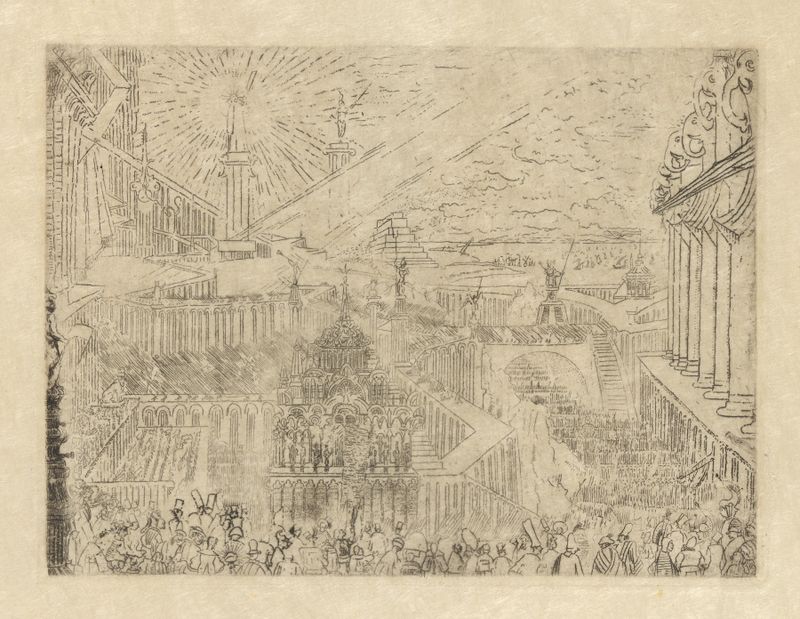
Verovering van een vreemde stad
James Ensor





