
Smyrna (Bazaar) — History & Facts
What secret hides in the quiet of the canvas? In the stillness of a bazaar, amidst the vibrant chaos of life, there lies an undercurrent of loneliness waiting to be discovered. Look to the left at the figures meandering through the market stalls; their relaxed postures suggest a mundane routine yet hint at their isolation. The warm, earthy palette envelops the scene, with shades of ochre and sienna blending seamlessly. Notice how the light filters gently through the stalls, casting soft shadows that dance across the cobblestones, creating pockets of warmth amid the cool air.
The composition draws your eye toward the focal point, a solitary vendor, who stands apart from the throng, his expression a mixture of hope and resignation. On closer inspection, the juxtaposition of bustling market life and the solitary figure speaks volumes about the human experience. Each passerby appears engaged in their own world, their faces a tapestry of stories untold, emphasizing individual loneliness amidst the collective crowd. The empty spaces around the vendor serve as a metaphor for isolation, suggesting that even in a bustling environment, one can feel profoundly alone. In 1910, Jan Ciągliński was living in Paris, surrounded by the vibrant influences of modernism.
He captured Smyrna (Bazaar) during a time when he was reflecting on the interplay of culture and identity. As the world was on the brink of change, his work encapsulated the essence of a fading era, blending elements of Eastern and Western art, while revealing a deep understanding of human emotion and connection.
More Artworks by Jan Ciągliński
Browse all →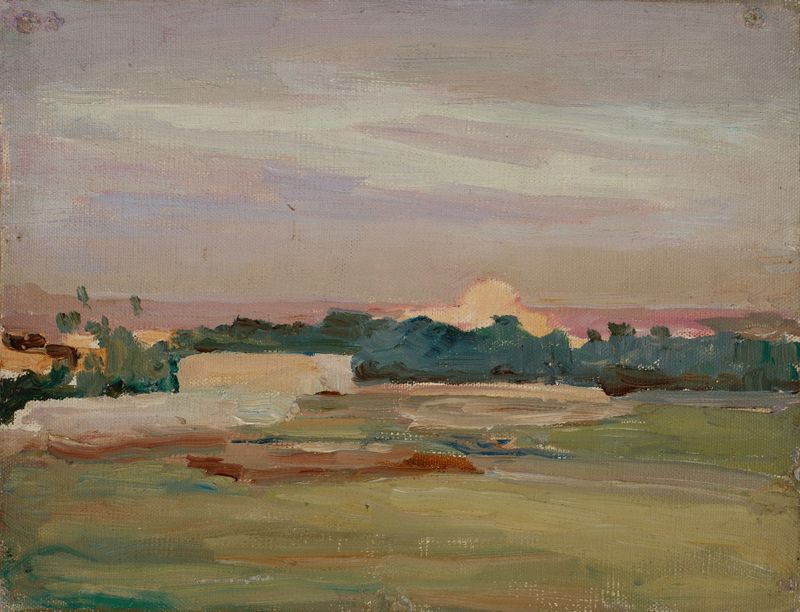
The Sirocco
Jan Ciągliński
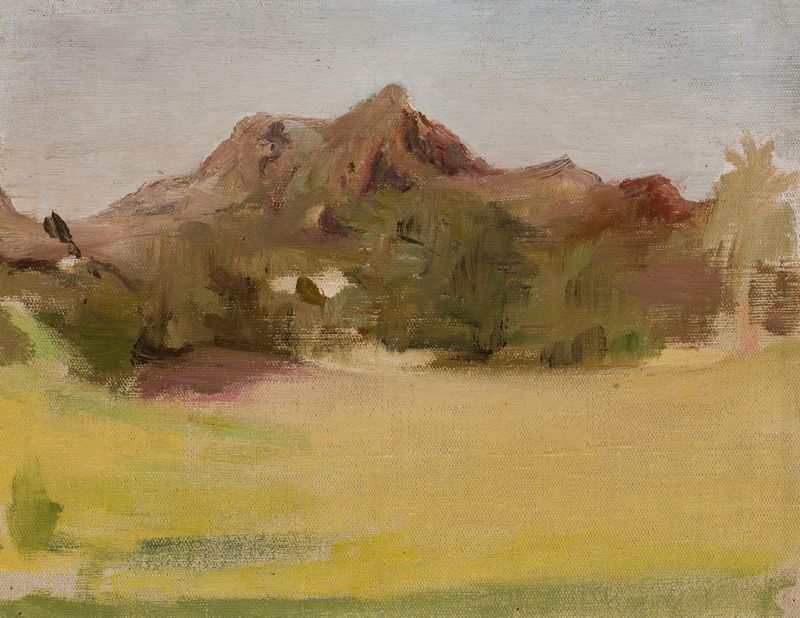
Mountain landscape. From the journey to India
Jan Ciągliński
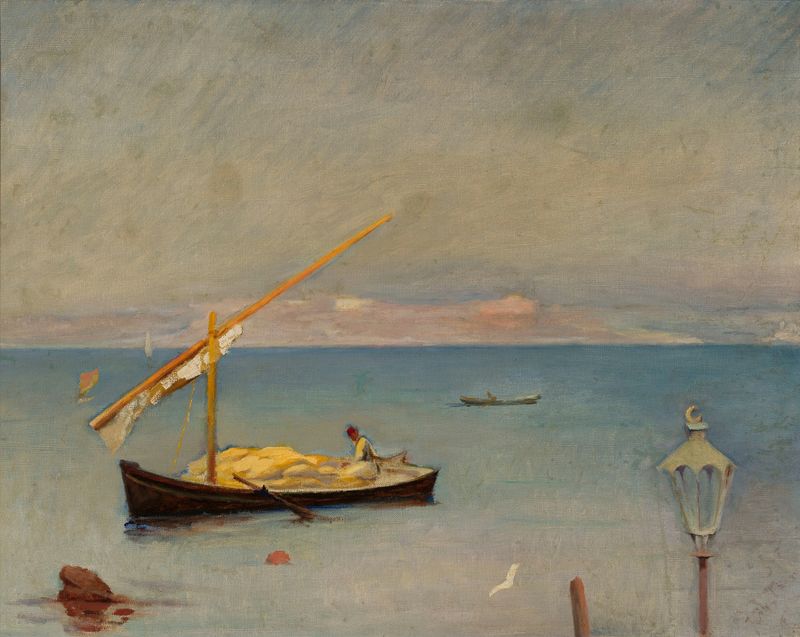
At Bosporus
Jan Ciągliński
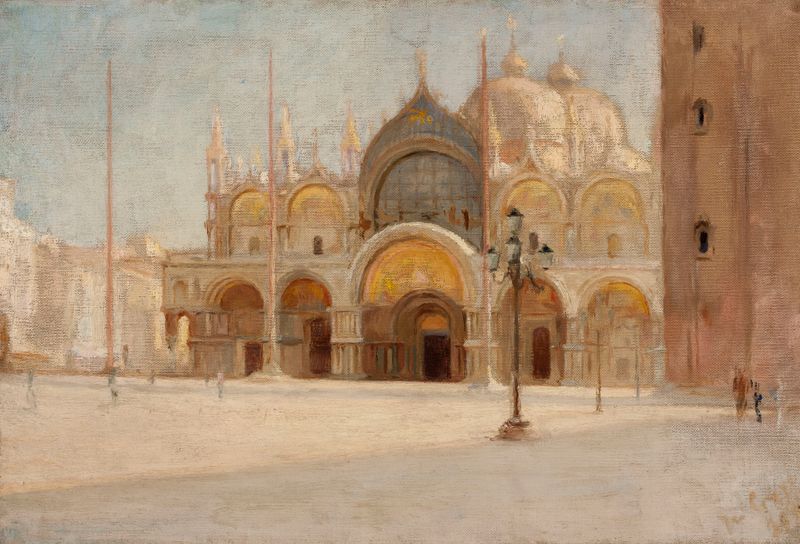
St Mark’s Square in Venice
Jan Ciągliński
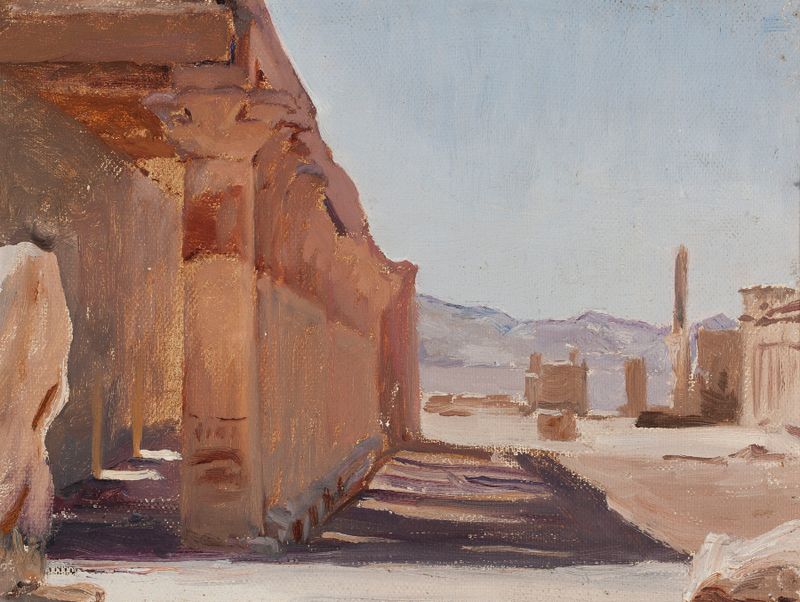
Temple. From the journey to Egypt
Jan Ciągliński
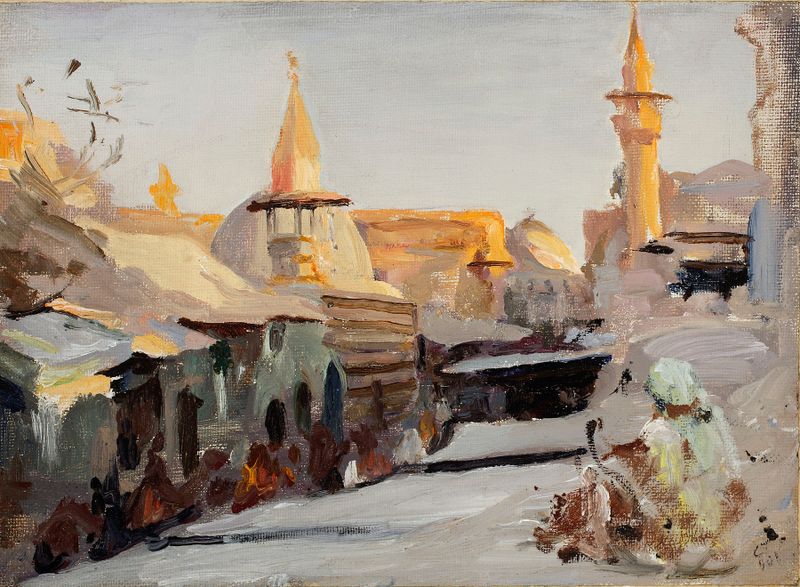
Street in Damascus. From the journey to Palestine
Jan Ciągliński
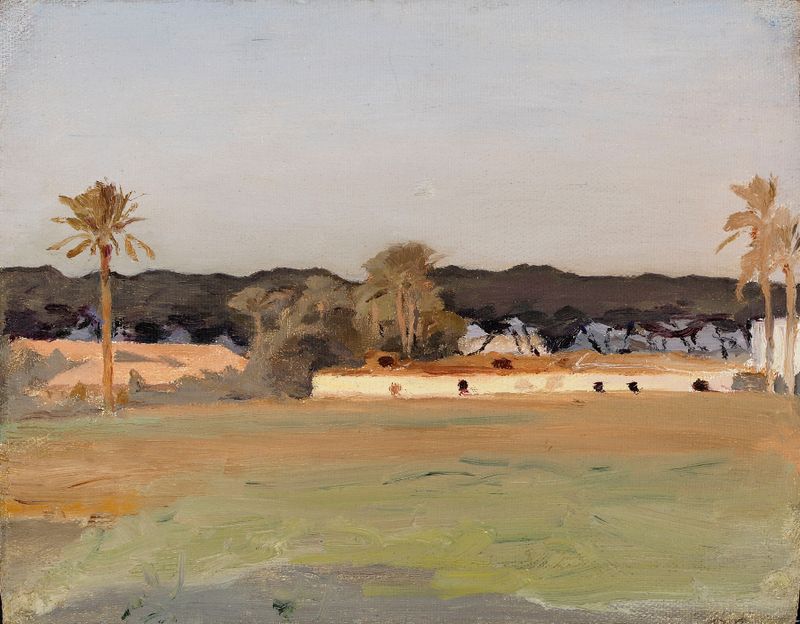
Evening. From the journey to Egypt
Jan Ciągliński
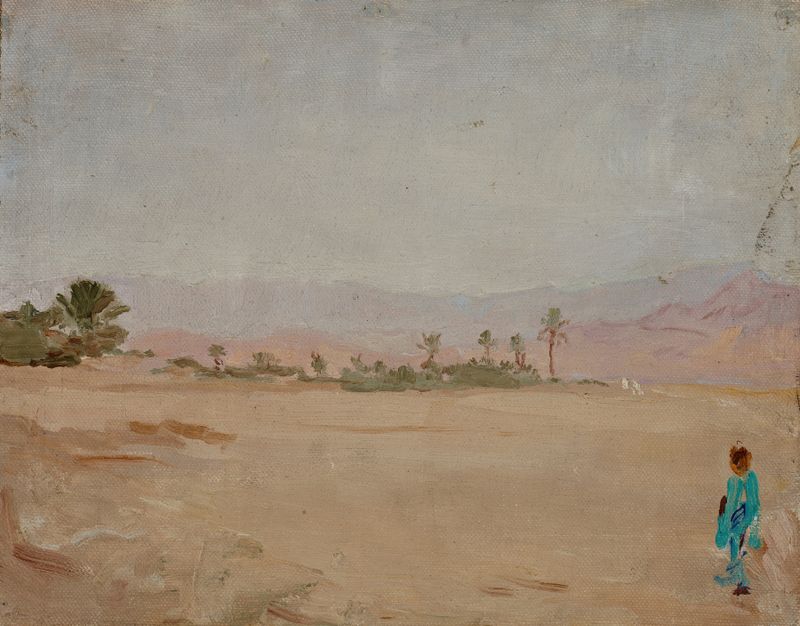
Sahara (Desert)
Jan Ciągliński
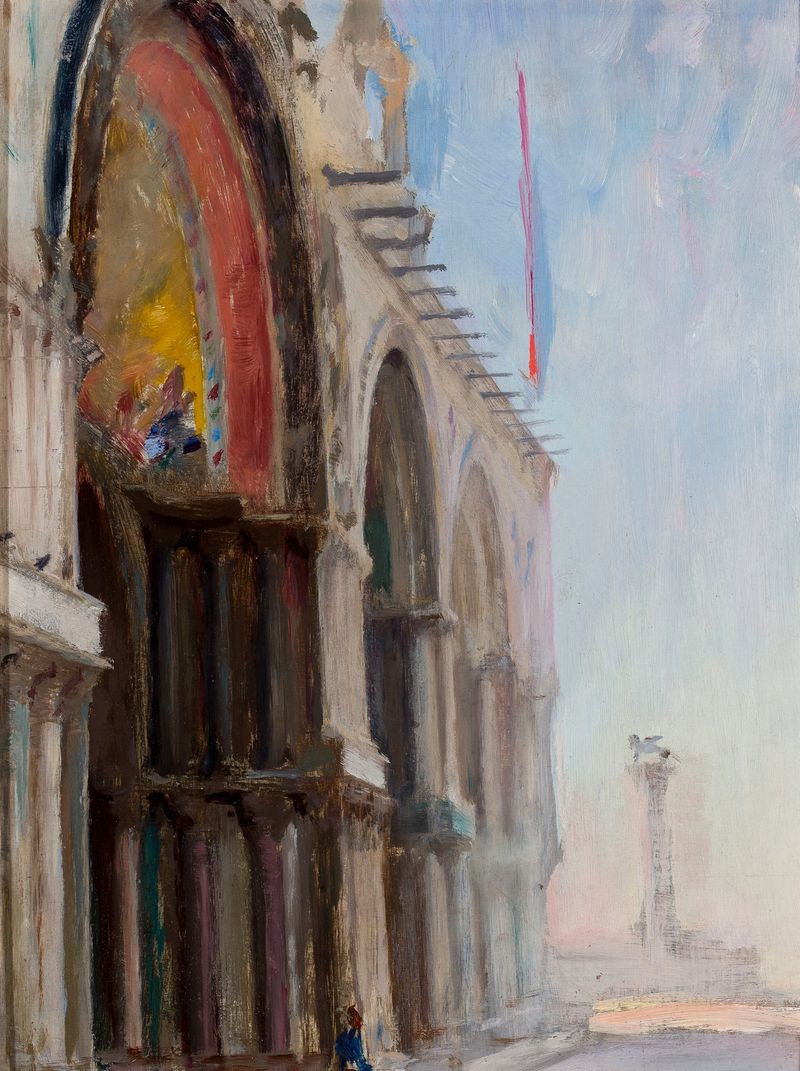
Venice – San Marco. From the journey to Italy
Jan Ciągliński
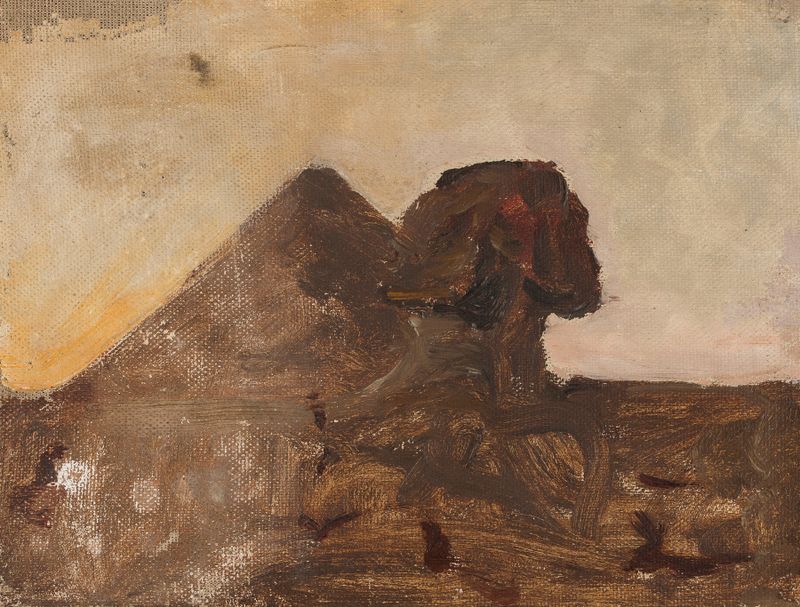
Evening in the desert – Sphinx and pyramid. From the journey to Egypt
Jan Ciągliński





