
Spielende nackte Menschen 1910 1 — History & Facts
What leaps out first in Spielende nackte Menschen 1910 1 is the riot of color that refuses to settle into the expected hues of flesh or landscape. Figures are rendered in urgent oranges, reds, and greens, their bodies outlined with the same wild energy as the foliage that surrounds them. The scene thrums with movement: one pair stands locked in a tender, ambiguous gesture, while the others crouch or lean, their limbs echoing the tangled branches overhead.
The brushwork is brisk and uncontained, giving the impression of a moment seized rather than composed, and the eye is led in restless loops from figure to tree to the distant, vibrating horizon. This is not a tranquil idyll, but a vision of nature and humanity fused by the sheer force of paint. Created in 1910, this work belongs to the world of Ernst Ludwig Kirchner and the Expressionist movement, a time when artists in Germany sought to break free from academic restraint and capture the raw pulse of life. Such paintings were rarely made for grand salons or aristocratic patrons; instead, they were declarations, often shared among avant-garde circles hungry for new ways of seeing.
The period was marked by a fascination with the untamed—both in nature and in the human psyche—and Kirchner’s contemporaries in groups like Die Brücke embraced similar themes, using color and form to challenge the boundaries of representation. Though little is recorded about the journey of this specific canvas, its boldness speaks to the restless energy of its era. Let your gaze linger on the electric meeting of bodies and landscape, and imagine the shock these colors must have delivered to their first viewers.
More Artworks by Ernst Ludwig Kirchner
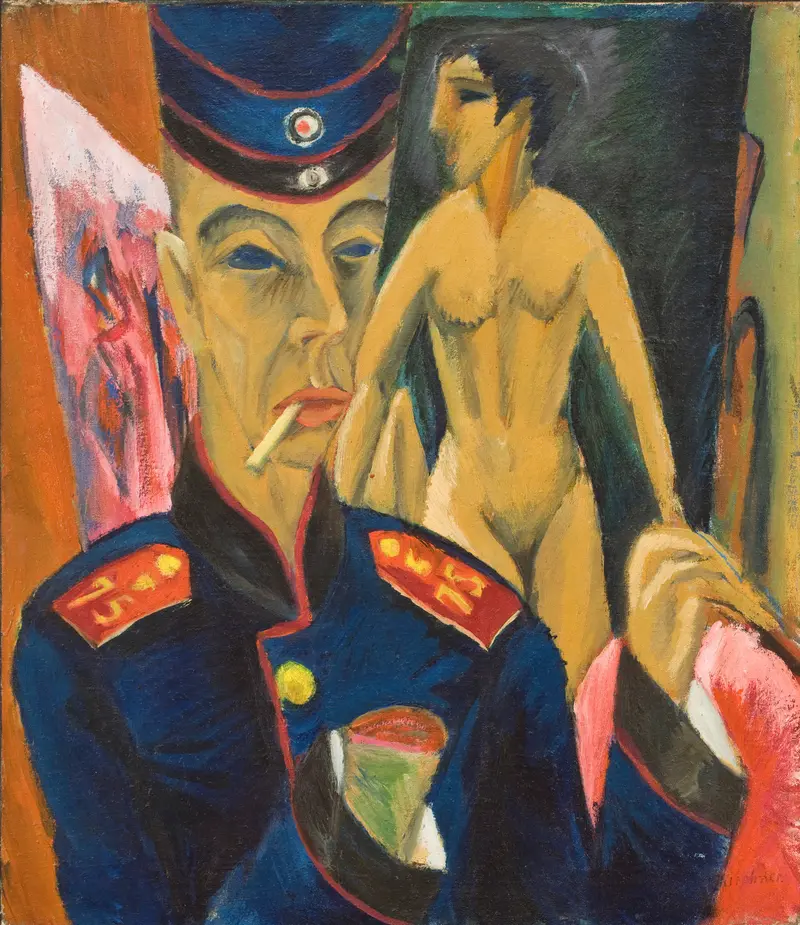
Self-Portrait as a Soldier
Ernst Ludwig Kirchner
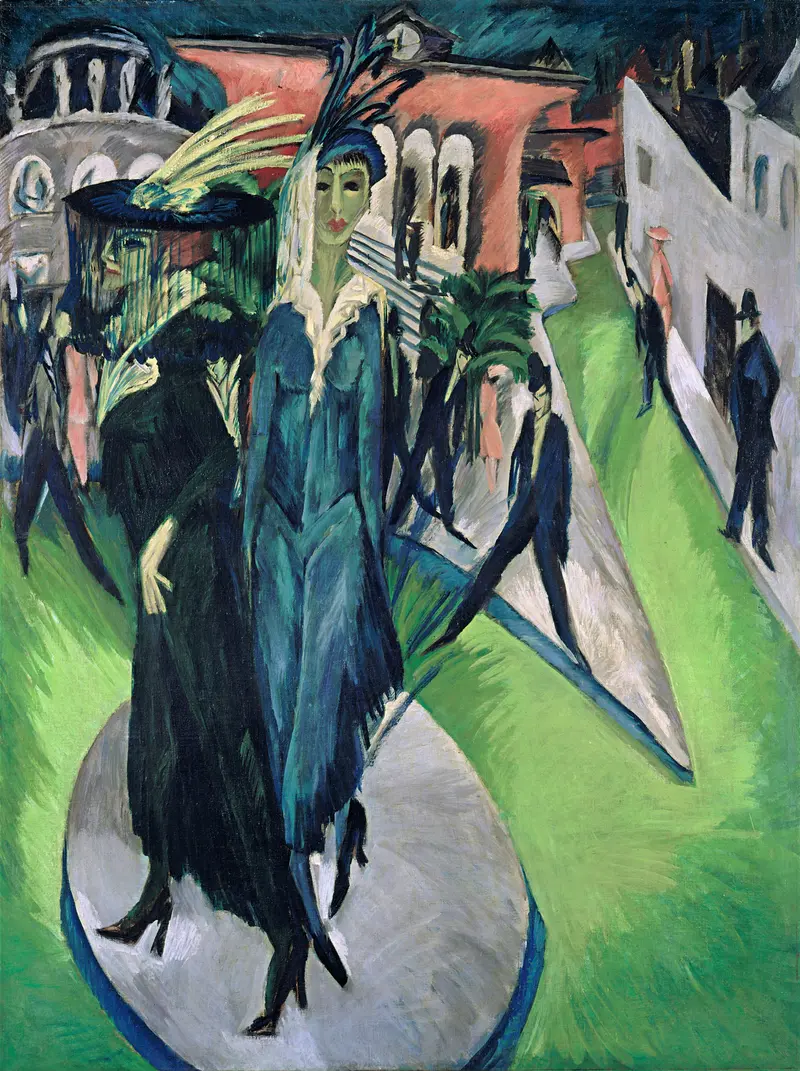
Potsdamer Platz
Ernst Ludwig Kirchner

Alphütten und Tinzenhorn
Ernst Ludwig Kirchner
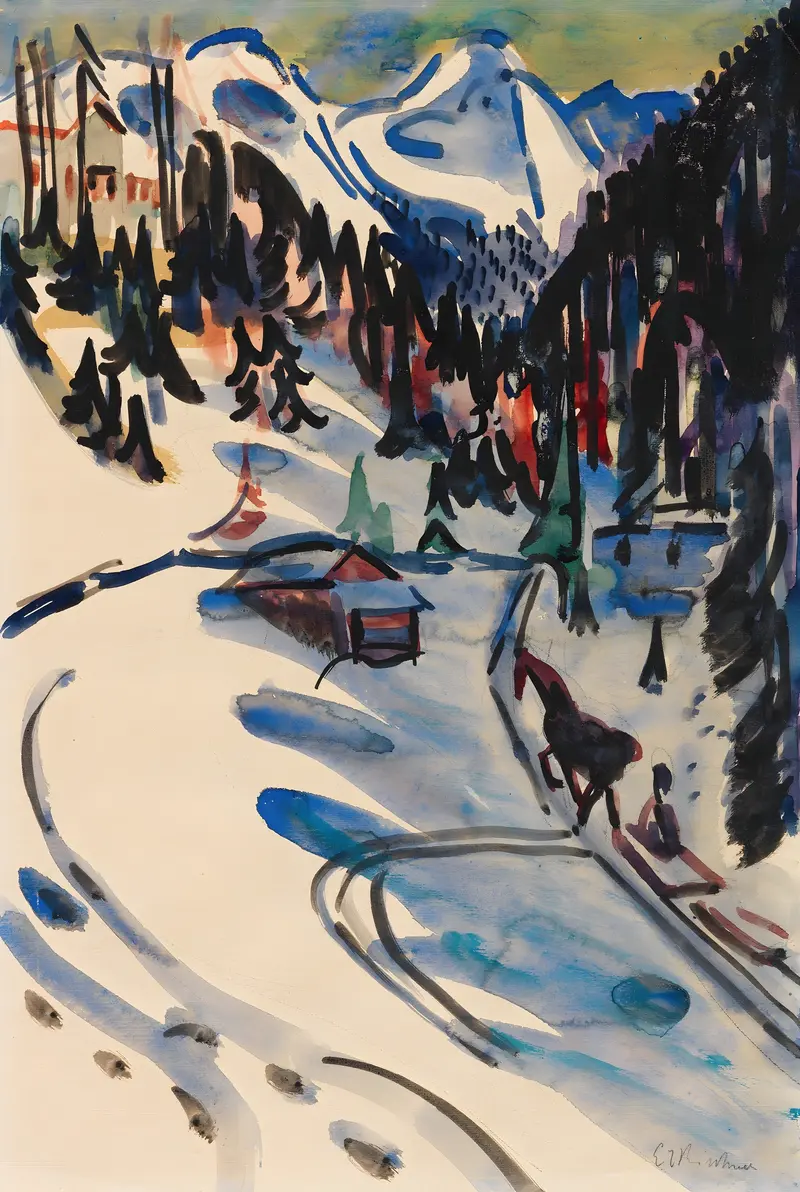
Sertigtal im Winter
Ernst Ludwig Kirchner
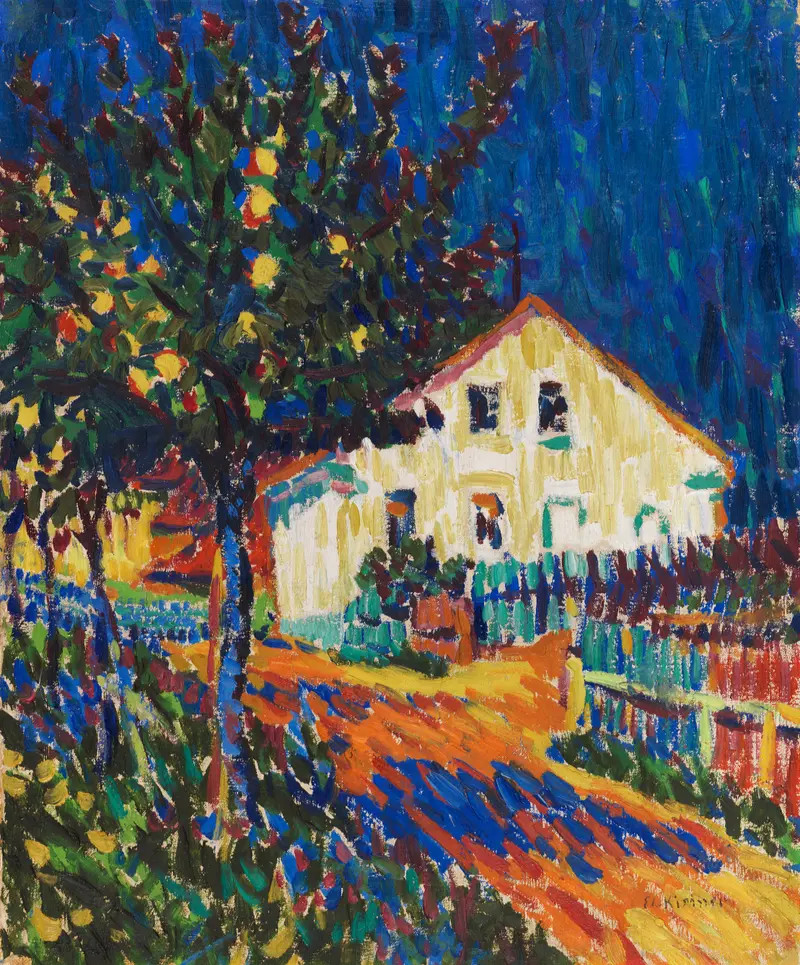
Dorfstraße mit Apfelbäumen
Ernst Ludwig Kirchner
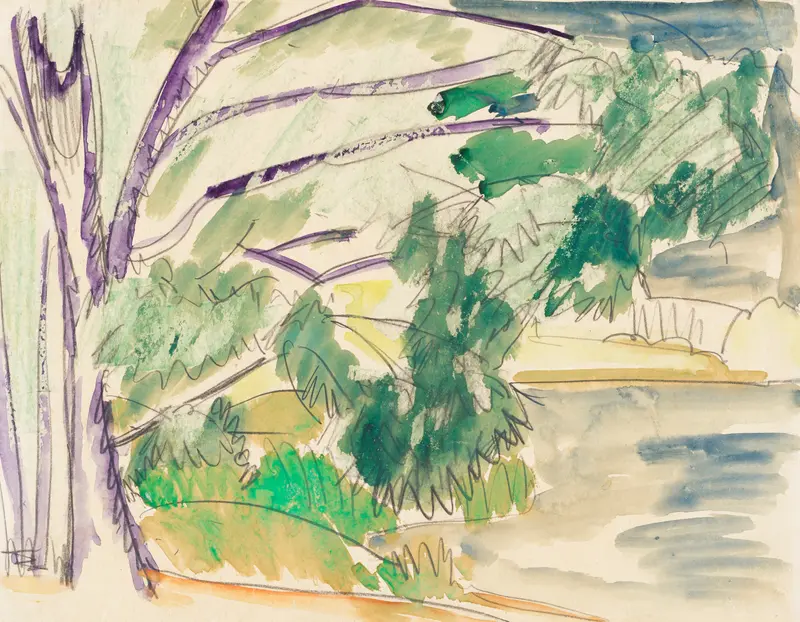
Unter Bäumen am See
Ernst Ludwig Kirchner
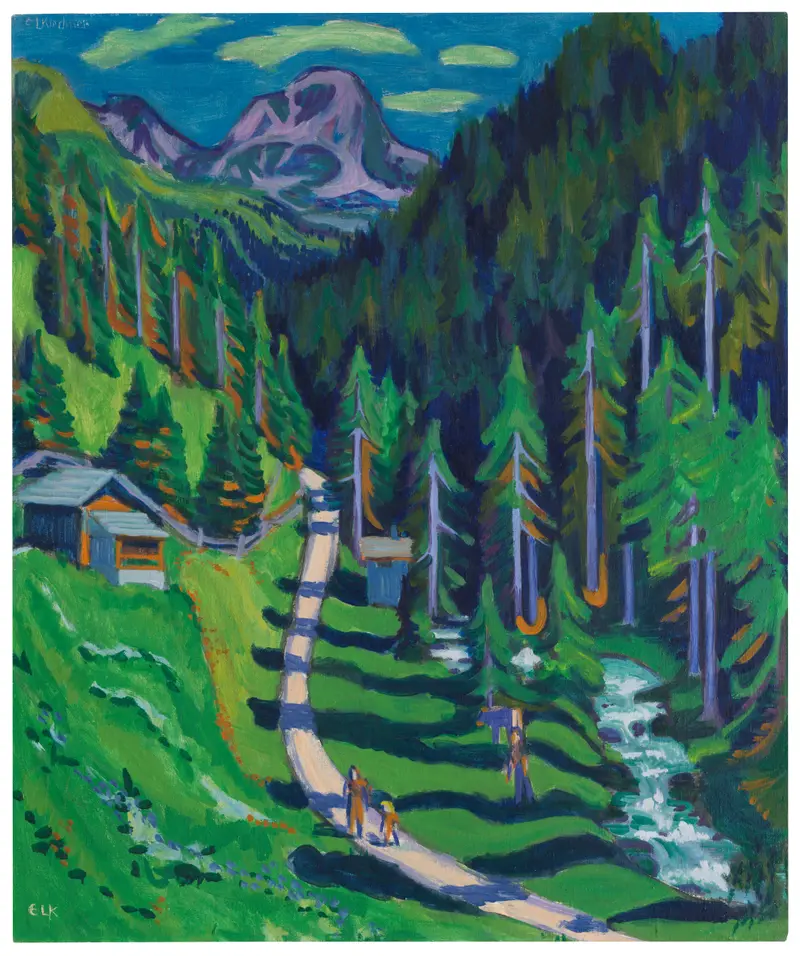
Sertigweg
Ernst Ludwig Kirchner
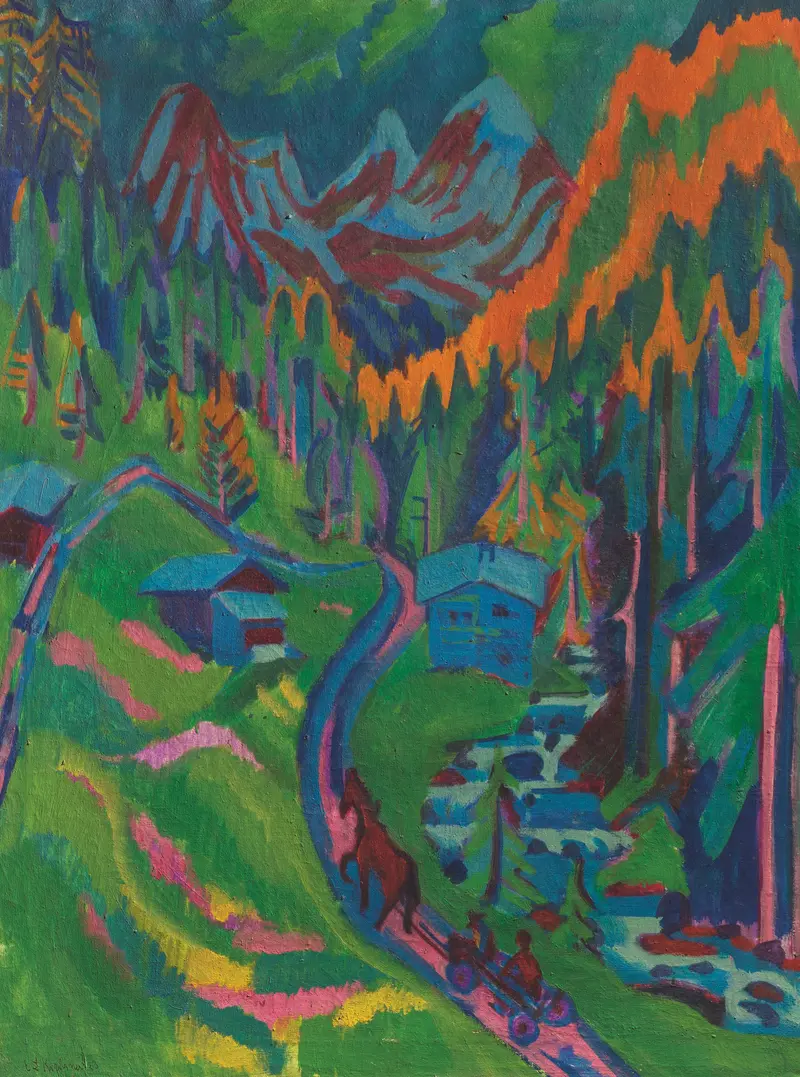
Sertigweg im Sommer
Ernst Ludwig Kirchner
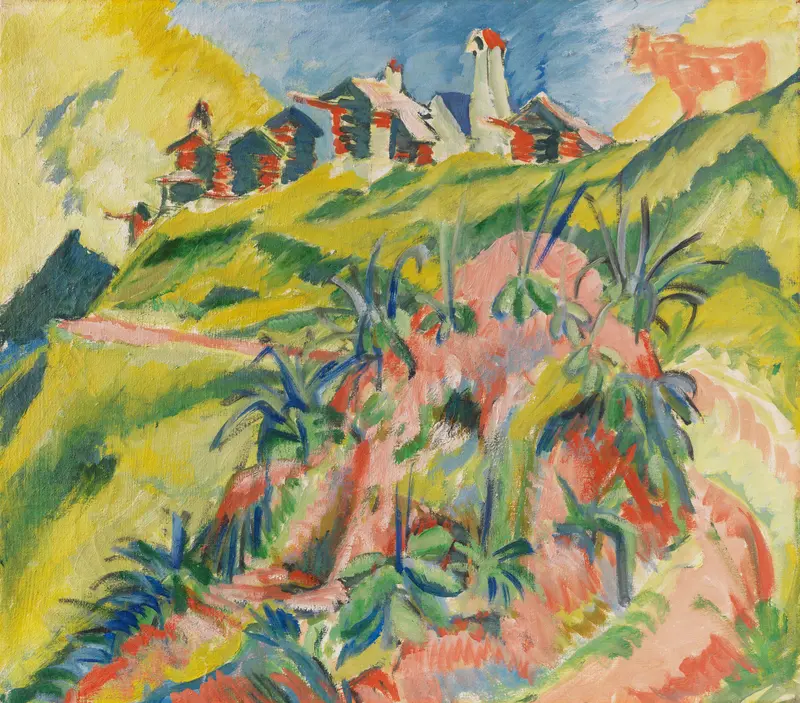
Bergdorf mit rosa Kuh
Ernst Ludwig Kirchner
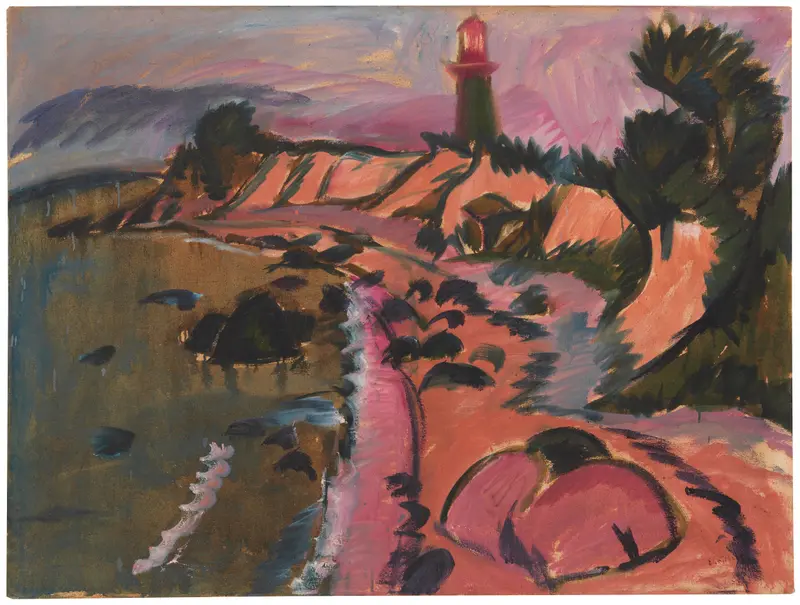
Fehmarnküste mit Leuchtturm
Ernst Ludwig Kirchner



