
Spoorwegbrug bij Culemborg — History & Facts
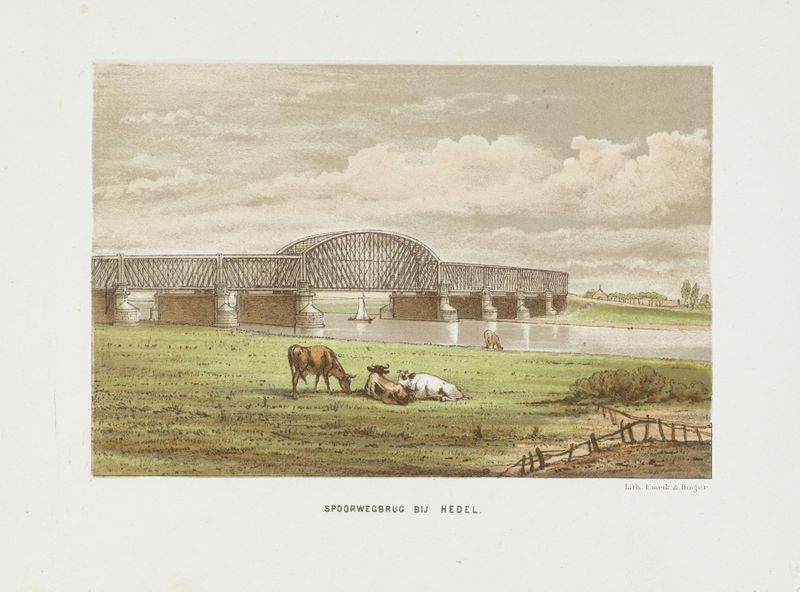
What if beauty was never meant to be finished? In the delicate interplay of light and shadow, a world unfolds that speaks to the transient nature of existence and the constant evolution of art. Focus your gaze on the foreground, where the intricate detailing of the railway bridge draws you in. Notice how the warm hues of the sunset illuminate the rusting ironwork, giving it an almost ethereal glow. As your eyes travel toward the horizon, the soft blues of the sky blend seamlessly with the earthy tones of the landscape, creating a perfect harmony that invites contemplation.
The brushstrokes, both bold and delicate, capture a moment in time, poised between the solidity of human invention and the fluidity of nature. Within this composition lies a tension between man-made structure and the organic world surrounding it. The railway bridge stands as a symbol of progress, yet its weathered appearance suggests decay and the passage of time. Beneath the surface, there exists an emotional resonance — the bridge is not merely an object but a conduit of stories and journeys, forever entwined with the lives it touches.
The fading light hints at both endings and new beginnings, awakening a sense of nostalgia for what has come before. Painted between 1872 and 1874, this work emerged during a time of rapid industrial expansion in the Netherlands, as railways transformed the landscape and society. Emrik & Binger sought to capture this intersection of nature and industry, reflecting the shifting dynamics of their era. At this juncture, they were not only chronicling a moment but also exploring the deeper implications of progress and its impact on the human experience.
More Artworks by Emrik & Binger
Browse all →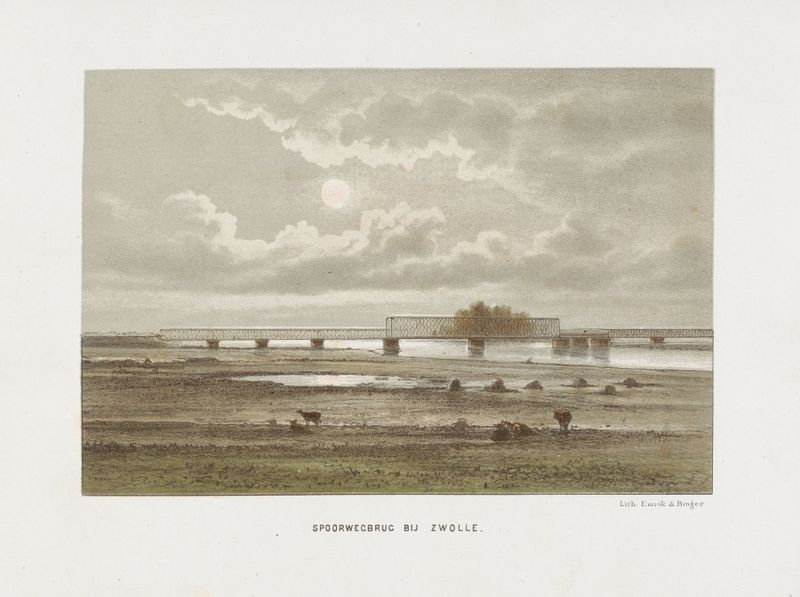
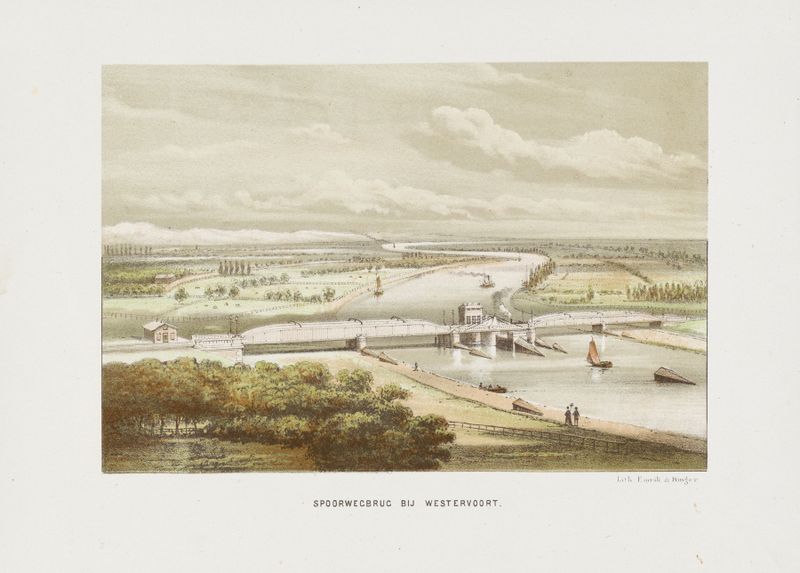
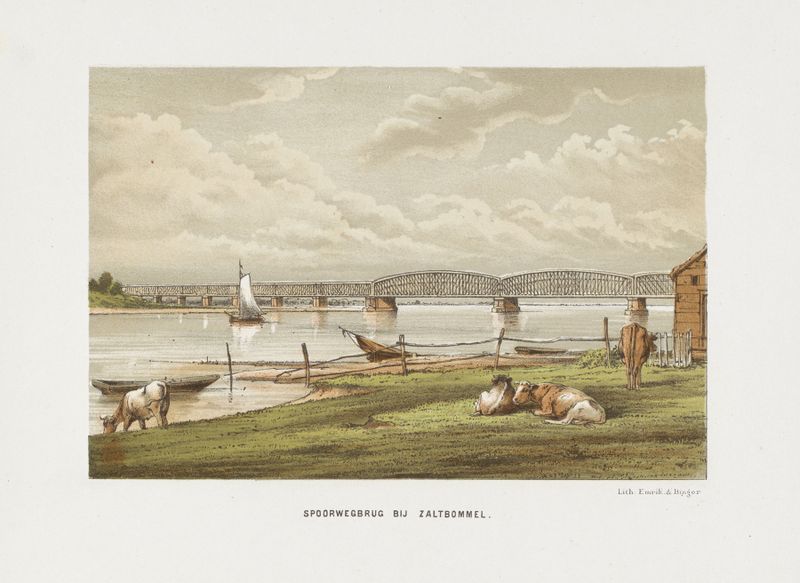
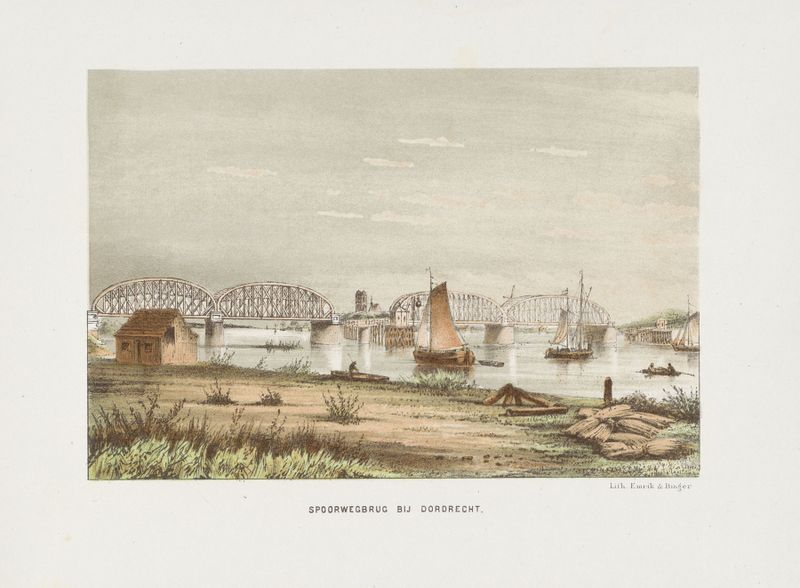


More Architecture Art
Browse all →
The statue of Liberty
Frédéric Auguste Bartholdi

View of Houses in Delft, Known as ‘The Little Street’
Johannes Vermeer

View of Houses in Delft, Known as ‘The Little Street’
Johannes Vermeer

The Cathedral in Rouen. The portal, Grey Weather
Claude Monet

The yellow house
Vincent van Gogh

The Church in Auvers-sur-Oise, View from the Chevet
Vincent van Gogh