Spoorwegbrug bij Moerdijk — History & Facts
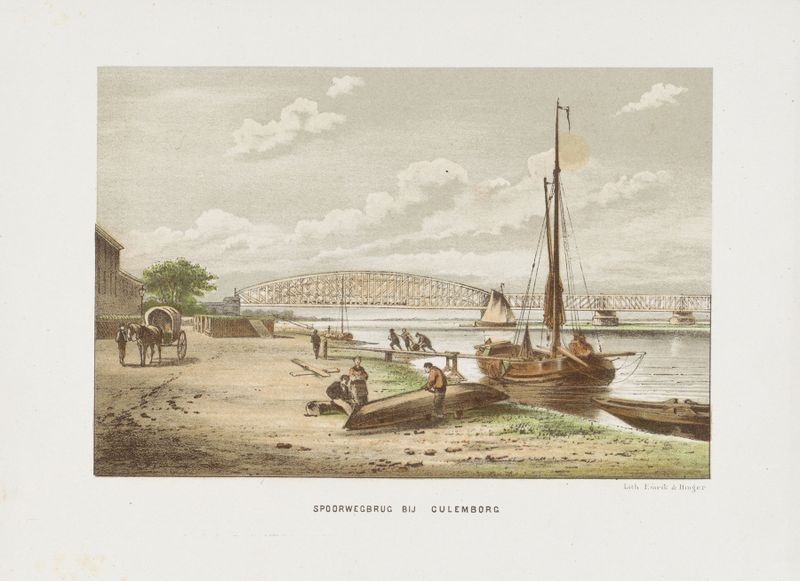
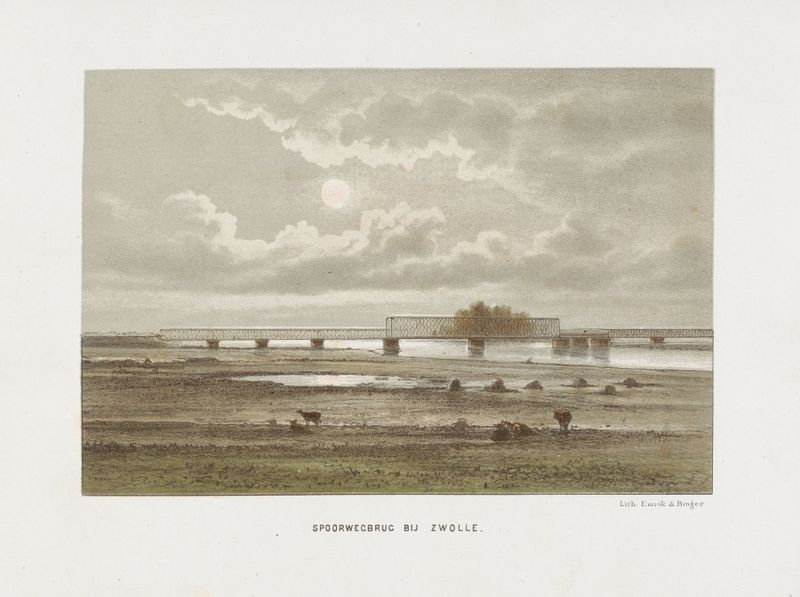
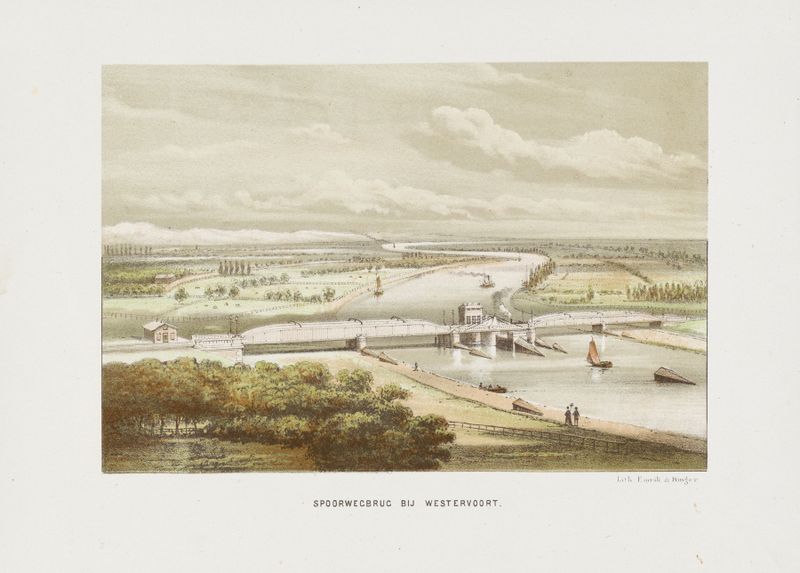
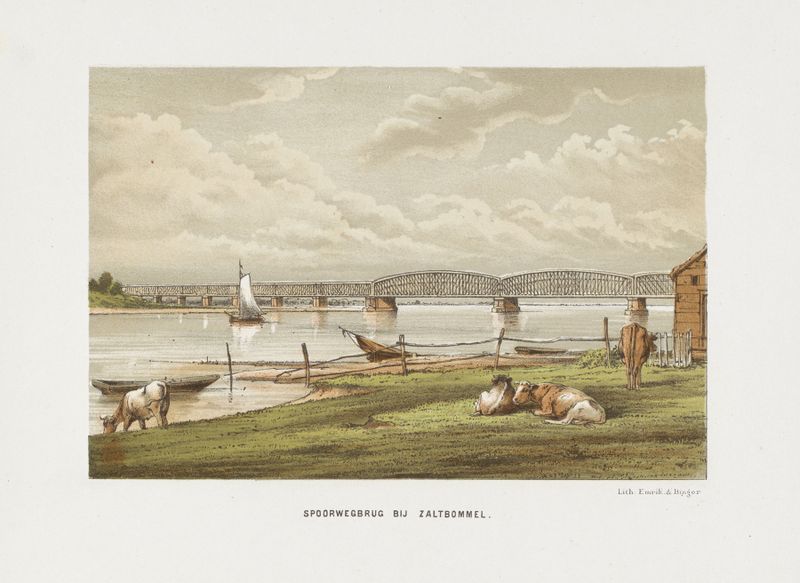
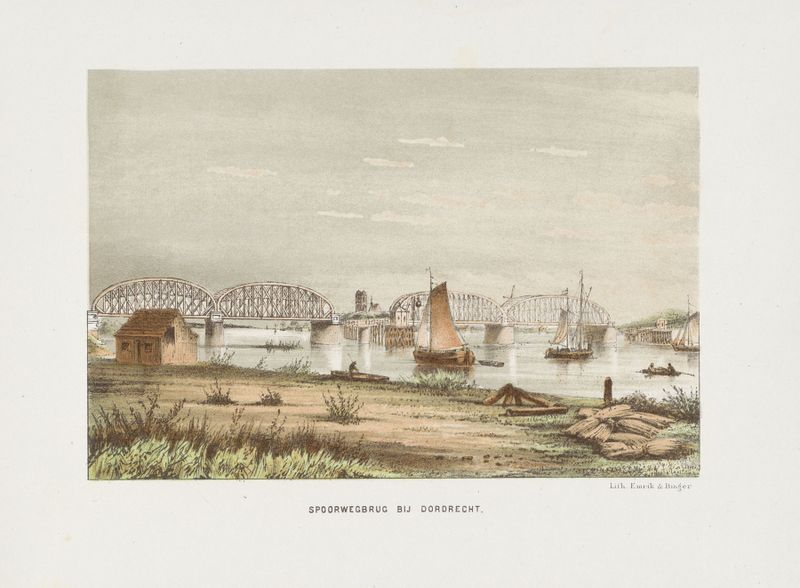
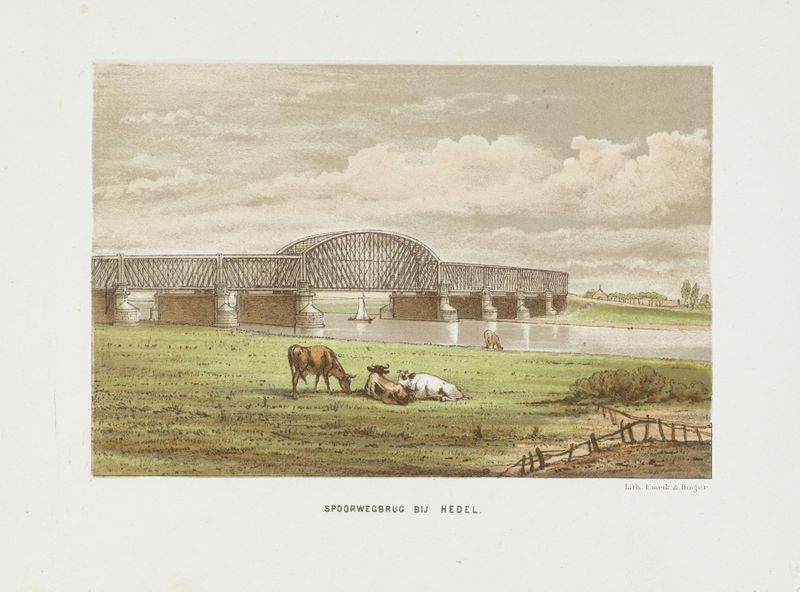
In the lush landscape of 19th century Europe, art became a vessel for rebirth, capturing not just moments but entire epochs yearning for renewal. Look closely at the foreground, where the railway bridge stretches across the canvas, its arches reflecting the strength of industry against the softness of nature. The muted palette of greens and browns evokes a sense of tranquility, while the textured brushwork brings life to the subtle ripples of water below. The artists invite you to trace the intricate details of the bridge's structure — the interplay of light and shadow reveals a delicate balance between man-made progress and the surrounding wilderness. Yet, it is in the contrasts that deeper meanings emerge.
The solidity of the bridge stands in stark opposition to the fluidity of the water, symbolizing the tension between human ambition and nature’s timeless grace. The gentle rise of the clouds hints at the promise of change, a whisper of hope amidst the weight of industrial advancement. Each element in this composition serves to remind us that rebirth is not merely an escape from the past but an embrace of both the natural and the constructed world. Created between 1872 and 1874, this work came during a transformative period for Emrik & Binger, as they navigated the shifting tides of artistic expression in the Netherlands.
This era was marked by the burgeoning impact of industrialization on society, compelling artists to reconcile the encroachment of modernity with their reverence for the natural landscape. It was in this crucible of change that they found their voice, capturing the essence of a world in flux.