Spoorwegbrug bij Westervoort — History & Facts
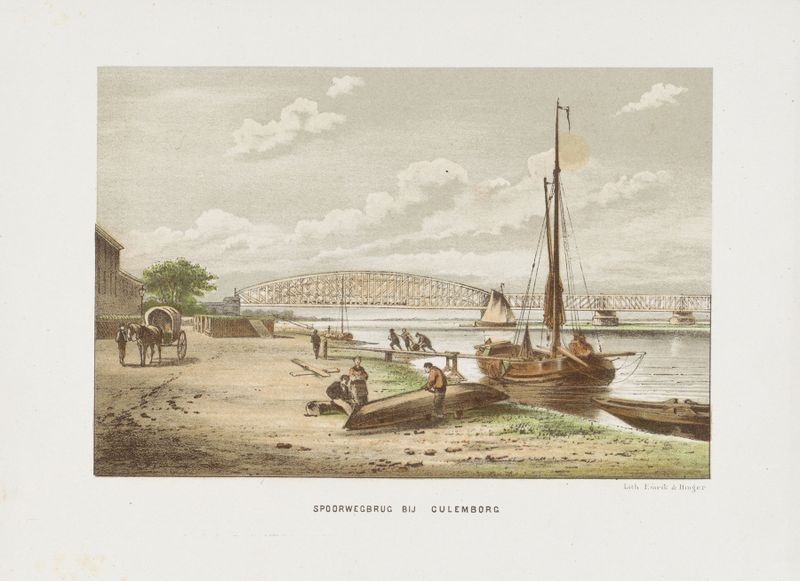
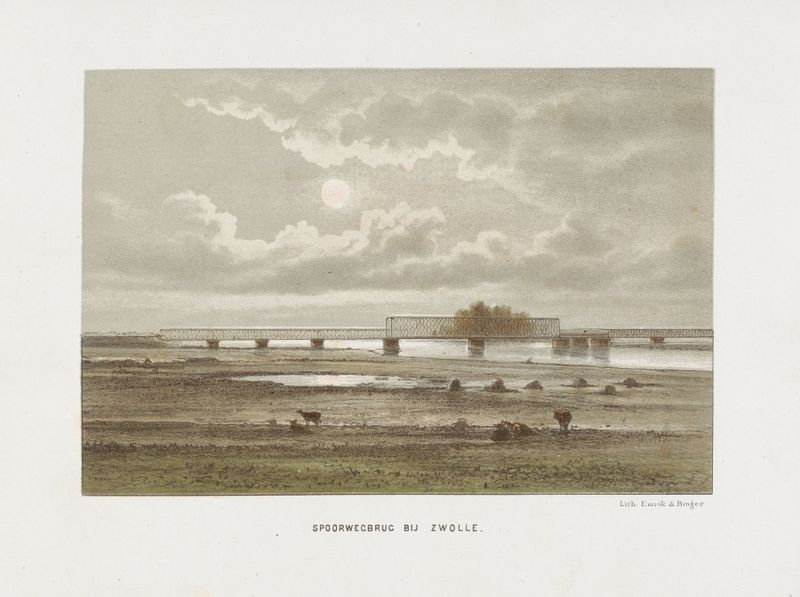
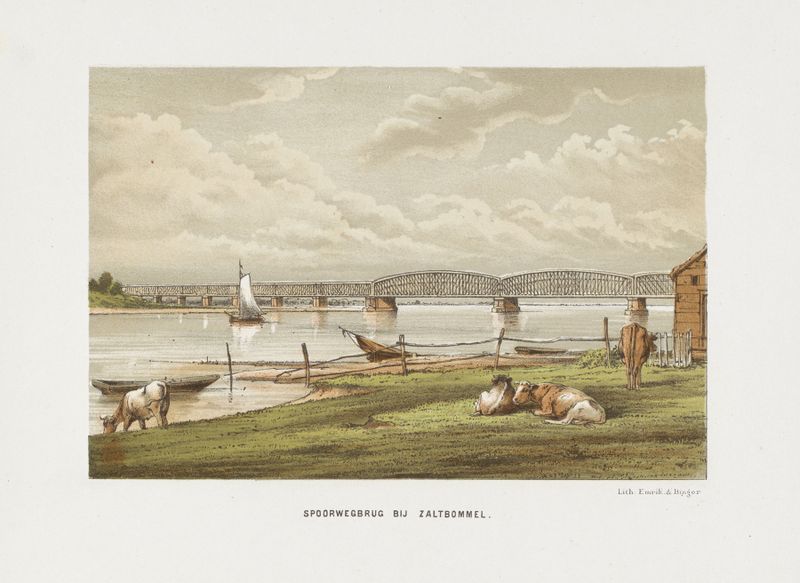
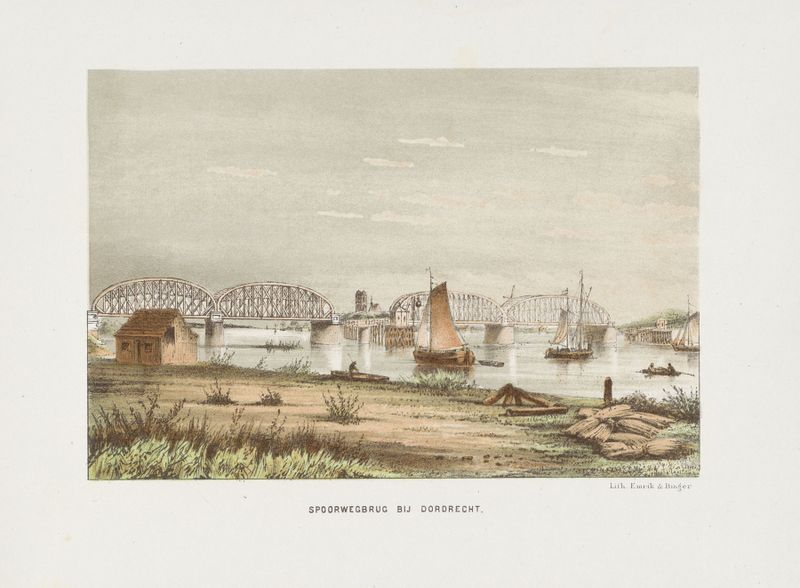
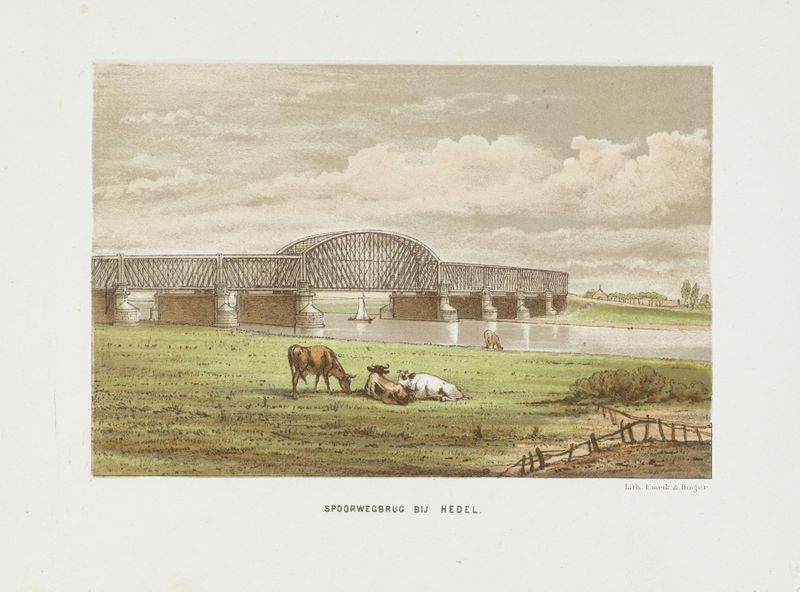
What if beauty was never meant to be finished? The fleeting essence of a moment, captured yet perpetually out of reach, lingers in the air, urging us to embrace a longing that feels both tender and haunting. Look towards the bottom left of Spoorwegbrug bij Westervoort, where the quiet strength of a railway bridge anchors the composition. The structure looms majestically against a backdrop of soft blues and greens, inviting your gaze to travel along its lines. Notice how the interplay of light dances across the water's surface, reflecting the bridge's sturdy form.
The brushstrokes, both precise and spontaneous, evoke movement, suggesting the vibrancy of life and the silent stories unfolding beneath the arch. The juxtaposition of the rigid architecture with the fluidity of the surrounding nature illuminates deeper emotional tensions. This is not merely a bridge; it symbolizes connection and separation, the crossing of lives and landscapes. The muted color palette hints at nostalgia, inviting viewers to ponder the passage of time and the memories held within this serene yet evocative setting.
Each detail, from the rippling water to the distant horizon, resonates with a yearning for continuity in a world that is ever-changing. Emrik & Binger painted this work between 1872 and 1874, during a period when the Netherlands was witnessing rapid industrial growth alongside a burgeoning appreciation for natural beauty. Based in a landscape alive with innovation, the artists explored themes of connectivity and transition, reflecting both the triumphs and fears of their time. This piece emerges as a testament to the balancing act between progress and the longing for a simpler, unspoiled existence.