Spoorwegbrug bij Zaltbommel — History & Facts
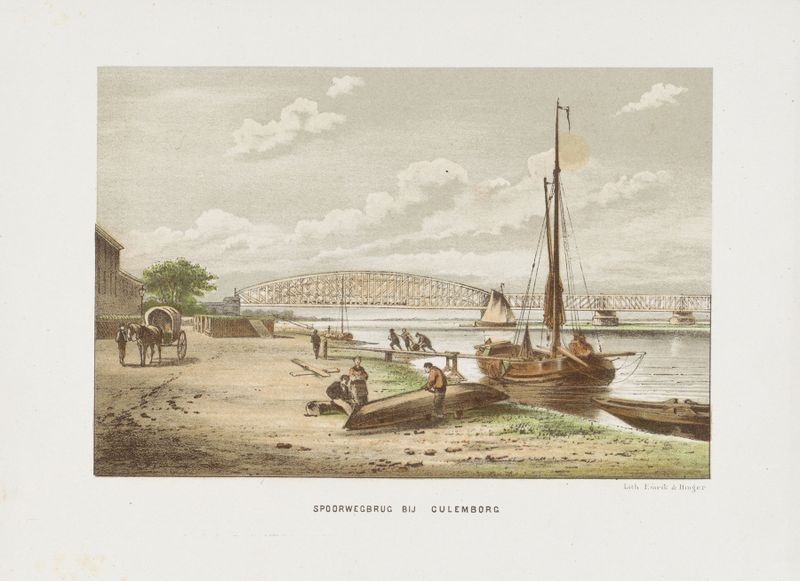
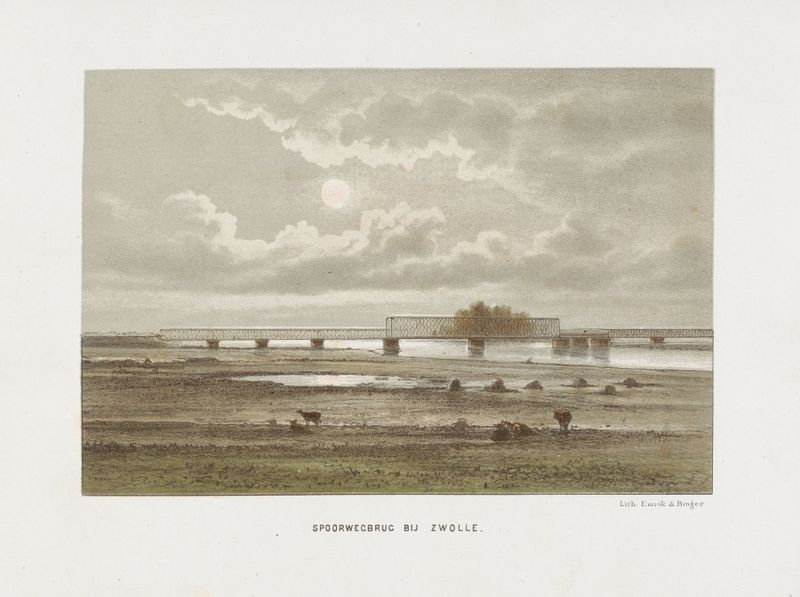
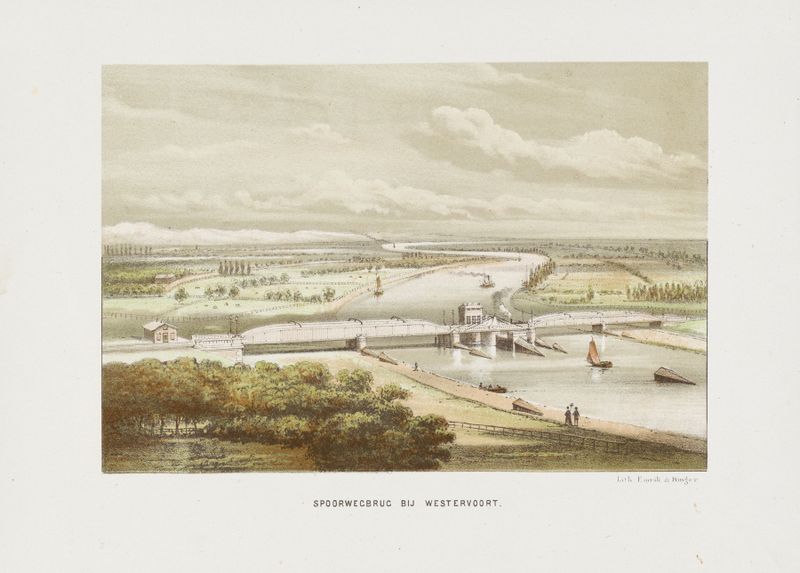
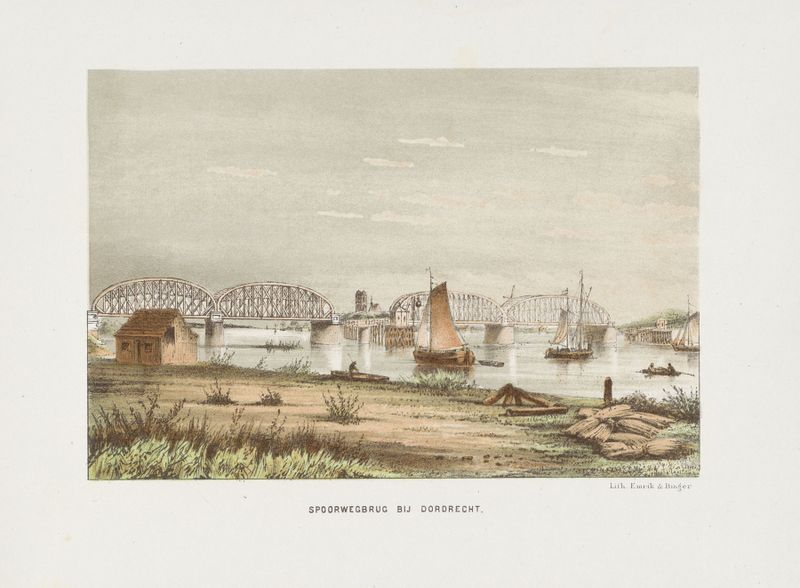
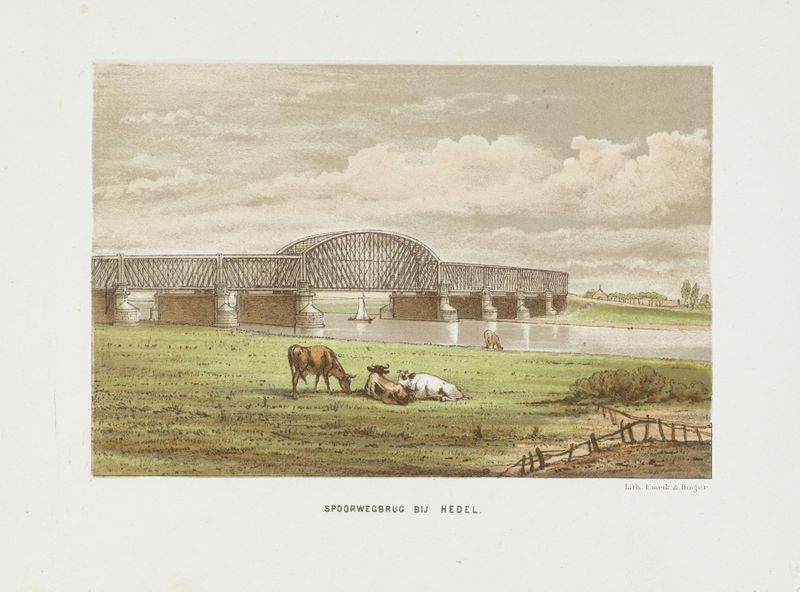
In the folds of its depths, it captures a world suspended between transience and permanence, echoing the ever-present specter of mortality. First, let your gaze drift towards the bridge, gracefully arching across the canvas. Notice how the muted tones of gray and earthy browns evoke a sense of melancholy, while the light plays delicately upon the water below, creating ripples of reflection that shimmer with life yet hint at the passage of time. The composition draws the viewer’s eye through the scene, guiding you along the bridge as if inviting you to walk across its span, bridging the gap between the living and the eternal. Upon closer inspection, you may observe the distant landscape fading into soft wisps of color, emphasizing the ephemeral nature of existence.
The figures scattered along the bridge represent both movement and stillness, their presence a poignant reminder of those who traverse this life, forever journeying yet never fully grasping what lies beyond. The bridge itself becomes a metaphor for connection — to nature, to others, and perhaps, to something more profound yet just out of reach. During the years 1872 to 1874, the artists Emrik & Binger were immersed in the Dutch landscape movement, drawing inspiration from the quiet beauty of rural life. This period was marked by a growing focus on realism, as artists sought to capture the essence of their surroundings without embellishment.
At that time, the duo was also establishing their reputation, experimenting with techniques that would lay the groundwork for their artistic legacy.