
Spring at Cardross — History & Facts
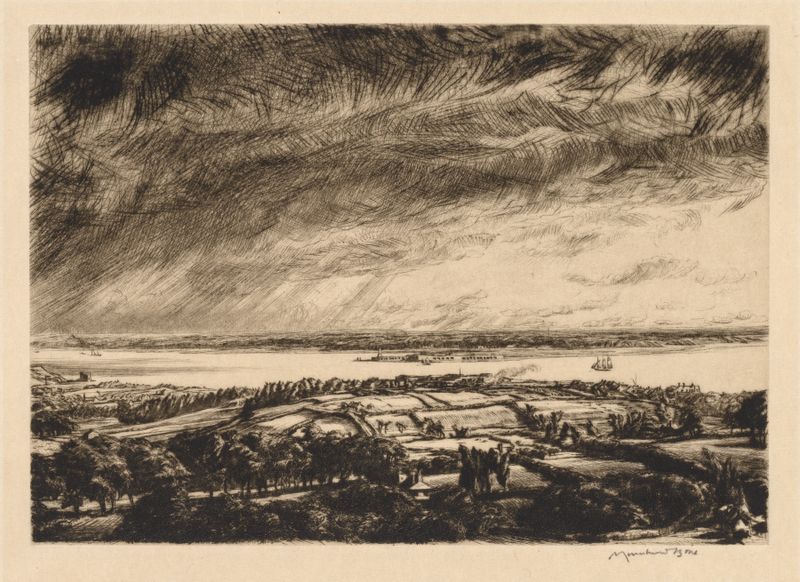
In Spring at Cardross, nature unfolds in a fragile display, reminding us of the transient nature of life. Focus on the lush greens that dominate the foreground, where blades of grass sway gently, a testament to life’s vitality. Notice how the light dances across the scene, casting a warm glow that highlights the delicate blossoms, hinting at a fleeting beauty. The brushwork is expressive, suggesting movement yet capturing stillness, inviting you to linger upon the details the artist chose to emphasize. Yet, upon closer inspection, one can feel an underlying tension woven throughout the vibrant landscape.
The vibrant blooms, while resplendent, also evoke the ephemeral nature of spring — a reminder that beauty is often short-lived. The juxtaposition of the lively foliage against the somber, muted palette of the distant hills hints at mortality, a bittersweet acknowledgment of what lies ahead in the cycle of life. Created in 1900, this piece emerged during a period of evolving artistic expression in Britain, as Muirhead Bone sought to capture the essence of the Scottish landscape. The artist was influenced by the burgeoning movement of mixed media and graphic methods, which shaped his approach to landscape painting.
As the world underwent rapid industrial change, Bone’s work served as a poignant reminder to find beauty amidst the transience of nature.
More Artworks by Muirhead Bone
Browse all →
On the Clyde, 1917-1918; Building a Liner at Greenock
Muirhead Bone
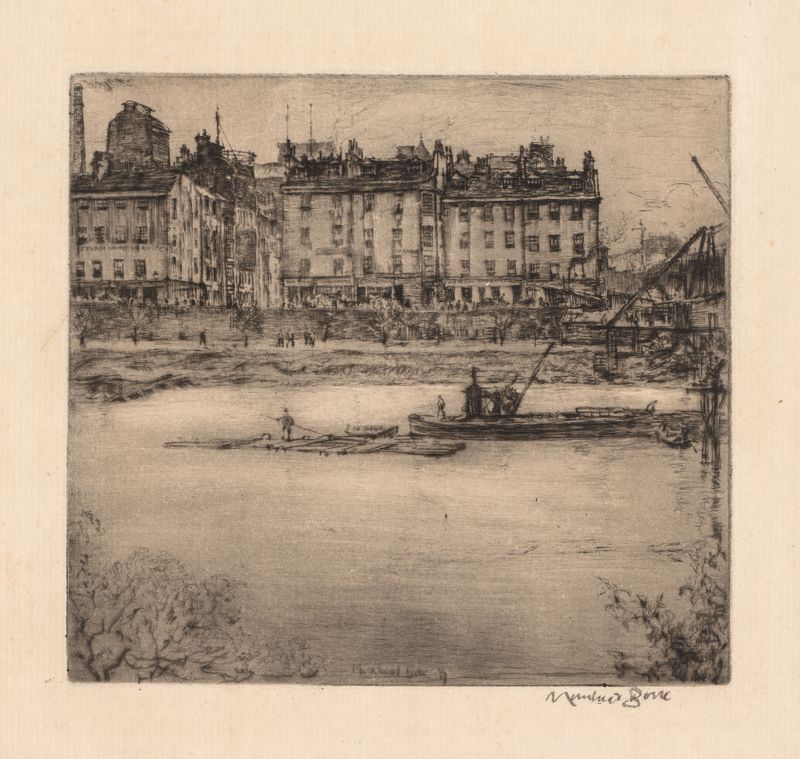
Etchings of Glasgow; Gorbals
Muirhead Bone

On the Clyde, 1917-1918; Reconstructing a Clyde Shipyard
Muirhead Bone

The Great War; Britain’s Efforts and Ideals; Building Ships; A Fitting Out Basin
Muirhead Bone

Picadilly Circus
Muirhead Bone

Demolition of St. James Hall, Exterior
Muirhead Bone
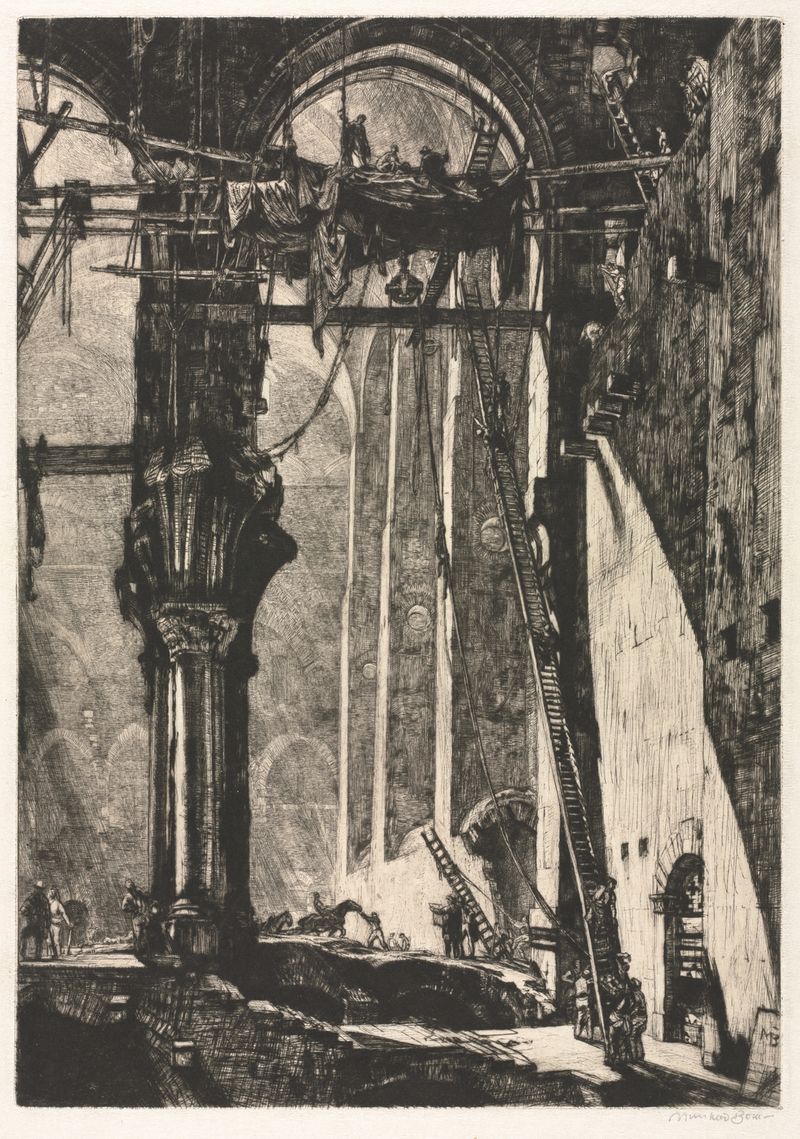
Demolition of St. James Hall, Interior
Muirhead Bone
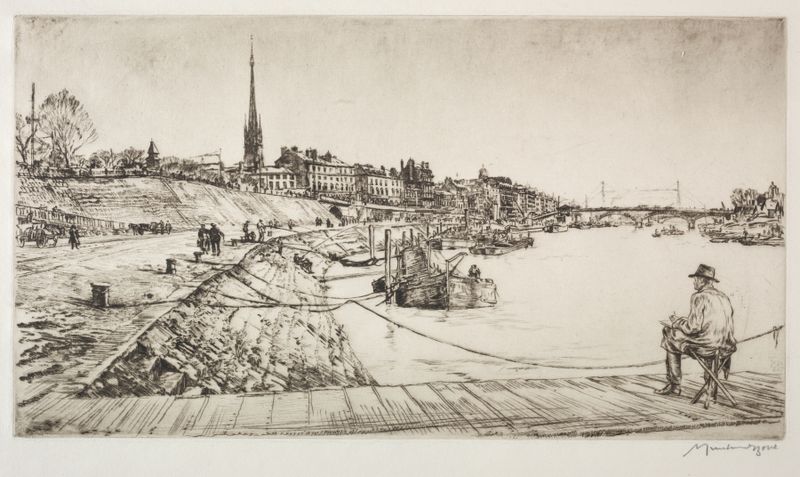
Rouen
Muirhead Bone
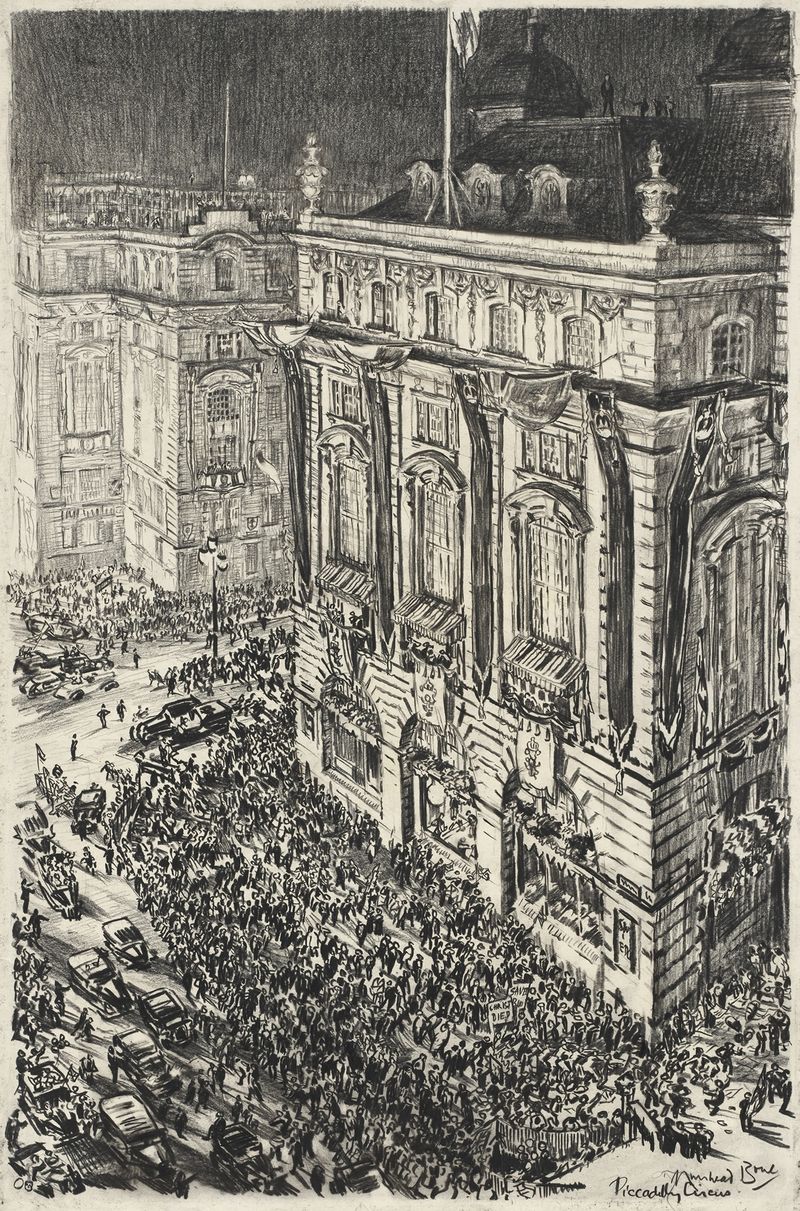
Piccadilly Circus, Eve of the Coronation of George VI
Muirhead Bone
The Solent
Muirhead Bone





