
Staande man met mantel over schouder — History & Facts
Can paint confess what words never could? In Staande man met mantel over schouder, the silent eloquence of the subject reveals a depth of character and yearning beyond mere description. Look to the figure at the center, a man poised in a contemplative stance, his mantle draped elegantly over one shoulder. The rich, muted tones of the fabric contrast beautifully with the warm glow of his skin, creating an intimate connection with the viewer. Notice how the play of light emphasizes the soft contours of his face while casting gentle shadows that hint at an inner turmoil.
Each brushstroke draws you into the fabric's texture and the intricate detailing of his attire, guiding your gaze to the quiet dignity he embodies. As you absorb the intensity of his expression, consider the emotional contrasts at play—confidence tempered by vulnerability, stillness charged with unspoken thoughts. The careful arrangement of the mantle signifies both protection and burden, suggesting a duality in his identity. The absence of elaborate backgrounds further isolates the figure, adding a sense of intimacy that invites you to ponder his story and the revelations hidden beneath the surface. Cornelis Pietersz.
Bega painted this work between 1642 and 1664, a period marked by profound changes in Dutch art as it transitioned towards more personal and psychological explorations of subjects. Working in Amsterdam, Bega was influenced by the growing interest in portraiture and the focus on individual character during the Dutch Golden Age, making this piece a significant reflection of his artistic development and the cultural shifts of his time.
More Artworks by Cornelis Pietersz. Bega
Browse all →
Mannen en jonge vrouw in herberg
Cornelis Pietersz. Bega

Twee mannen en vrouw met kind zittend in herberg
Cornelis Pietersz. Bega
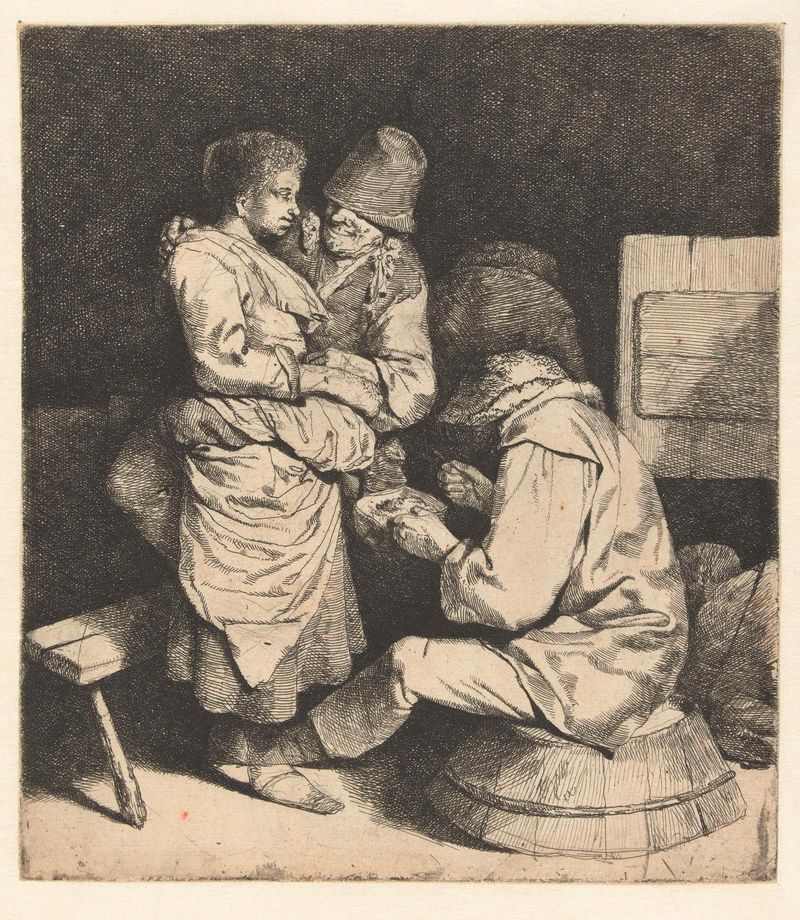
Vrouw vastgepakt door man, andere man zit te eten in herberg
Cornelis Pietersz. Bega

Jonge vrouw zittend met een pijp
Cornelis Pietersz. Bega

Staande vrouw vastgepakt door man, andere man kijkt toe in herberg
Cornelis Pietersz. Bega
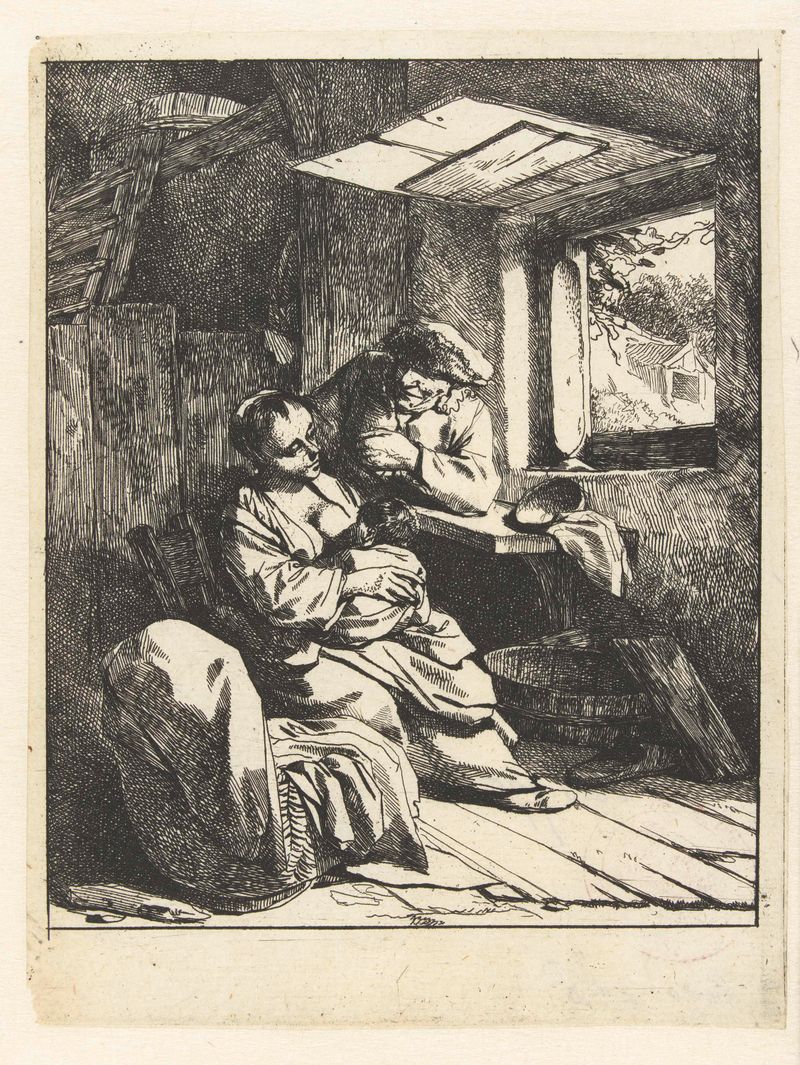
Vrouw met kind en man bij wieg in interieur met open raam
Cornelis Pietersz. Bega
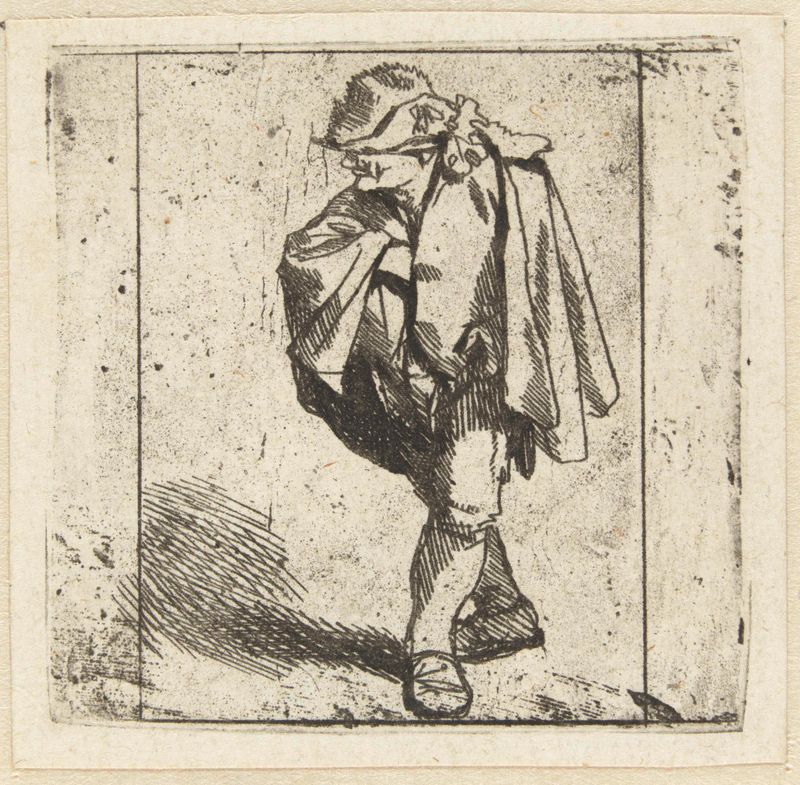
Staande man met de rechterhand op de borst in zijn mantel gestoken
Cornelis Pietersz. Bega
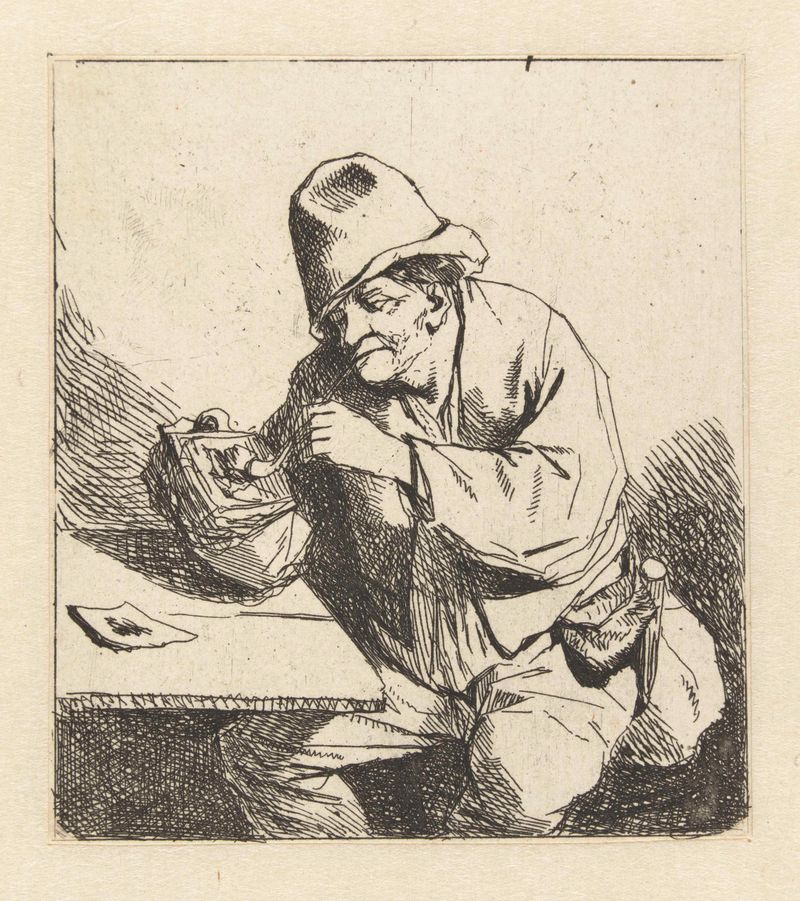
Zittende man steekt pijp aan
Cornelis Pietersz. Bega

Man zittend op ton met kruik in handen
Cornelis Pietersz. Bega

Liefdespaar
Cornelis Pietersz. Bega
More Portrait Art
Browse all →
Las meninas
Diego Velázquez

Self-portrait with a Bandaged Ear and Pipe
Unidentified artist

Girl with a Pearl Earring
Johannes Vermeer

The Sampling Officials of the Amsterdam Drapers’ Guild, Known as ‘The Syndics’
Rembrandt van Rijn

The Hundred Guilder Print: the man seen on the back in the lower left corner
Rembrandt van Rijn

Portrait of Dr Gachet
Vincent van Gogh