
Standing Man with a Stick, Facing Left — History & Facts
What first catches the eye in Standing Man with a Stick, Facing Left is the quiet dignity that emerges from the simplest of means. The figure leans into his stick, his weight and age suggested by the gentle arc of his back and the loose, heavy folds of his cloak. Rembrandt’s hand is unmistakable in the sure, searching lines that never over-explain, letting the viewer’s imagination fill in the man’s story.
The face, though only lightly sketched, hints at a beard and a downward gaze, drawing us into a moment of pause. The play of shadow beneath his feet anchors him to the ground, while the rest of the space remains open, as if the world around him has faded to silence. Drawings like this were a vital part of seventeenth-century studio practice in the Dutch Republic, where artists such as Rembrandt van Rijn used quick studies to capture fleeting gestures and the character of ordinary people. These sheets were rarely made for sale; instead, they served as private exercises or teaching tools, valued for their immediacy and insight.
In 1629, Rembrandt was still in Leiden, experimenting restlessly with materials and subjects, and works like this reveal his fascination with the human condition—unvarnished, unposed, and deeply observed. History has kept few traces of the individual sitters for such studies, but the freshness of the line invites us to imagine the artist’s world: a place where every passerby might become the subject of art. Look again at the man’s stance, and you may sense the artist’s presence, watching, pencil in hand.
More Artworks by Rembrandt van Rijn
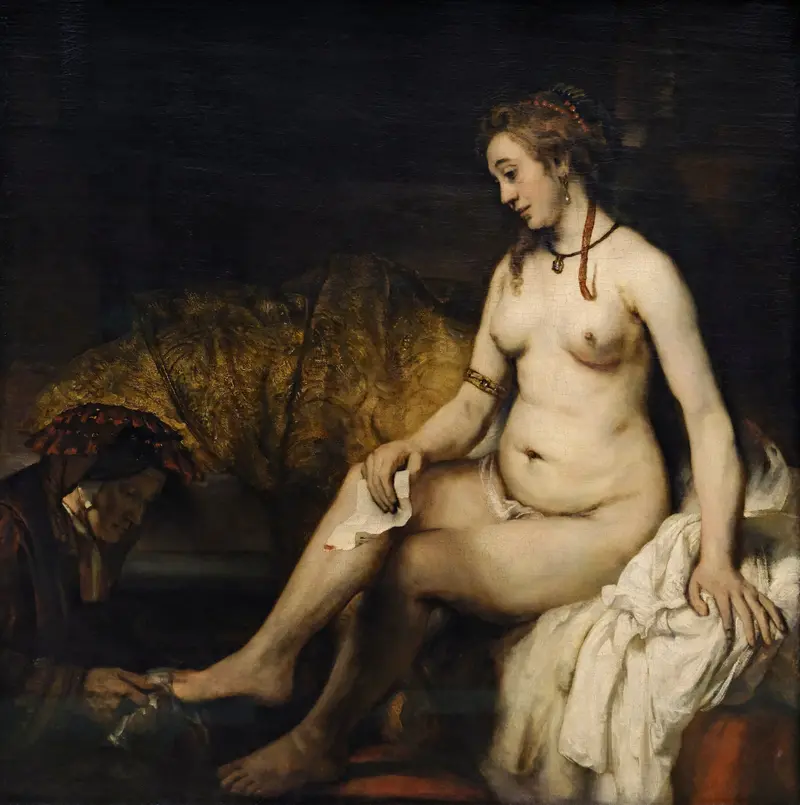
Bathsheba at Her Bath
Rembrandt van Rijn
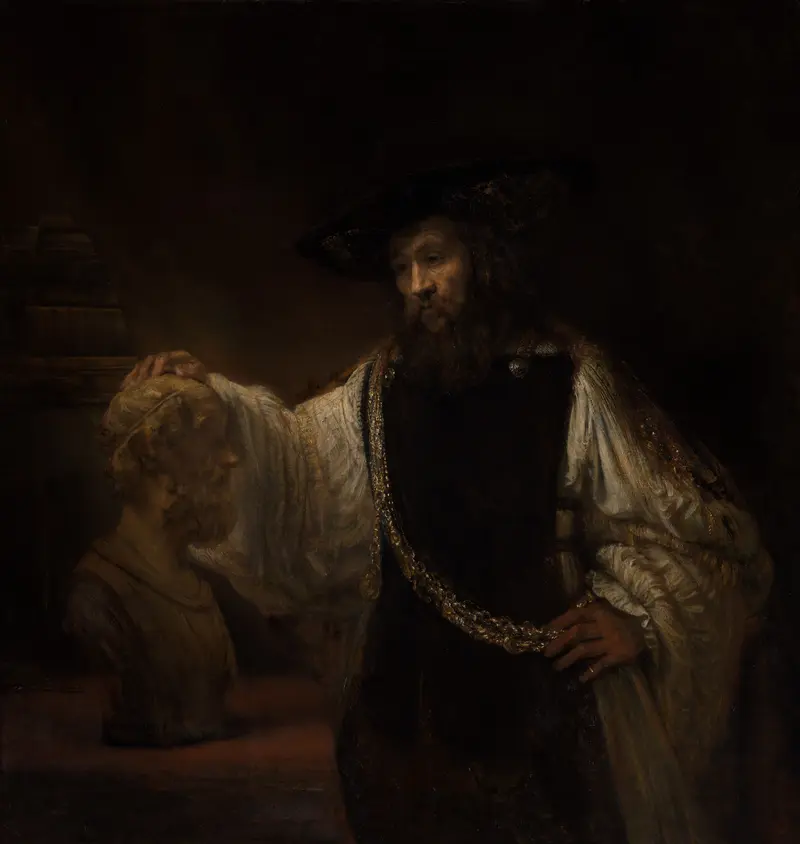
Aristotle with a Bust of Homer
Rembrandt van Rijn
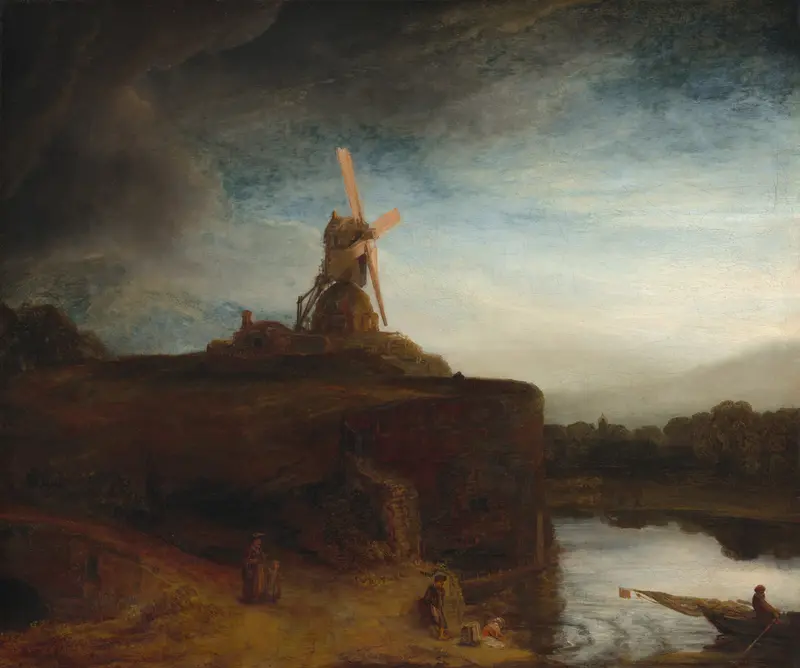
The Mill
Rembrandt van Rijn
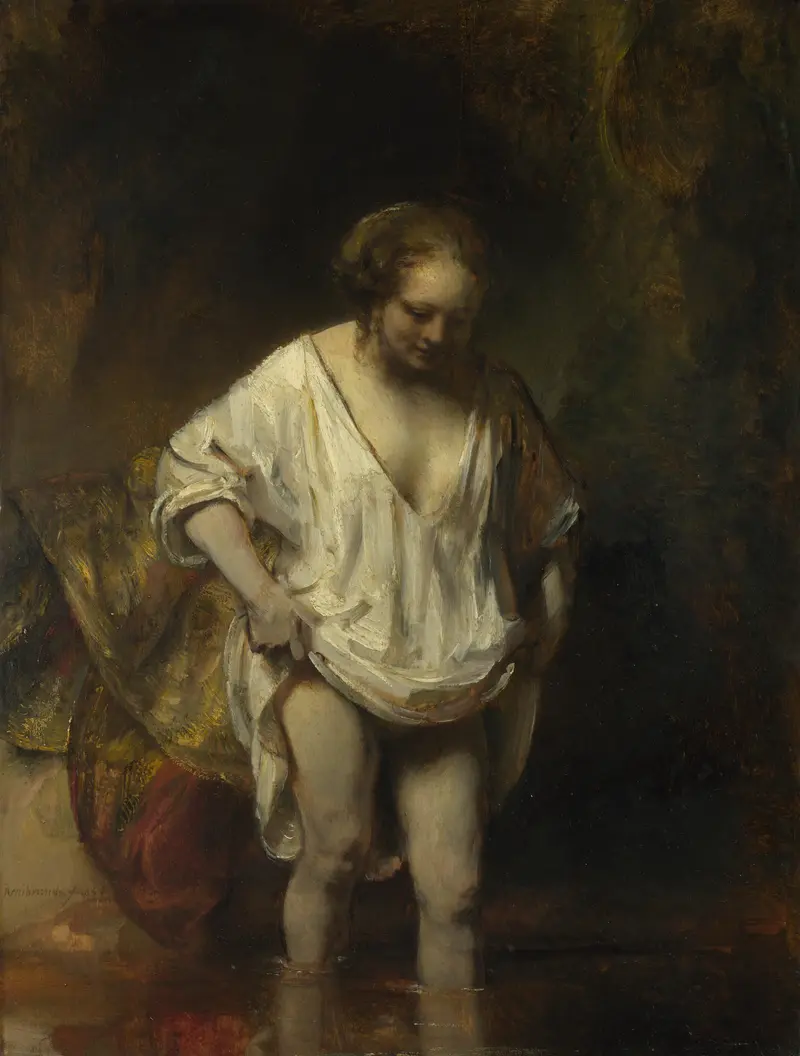
A Woman Bathing in a Stream
Rembrandt van Rijn
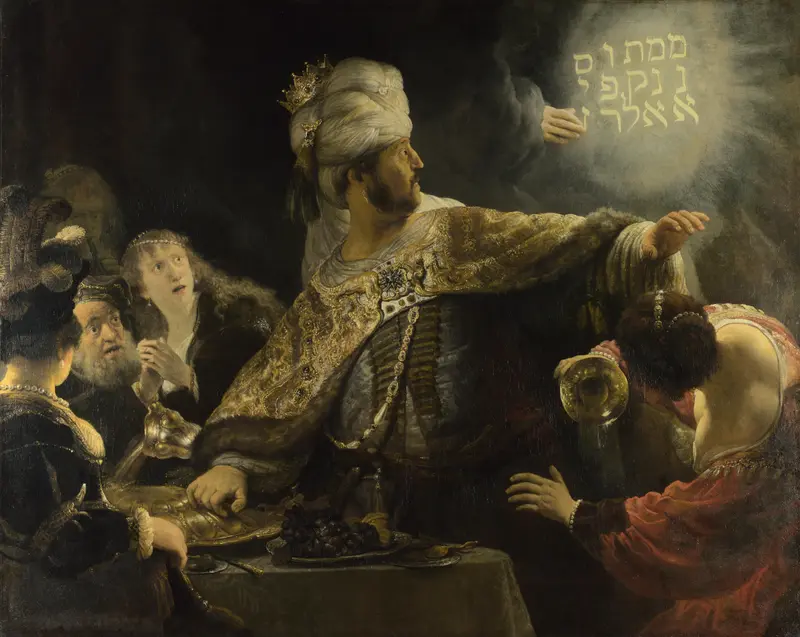
Belshazzar’s Feast
Rembrandt van Rijn
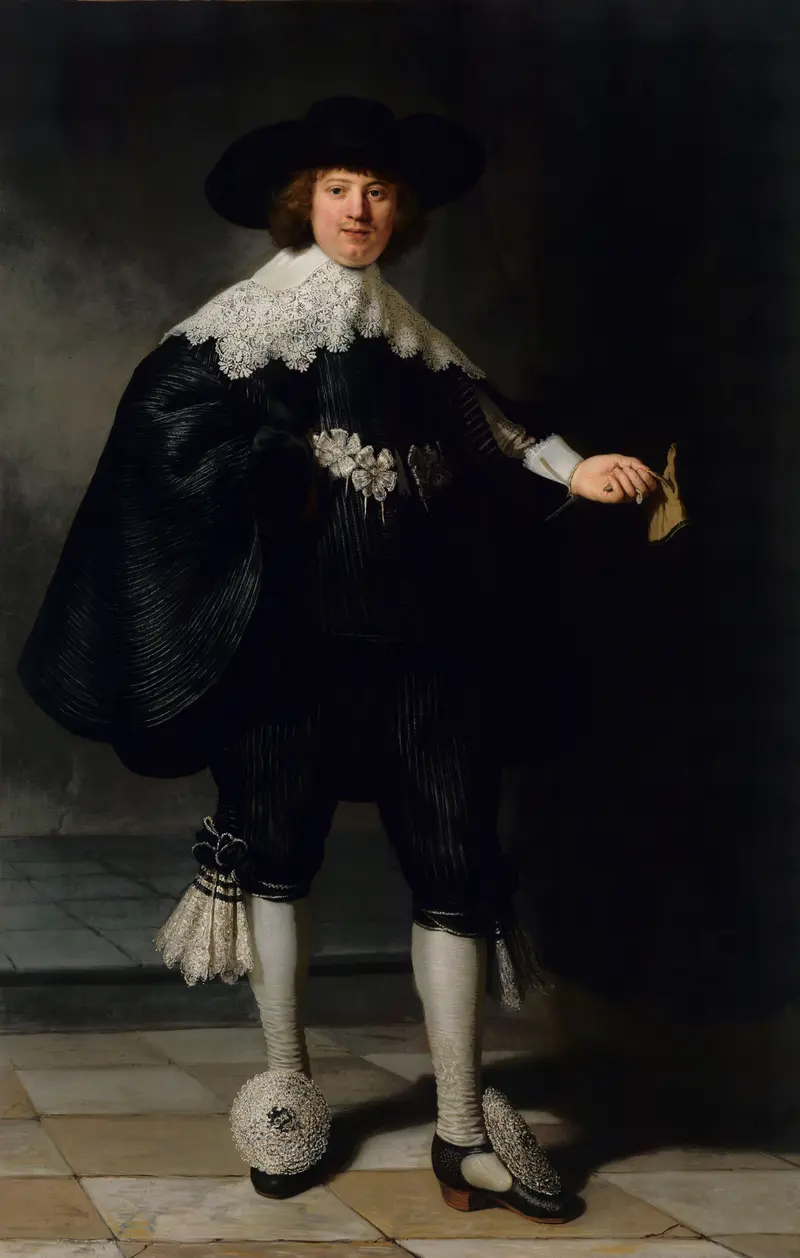
Portrait of Marten Soolmans
Rembrandt van Rijn
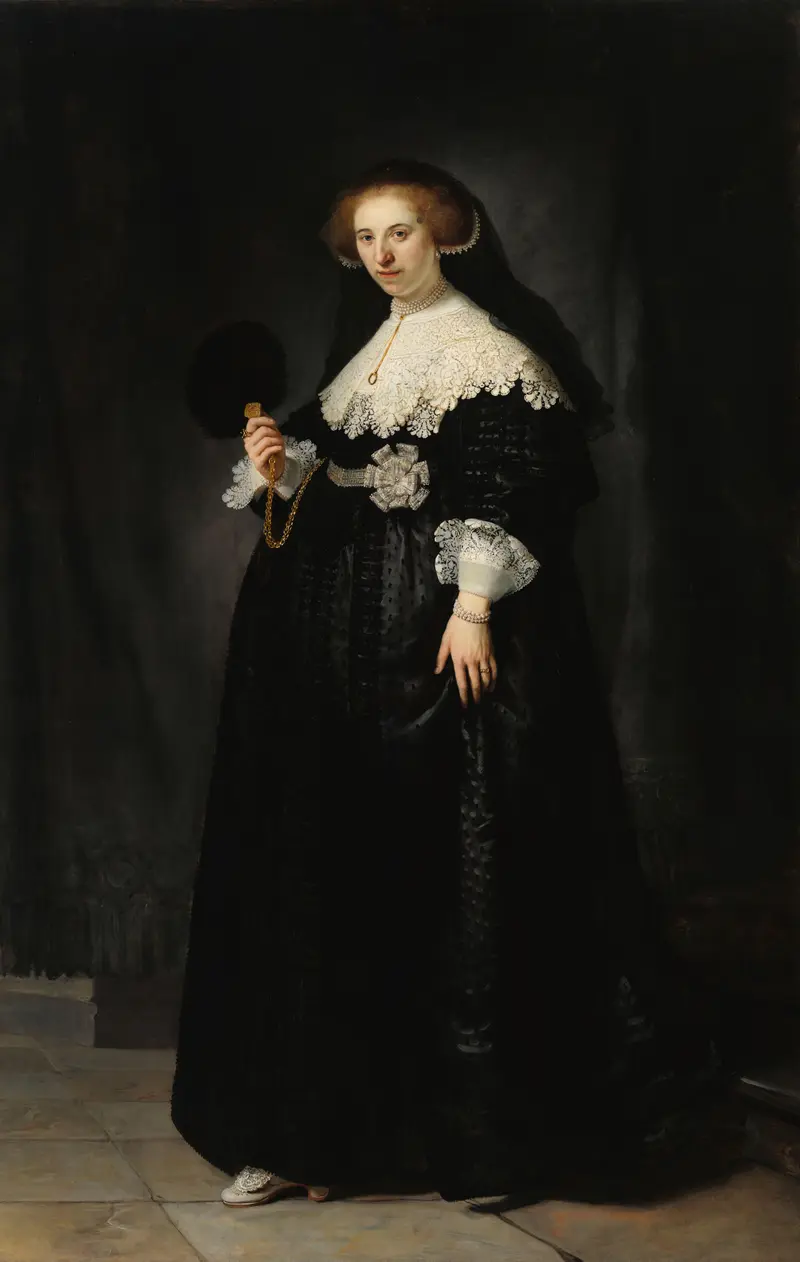
Portrait of Oopjen Coppit
Rembrandt van Rijn

The Prodigal Son in the Tavern
Rembrandt van Rijn
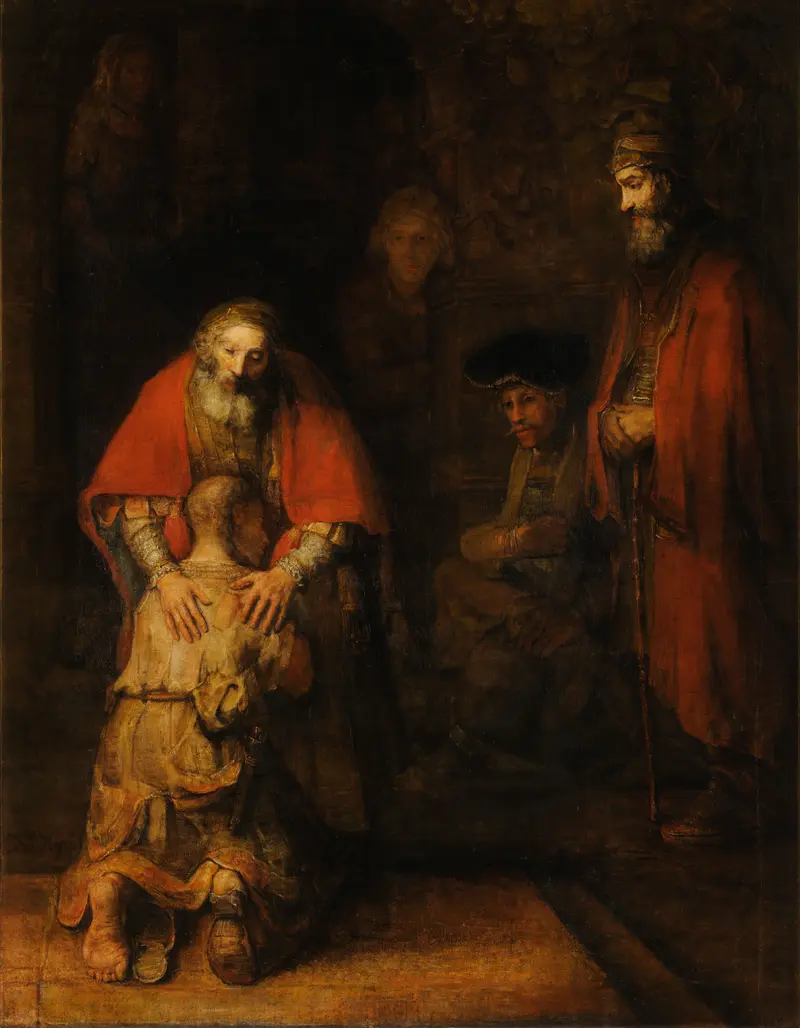
The Return of the Prodigal Son
Rembrandt van Rijn
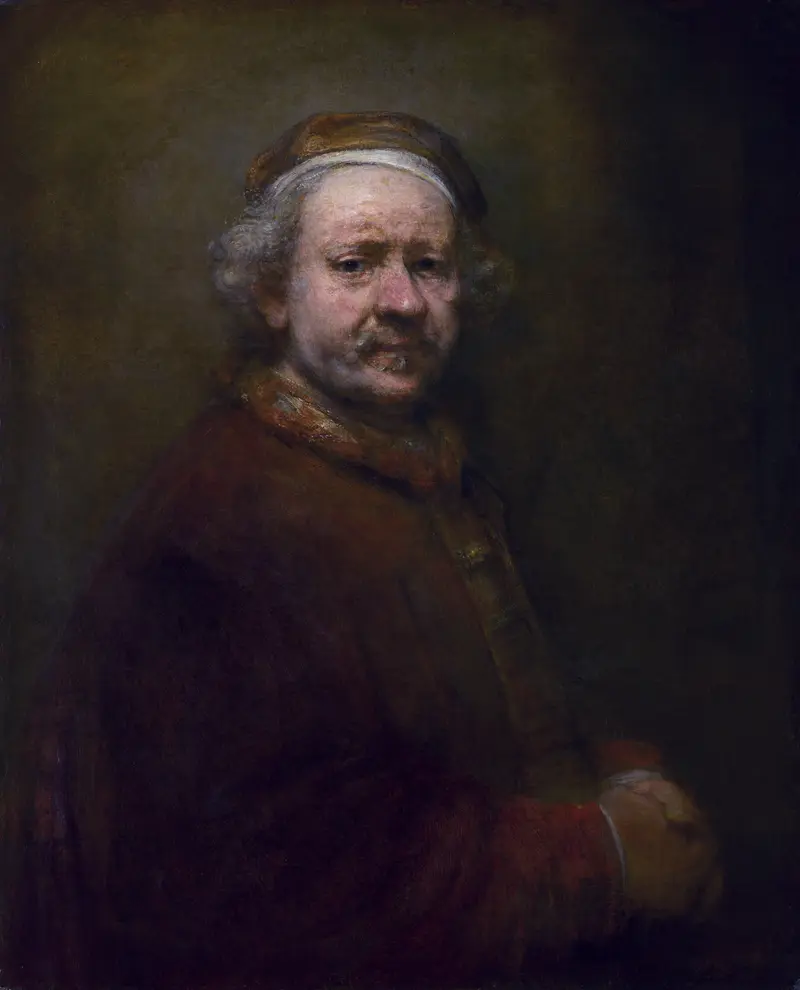
Self-Portrait at the Age of 63
Rembrandt van Rijn




