
Steinbruch bei Paris 8838 Bavarian State Painting Collections — History & Facts
What first catches the eye is the sweep of pale earth under a broad, unsettled sky, where the scars of industry meet the distant promise of a city. In Steinbruch bei Paris, the painter leads us down into the heart of a quarry, where figures and carts toil in the dust, dwarfed by the raw, gouged landscape around them. The light pours in from the left, picking out the ochre ridges and tracing the ruts of heavy wheels, while the city of Paris, rendered in a haze of blue and grey, hovers on the horizon—close enough to feel its presence, yet far enough to seem another world.
The composition draws a line between nature and human ambition: the quarry’s jagged forms echo the city’s rooftops, but here, the land is still king. Painted in 1870, this work stands at the crossroads of a rapidly changing Europe, when artists like Adolf Heinrich Lier turned their gaze from grand historical scenes to the landscapes shaped by modern life. The quarry was a site of transformation, feeding the growth of cities and the ambitions of industry, and painters of the era—especially those influenced by the Barbizon School—found new meaning in such humble, everyday subjects. While history has kept few traces of the exact circumstances behind this painting, its presence today in the Bavarian State Painting Collections speaks to a time when the boundaries between city and countryside, labor and leisure, were being redrawn.
Look again at the figures and their shadows: they are both witnesses and agents of this new world.
More Artworks by Adolf Heinrich Lier

Erntetag in Oberbayern bei Habach
Adolf Heinrich Lier

Küstenlandschaft mit Windmühle
Adolf Heinrich Lier
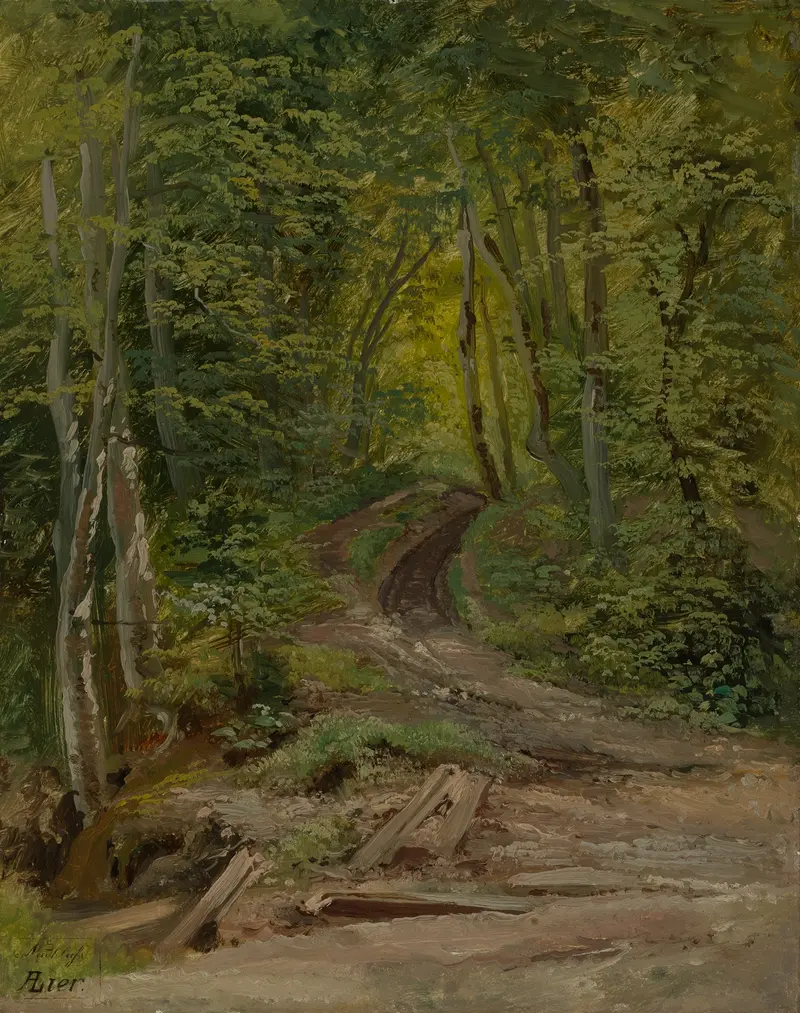
Waldinneres
Adolf Heinrich Lier
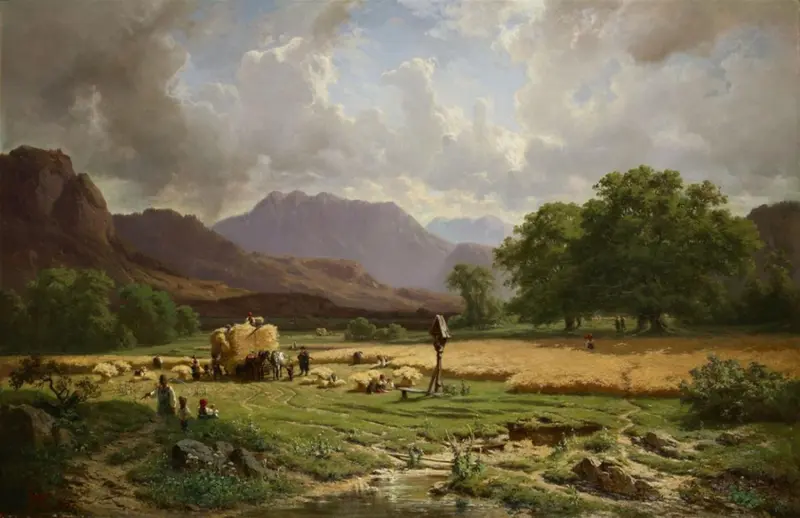
Grain Harvest in the Mountain
Adolf Heinrich Lier
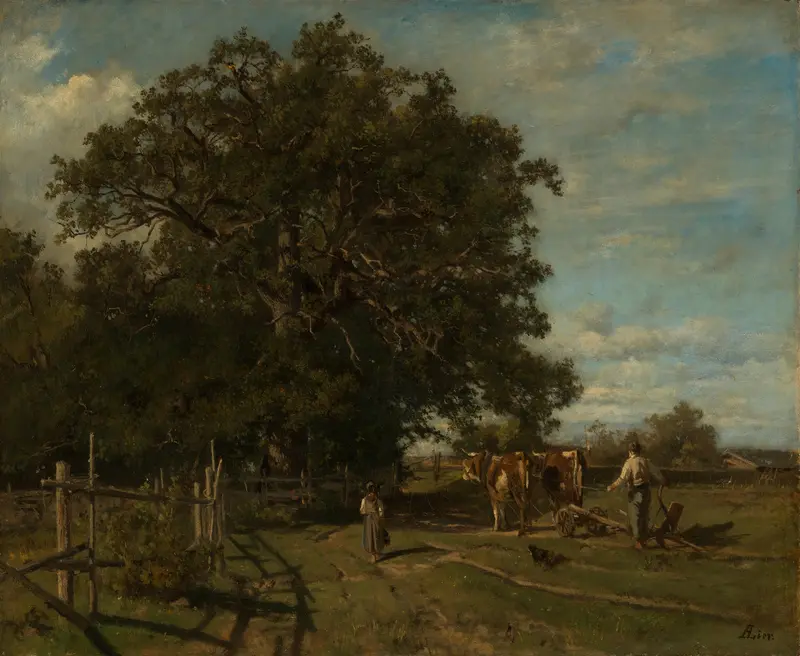
Eiche am Waldrand und pflügender Bauer
Adolf Heinrich Lier
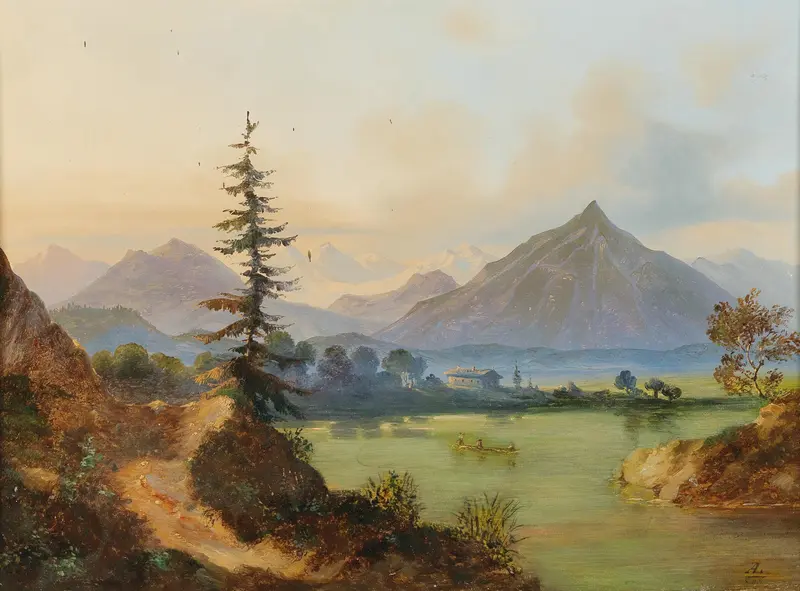
Lake In A Mountain Landscape
Adolf Heinrich Lier

Herbstlandschaft am Abend mit heimkehrender Schafherde
Adolf Heinrich Lier
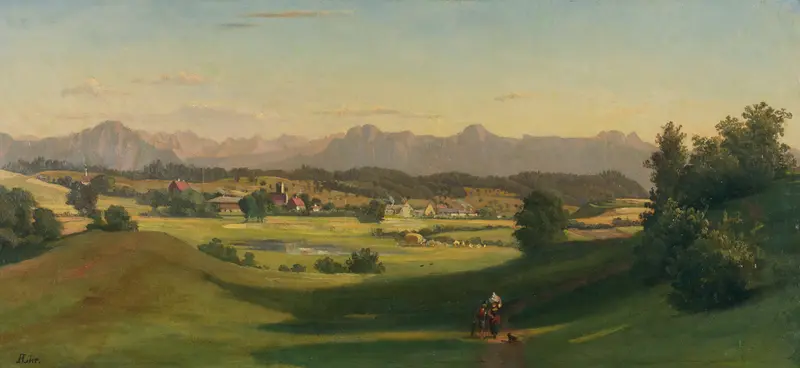
Landschaft bei Murnau
Adolf Heinrich Lier
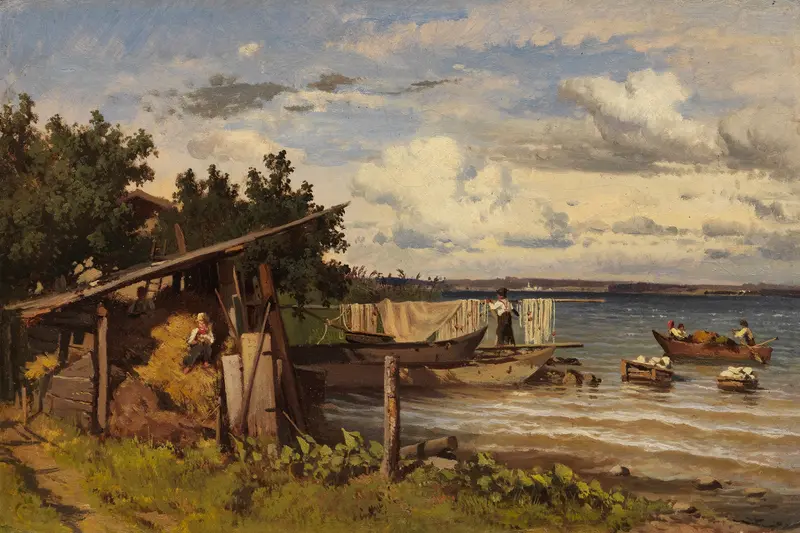
Fischer am Seeufer
Adolf Heinrich Lier
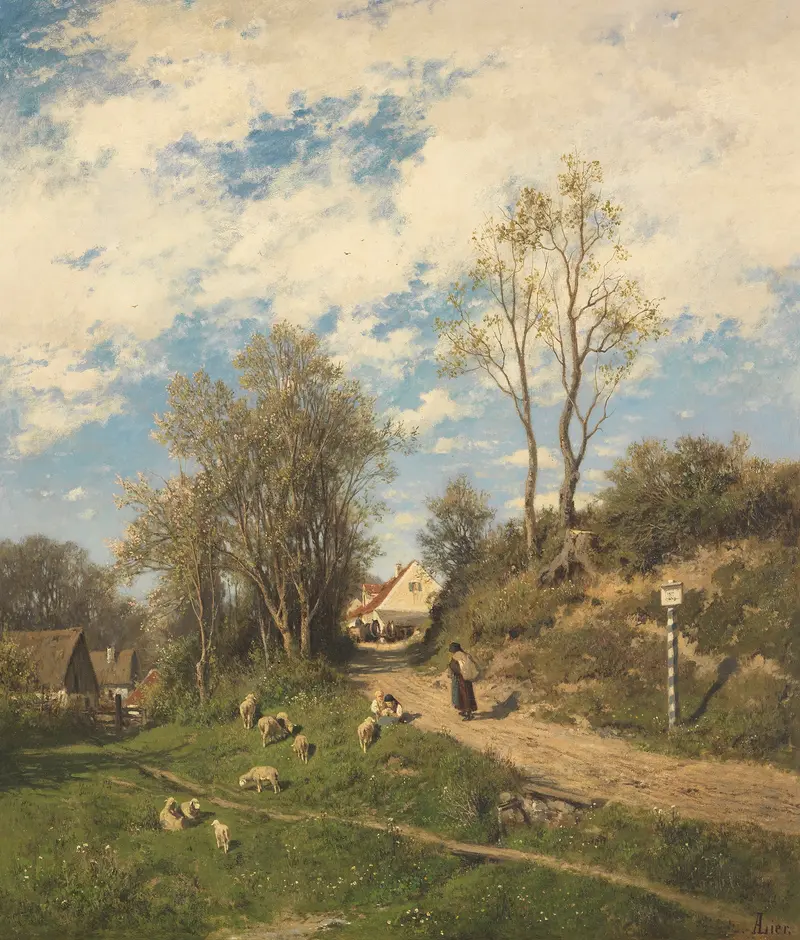
Frühlingsmorgen
Adolf Heinrich Lier
More Landscape Art

The Starry Night
Vincent van Gogh

View of Delft
Johannes Vermeer

Water Lilies
Claude Monet

The Grand Canal, Venice, looking north-west from the Ca' Corner to the Ca' Contarini degli Scrigni, with the campanile of Santa Maria della Carità
Canaletto

Windsor Castle
Canaletto

The Grand Canal looking North-East from the Palazzo Dolfin-Manin to the Rialto Bridge
Canaletto