
Steiniger Weg am Waldrand mit sitzendem Mann — History & Facts
What secret hides in the quiet of the canvas? In a world that rushes past us, how often do we pause to embrace the stillness and the memories it can evoke? Look to the center of the piece, where a solitary figure sits on a rocky path, surrounded by a lush forest. His posture, relaxed yet contemplative, invites the viewer to share in his moment of reflection. Notice the warm hues that define the scene—earthy browns and vibrant greens—each brushstroke capturing the soft interplay between light and shadow.
The artist's technique brings a palpable texture to the foliage, while the winding path leads the eye deeper into the tranquil landscape, creating a sense of journey both external and internal. Delving deeper, we can sense a poignant contrast between solitude and nature's embrace. The serene expression on the man’s face suggests a profound connection to his surroundings, hinting at nostalgia for a simpler time or a personal memory lost to the passage of years. The contrasts in light play against the dark foliage, symbolizing the interplay of past and present, evoking a bittersweet reminder of fleeting moments that shape our identities. Hans Thoma painted Steiniger Weg am Waldrand mit sitzendem Mann in 1860 during his time in Germany, where he was influenced by the burgeoning Romantic movement.
While he sought to capture the beauty of rural life and nature, this period was marked by a fascination with inner emotional experiences as well. Thoma's works often reflect a deep appreciation for the human connection to landscape, and this painting is no exception, revealing the artist's desire to evoke contemplation and memory amidst the serenity of nature.
More Artworks by Hans Thoma
Browse all →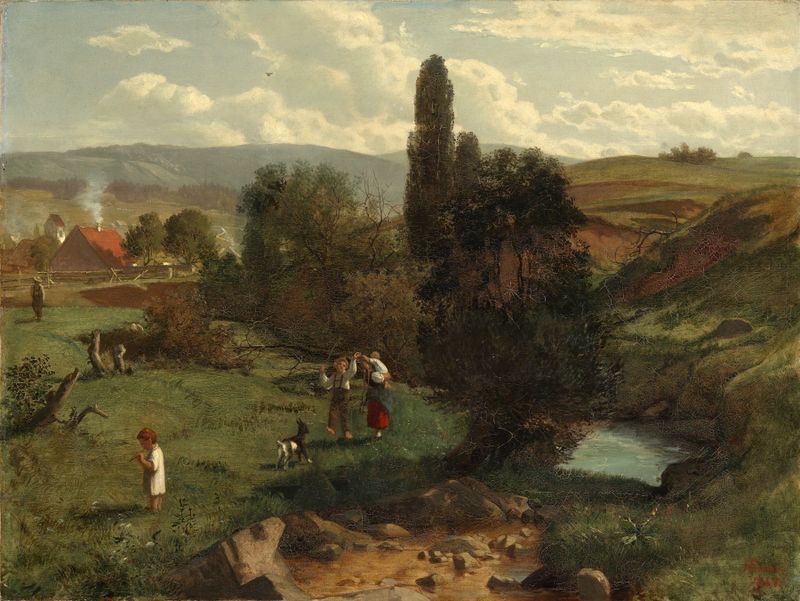
Schwarzwaldlandschaft
Hans Thoma
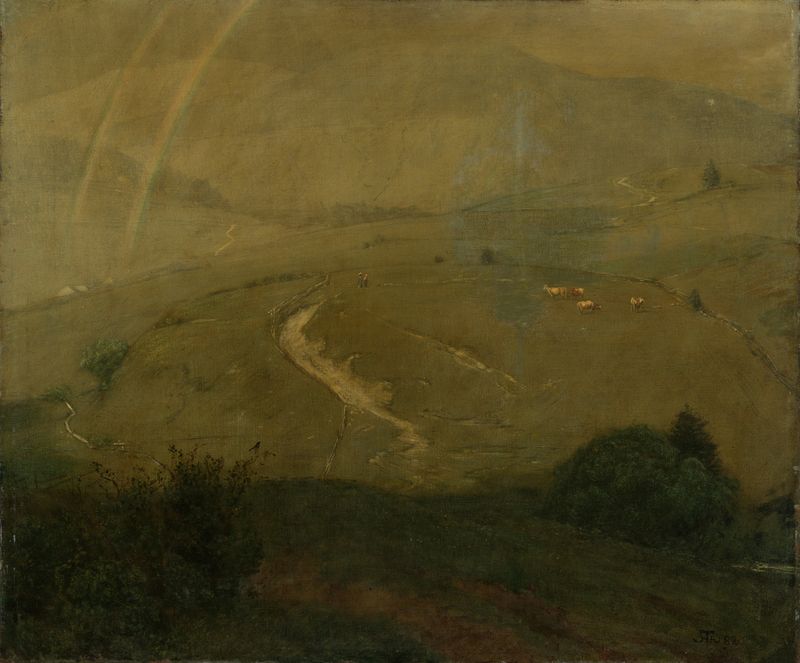
Regen im Schwarzwald
Hans Thoma
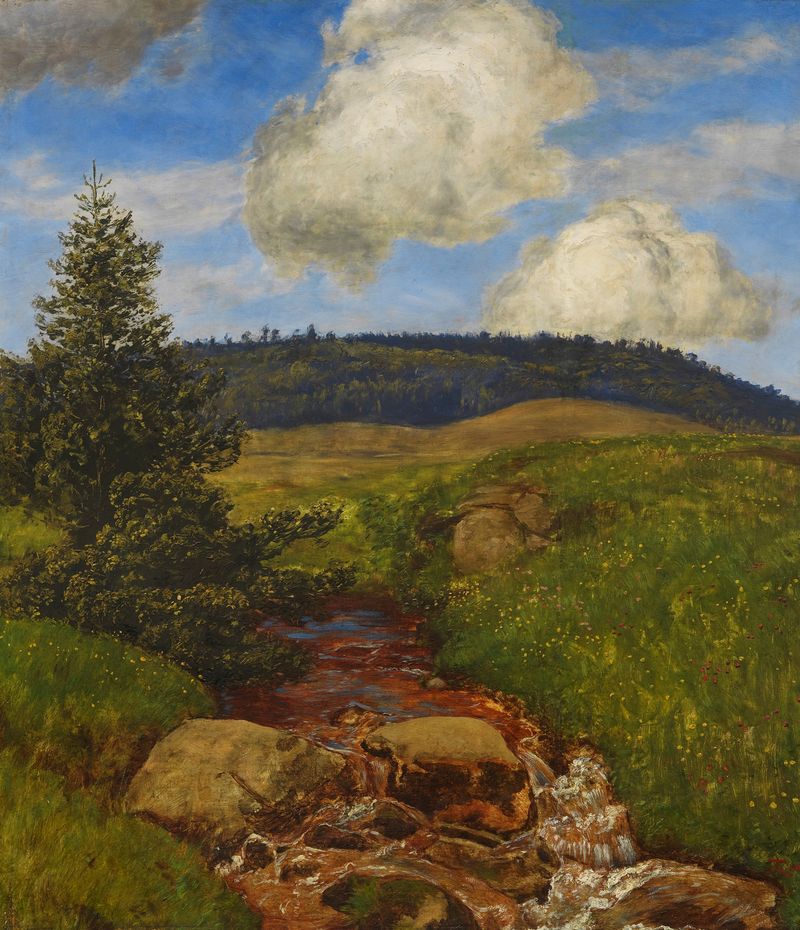
Schwarzwaldbach
Hans Thoma
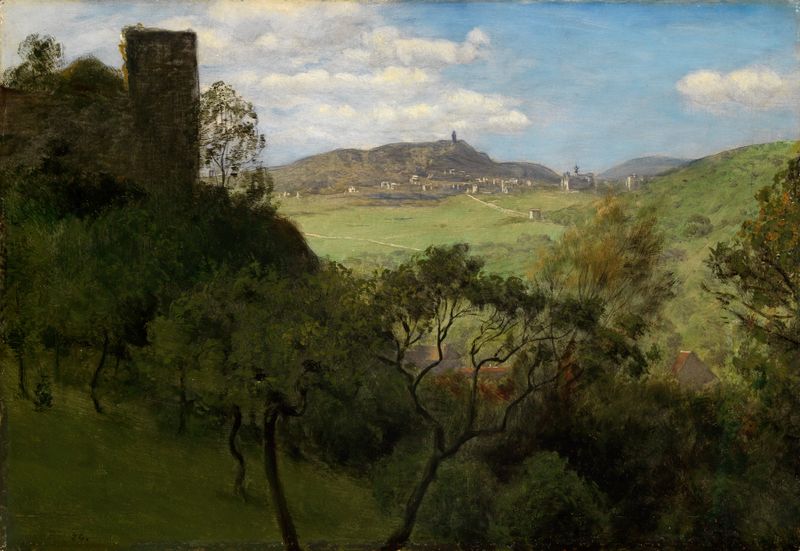
Blick auf Falkenstein im Taunus
Hans Thoma
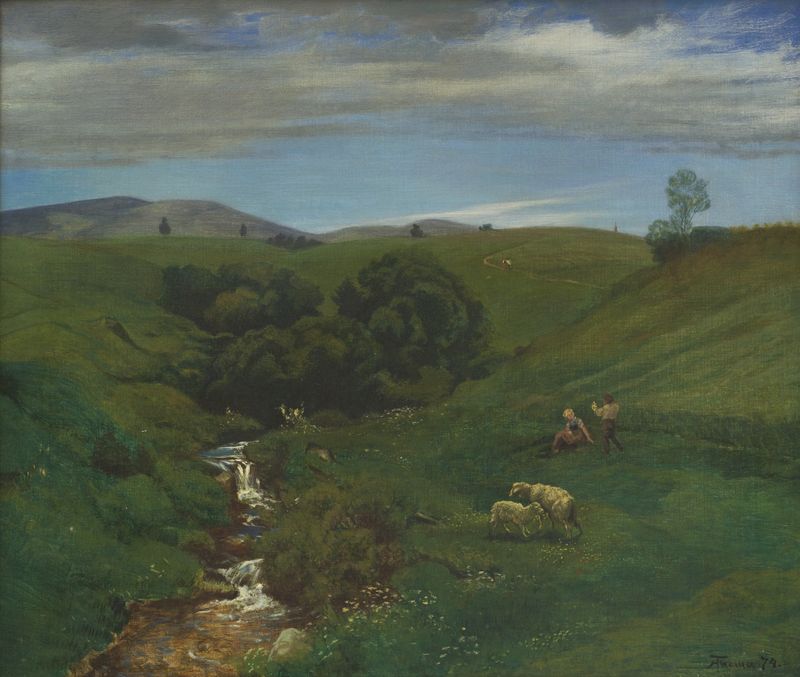
Black Forest Meadow near Bernau
Hans Thoma
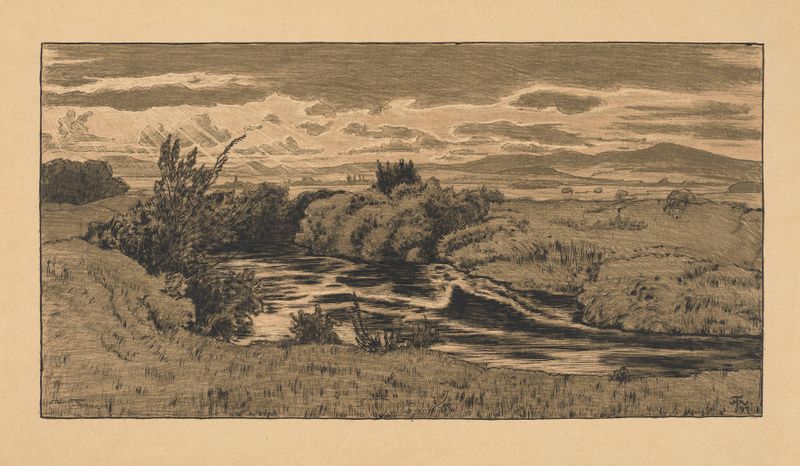
Evening by the Nidda River
Hans Thoma
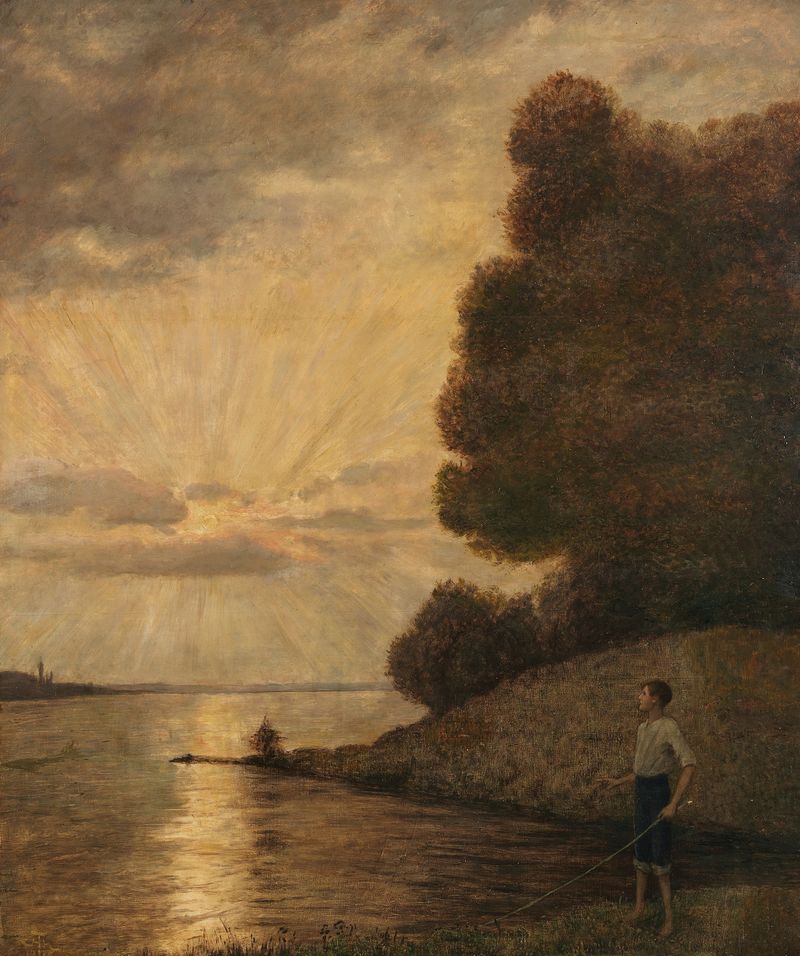
Sonnenuntergang am Oberrhein
Hans Thoma
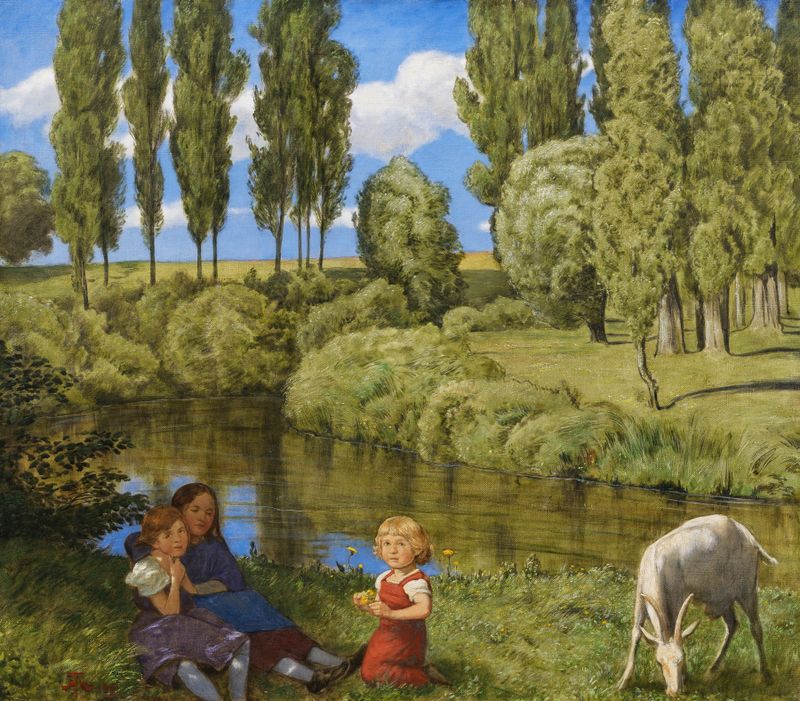
Am Stillen Bach
Hans Thoma
Der Abendstern
Hans Thoma
Das Rheintal bei Säckingen
Hans Thoma





