
Still Life — History & Facts
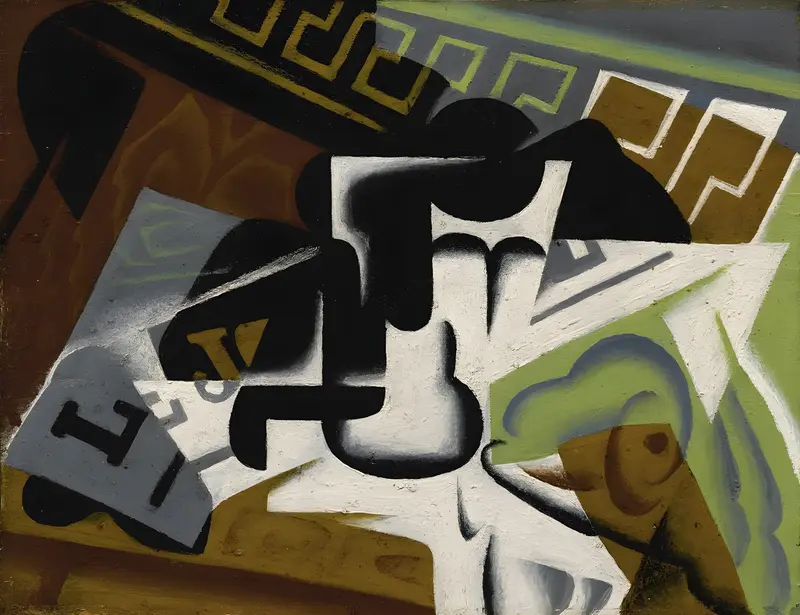
In Still Life, Juan Gris employs a vibrant palette dominated by shades of blue, yellow, and red. The composition features a variety of objects, including fruits and everyday items, arranged in a geometric manner. The use of sharp angles and overlapping shapes creates a sense of depth and complexity.
The overall effect is both dynamic and harmonious, typical of Gris's Cubist style. The painting is executed in oil on canvas, showcasing Gris's signature technique of breaking down forms into geometric shapes. The viewer can observe the meticulous brushwork that contributes to the texture and richness of the colors. Gris's innovative approach to still life challenges traditional representations by emphasizing structure over realism.
This work exemplifies the Cubist movement's focus on multiple perspectives. Juan Gris, a Spanish painter associated with the Cubist movement, created this work during the early 20th century. He was known for his ability to blend color and form in a way that was distinct from his contemporaries. An interesting fact about this painting is that it reflects Gris's transition from traditional still life to a more abstract interpretation, showcasing his unique vision.
This piece is part of the collection at the Museo Thyssen-Bornemisza in Spain.
More Artworks by Juan Gris
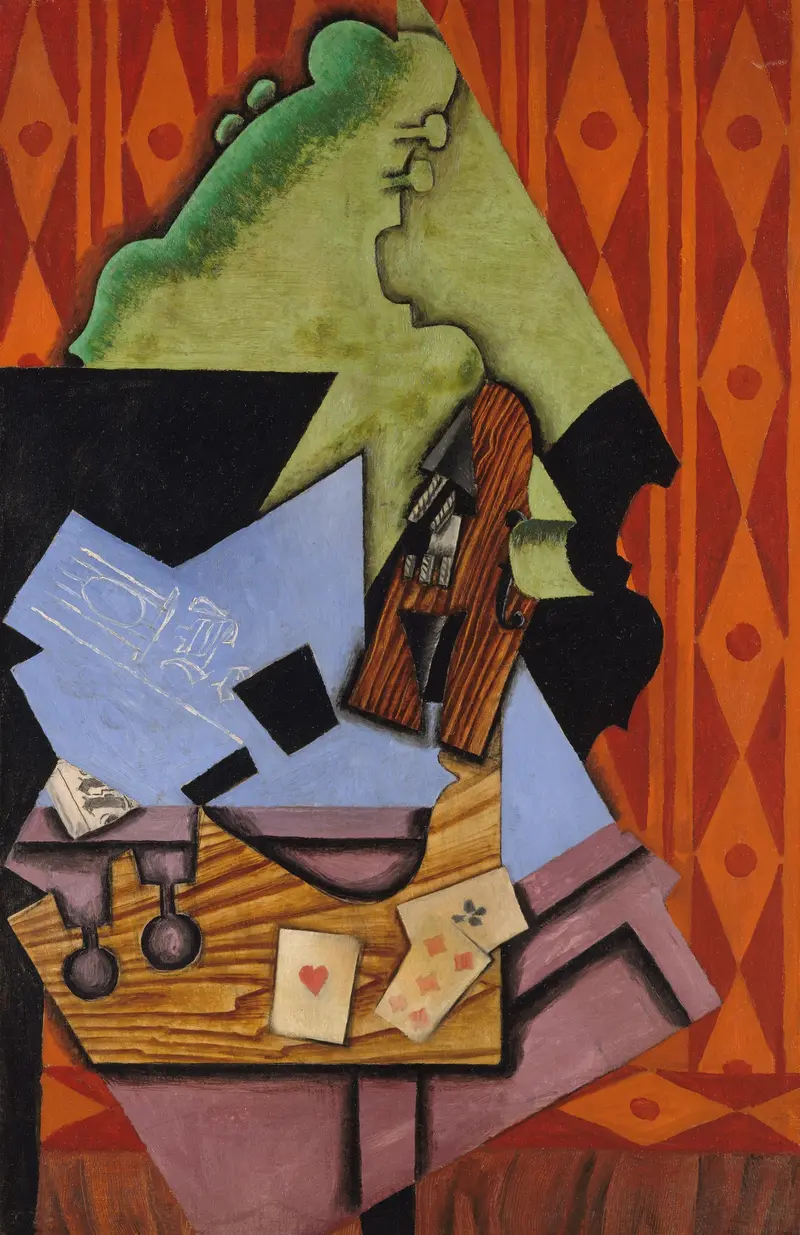
Violin and Playing Cards on a Table
Juan Gris

Portrait of Picasso
Juan Gris
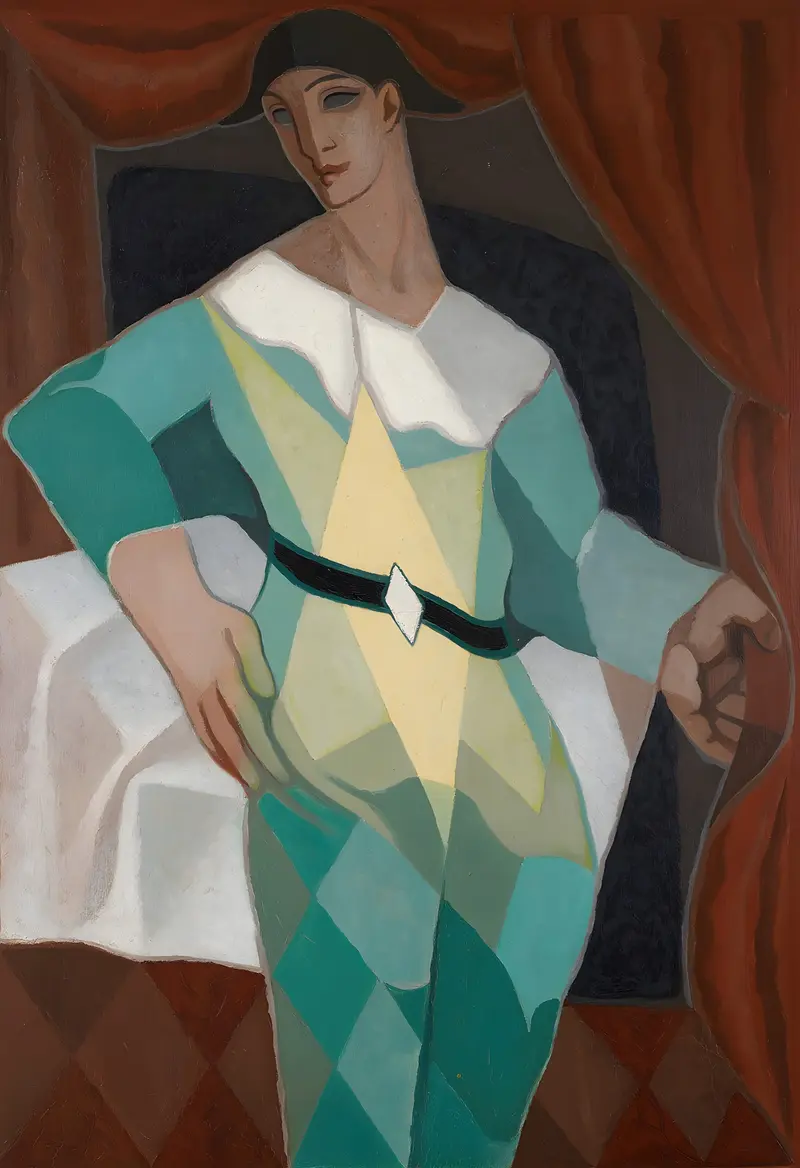
Arlequin
Juan Gris

A Guitar, Glasses and a Bottle
Juan Gris
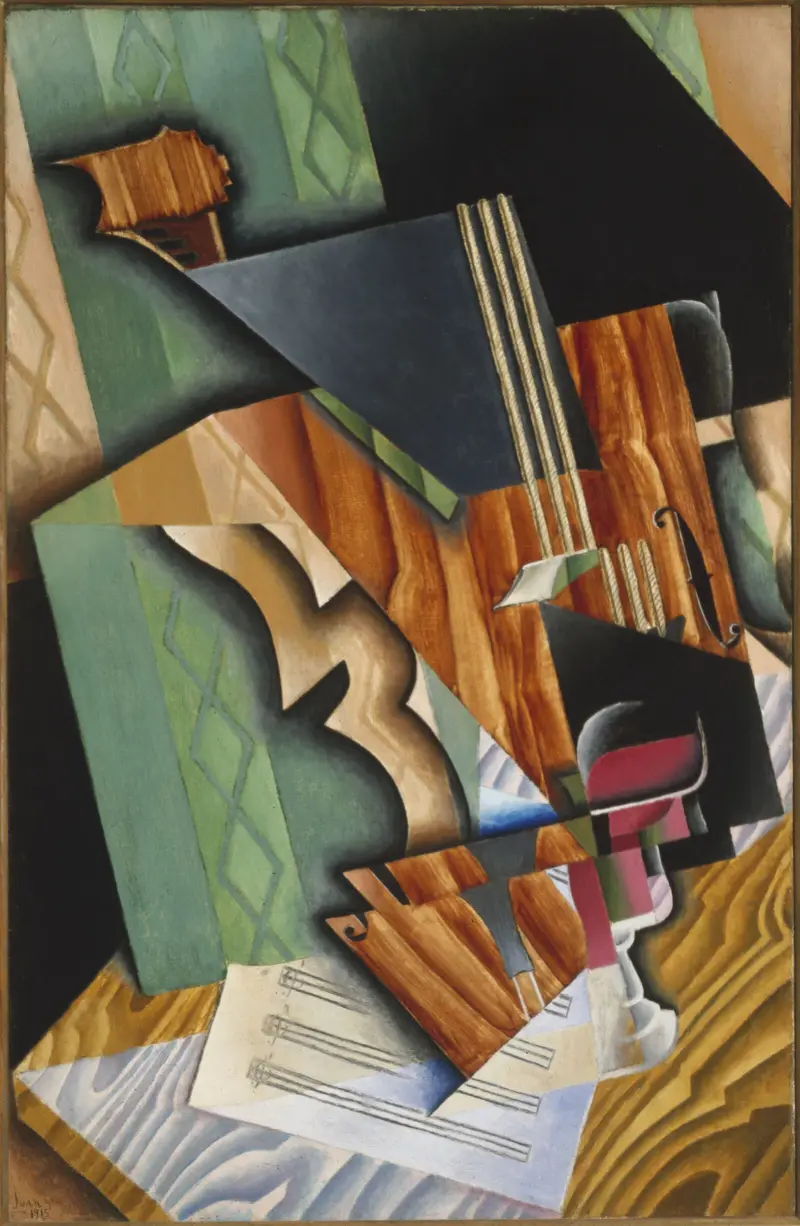
Violin and Glass
Juan Gris

Bottle and fruit bowl
Juan Gris
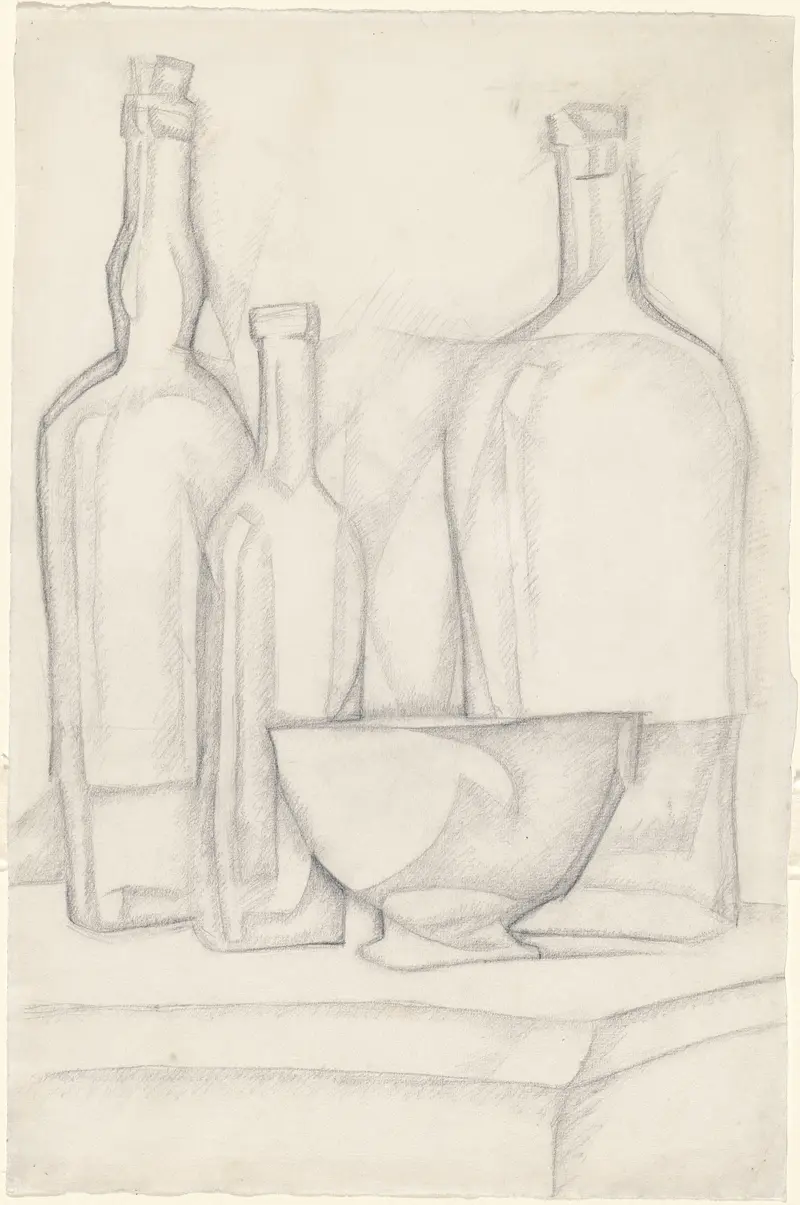
Bottles and Bowl
Juan Gris
Journal et compotier
Juan Gris
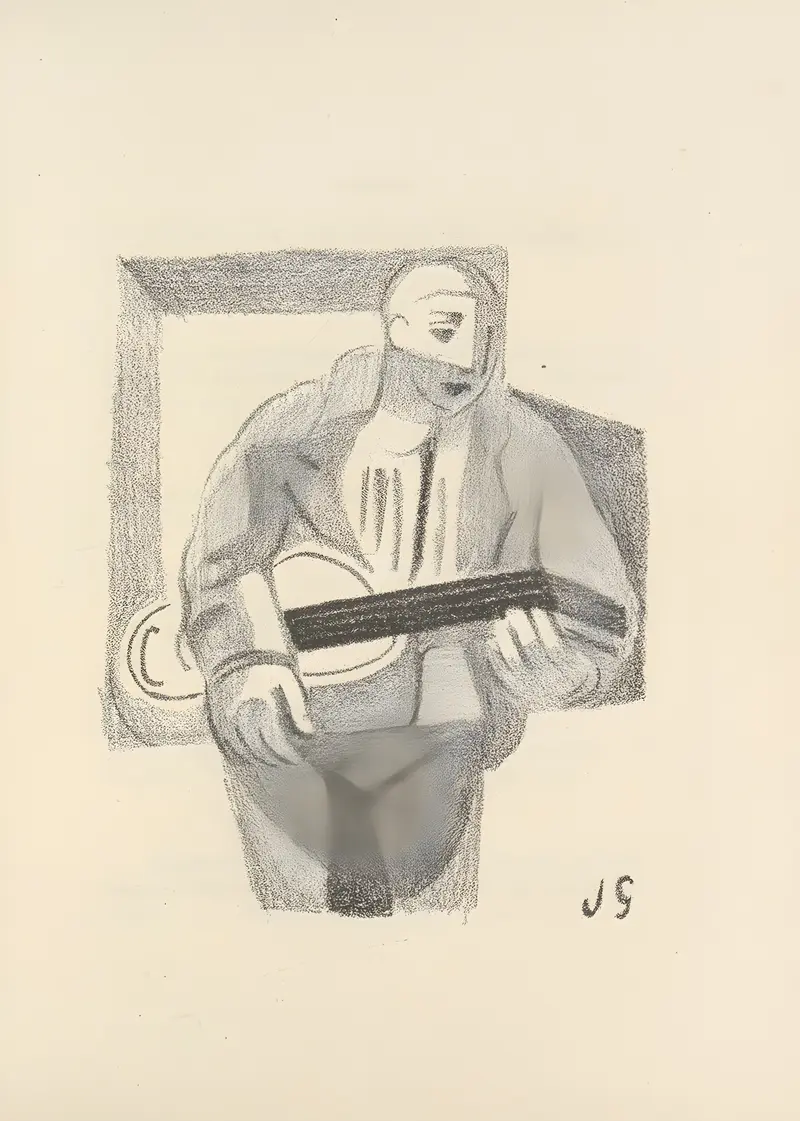
As a wife has a cow Pl.2
Juan Gris
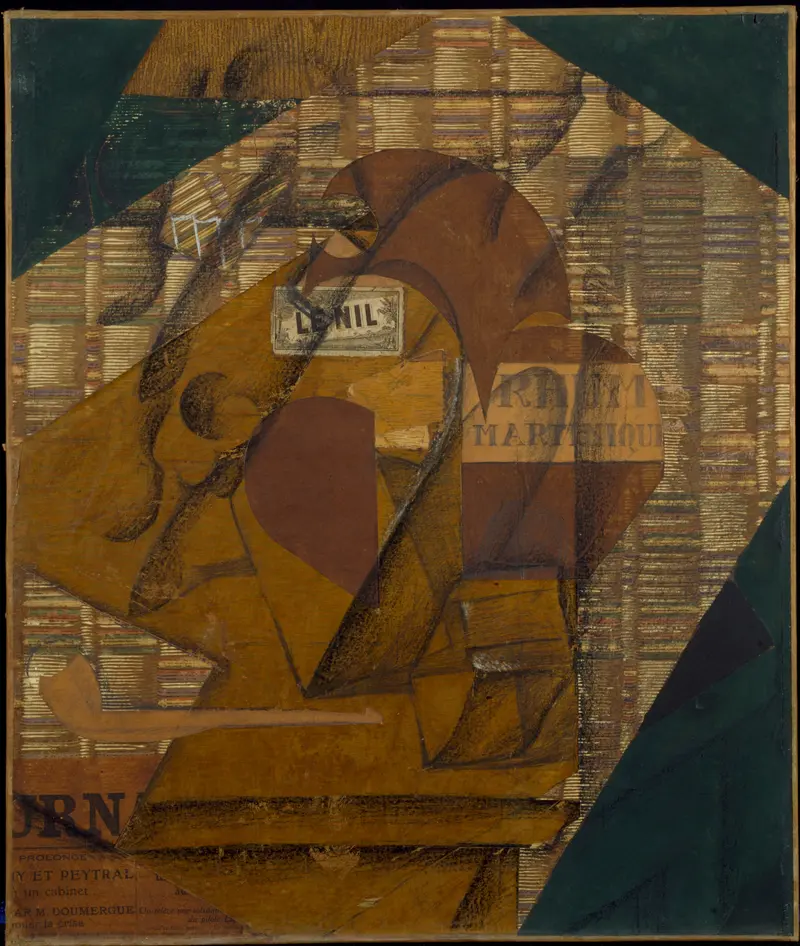
Bottle of Rum and Newspaper
Juan Gris





