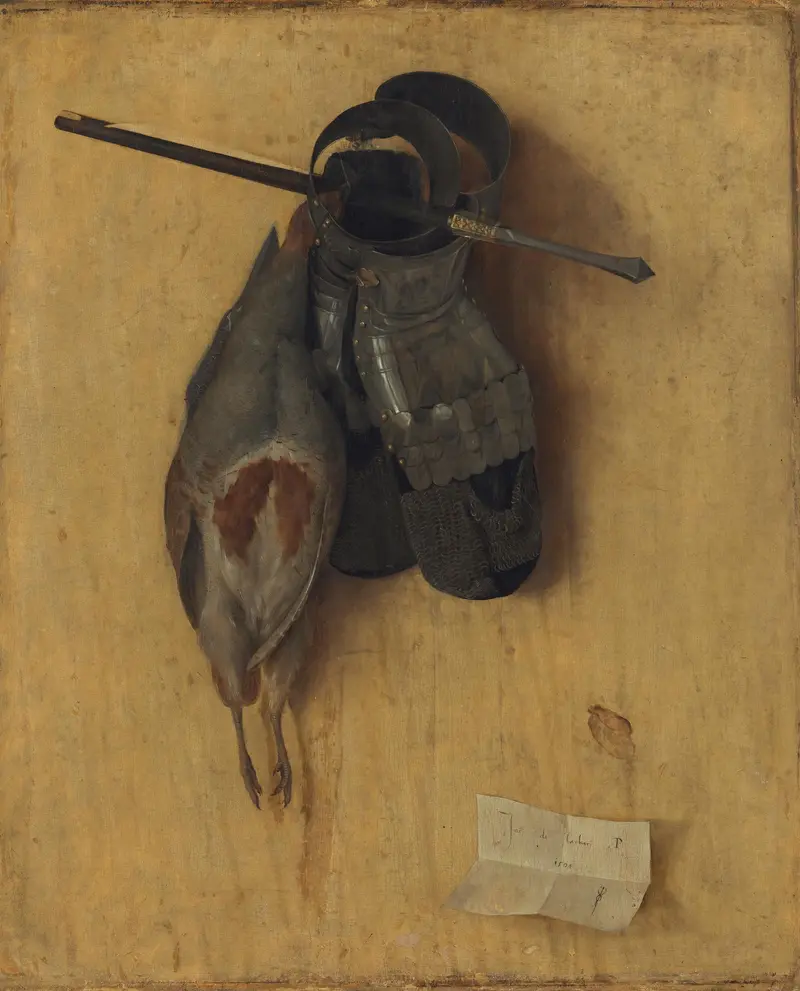
Still life - The Game bag — History & Facts
A single shaft of light slices through the darkness, drawing your gaze to the rough textures and muted colors of the objects gathered on the table. The drama here is not in movement but in the quiet tension between the humble and the hunted: a game bag, a heavy ceramic jug, a lemon, and two pale rolls rest against a stark white cloth, their forms emerging almost sculpturally from the gloom. The painter’s eye lingers on surfaces—the cracked rind of the lemon, the folds of the bag, the thick, almost tactile paint that gives the jug its weight.
Nothing is accidental: the white cloth is not just a resting place but a stage, its brightness setting the entire composition aglow against the enveloping shadow. Works like this belong to a tradition that flourished in nineteenth-century France, where still life was both a painter’s challenge and a collector’s prize. Artists such as Augustin Théodule Ribot found in these everyday arrangements a way to explore light, texture, and the quiet drama of domestic life. The genre’s roots run deep, from the Dutch Golden Age to the Spanish bodegón, but by Ribot’s time, still life had become a space for technical bravura and meditative calm.
This particular painting, documented as photographed in 2021 and held in a private collection, reminds us how such works once hung in bourgeois homes, signaling taste and a certain appreciation for the pleasures of the table. Its silence is deliberate—inviting the viewer to look again, and to find meaning in the ordinary.
More Artworks by Augustin Théodule Ribot

The Scullion
Augustin Théodule Ribot
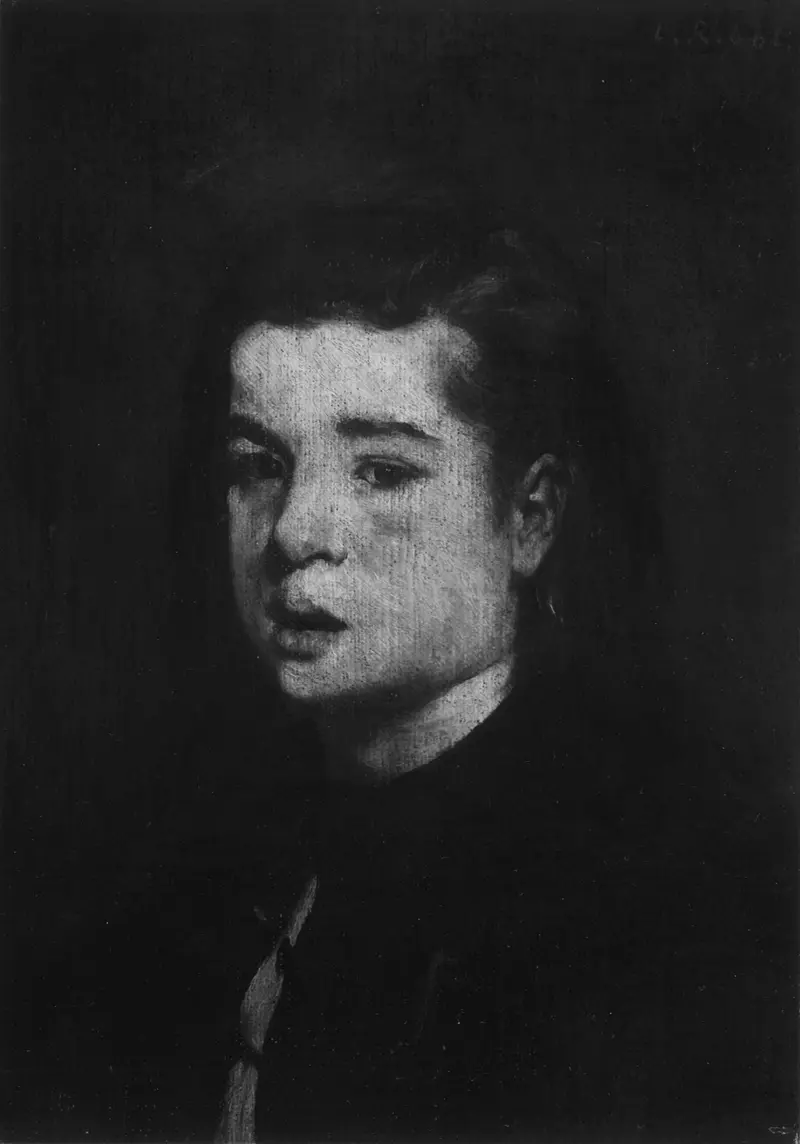
The Artist's Daughter
Augustin Théodule Ribot
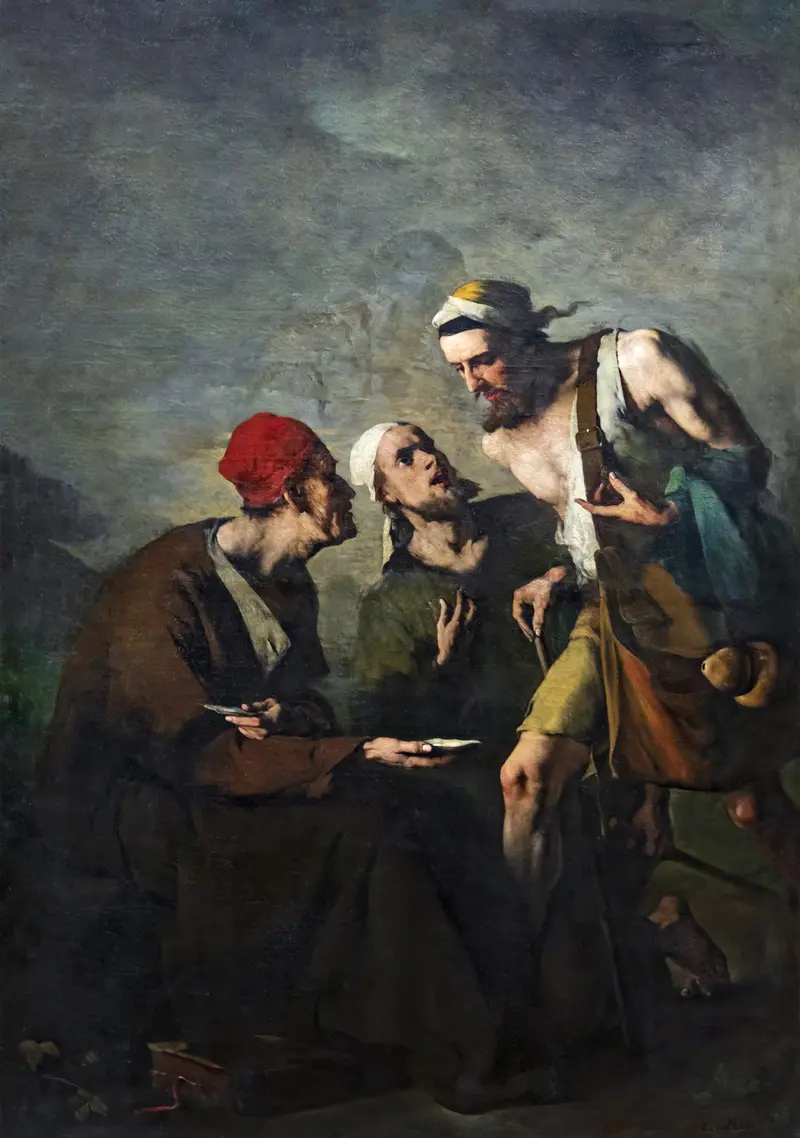
The oyster and the Litigant's
Augustin Théodule Ribot
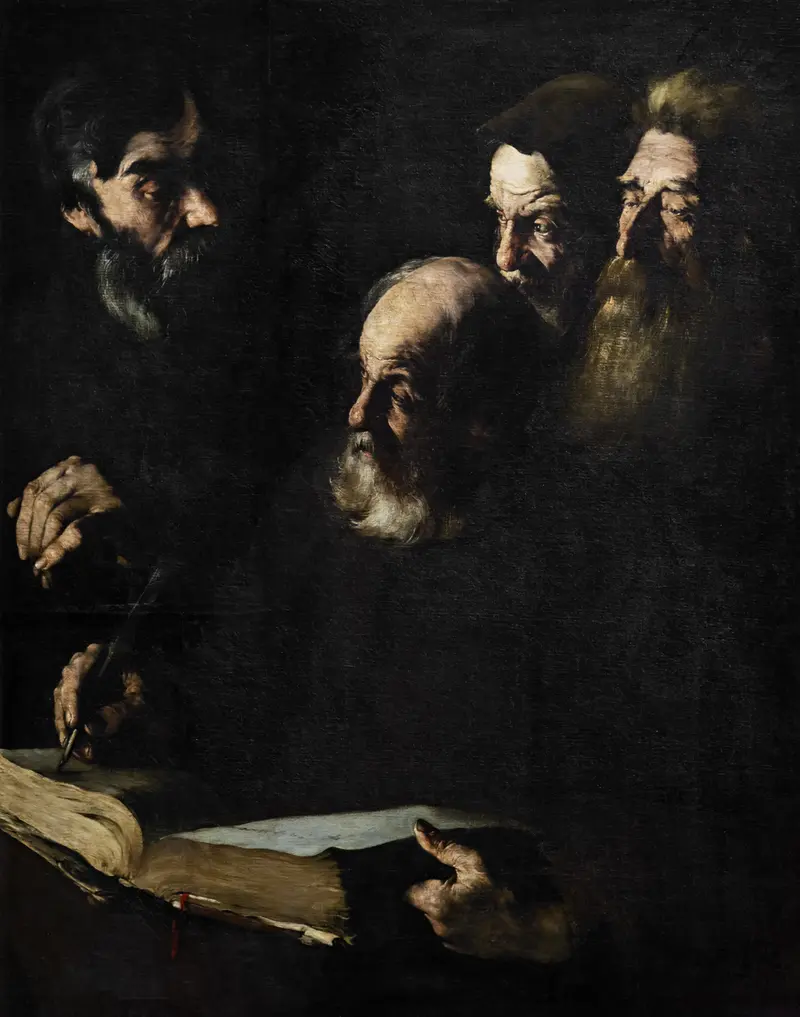
The philosophers
Augustin Théodule Ribot
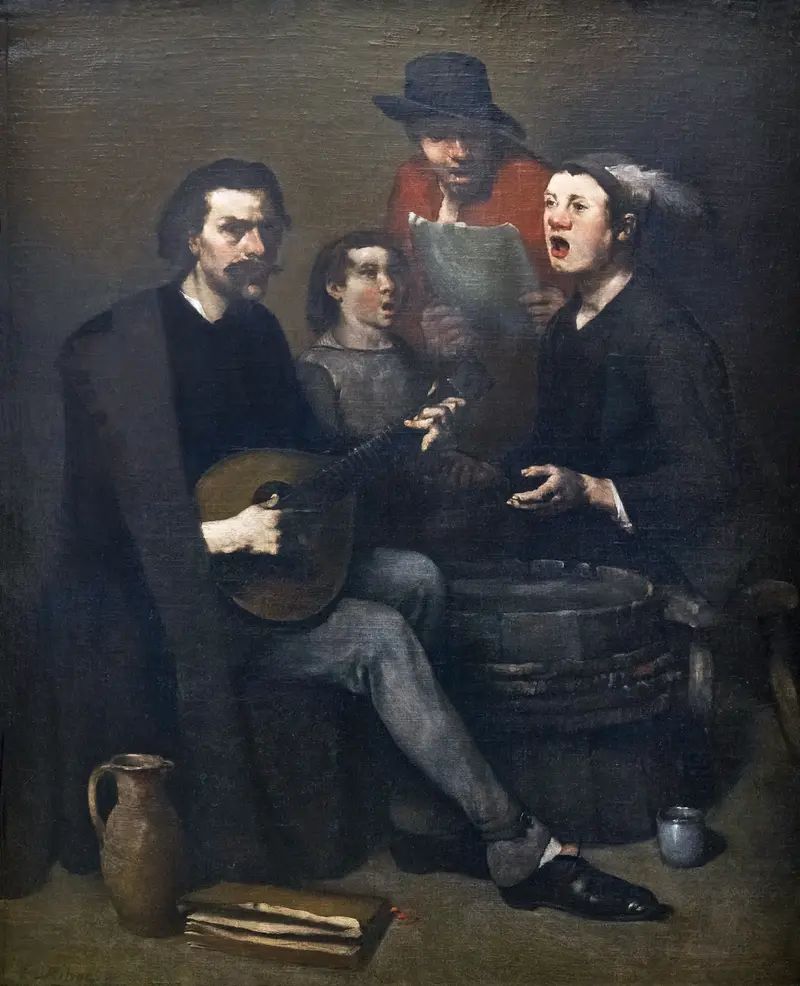
Singers
Augustin Théodule Ribot
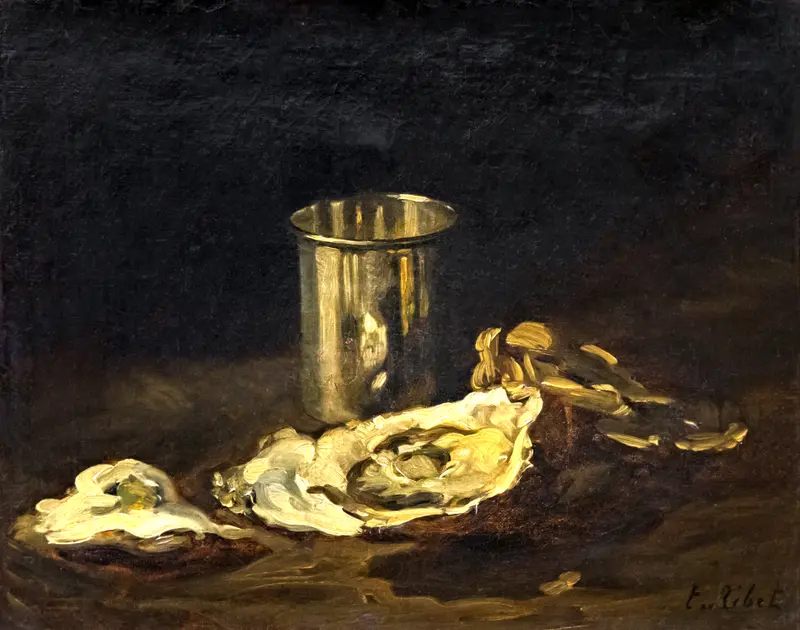
Oyster and timbale
Augustin Théodule Ribot
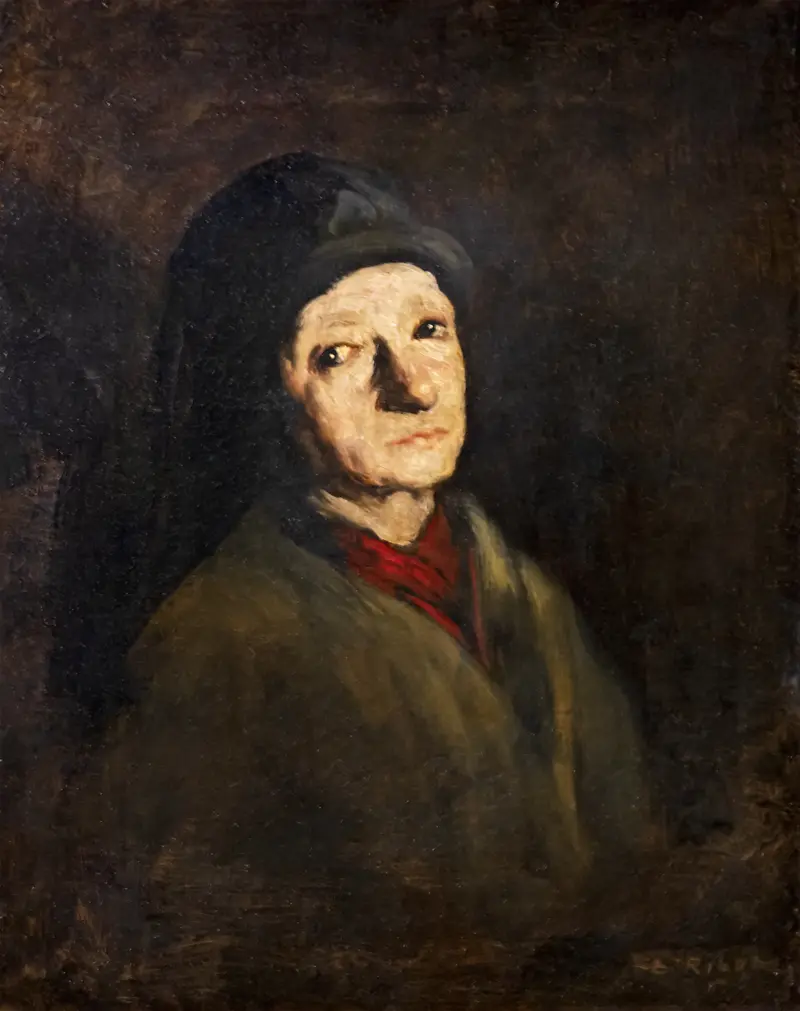
Portrait of the artist's mother
Augustin Théodule Ribot
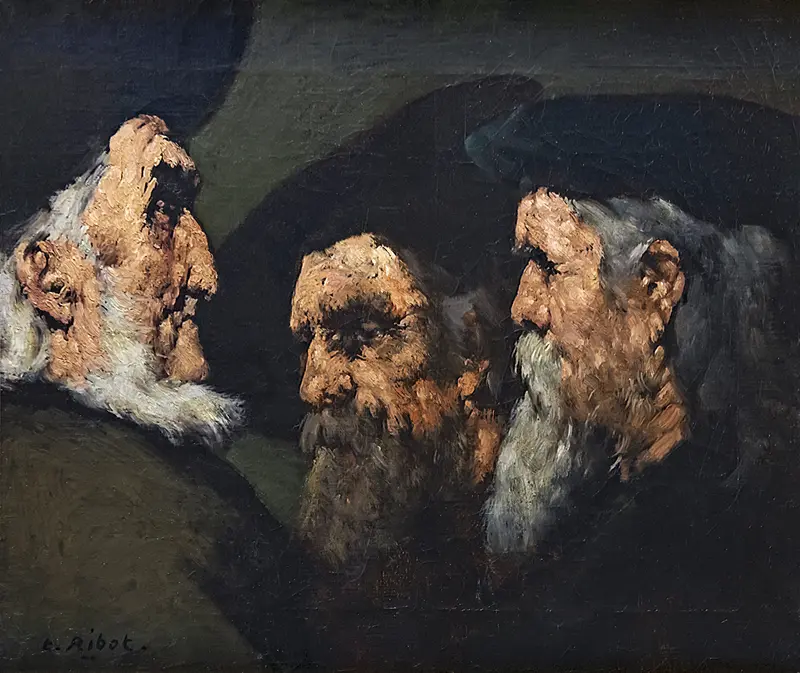
Three old jews
Augustin Théodule Ribot
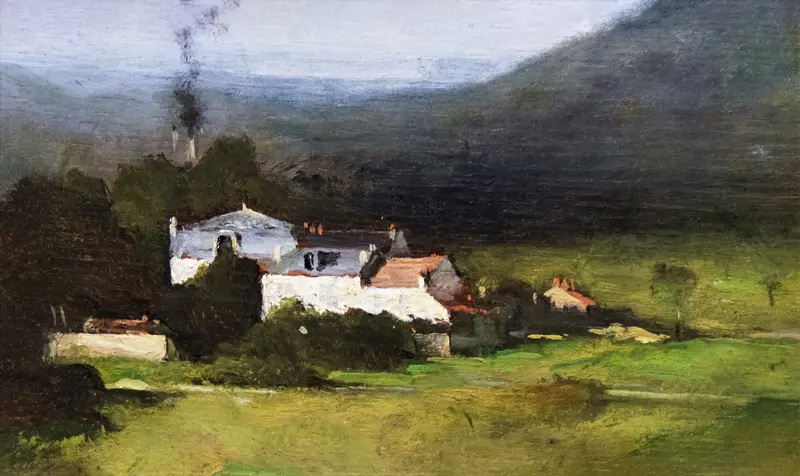
' Landscape ', known as ' La Maison de Corot in Ville-d'Avray '
Augustin Théodule Ribot
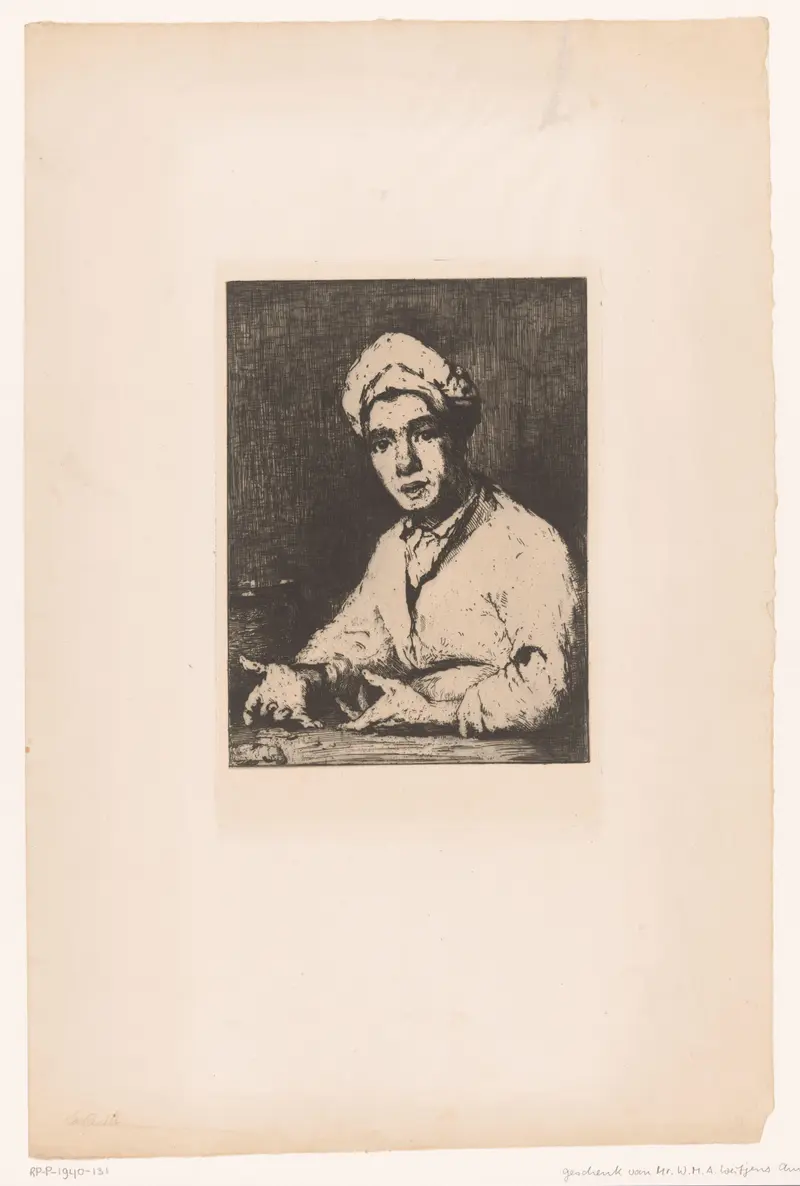
La recette du cuisinier
Augustin Théodule Ribot