Still Life with Fishbowl and Figurines — History & Facts
Where does light end, and longing begin? This question resonates deeply within the contours of Still Life with Fishbowl and Figurines, inviting viewers to explore the delicate interplay of illumination and emotion. Look closely at the fishbowl at the center of the composition, where crystalline water reflects a dance of light. Observe how the vibrant, colorful fishes seem suspended in their own world, while the surrounding figurines—each poised with a sense of quiet dignity—frame the scene with a gentle harmony. The artist employs soft brushstrokes and a palette rich with greens and blues, creating a soothing contrast against the warm undertones that infuse the atmosphere with a sense of nostalgia. Beneath the surface, this work touches on themes of aspiration and confinement.
The fish, trapped yet vibrant, symbolize fleeting moments of joy within the boundaries of life, while the meticulously arranged figurines echo the complexities of human emotion. Each figure tells a story, and their tranquil positions evoke a silent yearning for connection, as if they are witnessing the world beyond the glass but unable to participate in it. The light serves as a bridge between these disparate realms, illuminating both the beauty and the isolation present in the scene. Created in the late 19th to early 20th century, the artist captured Still Life with Fishbowl and Figurines during a period of transition in the art world.
Nakamura, influenced by the rising modernist movements while steeped in traditional practices, sought to convey emotion through still life. This work reflects the era's fascination with domesticity, introspection, and the delicate balance between reality and illusion, marking a significant moment in the evolution of visual storytelling.
More Artworks by Kanji Nakamura
Browse all →
Courtyard of an Old Palace, Palermo
Kanji Nakamura
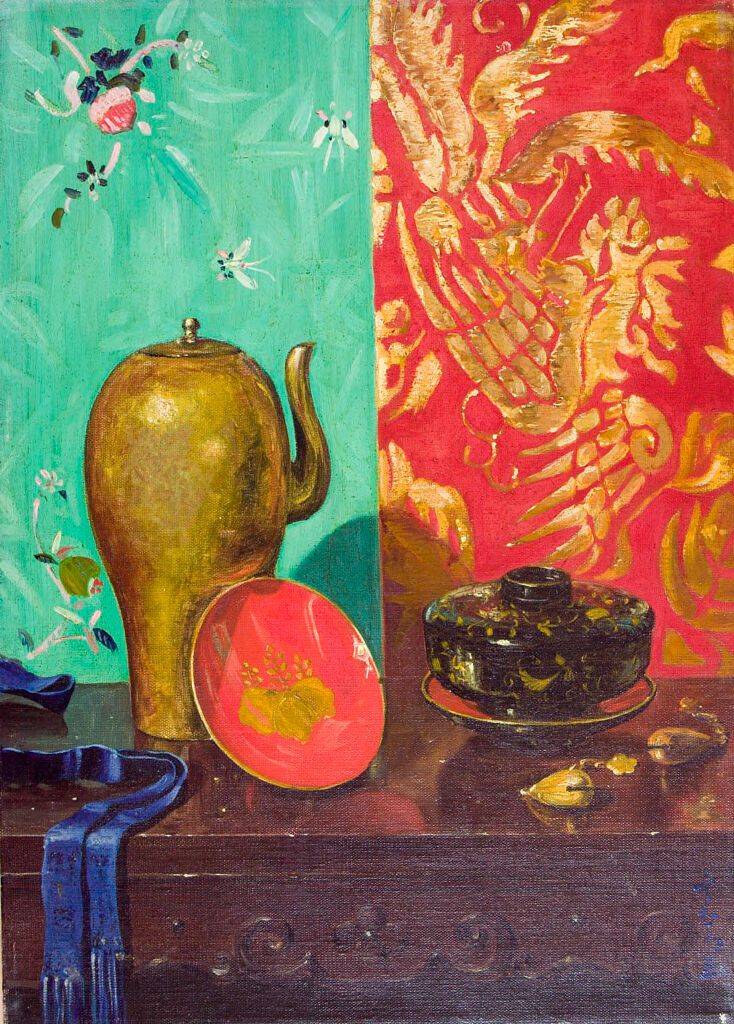
Still Life with Vessel, Plate and Ink Jar
Kanji Nakamura
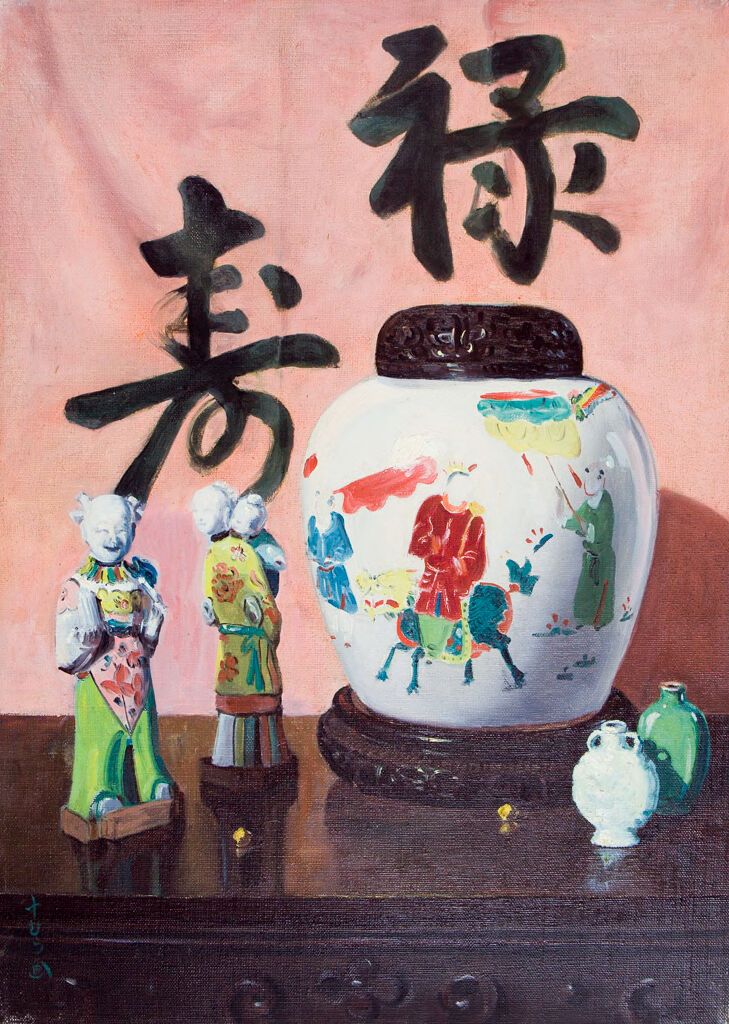
Still Life with Jars and Figurines
Kanji Nakamura
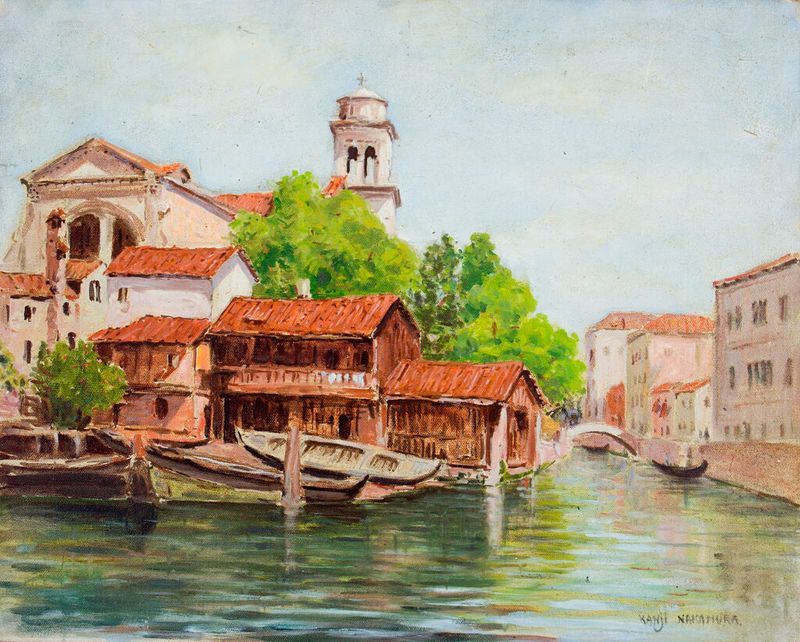
Canal Scene with Buildings and Steeple
Kanji Nakamura

Flowers
Kanji Nakamura

Orizaba, Mexico
Kanji Nakamura

Self-Portrait
Kanji Nakamura

Still Life with Oriental Head
Kanji Nakamura
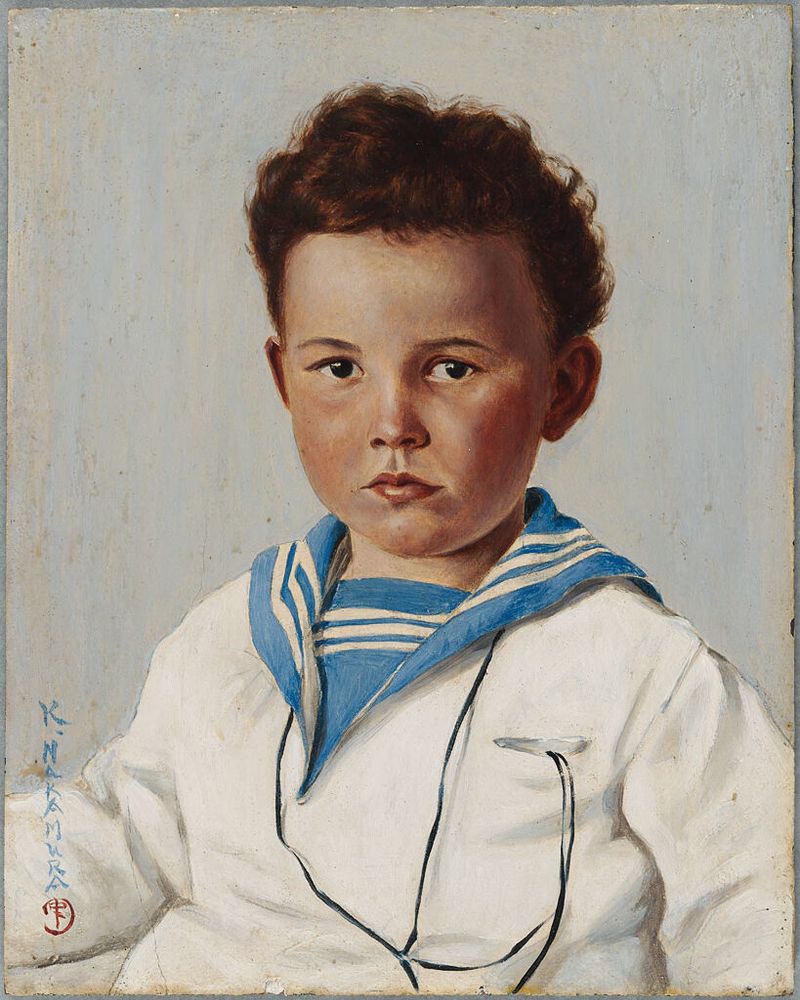
Portrait of a Boy
Kanji Nakamura

Still Life with Grapes and Pomegranates
Kanji Nakamura