
Storm, Anatolia — History & Facts
What if beauty was never meant to be finished? In Storm, Anatolia, the viewer is swept into a dreamscape where nature's fury dances with the ethereal beauty of the landscape, a moment suspended between chaos and tranquility. Look to the center where dark, brooding clouds swirl ominously, their tumultuous forms contrasting against the fleeting glimpses of light breaking through. Notice how the artist employs rich, earthy tones of browns and deep greens to ground the scene while bright, almost ethereal highlights catch the edges of the clouds, lending an otherworldly quality. The composition draws the eye through the tumult, inviting one to explore the interplay of shadow and light that defines this dramatic encounter with nature. Hidden within this tempest is a profound exploration of the sublime.
The violent energy of the storm clashes with the serene beauty of the pastoral landscape, evoking a tension between destruction and creation. The scattered figures in the foreground, dwarfed by the vastness above, reflect humanity's vulnerability in the face of nature's overwhelming power—a reminder of our place within the grand tapestry of the world. The brushstrokes convey a sense of movement, as if the elements are alive, encapsulating the fleeting nature of existence. Müller created Storm, Anatolia in 1843 during a period of burgeoning Romanticism, where artists began to focus on nature's emotional resonance.
Living in England, he was influenced by the dramatic landscapes of the Mediterranean, reflecting a desire to capture the sublime experience of the natural world. This work emerged in a time when artists were increasingly exploring personal vision and emotional depth, paving the way for a more intimate relationship between humanity and nature.
More Artworks by William James Müller
Browse all →
Cleeve, Somerset, with Bridgewater Bay in the Distance
William James Müller

The Bridge at Llangollen
William James Müller

Cairo Bazaar
William James Müller
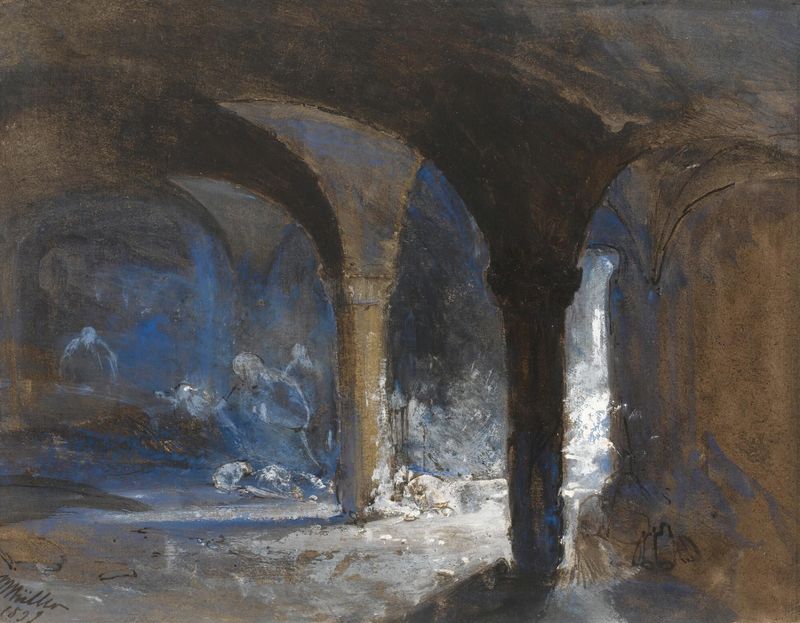
Crypt of the bishop’s palace during the Bristol riots
William James Müller

Near the Caravan Bridge, Smyrna
William James Müller
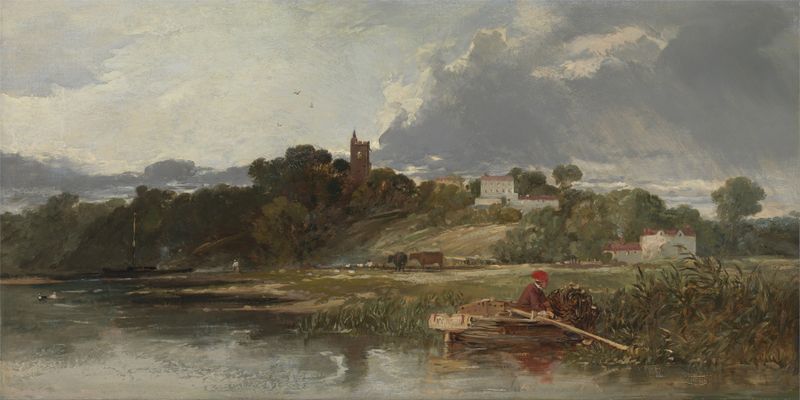
Gillingham on the Medway
William James Müller

The Church of the Holy Sepulchre
William James Müller

A View of Eton and the Fellows Eyot
William James Müller

Tripoli
William James Müller

A Mountain Torrent
William James Müller





