Strook zwarte kant met bloem- en bladmotief met één gladde zijde en één rand met schulpen, op karton — History & Facts
Could beauty survive in a century of chaos? In a world that often feels frayed at the edges, the delicate intricacies of a design can whisper tales of resilience and fate. Look closely at the smooth surface of the cardboard, where a masterful stroke of black lace unfurls. The floral and leaf motifs elegantly contrast with the starkness of the material, inviting the viewer to trace the curves and lines with the eye. Notice how the interplay of light glides over the textures, creating a dynamic dance between shadow and form.
The scalloped edge conveys a sense of movement, as if the design is about to spring to life. Hidden within its beauty lies a poignant commentary on destiny and duality. The smooth side signifies calm, while the intricately patterned edge suggests the unpredictability of life’s twists and turns. The tension between the two halves evokes a dialogue between serenity and chaos, prompting reflections on how beauty can emerge from turmoil.
Each motif captures the fragility and strength inherent in nature, weaving a narrative that resonates with the human experience. Created around 1925, this piece reflects Gustav Schnitzler's engagement with the avant-garde movements of his time, marking a departure from traditional craft into the world of modern design. He produced this work during a period of personal exploration and transformation in the art world, where artists sought to redefine aesthetic boundaries amidst the backdrop of societal upheaval in post-World War I Europe. In this context, the artwork stands as a testament to the enduring power of beauty in the face of uncertainty.
More Artworks by Gustav Schnitzler
Browse all →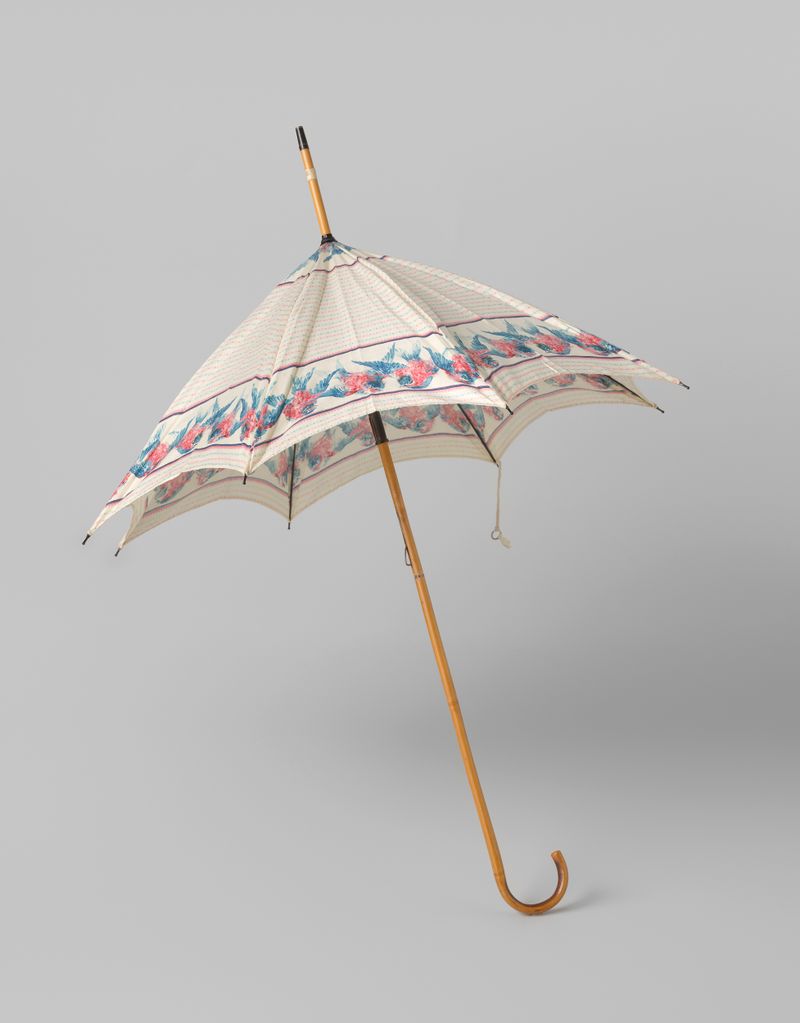
Parasol met dek witte katoen bedrukt met roze en blauwe vogeltjes, op een bamboe stok met gebogen handvat
Gustav Schnitzler
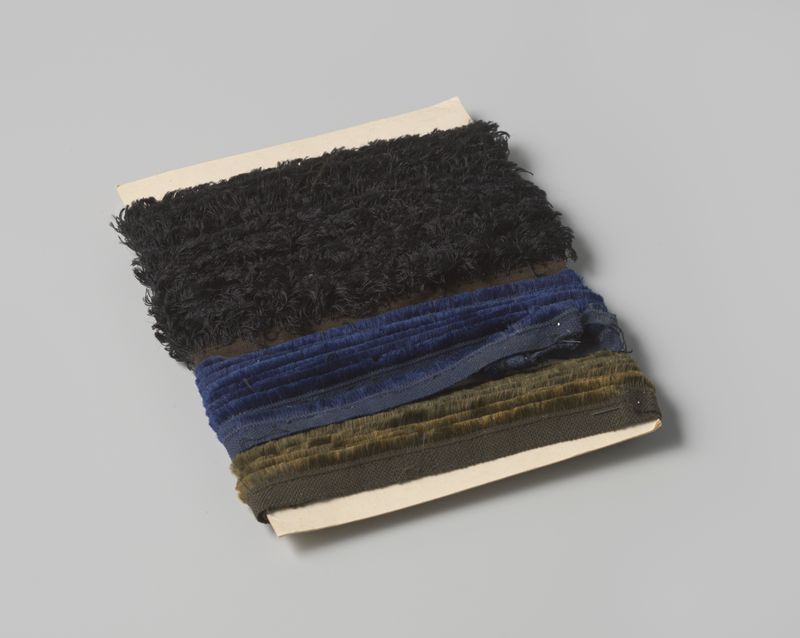
Strook zwarte franje aan bezemband, op karton
Gustav Schnitzler
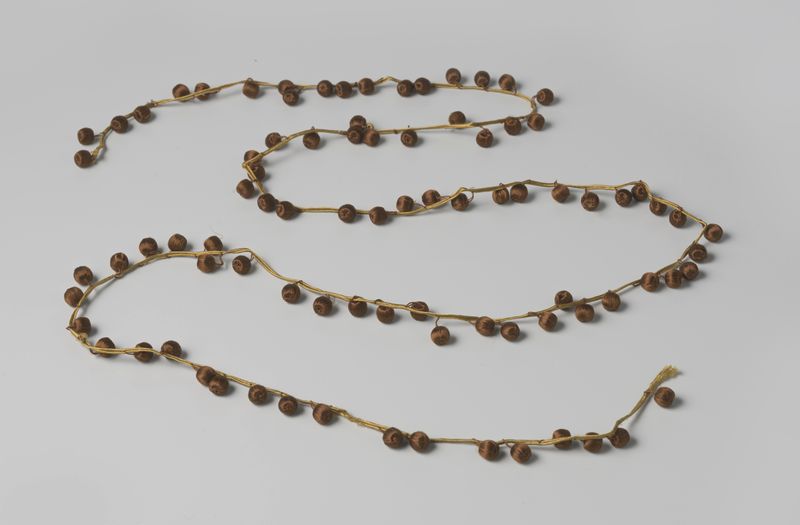
Galon, goudkleurig, waaraan pompons van bruin (zijde)draad hangen
Gustav Schnitzler
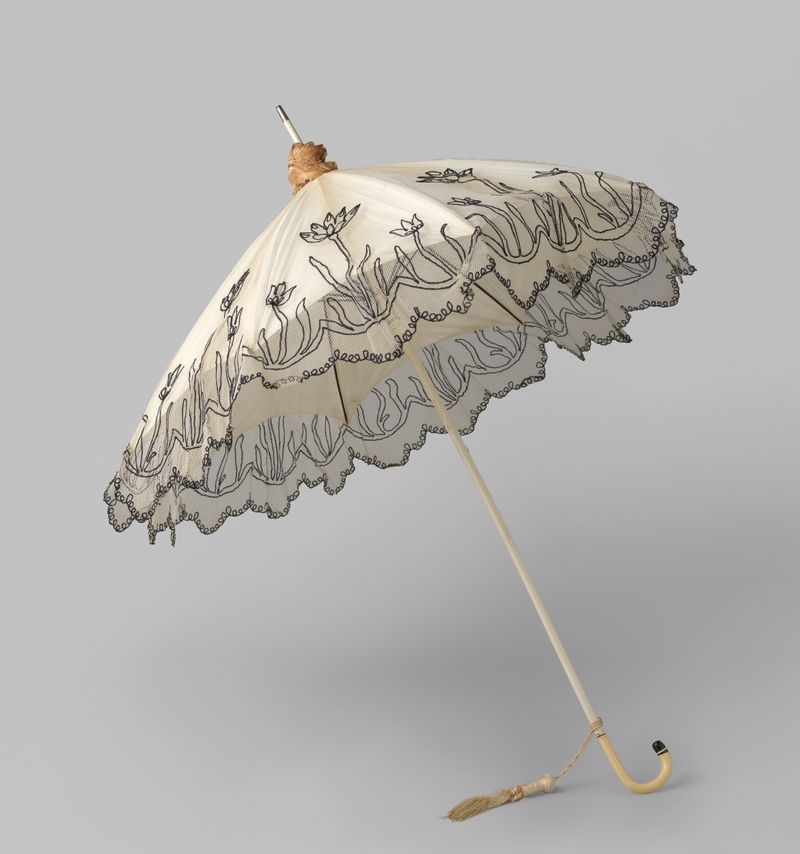
Parasol met dek van witte tule waarop zwart borduurwerk van telkens drie bloemen, op een witgeverfde houten stok, waaraan een gebogen ivoorkleurig handvat
Gustav Schnitzler

Parasol met dek van witte katoen, waartussen een strook van witte kant, op een lichte, houten stok met een ronde haak
Gustav Schnitzler

Strook franje, getand, wit en écru, gewikkeld rond een met gouden randen afgezet plankje
Gustav Schnitzler
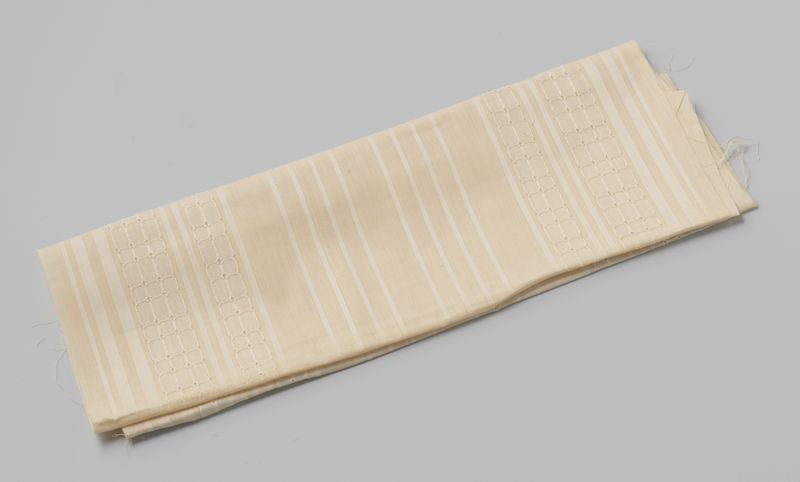
Coupon wit parasolkatoen met beige strepen aan weerszijden
Gustav Schnitzler
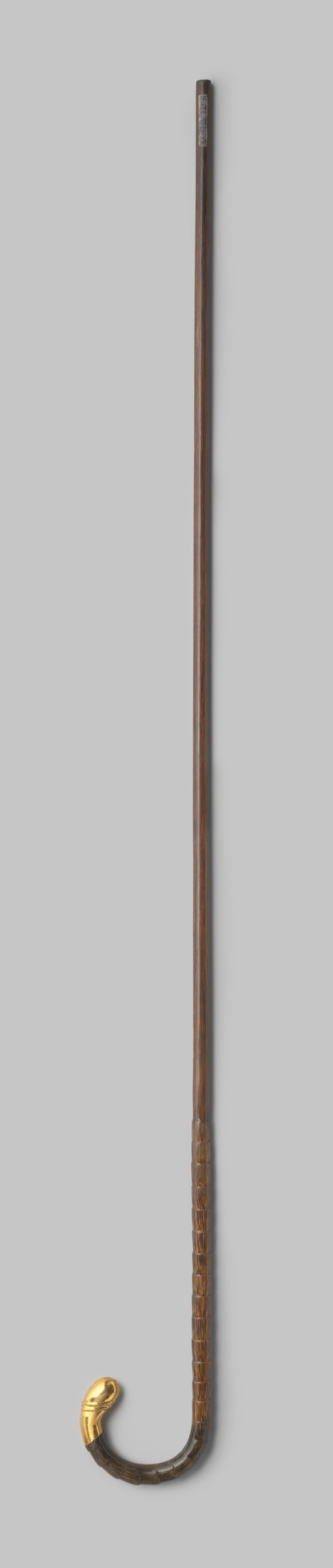
Onderstok van een parapluie of parasol van kokospalm met ronde haak en goudkleurig (verguld?) metalen uiteinde
Gustav Schnitzler
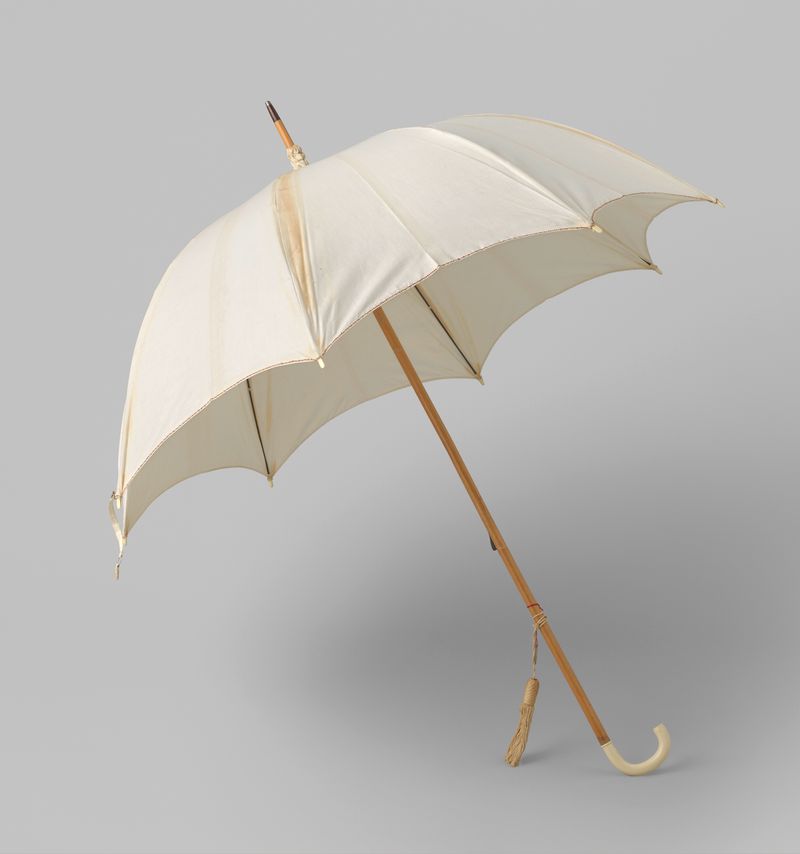
Parasol met dek van effen witte katoen met een smal meerkleurig draad langs de rand geregen, op lichte houten stok, met gebogen, ivoorkleurig handvat
Gustav Schnitzler
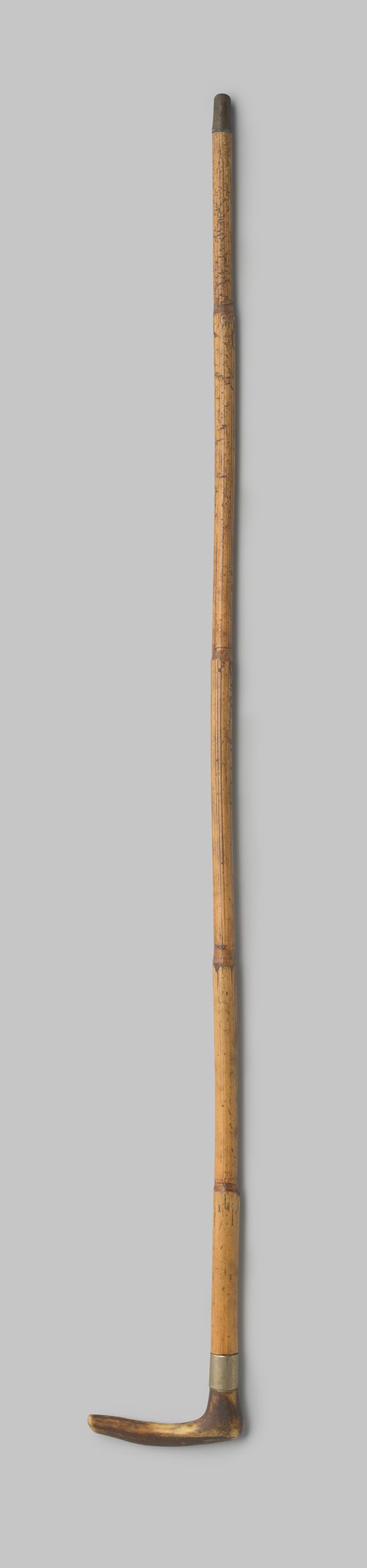
Onderstok van parasol of parapluie van bamboe met rechte haak van hertshoorn, met ring en punt van koper
Gustav Schnitzler