
Study of the Amor Figure to the Painting ‘Wedding Procession of Amor and Psyche’ — History & Facts
In Study of the Amor Figure to the Painting ‘Wedding Procession of Amor and Psyche’, we see a delicate portrayal of Amor, the god of love. The colors are soft and warm, with shades of pink and gold dominating the palette. Amor is depicted with a playful expression, surrounded by flowing drapery that enhances his youthful charm.
The background is minimal, focusing the viewer's attention on the figure itself. The painting showcases Simmler's skill in rendering the human form with fluid lines and gentle contours. The use of oil on canvas allows for rich textures and a vibrant color scheme. The brushwork is smooth, creating a sense of movement and life in the figure.
This study serves as a preparatory work for the larger composition, highlighting the importance of Amor in the narrative. Józef Simmler was a Polish artist known for his neoclassical style, often drawing inspiration from mythology. This particular study reflects his interest in the themes of love and beauty, central to many of his works. An interesting fact about this piece is that it was created as a preparatory study for a larger painting, demonstrating the artist's meticulous approach to his craft.
Simmler's works are often characterized by their elegance and attention to detail.
More Artworks by Józef Simmler
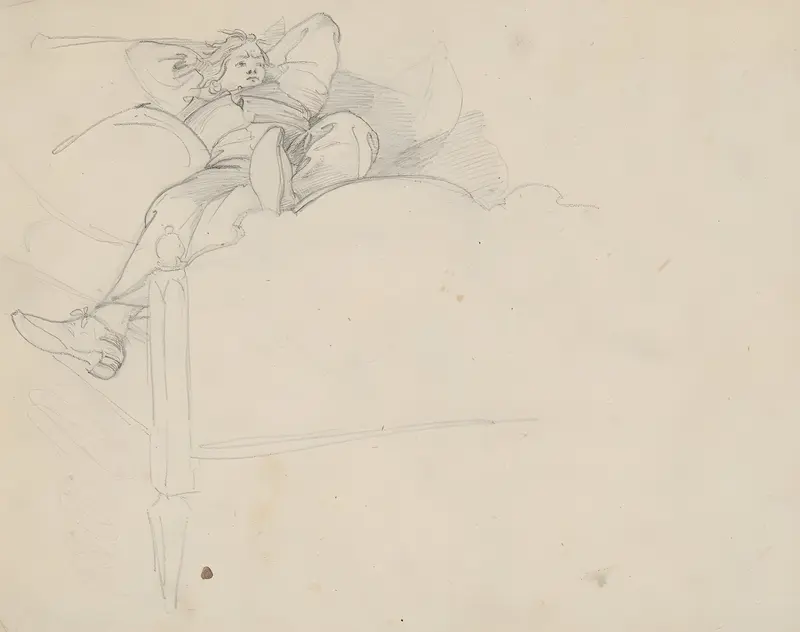
Man resting on a bed
Józef Simmler
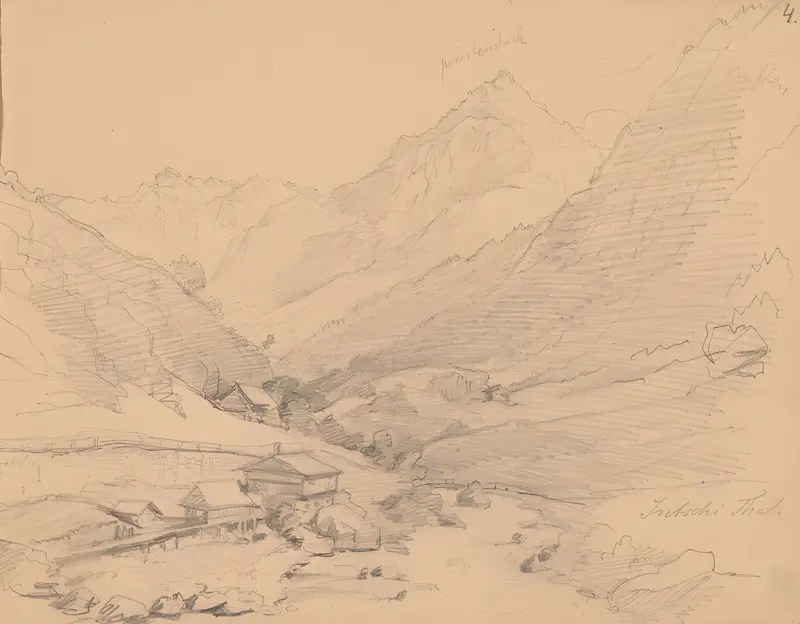
Mountain landscape
Józef Simmler
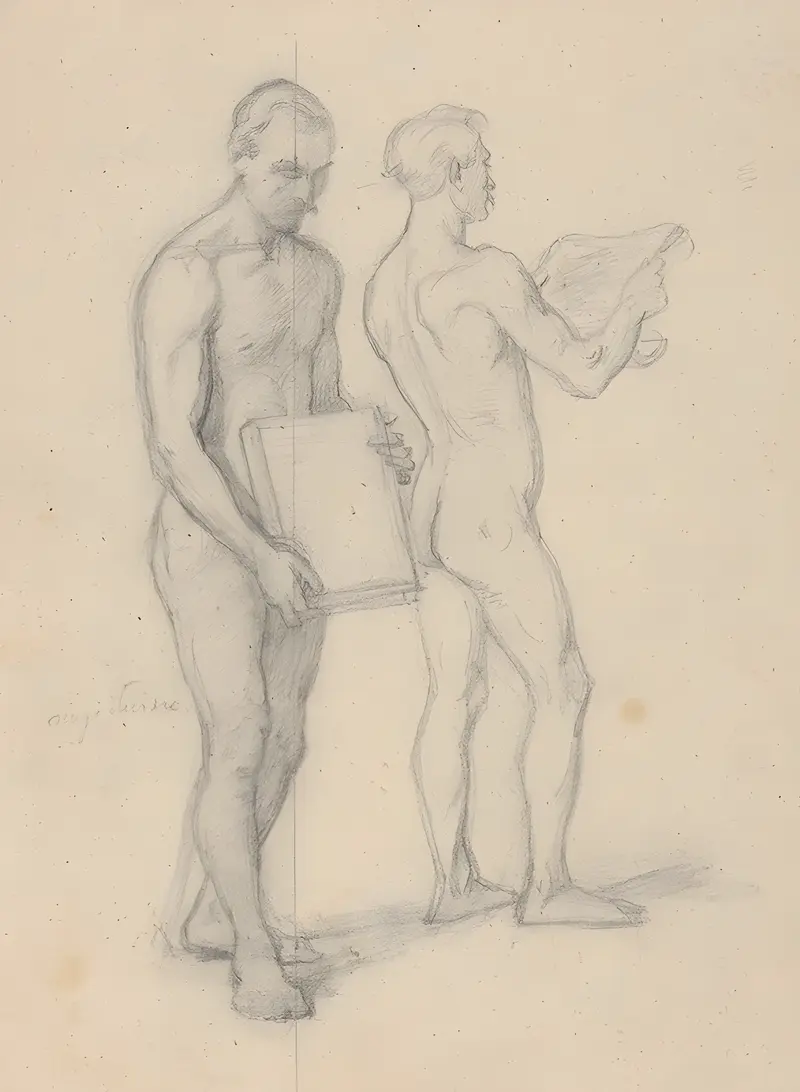
Nude studies for the figures of Jaśko of Tęczyn and the man standing behind him for the painting ‘Queen Jadwiga’s Oath’
Józef Simmler

Half-length figure of a boy in profile to the left
Józef Simmler
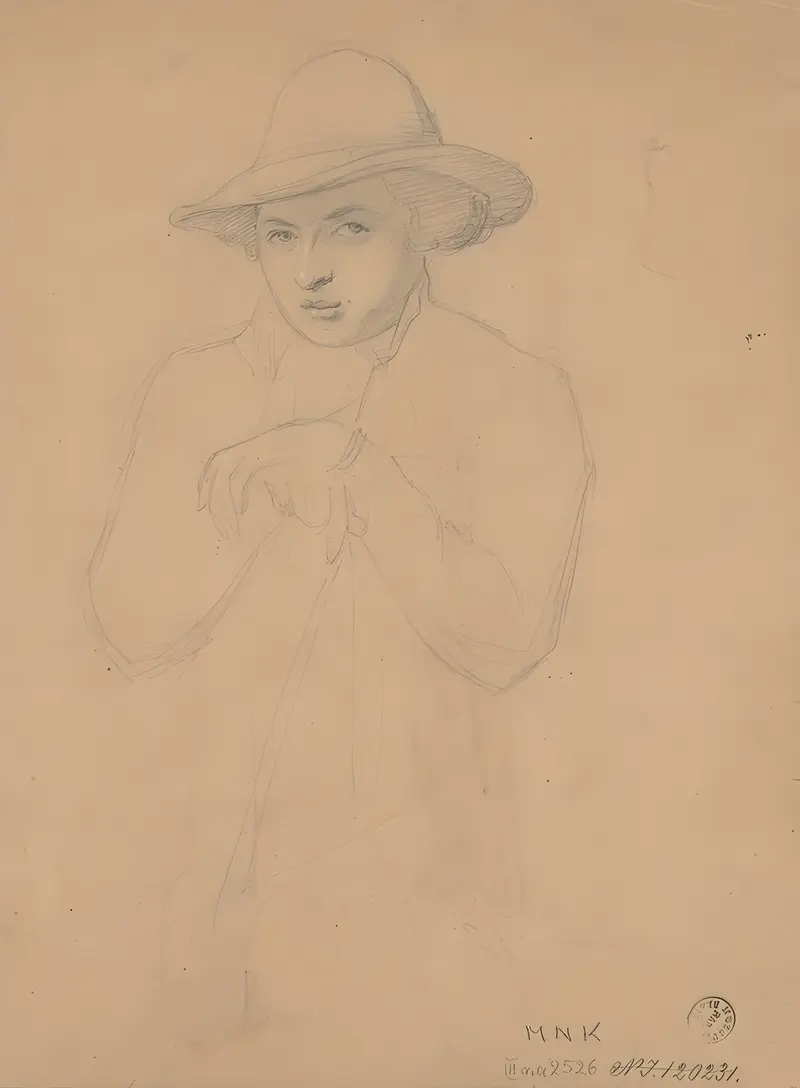
Half-length figure of young man in a hat
Józef Simmler
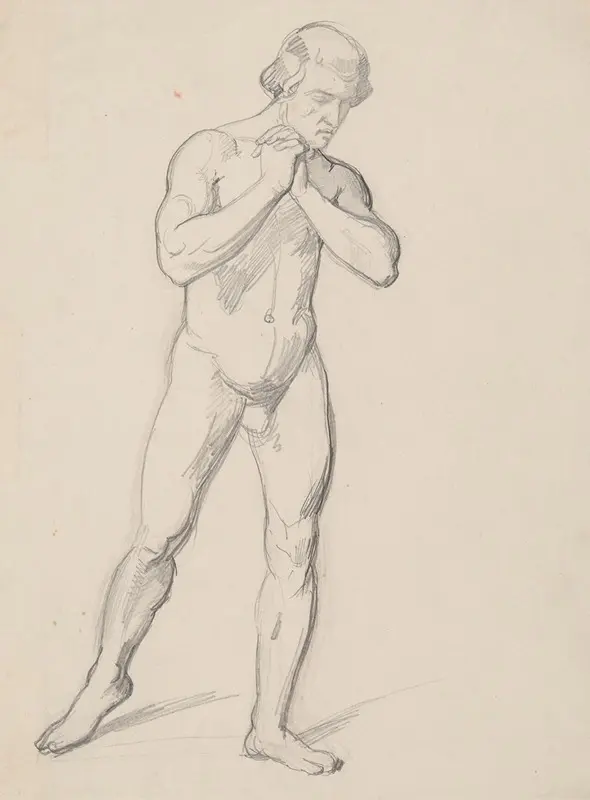
Sketch of a nude male
Józef Simmler
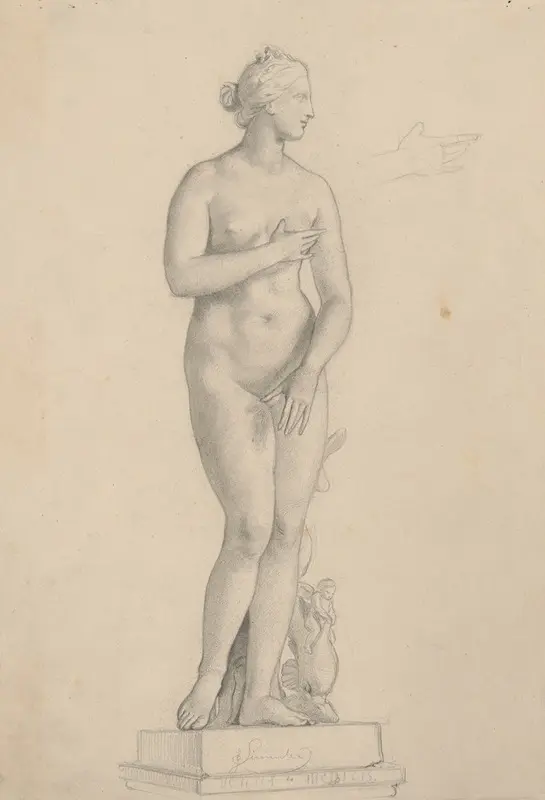
Studium rzeźby ‘Wenus Medycejska’
Józef Simmler
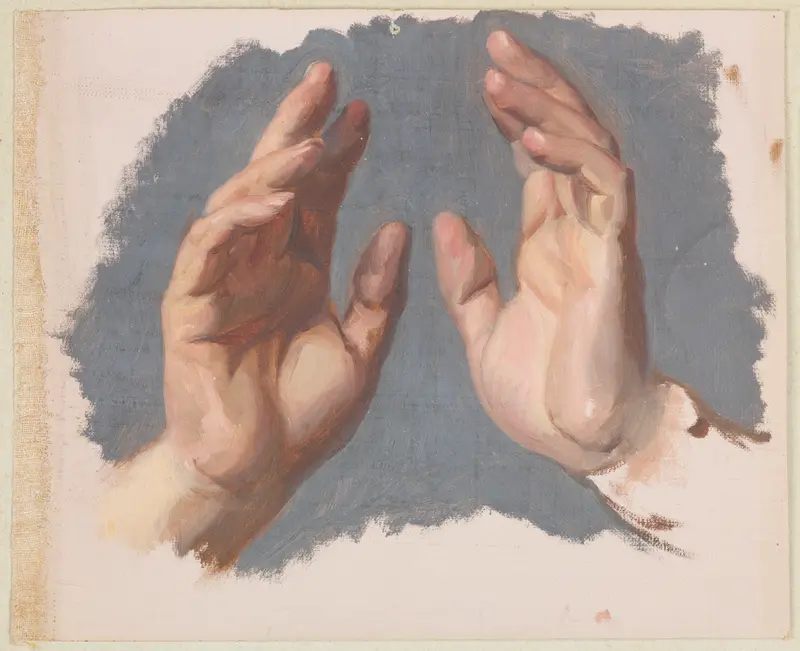
Study of Both Hands of the Bishop for the Painting ‘The Oath of Queen Jadwiga’
Józef Simmler
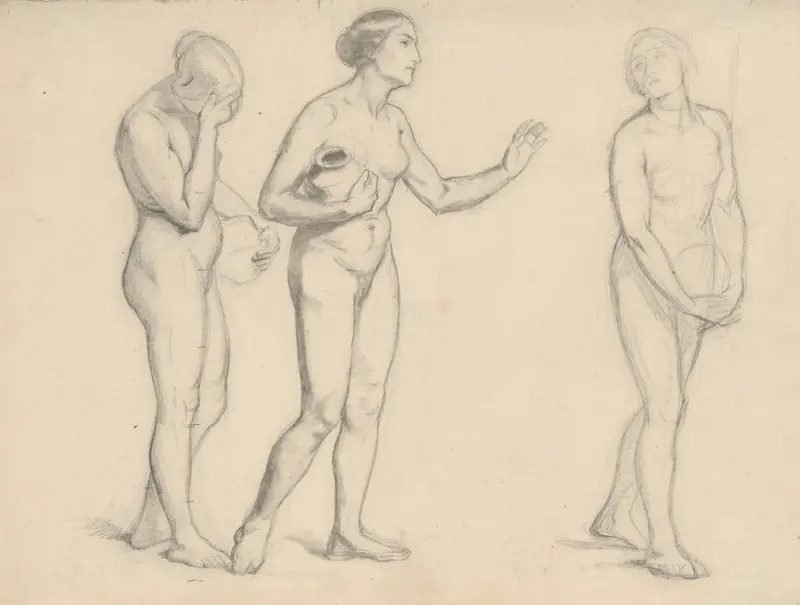
Study of female nudes to figures of three Marys for the painting ‘Three Marys’
Józef Simmler

Nude male study to the painting ‘King David playing the harp’
Józef Simmler





