Summer — History & Facts
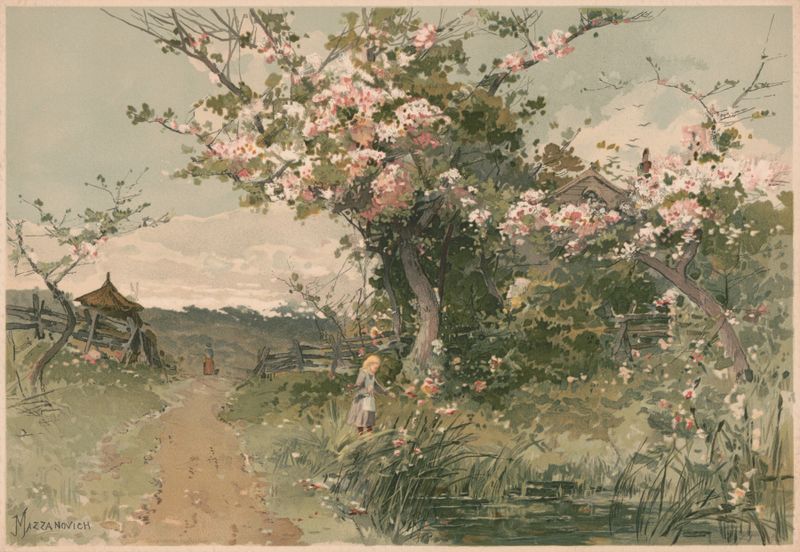
It lingers in the air, heavy with unspoken desires and a yearning for connection that seems to echo through time. This artwork captures the essence of longing, inviting us to explore the delicate balance between the seen and the felt. Look to the left at the sun-kissed fields, where golden hues spread like warm whispers across the canvas. The artist employs a palette of vibrant yellows and greens, creating a luscious tapestry of life that vibrates with warmth.
The brushwork is fluid, imbuing the scene with an almost ethereal quality as it captures the gentle sway of grass and the flicker of light that dances across the landscape. The composition draws the viewer's eye toward a distant horizon, suggesting both an end and a beginning. Yet, amid this exuberance lies a subtle tension. The absence of figures within the idyllic scene amplifies a sense of solitude, as if the land itself holds secrets of those who once inhabited it.
The vibrant colors evoke joy, yet they are undercut by an almost palpable ache—an unfulfilled promise that exists within the silence of this summer day. Each stroke speaks to the bittersweet nature of memory and desire, creating a poignant contrast between the beauty of the moment and the longing that accompanies it. Created in 1888, this work reflects J. Mazzanovich’s exploration of the natural world, painted during a time of personal introspection and artistic evolution.
Living in an era marked by rapid change and the emergence of Impressionism, he sought to convey not just the physical landscape but the emotional landscapes of his own experiences. As the world around him transformed, his focus on capturing fleeting moments of beauty became a testament to the power of memory and connection.