
Sunrise — History & Facts
Could beauty survive in a century of chaos? In Sunrise, the ethereal glow of dawn offers a glimpse into a world where divinity and nature intertwine, inviting us to contemplate the fragility of peace amidst turmoil. Look to the right at the horizon, where soft hues of pink and gold merge seamlessly with the tranquil blue of the sky. The rising sun, a radiant orb, casts delicate reflections on the water below, illuminating the silhouettes of trees and figures in the foreground. Lorrain’s masterful brushwork creates a sense of movement, as if the landscape itself is awakening, engaging the viewer in a serene yet dynamic composition that balances light and shadow. As the light breaks, a sense of renewal fills the canvas, contrasting with the impending darkness that history often brings.
The figures, small and almost insignificant against the vastness of the scene, evoke a sense of longing; they are both part of the beauty and yet overshadowed by it. The harmonious interplay of color and light suggests a divine presence, hinting at the possibility that even in chaos, there exists a moment of sublime beauty and tranquility. Claude Lorrain painted Sunrise around 1646–47 during a time marked by political upheaval in Europe, particularly the Thirty Years' War. His career flourished in a period when landscape painting was gaining prominence, and he became known for his ability to infuse natural scenes with a sense of narrative and grandeur, reflecting his deep appreciation for both the divine and the earthly.
More Artworks by Claude Lorrain
Browse all →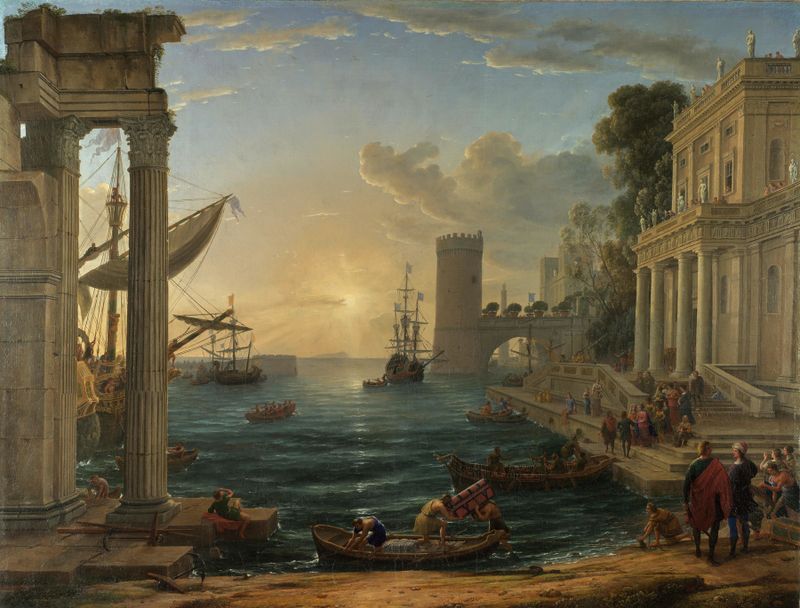
The Embarkation of the Queen of Sheba
Claude Lorrain
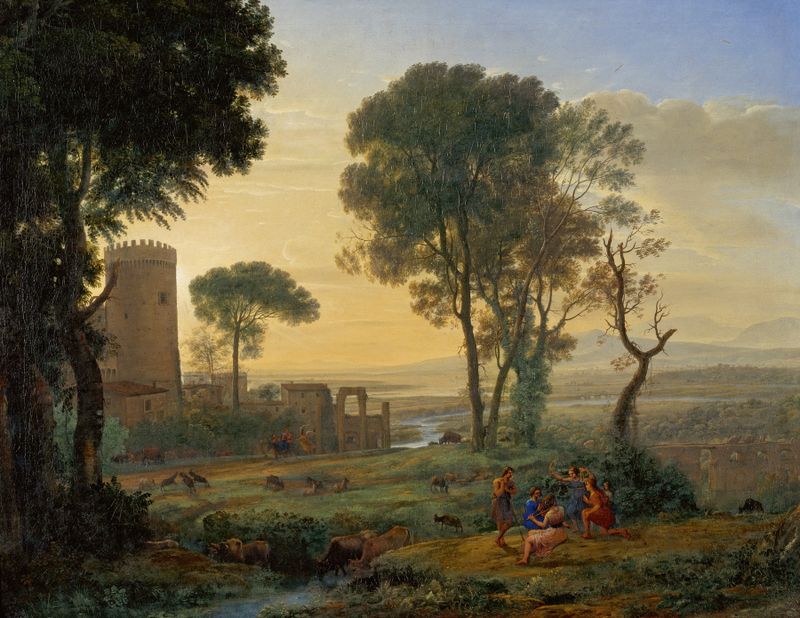
Landscape with the Flight into Egypt
Claude Lorrain
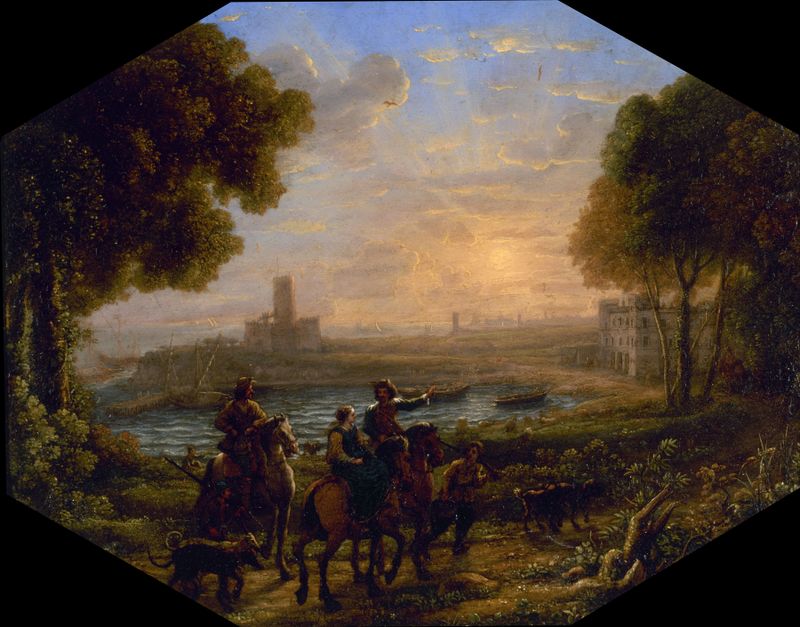
Paysage avec le port de Santa Marinella
Claude Lorrain
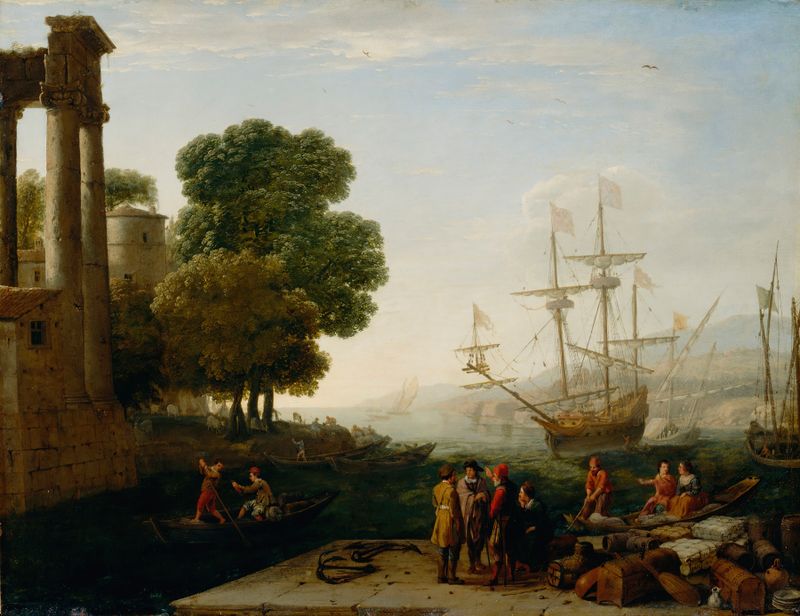
A Seaport at Sunset
Claude Lorrain
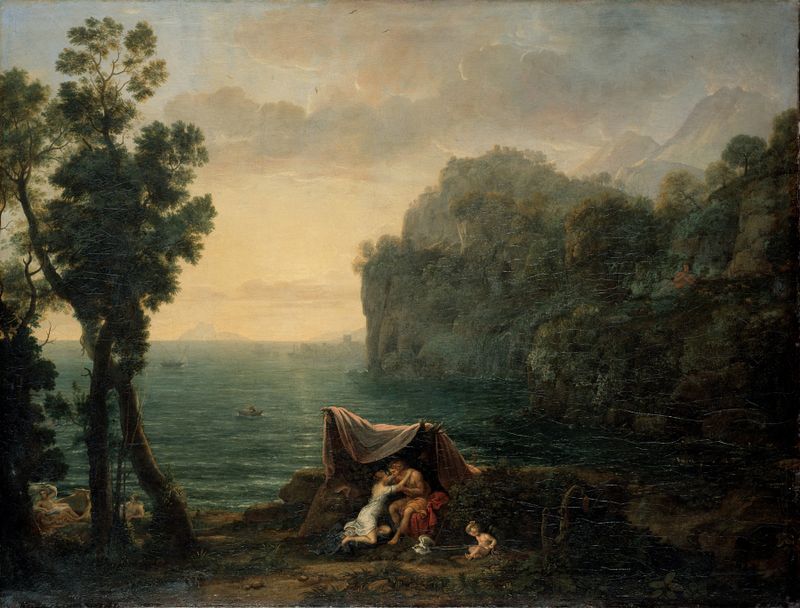
Landscape with Acis and Galatea
Claude Lorrain
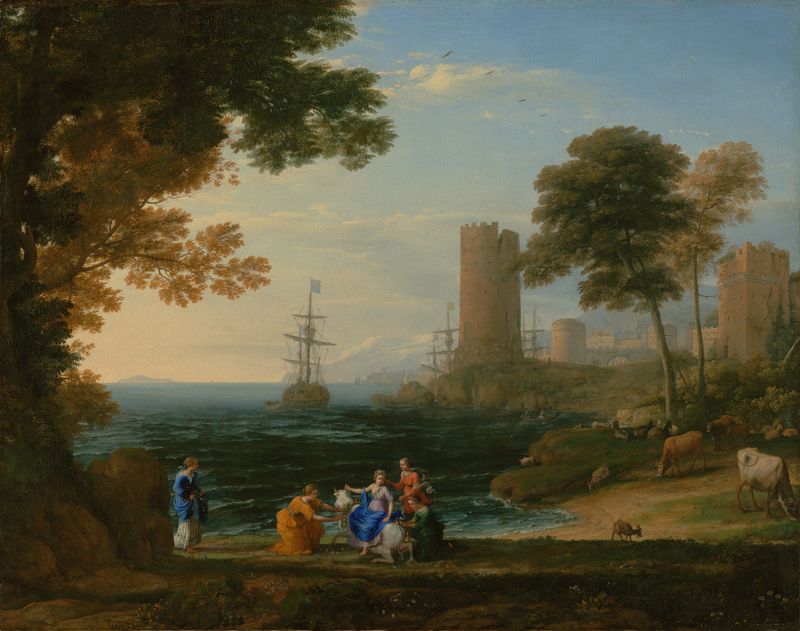
Coast View with the Abduction of Europa
Claude Lorrain
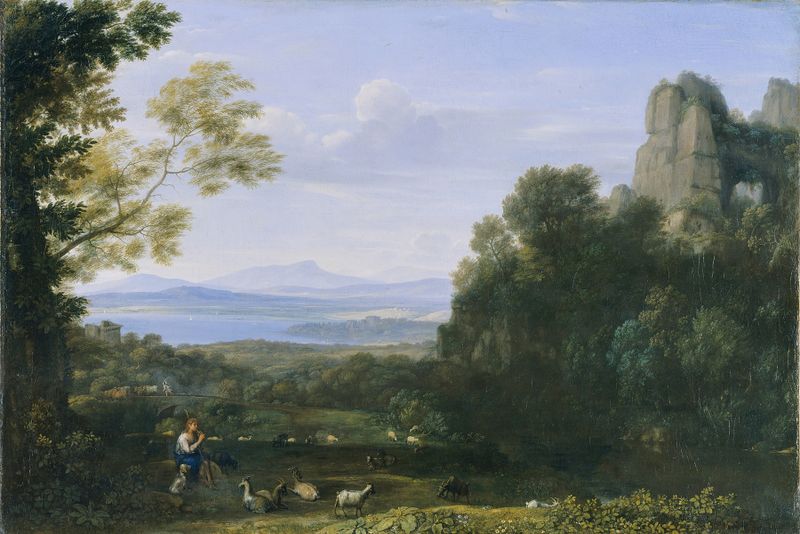
Landscape with Apollo and Mercury
Claude Lorrain
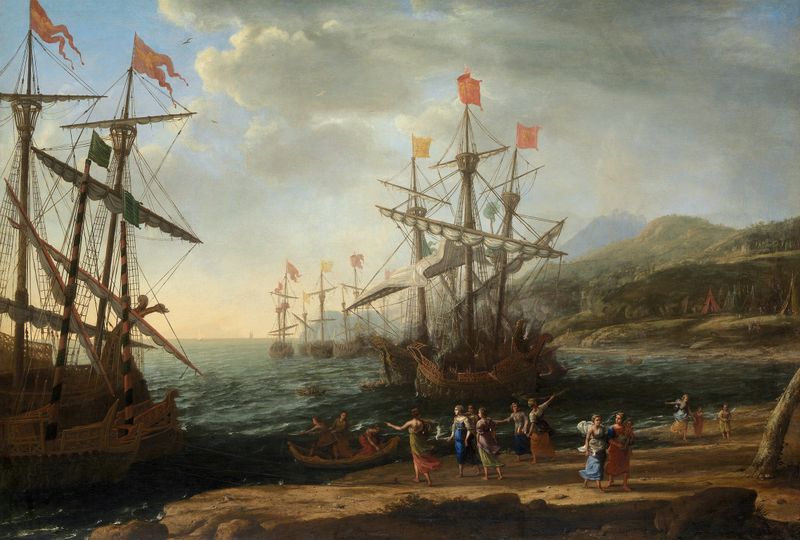
The Trojan Women Setting Fire to Their Fleet
Claude Lorrain
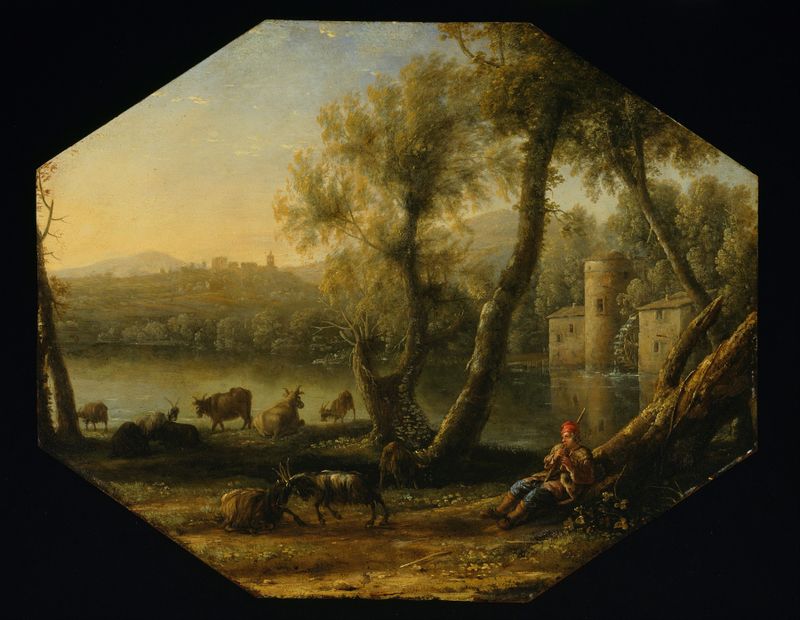
Pastoral landscape
Claude Lorrain
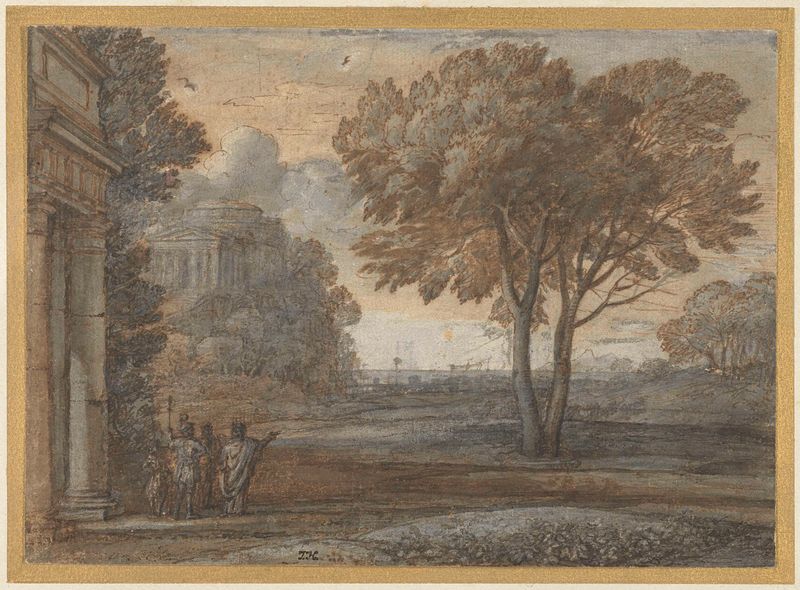
Aeneas op Delos
Claude Lorrain





