
Sunset — History & Facts
Two figures stand together at the edge of dusk, their silhouettes quietly claiming the foreground as the last light pools across a distant landscape. The eye is drawn first to the glow on the horizon, where gold and amber seep through a low band of cloud, then back to the pair—rooted, motionless, almost monumental in their stillness. Their hats and cloaks mark them as travelers or perhaps companions sharing a moment of wordless reflection.
The low horizon gives the sky the leading role, and the land below dissolves into gentle, dark shapes, pushing all drama into the encounter between human presence and the fading day. The painting’s silence is deliberate; every brushstroke seems to ask what these figures see, and what they feel as the world slips into shadow. Created in 1837, Sunset belongs to a moment in European art when the landscape became a stage for private reverie and philosophical longing. In the era of Caspar David Friedrich, such scenes were rarely mere records of nature—they were invitations to contemplation, often painted for collectors who sought not just beauty but meaning.
The Hermitage in St. Petersburg now houses this work, a reminder of how far Friedrich’s vision traveled from its origins in German Romanticism. Little is recorded about the journey of this specific canvas, but its mood and subject are unmistakable products of their time, when artists and viewers alike looked to the horizon for answers.
Stand before it, and you become the third figure, waiting for the sun to slip away.
More Artworks by Caspar David Friedrich
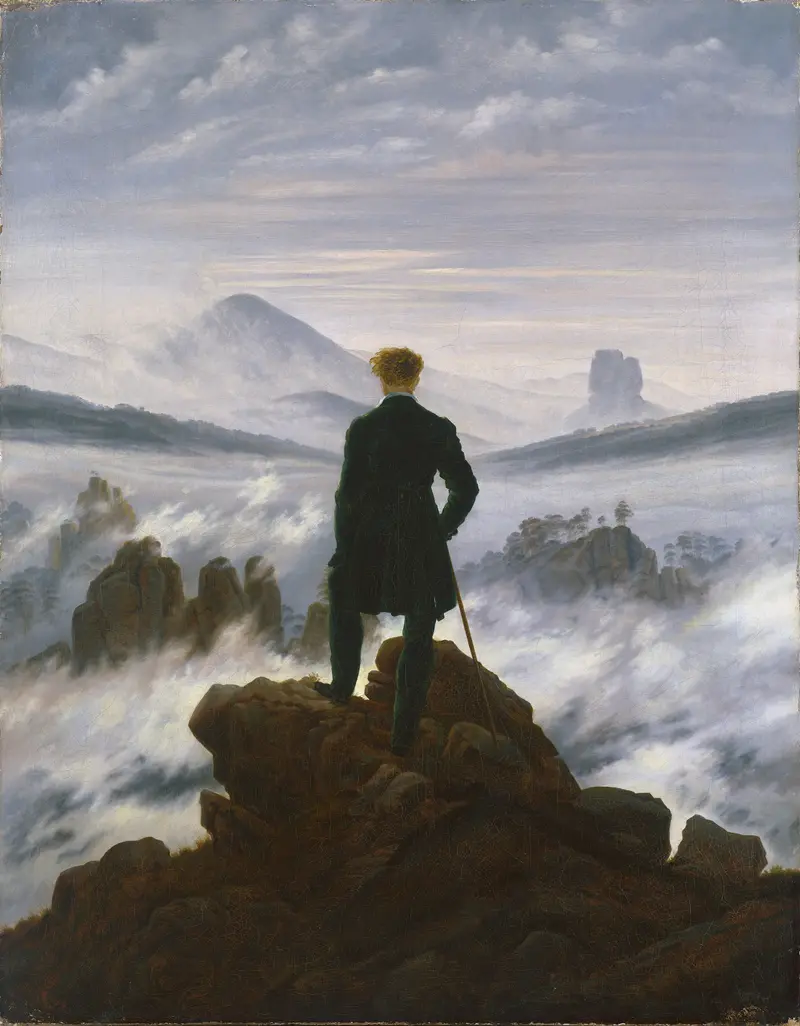
Wanderer above the Sea of Fog
Caspar David Friedrich
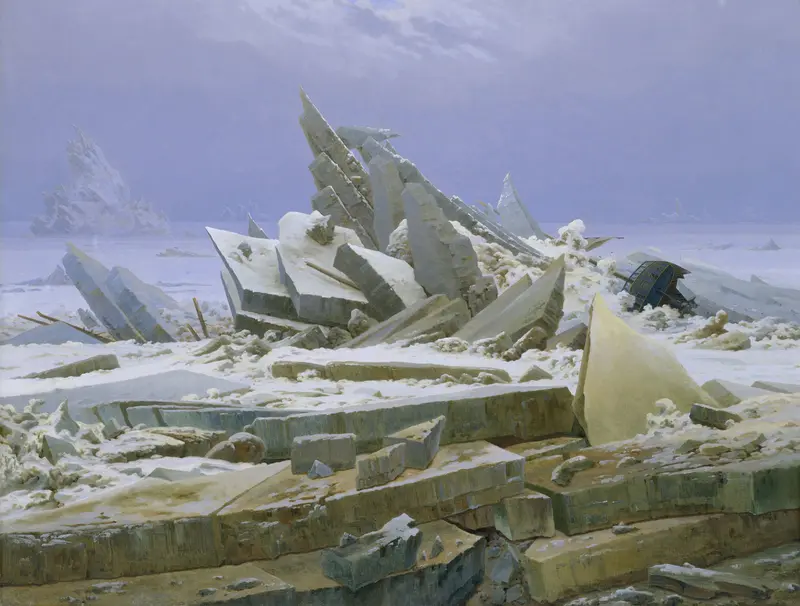
The Sea of Ice
Caspar David Friedrich
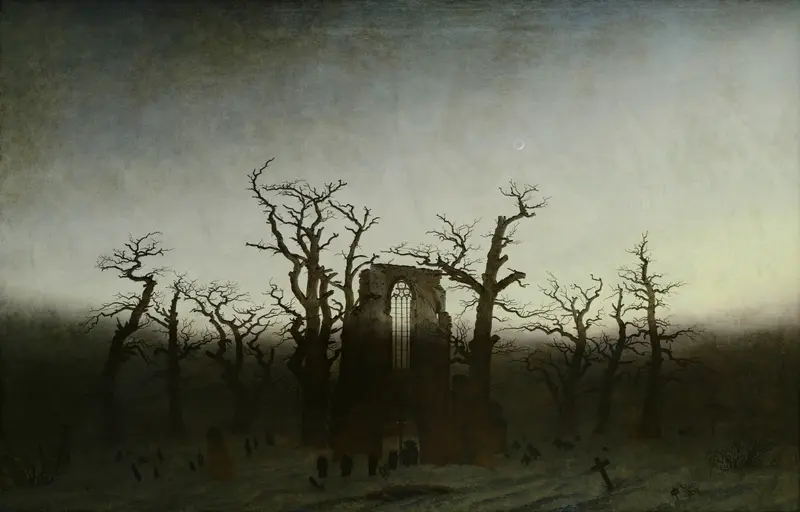
The Abbey in the Oakwood
Caspar David Friedrich
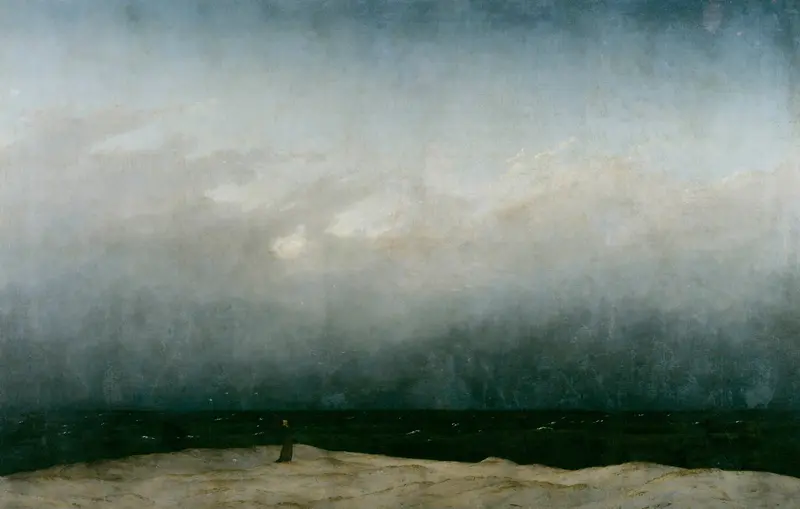
The Monk by the Sea
Caspar David Friedrich
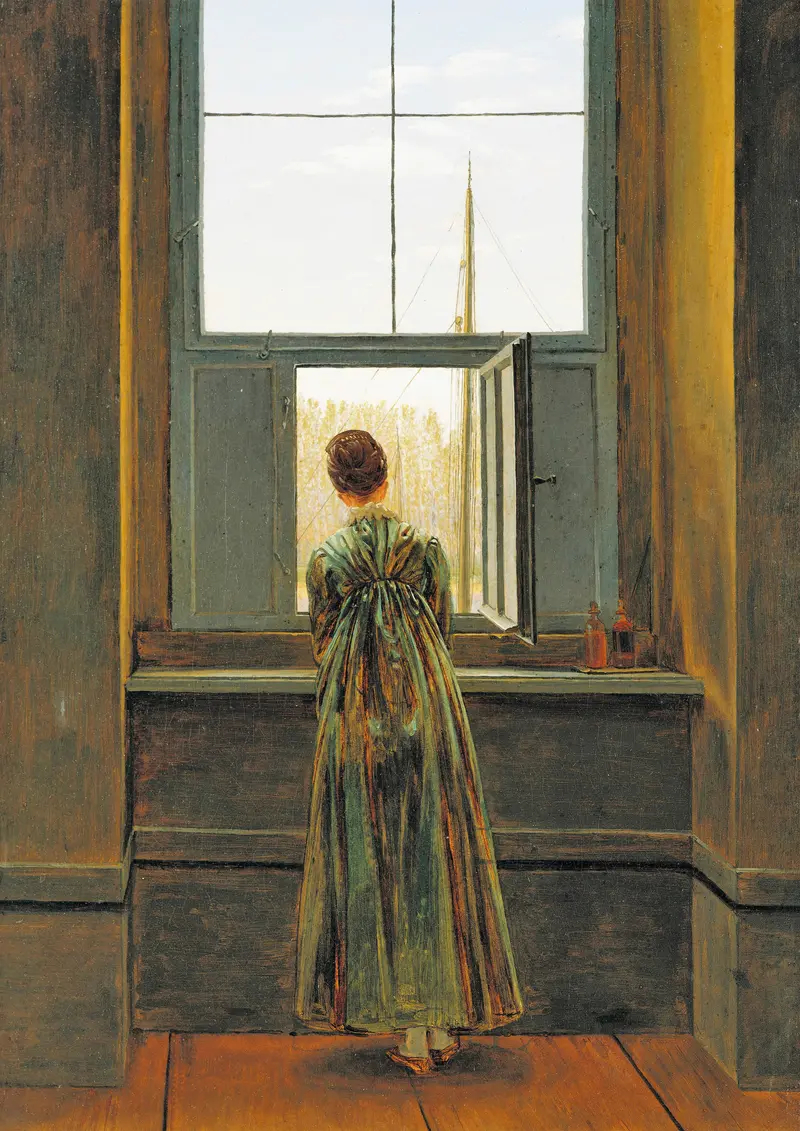
Woman at a Window
Caspar David Friedrich
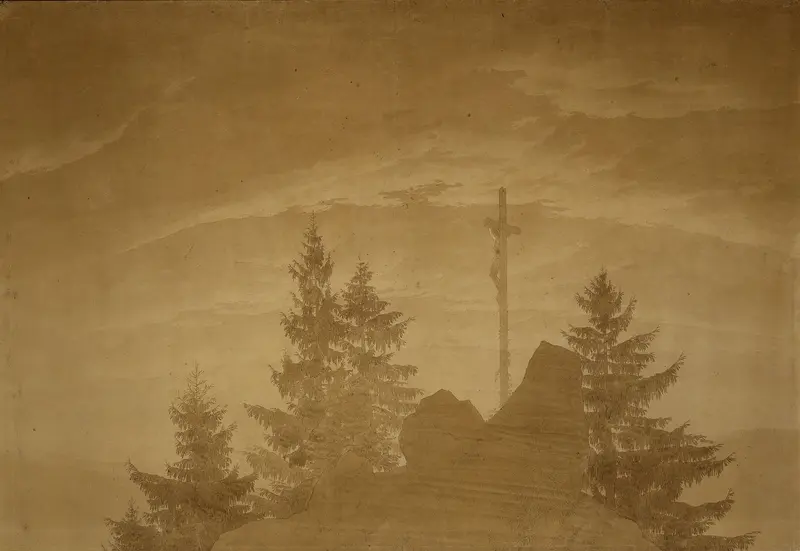
Cross in the Mountains
Caspar David Friedrich
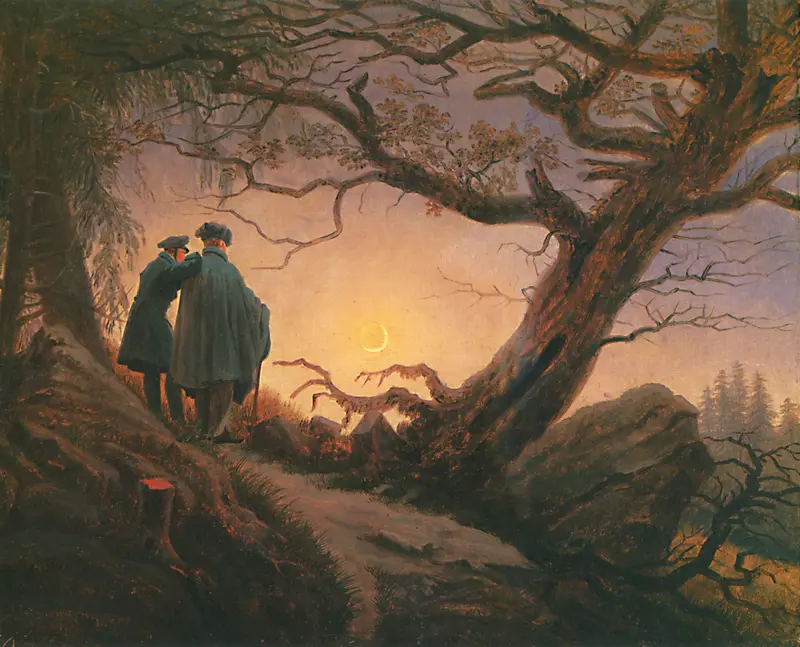
Two Men Contemplating the Moon
Caspar David Friedrich
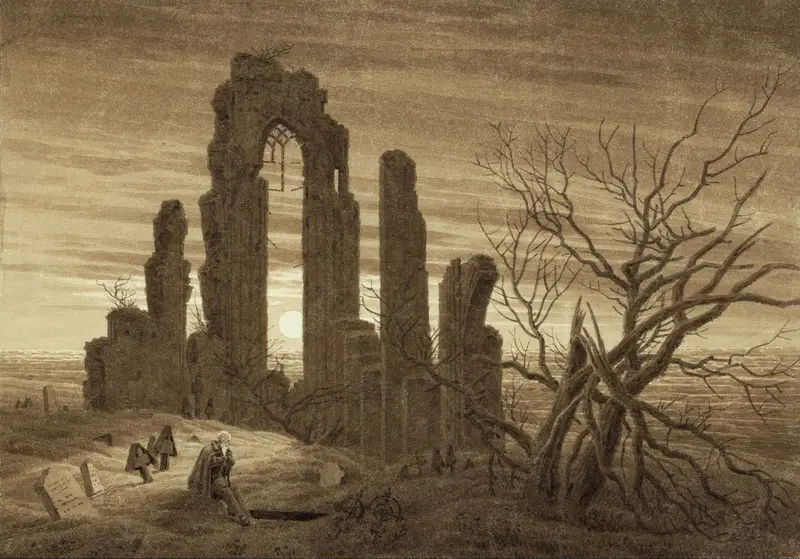
Winter – Night – Old Age and Death (from the times of day and ages of man cycle of 1803)
Caspar David Friedrich
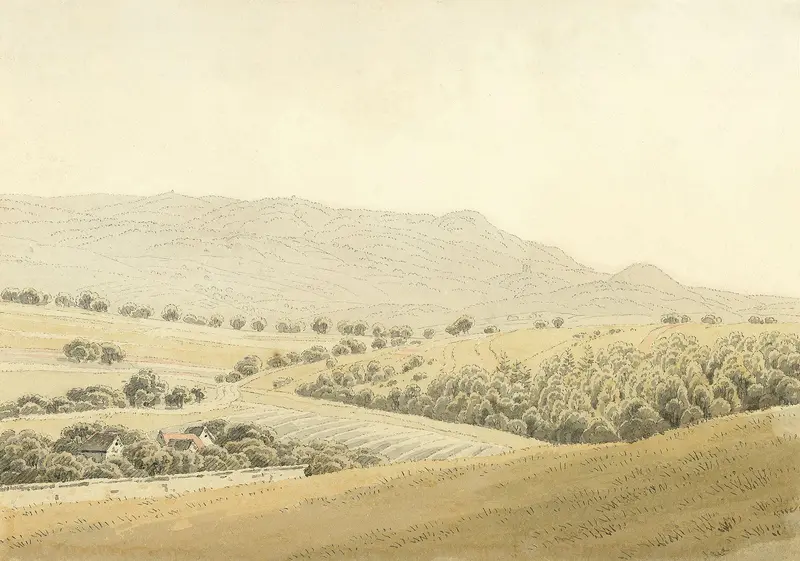
Mittelgebirgslandschaft
Caspar David Friedrich

Landschaft mit gebirgsee, morgen
Caspar David Friedrich
More Landscape Art

The Starry Night
Vincent van Gogh

View of Delft
Johannes Vermeer

Water Lilies
Claude Monet

The Grand Canal, Venice, looking north-west from the Ca' Corner to the Ca' Contarini degli Scrigni, with the campanile of Santa Maria della Carità
Canaletto

Windsor Castle
Canaletto

The Grand Canal looking North-East from the Palazzo Dolfin-Manin to the Rialto Bridge
Canaletto