
Suprematism (Supremus no. 56) — History & Facts
A tumble of colored shapes hovers in a pale, infinite space, as if gravity itself had been suspended for a moment. The eye is drawn first to the bold, angular yellow and red forms, their edges crisp against the soft, almost vaporous ground. Each rectangle, circle, and sliver seems to float independently, yet their arrangement hints at a hidden structure, a choreography of balance and tension.
The large black bar anchors the composition, while a solitary green circle and a blue crescent drift nearby, their pure hues sparking against the neutral field. This is not a scene to be entered, but a world to be navigated by the mind’s eye, where color and geometry are the only landmarks. Suprematism (Supremus no. 56) belongs to the radical artistic language forged by Kazimir Malevich in early twentieth-century Russia—a time when painters sought to break free from the old world’s forms and meanings.
The date, 1915, places this work at the heart of the Suprematist movement, when Malevich and his circle were stripping painting down to its barest essentials. These compositions were not made for patrons or palaces, but for a new vision of life and art, one that aimed to “free art from the ballast of objectivity,” as Malevich himself declared. History has kept few traces of the individual journeys of such works, but their impact is unmistakable: they invite us to look, to question, and to find meaning in pure sensation.
Stand before this painting and let your eye wander—every angle, every color, is a step into a world remade.
More Artworks by Kazimir Malevich

Red Square
Kazimir Malevich

Suprematist Composition: White on White
Kazimir Malevich

Black Square
Kazimir Malevich
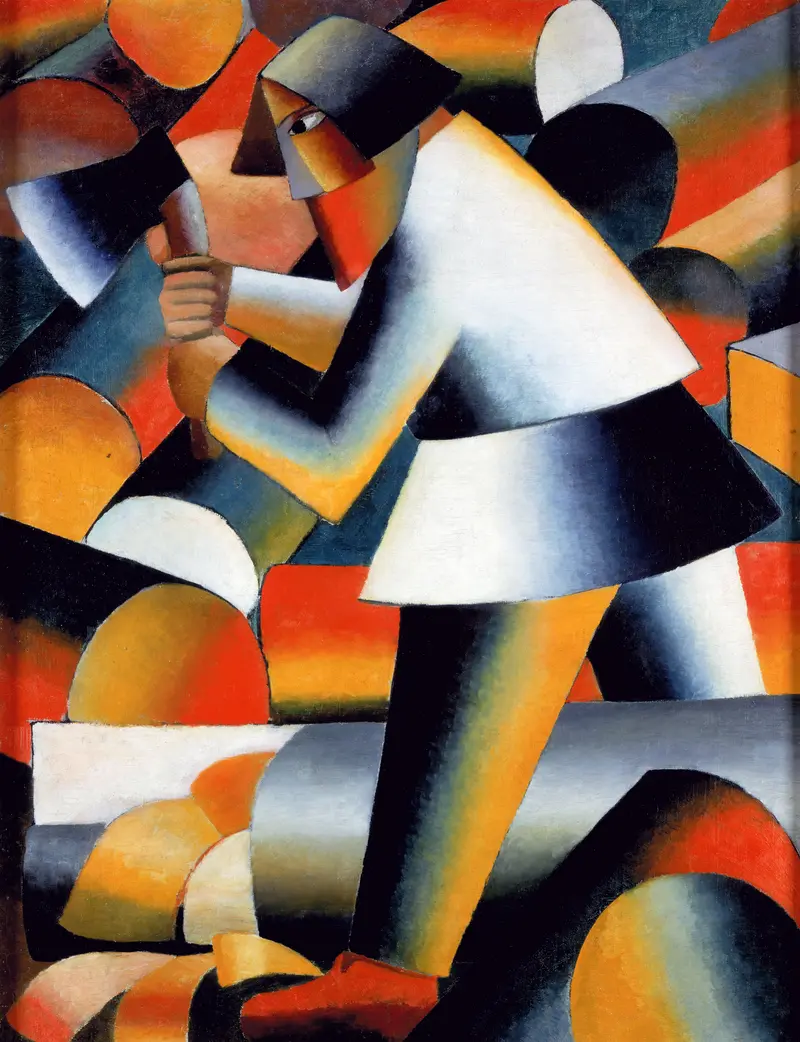
The Woodcutter
Kazimir Malevich

Untitled
Kazimir Malevich
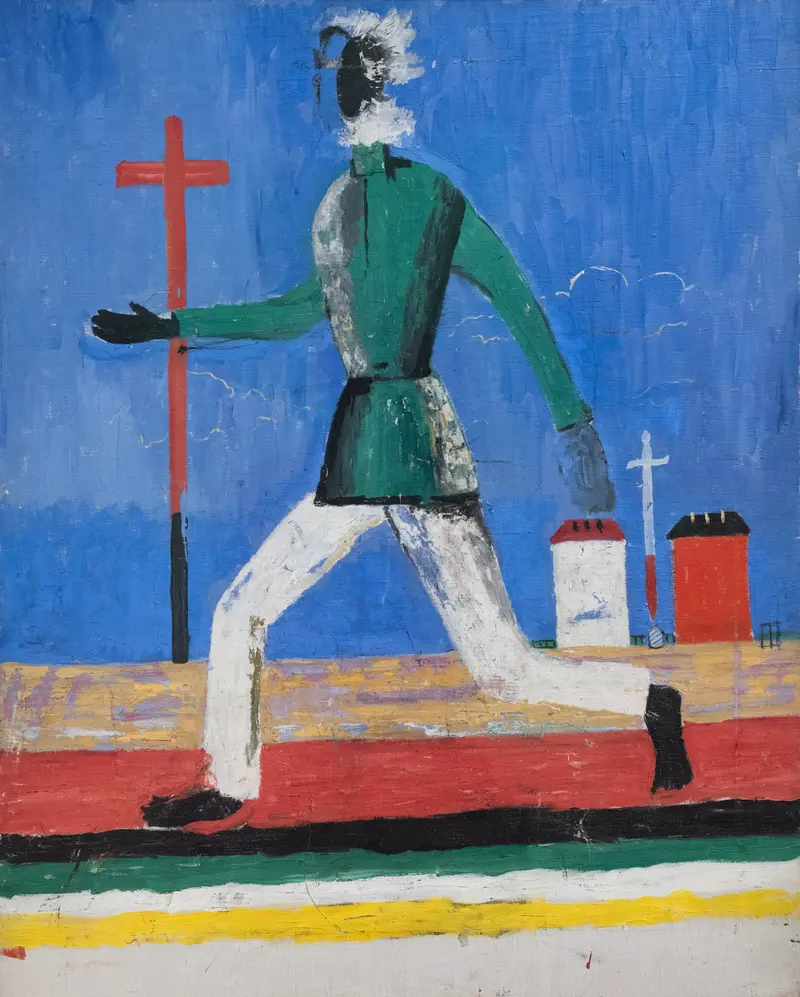
Sensation of danger
Kazimir Malevich
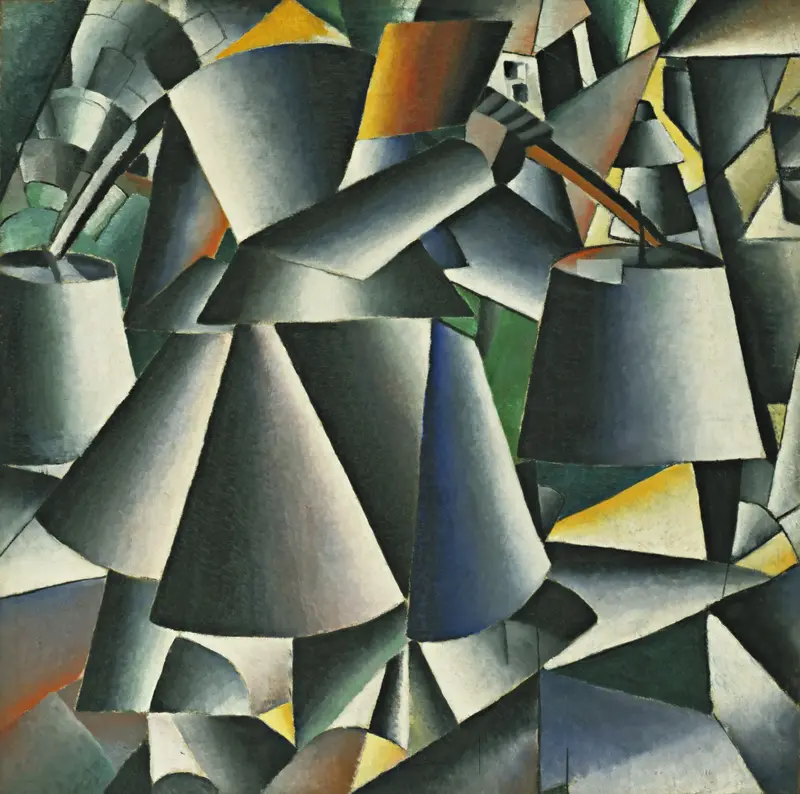
Woman with Pails: Dynamic Arrangement
Kazimir Malevich
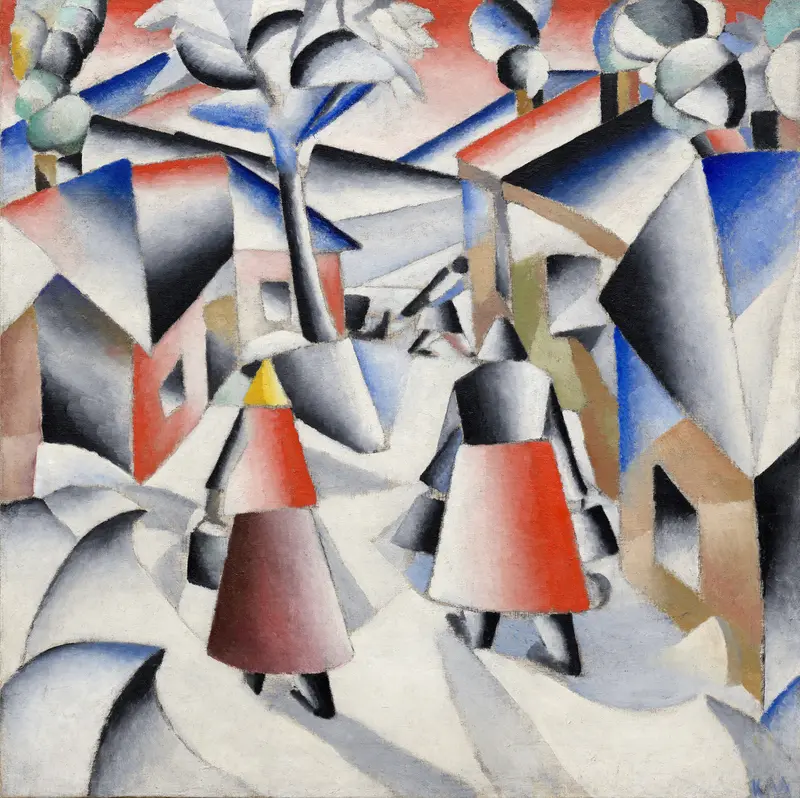
Morning in the Village after Snowstorm
Kazimir Malevich
The Knife Grinder
Kazimir Malevich
Painterly Realism of a Football Player - Color Masses in the 4th Dimension
Kazimir Malevich


