
The Knife Grinder — History & Facts
What first catches the eye in The Knife Grinder is the sense of relentless motion—an almost mechanical blur of limbs and steel, as if the figure and his wheel are fused into a single, unstoppable engine. The forms fracture and multiply, hands and tools echoing across the canvas, each edge and plane catching the light like shards of glass. The palette is cold and industrial, dominated by steely blues, machine greens, and the ochre of worn metal, all intersected by the hard geometry of Cubism.
The grinder’s arms and the wheel he turns become the painting’s axis, drawing the viewer into a vortex of labor and repetition, where the human and the mechanical are nearly indistinguishable. Every detail—the glint of the blade, the rhythmic repetition of fingers—serves to heighten this impression of ceaseless work. Painted in 1913, this work stands at the crossroads of a world hurtling toward modernity. Kazimir Malevich was working at a time when artists across Europe were breaking apart the old rules of representation, inspired by the rise of machines and the chaos of urban life.
The Cubist language here, with its overlapping planes and fractured forms, speaks to a fascination with speed, industry, and the transformation of ordinary labor into something almost monumental. While little is recorded about the specific journey of this painting, its presence today in the Yale University Art Gallery is a testament to the era’s hunger for reinvention. The world that produced this image was one in which the boundaries between man and machine, art and industry, were dissolving—look again, and you may find yourself caught in the relentless rhythm of the grinder’s wheel.
More Artworks by Kazimir Malevich

Red Square
Kazimir Malevich

Suprematist Composition: White on White
Kazimir Malevich

Black Square
Kazimir Malevich
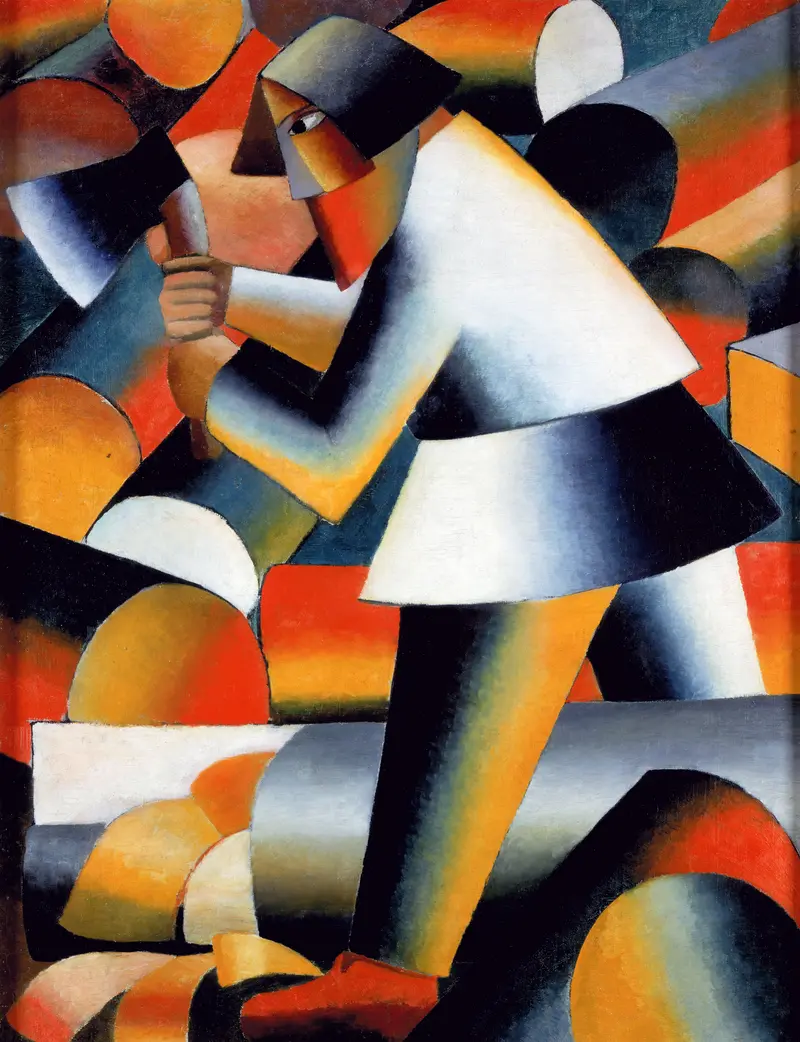
The Woodcutter
Kazimir Malevich

Untitled
Kazimir Malevich
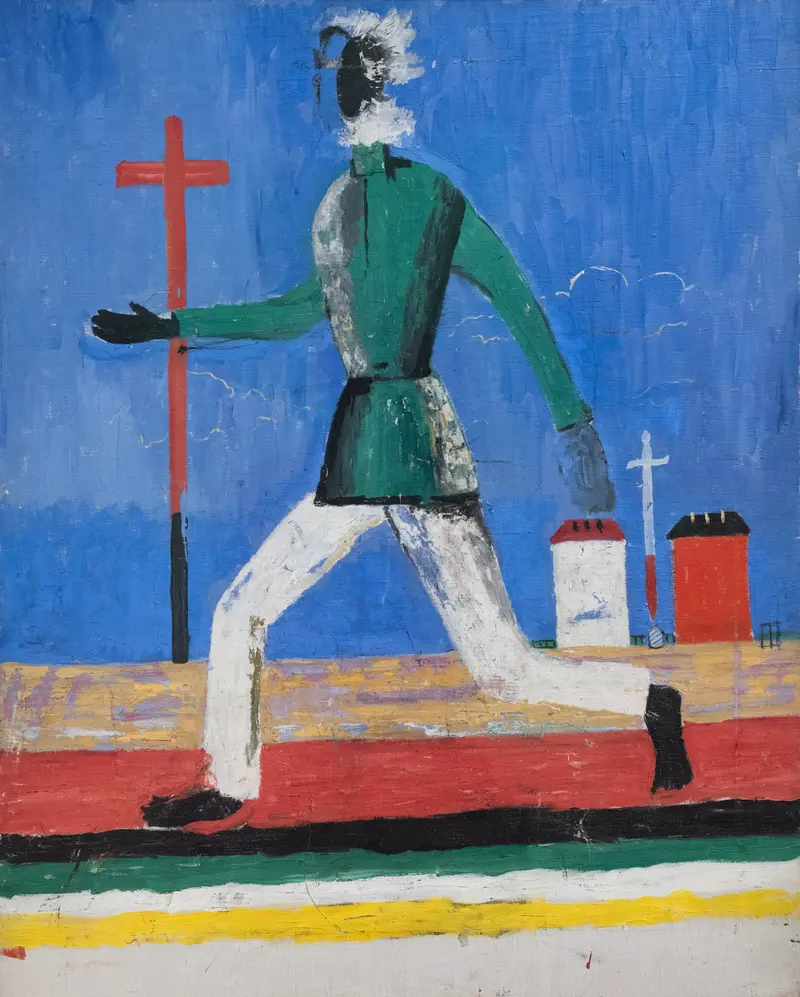
Sensation of danger
Kazimir Malevich
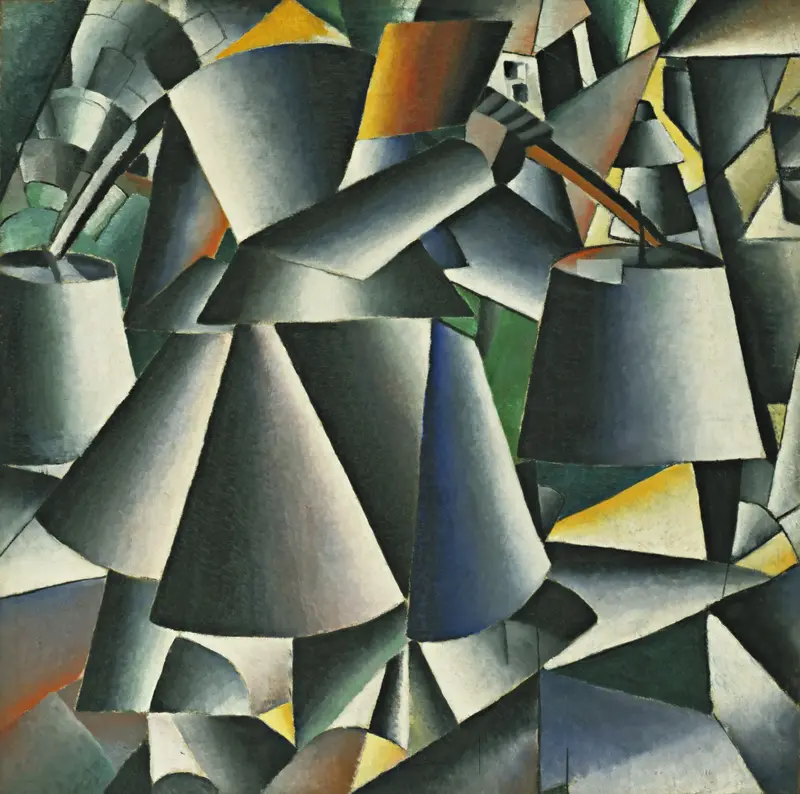
Woman with Pails: Dynamic Arrangement
Kazimir Malevich
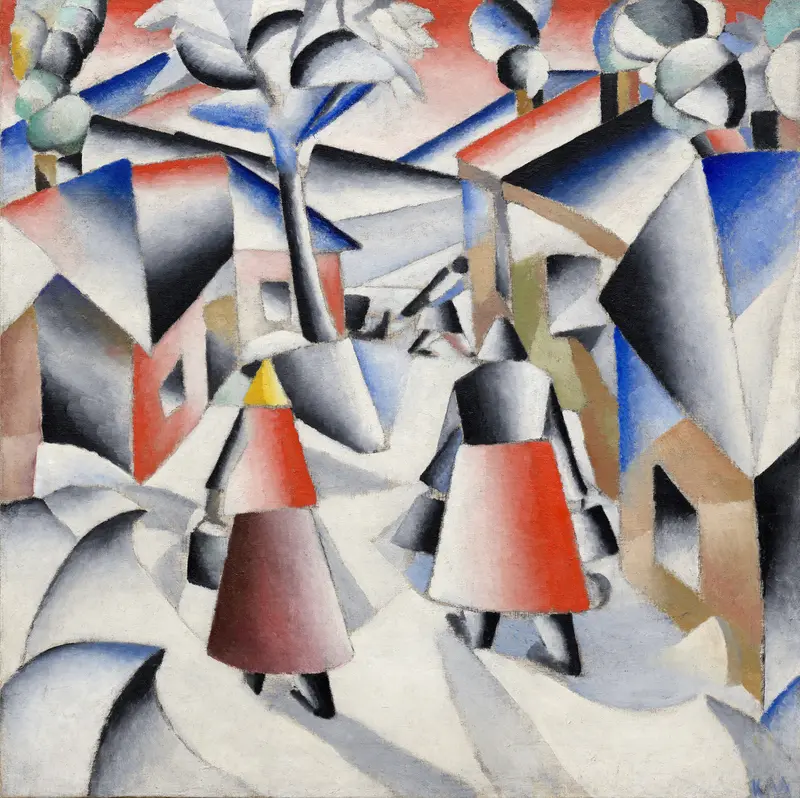
Morning in the Village after Snowstorm
Kazimir Malevich
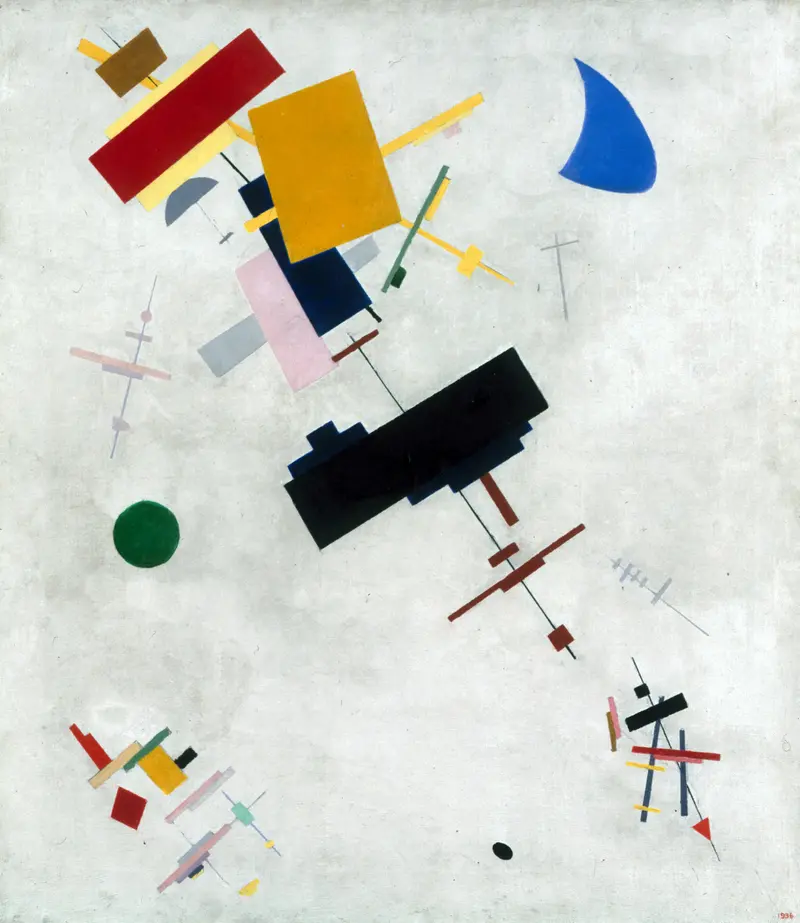
Suprematism (Supremus no. 56)
Kazimir Malevich
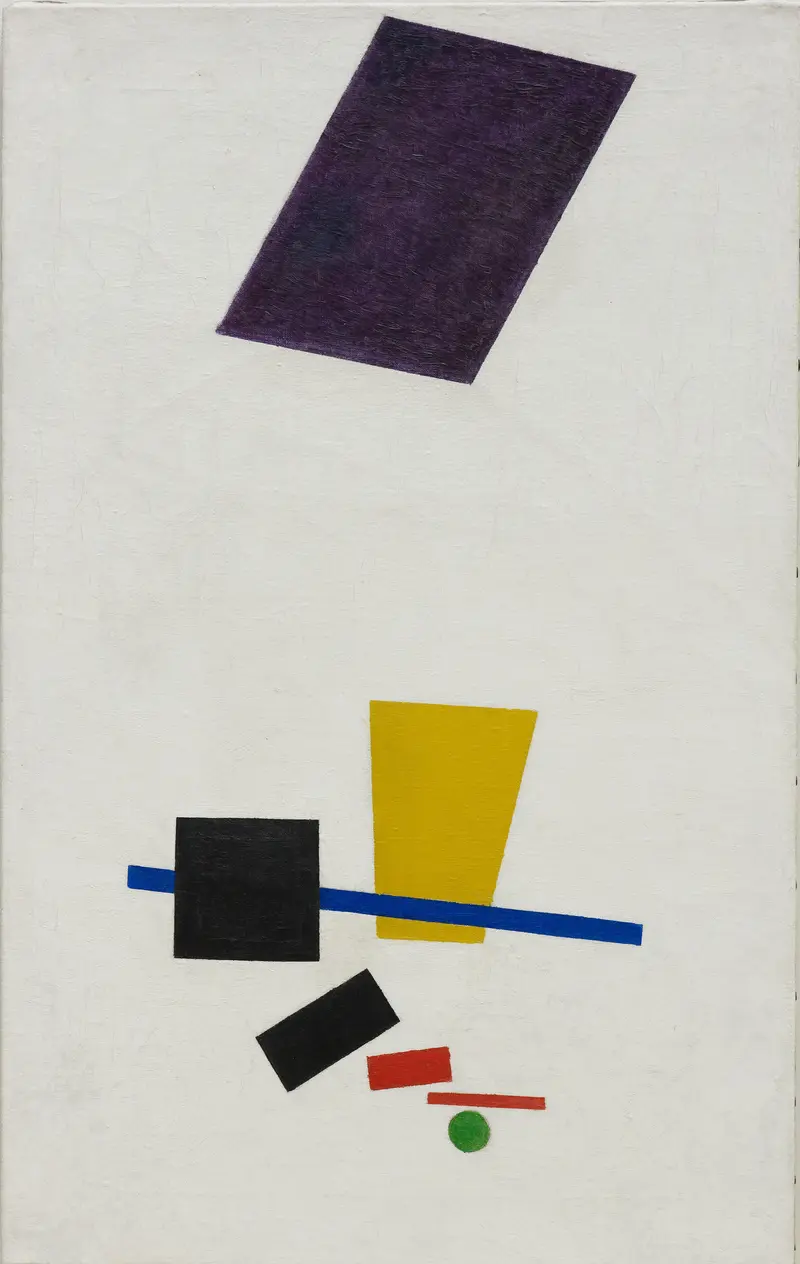
Painterly Realism of a Football Player - Color Masses in the 4th Dimension
Kazimir Malevich



