
Woman with Pails: Dynamic Arrangement — History & Facts
A figure seems to stride straight out of a fractured world, her form built from cones and cylinders, her arms taut with the weight of pails. In Woman with Pails: Dynamic Arrangement, every edge and plane pulses with energy, as if the act of carrying water has been split into a thousand moments and reassembled in a single, urgent instant. The woman’s body is a construction of sharp angles and shifting shadows, her presence both monumental and fleeting.
The eye is drawn to the central axis of her skirt, which fans out like a bell, anchoring the composition even as the surrounding forms tumble and collide. Light glances off the metallic surfaces, suggesting both the glint of water and the hard labor of daily life. This is a scene not of rest but of action, caught mid-motion. The pails, rendered as geometric solids, become almost architectural—echoing the rooftops and walls that crowd the background.
The palette is cool and steely, with flashes of yellow and green that animate the otherwise restrained tones. There is no clear narrative, only the sensation of movement and the rhythm of repeated forms. The woman’s gesture—arms outstretched, body leaning forward—transforms a simple task into a dynamic performance, as if the very act of carrying is worthy of monumental treatment.
The interplay of light and shadow, of curve and angle, keeps the viewer’s gaze in perpetual motion, circling the figure again and again. Painted in 1912, this work stands at the crossroads of Cubism and the Russian avant-garde, a moment when artists like Kazimir Malevich were breaking apart the visible world to rebuild it on new terms. In the years leading up to the Russian Revolution, painters sought to capture the energy and uncertainty of modern life, turning ordinary subjects into sites of experimentation. The painting now resides in the collection of the Museum of Modern Art, a testament to its place in the story of early twentieth-century art.
Few records survive about its early journey, but its restless geometry speaks for itself—inviting us to see the world, and the labor of those within it, as a field of endless possibility.
More Artworks by Kazimir Malevich

Red Square
Kazimir Malevich

Suprematist Composition: White on White
Kazimir Malevich

Black Square
Kazimir Malevich
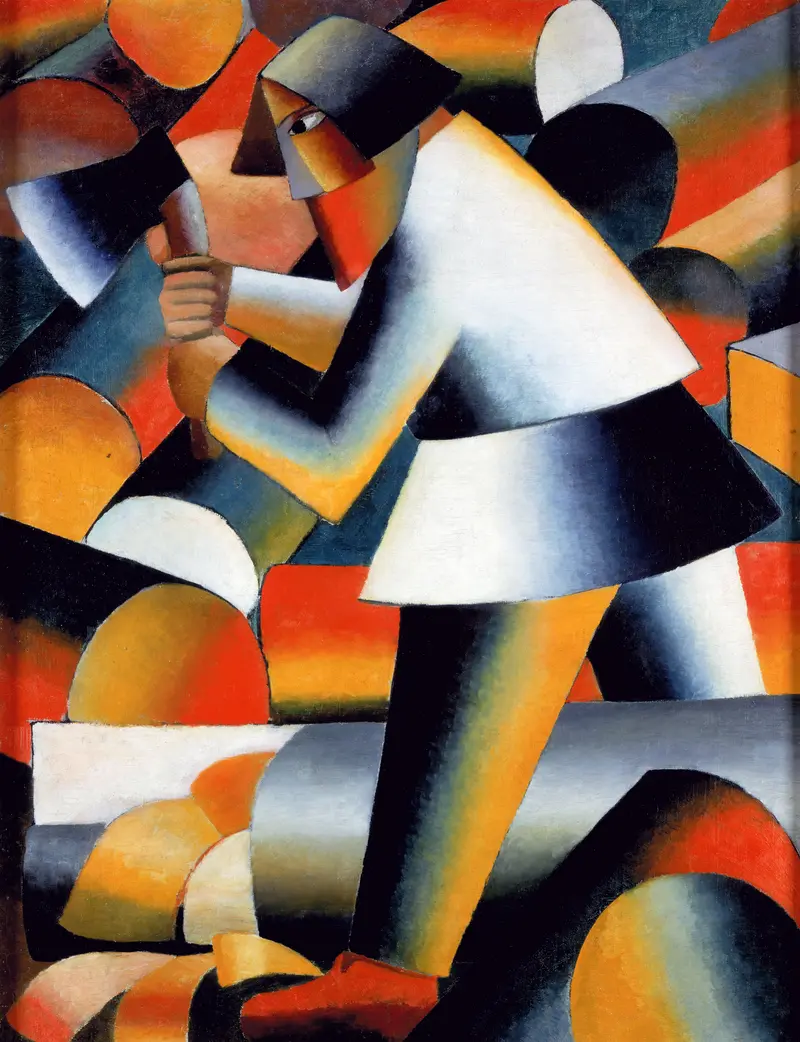
The Woodcutter
Kazimir Malevich

Untitled
Kazimir Malevich
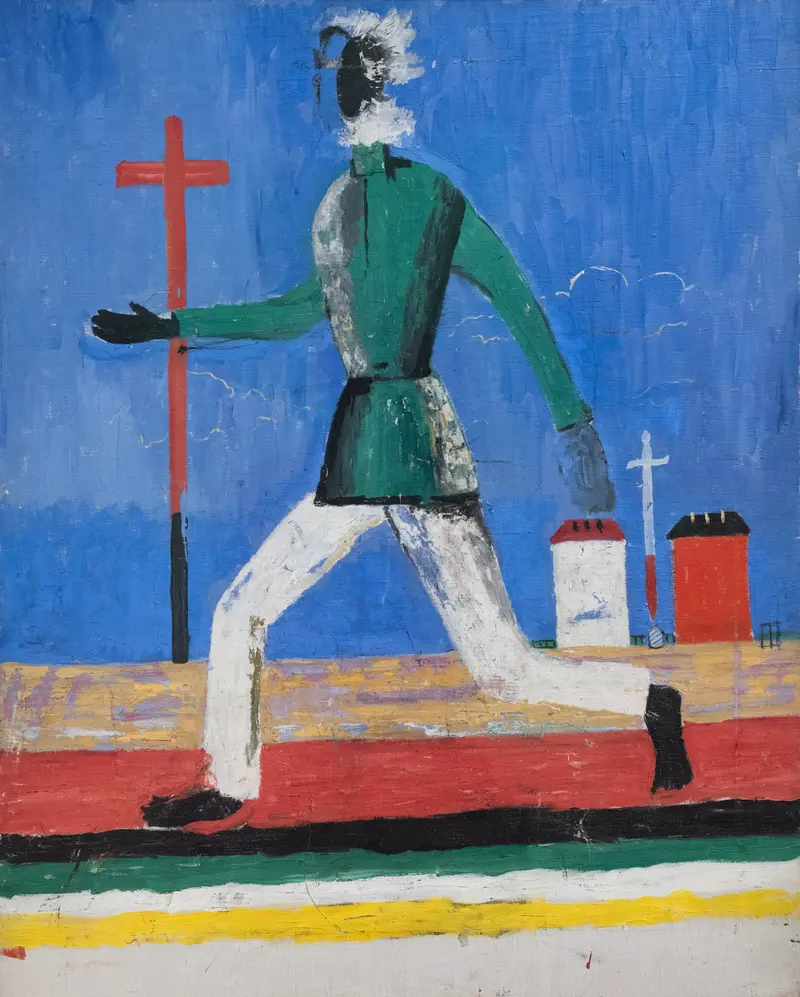
Sensation of danger
Kazimir Malevich
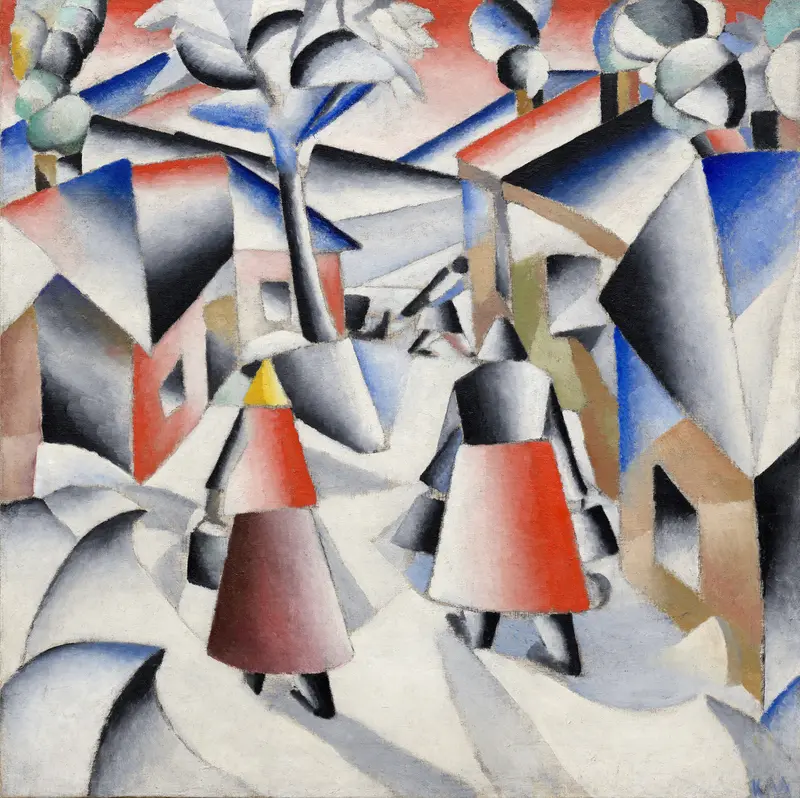
Morning in the Village after Snowstorm
Kazimir Malevich
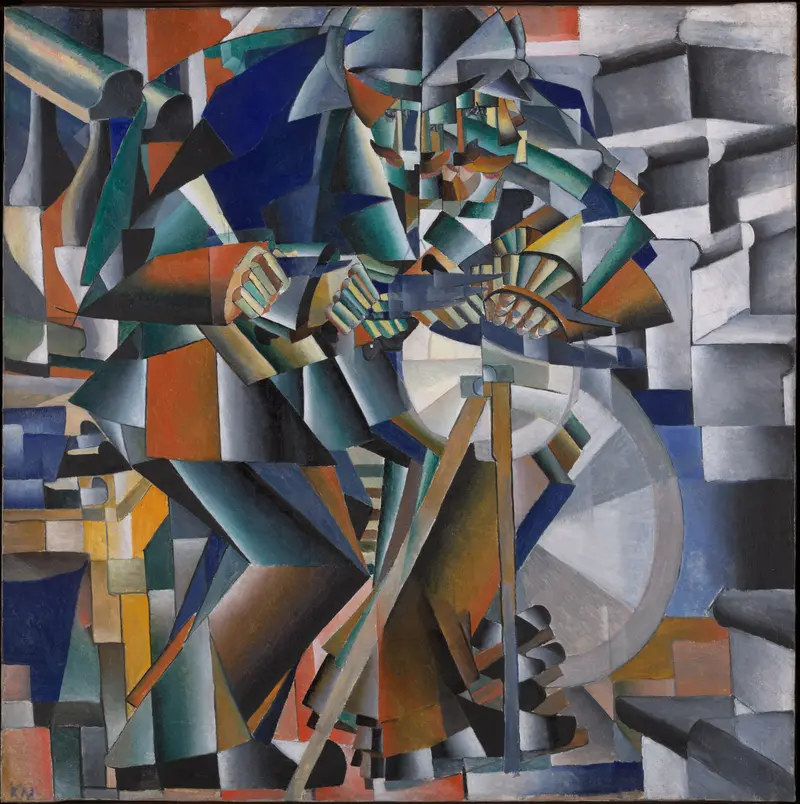
The Knife Grinder
Kazimir Malevich
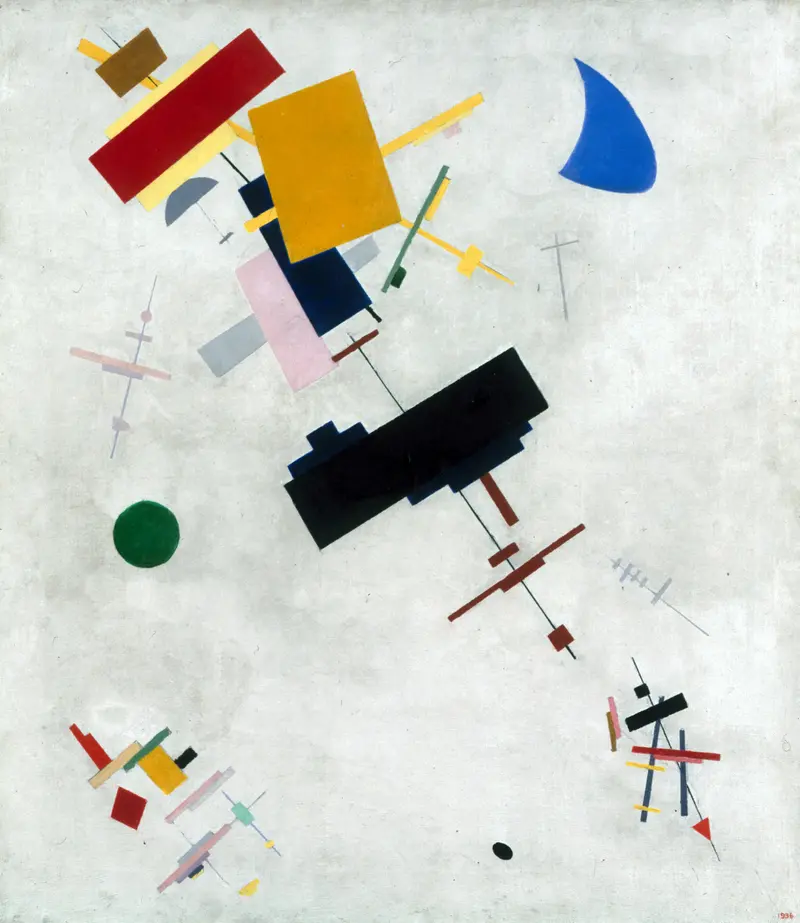
Suprematism (Supremus no. 56)
Kazimir Malevich
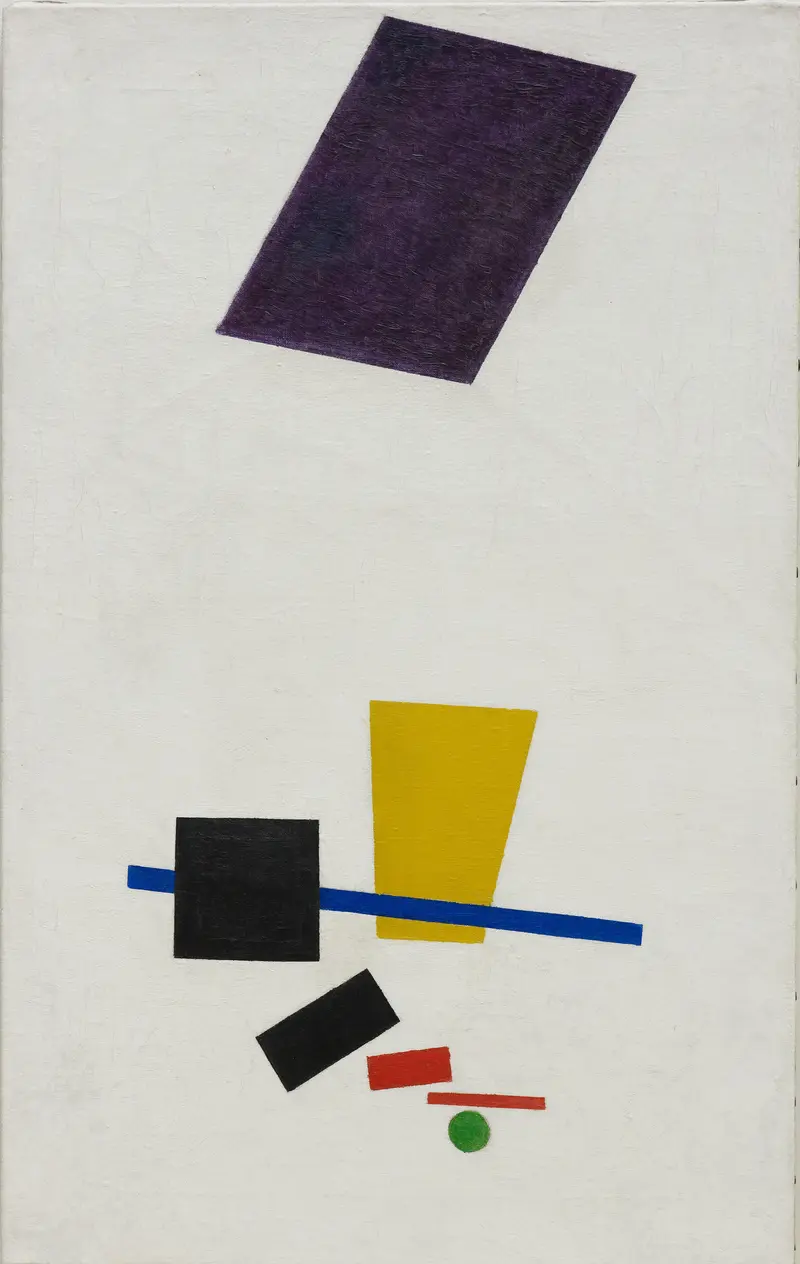
Painterly Realism of a Football Player - Color Masses in the 4th Dimension
Kazimir Malevich



