
The Woodcutter — History & Facts
What first seizes the eye in The Woodcutter is the sense of force—every shape and color seems to press forward, as if the figure might step out of the frame. The woodcutter’s body is built from sharp planes and arcs, his arms and axe rendered with the same sturdy geometry as the logs he splits. Color is not just decoration here: the bands of red, yellow, and blue carve up the space, echoing the rhythm of labor and the repetition of movement.
The figure’s face, half-shadowed, half-lit, draws us in—there is both anonymity and presence, as if he stands for every worker and for one man alone. This painting was made in late 1912, at a moment when Russian artists like Kazimir Malevich were breaking open the conventions of representation. The world around them was changing fast: industry was reshaping the countryside, and artists sought new forms to capture that energy. Works like this, with their fractured surfaces and bold colors, belonged to the movement known as Cubism—imported from Paris but quickly made Russian, with a sharper edge and a taste for the monumental.
Today, The Woodcutter lives in the Stedelijk Museum’s collection, a reminder of how the early twentieth century asked painters not just to record the world, but to reinvent it. The next time you look, see how the axe and the arm seem to merge—tool and worker, action and form, fused in a single moment of creation.
More Artworks by Kazimir Malevich

Red Square
Kazimir Malevich

Suprematist Composition: White on White
Kazimir Malevich

Black Square
Kazimir Malevich

Untitled
Kazimir Malevich
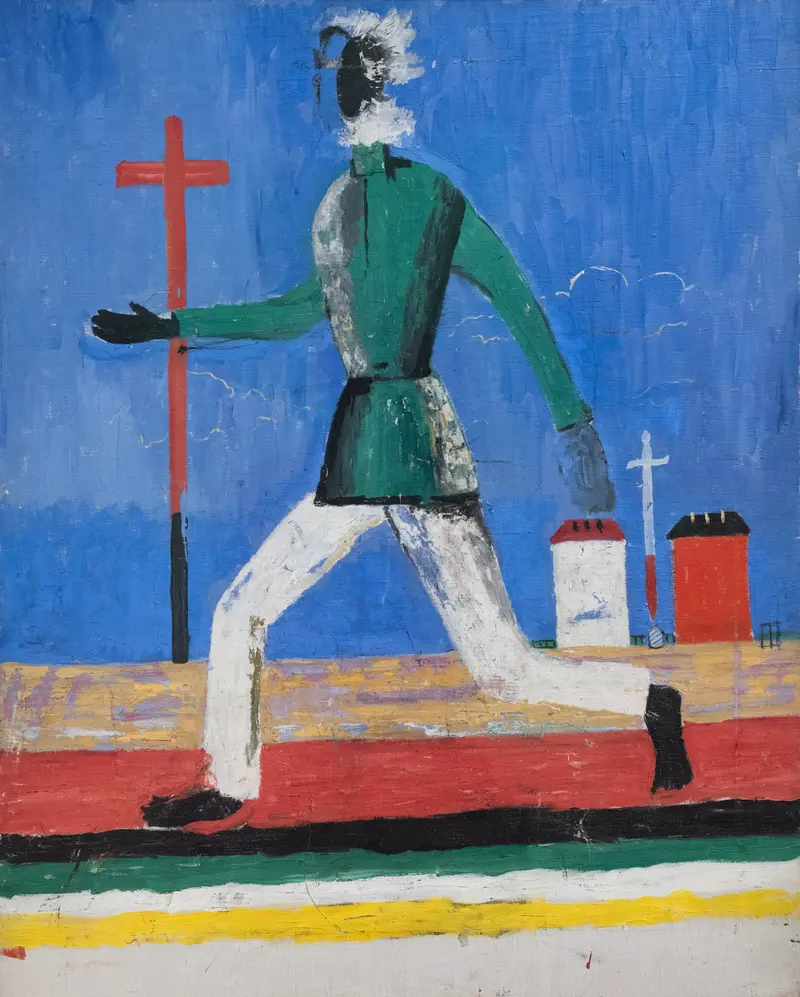
Sensation of danger
Kazimir Malevich
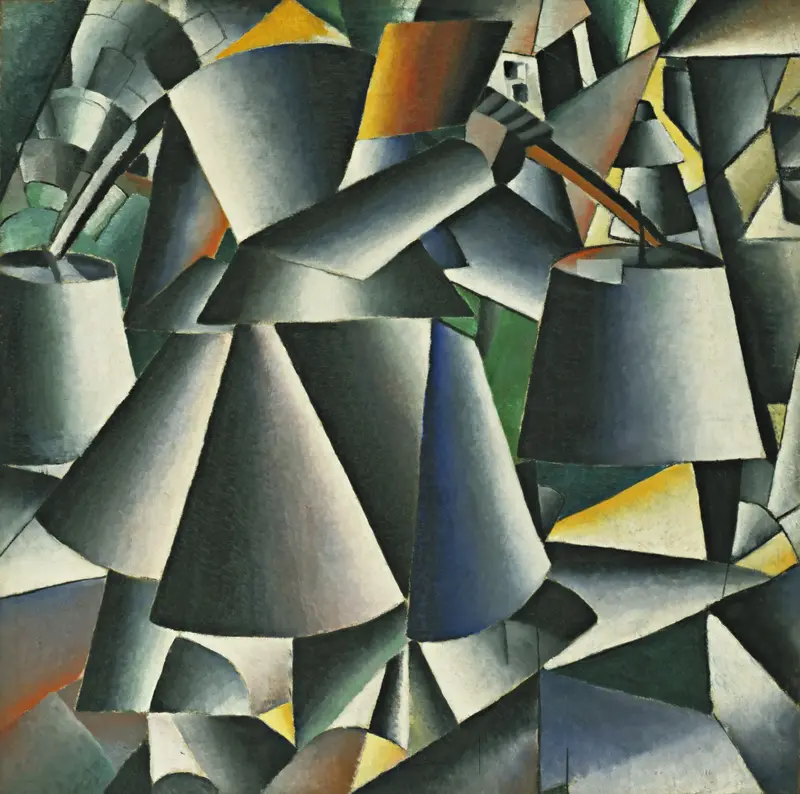
Woman with Pails: Dynamic Arrangement
Kazimir Malevich
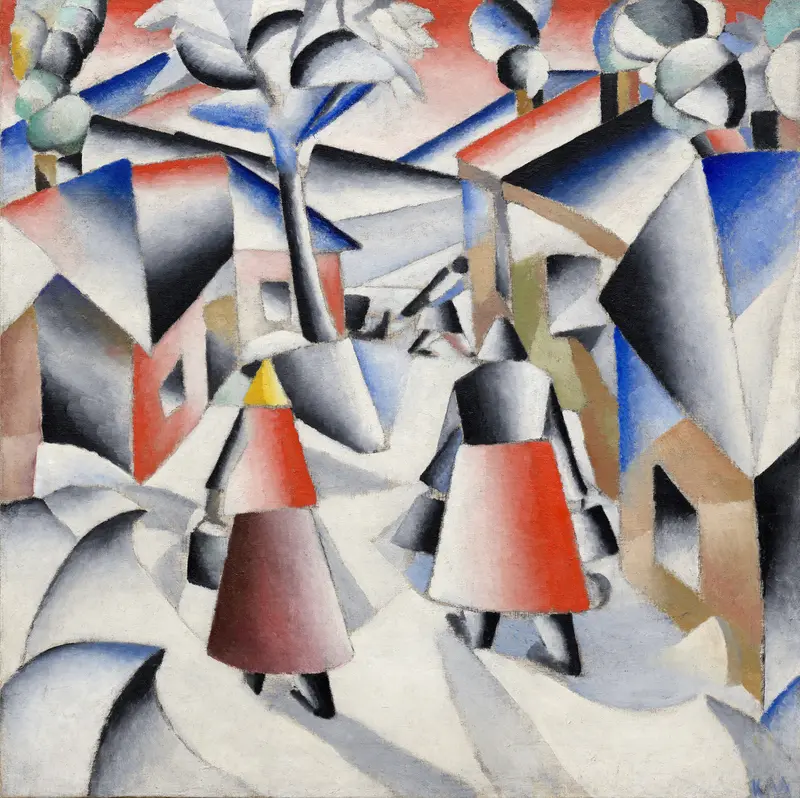
Morning in the Village after Snowstorm
Kazimir Malevich
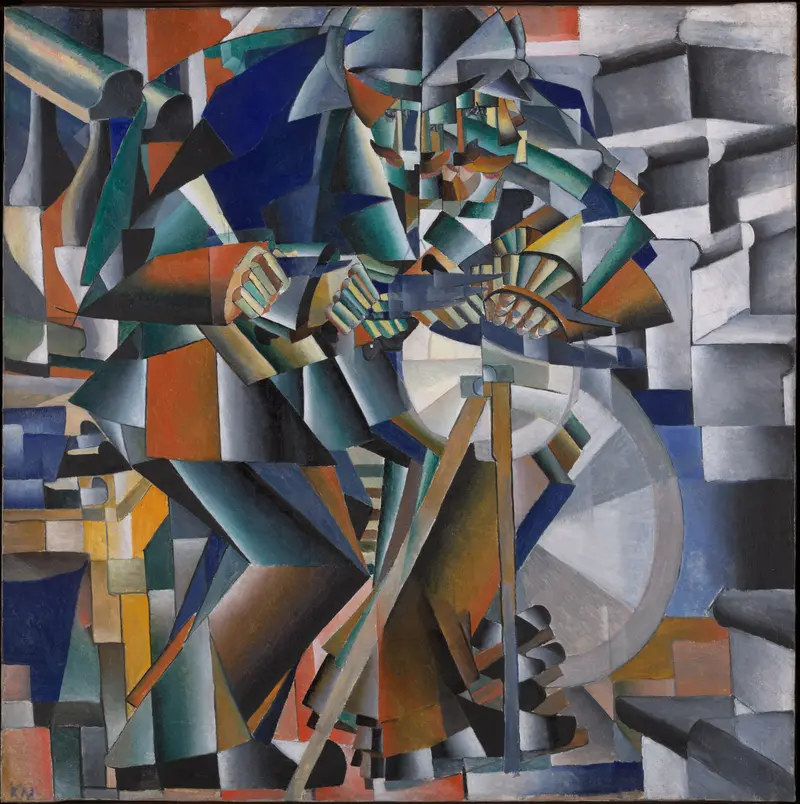
The Knife Grinder
Kazimir Malevich
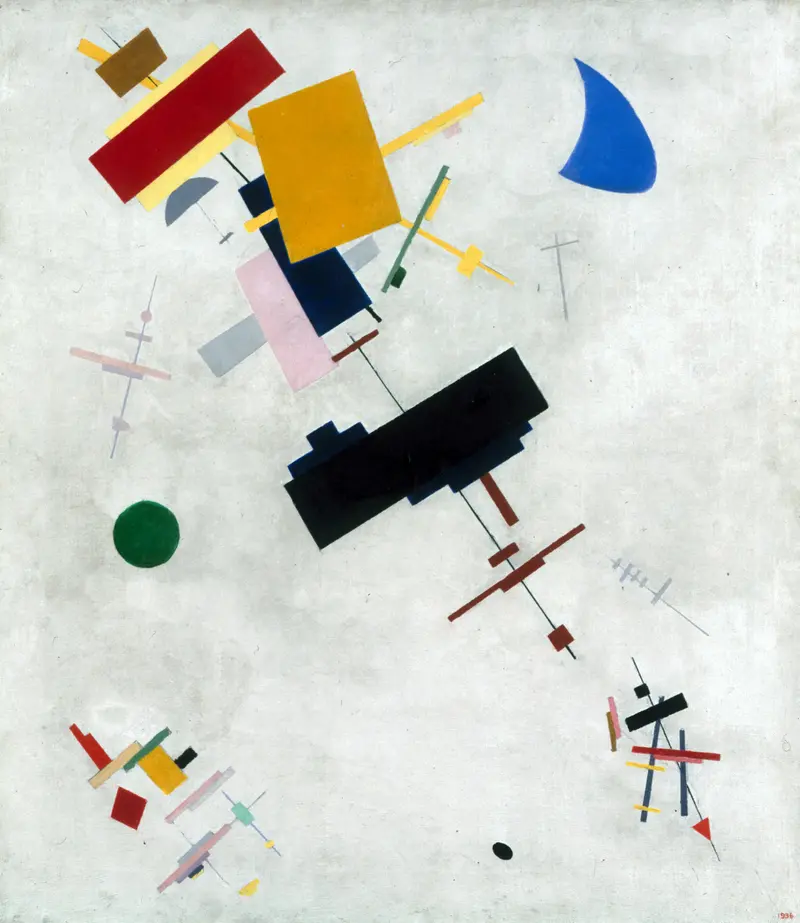
Suprematism (Supremus no. 56)
Kazimir Malevich
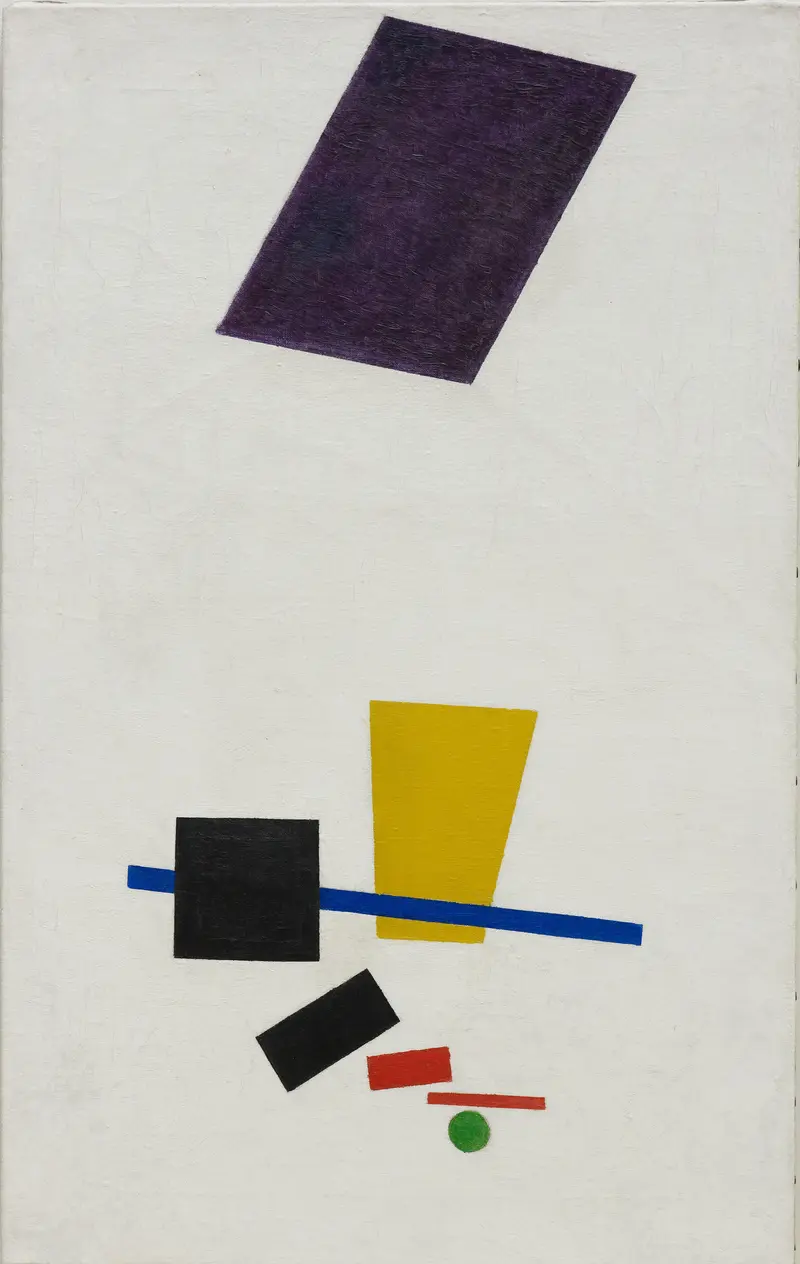
Painterly Realism of a Football Player - Color Masses in the 4th Dimension
Kazimir Malevich



