
Sensation of danger — History & Facts
A figure strides across a flat, color-blocked landscape, its faceless head whipped by white brushstrokes that could be hair or wind, urgency caught in the angle of its limbs. The body is reduced to geometric planes—emerald green, white, black—while the background pulses with a saturated blue sky, punctuated by a bold red cross and the schematic forms of houses or towers. The hand is outstretched, palm open, as if to ward off or beckon, and the whole scene vibrates with a sense of imminent movement.
The palette is primary, the brushwork rough and direct, and the horizon low, giving the figure the stage. There is a tension here: the title Sensation of danger hovers over the image, and the viewer feels it in the figure’s hurried gait and the stark, almost warning-like verticals of the crosses. Kazimir Malevich was a pioneer of the Suprematist movement, which sought to strip painting to its barest essentials—color, shape, and feeling. By 1930, however, the world around Malevich was changing: Soviet art was under pressure to serve the state, and abstraction was increasingly suspect.
Works like this, with their simplified forms and ambiguous narratives, stand at the crossroads of artistic freedom and political anxiety. The painting’s date of 2023-12-10, as recorded in its source, places it in a contemporary collection, a reminder that the questions Malevich raised about fear, identity, and the power of abstraction still resonate. Stand before this image and ask yourself: what is the figure running from—or toward?
More Artworks by Kazimir Malevich

Red Square
Kazimir Malevich

Suprematist Composition: White on White
Kazimir Malevich

Black Square
Kazimir Malevich
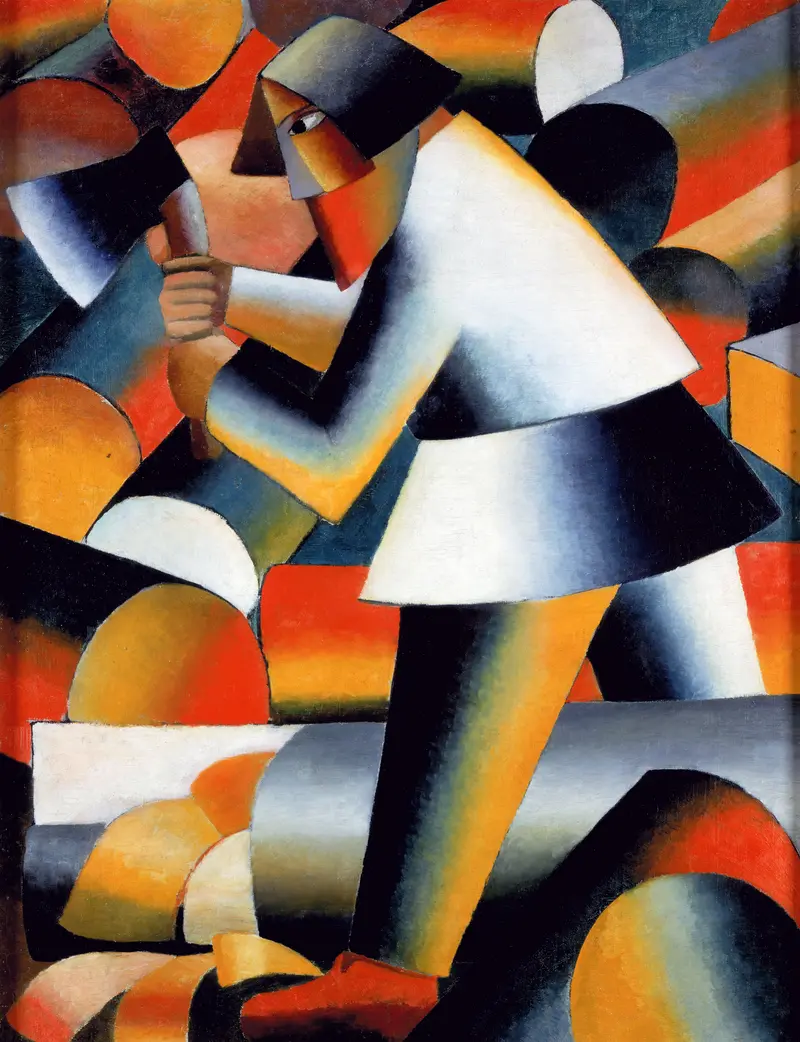
The Woodcutter
Kazimir Malevich

Untitled
Kazimir Malevich
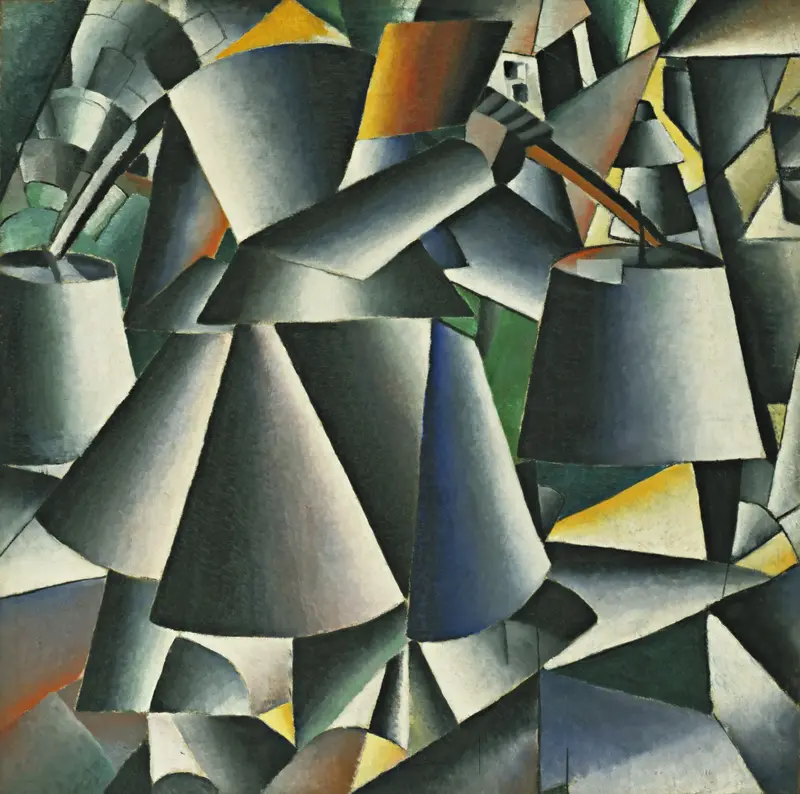
Woman with Pails: Dynamic Arrangement
Kazimir Malevich
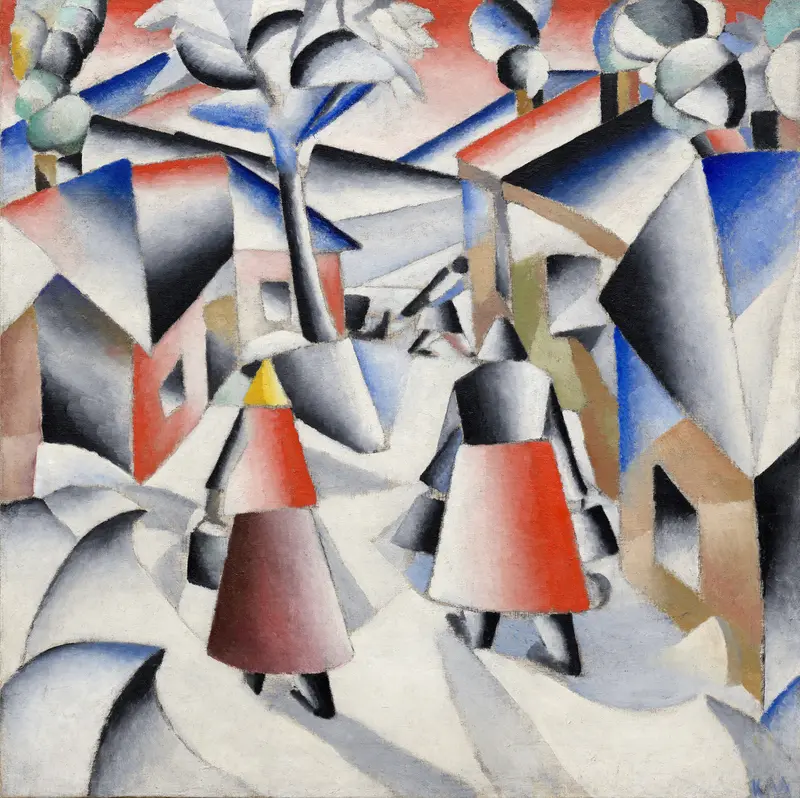
Morning in the Village after Snowstorm
Kazimir Malevich
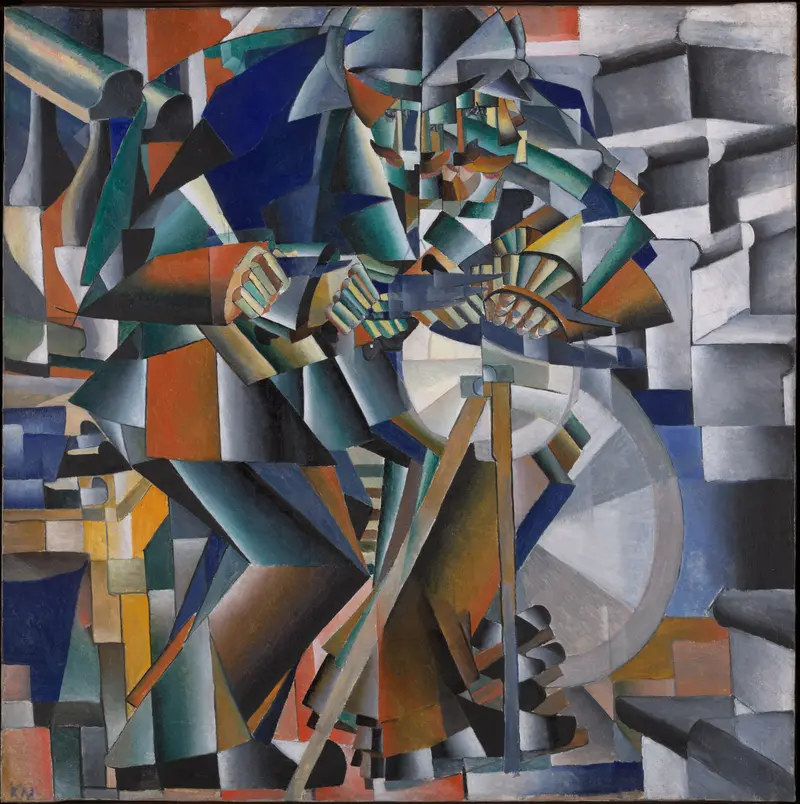
The Knife Grinder
Kazimir Malevich
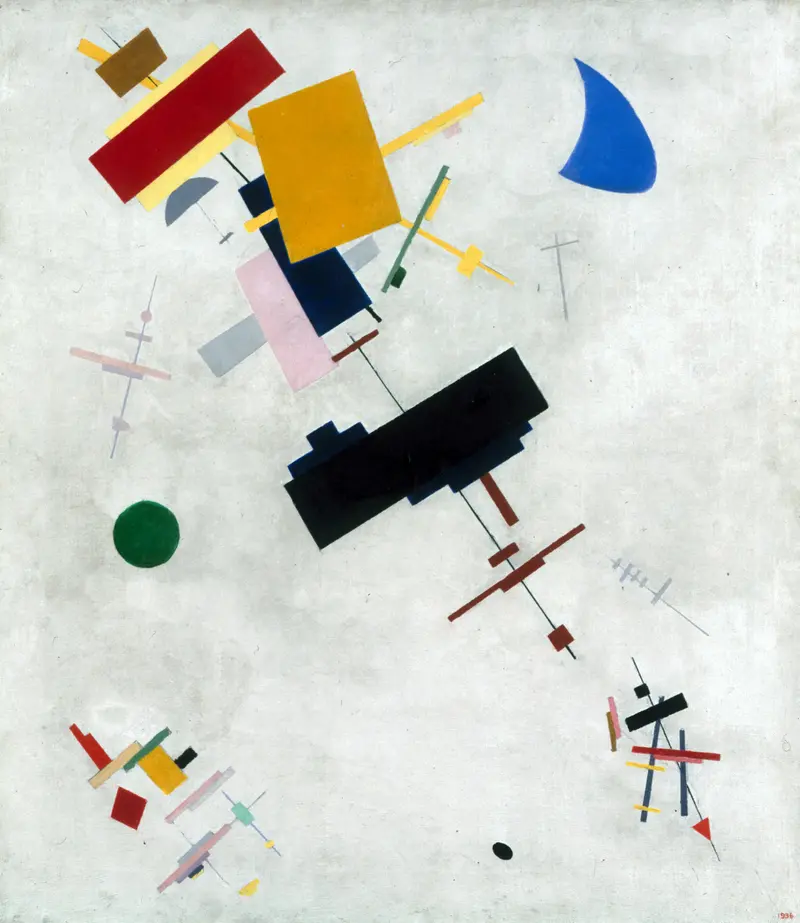
Suprematism (Supremus no. 56)
Kazimir Malevich
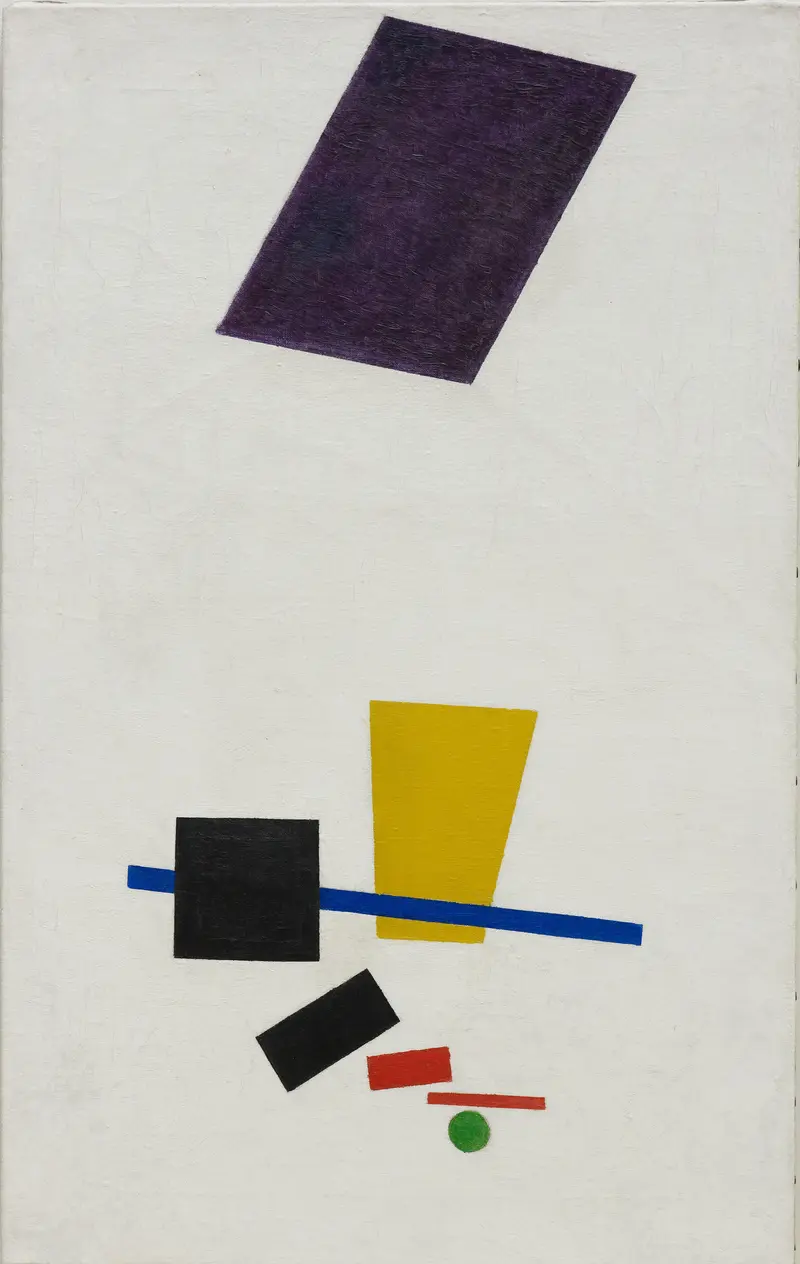
Painterly Realism of a Football Player - Color Masses in the 4th Dimension
Kazimir Malevich



