
Swans in the reeds at the first dawn — History & Facts
Two swans, necks arched in mirrored grace, draw the viewer into a hush that feels almost private. The reeds rise around them in dense, tangled walls, their tips catching the first, faint blush of dawn. The sky behind is a soft, glowing wash—rose and gold melting together—while a thin crescent moon lingers, barely visible, as if reluctant to leave the stage to the coming day.
The eye is led from the secretive darkness of the marshy water, where tiny red buds float, up through the sheltering reeds to the swans themselves, who seem to pause in a moment of silent communication. Here, every detail—the curve of a wing, the glint on a beak—serves to heighten the sense of intimacy and enclosure, as if the world outside this thicket has faded away. Painted around 1832, Swans in the reeds at the first dawn belongs to the era when artists like Caspar David Friedrich sought not grand historical narratives, but the quiet drama of nature’s own theatre. In the early nineteenth century, such works were often prized by private collectors who longed for images that offered both solace and reflection, a counterpoint to the rush of industrial life.
Friedrich’s landscapes, with their careful attention to mood and light, became emblematic of a Romantic longing for communion with the natural world. Though little is recorded about this particular painting’s journey, its presence today in the digital collection of Zeno.org (ID 20004019431) is a testament to the enduring pull of these silent, dawn-lit moments. The longer you look, the more the reeds seem to close around you, inviting you to linger in their quiet.
More Artworks by Caspar David Friedrich
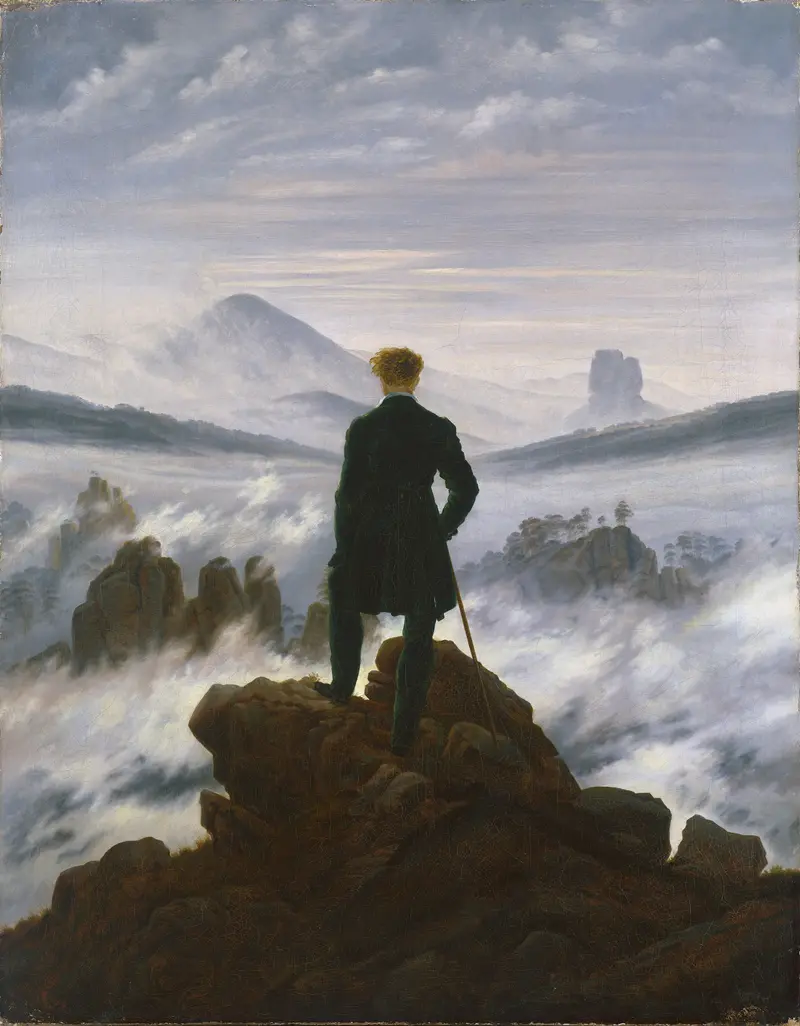
Wanderer above the Sea of Fog
Caspar David Friedrich

The Sea of Ice
Caspar David Friedrich
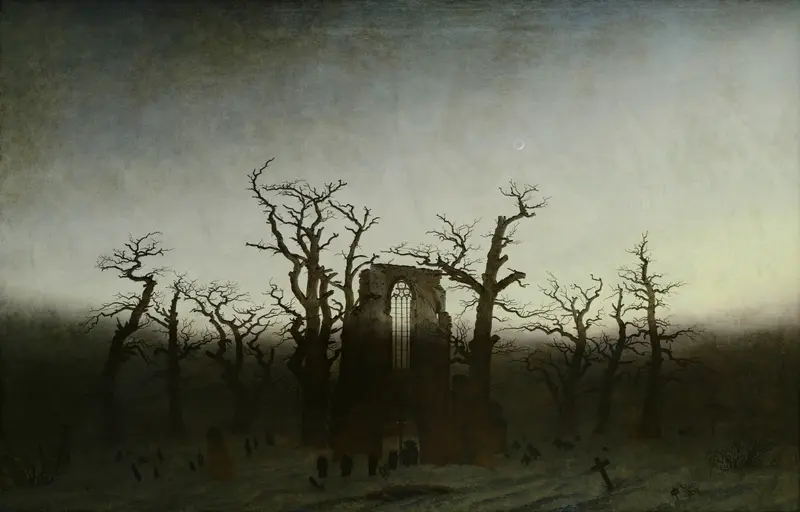
The Abbey in the Oakwood
Caspar David Friedrich
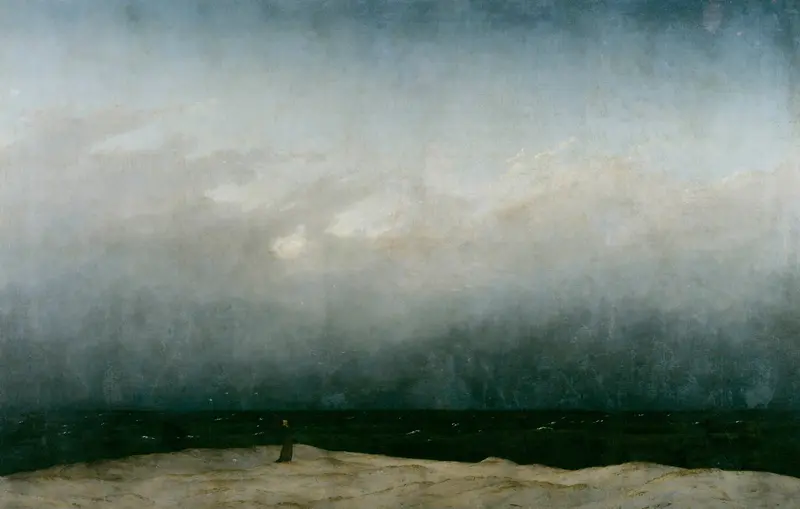
The Monk by the Sea
Caspar David Friedrich
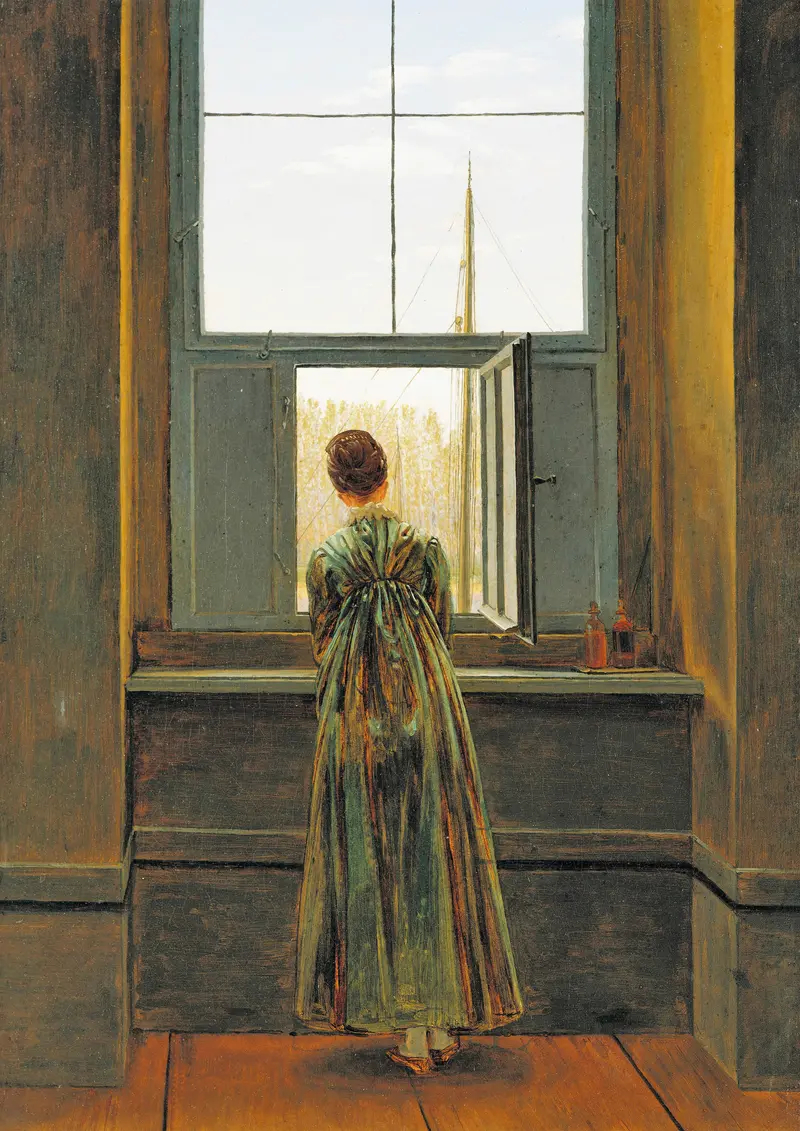
Woman at a Window
Caspar David Friedrich
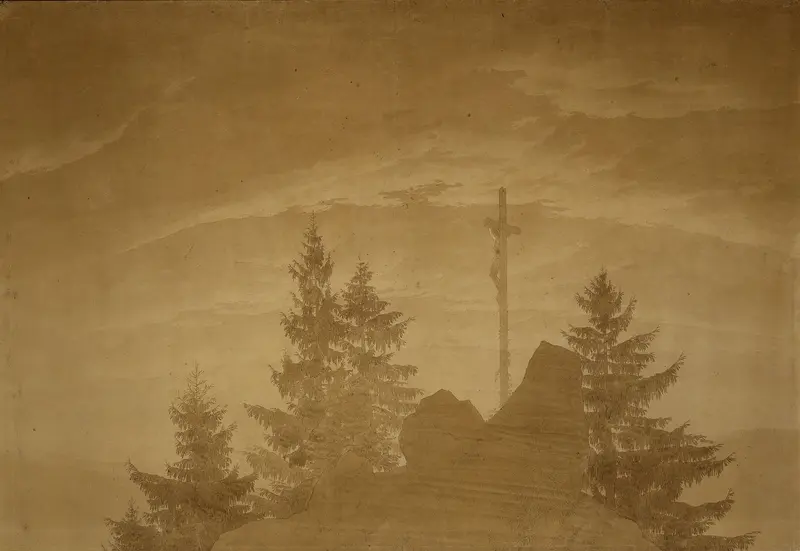
Cross in the Mountains
Caspar David Friedrich
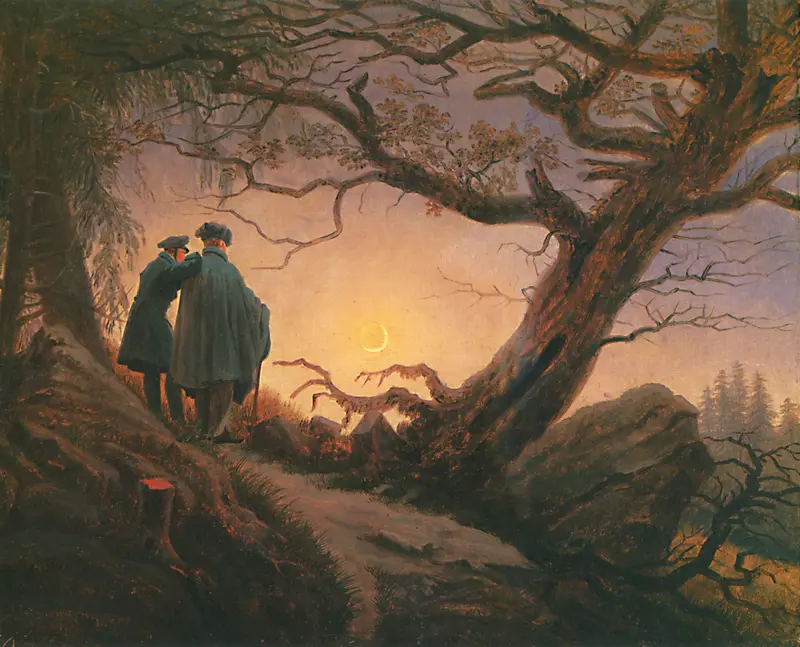
Two Men Contemplating the Moon
Caspar David Friedrich
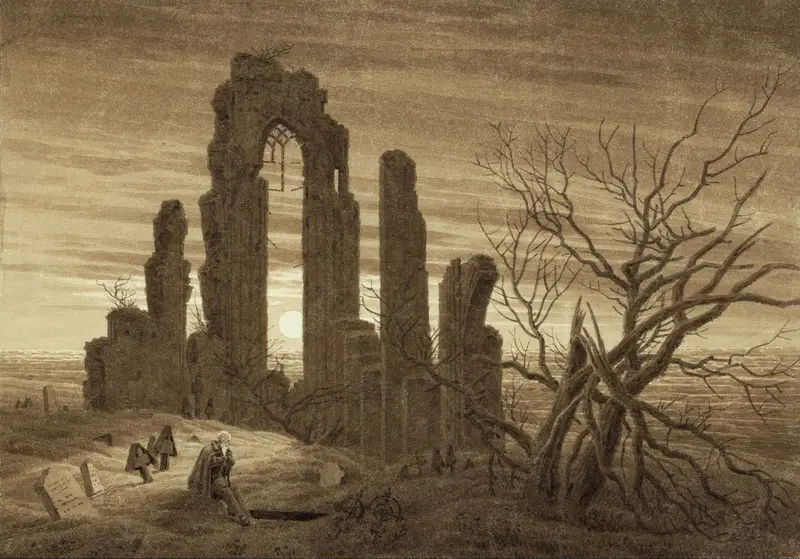
Winter – Night – Old Age and Death (from the times of day and ages of man cycle of 1803)
Caspar David Friedrich
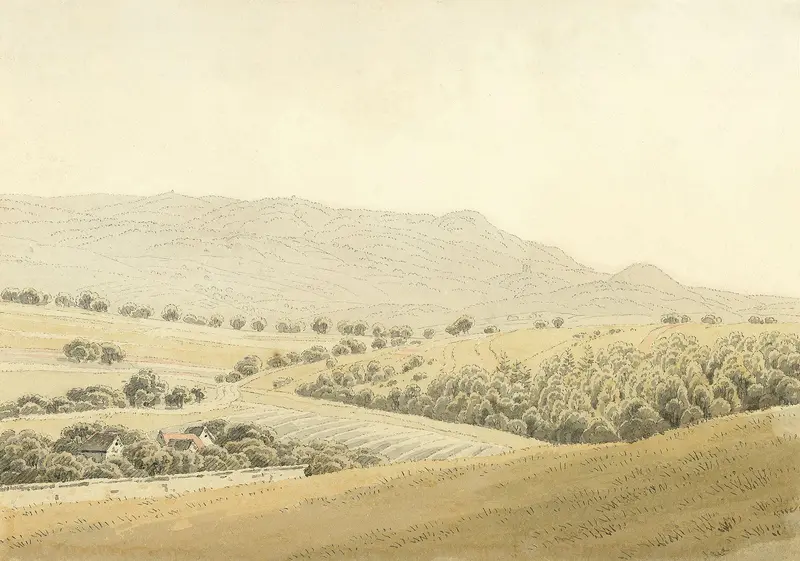
Mittelgebirgslandschaft
Caspar David Friedrich

Landschaft mit gebirgsee, morgen
Caspar David Friedrich
More Landscape Art

The Starry Night
Vincent van Gogh

View of Delft
Johannes Vermeer

Water Lilies
Claude Monet

The Grand Canal, Venice, looking north-west from the Ca' Corner to the Ca' Contarini degli Scrigni, with the campanile of Santa Maria della Carità
Canaletto

Windsor Castle
Canaletto

The Grand Canal looking North-East from the Palazzo Dolfin-Manin to the Rialto Bridge
Canaletto