
Święta Kinga modląca się pośród sądeckich gór. — History & Facts
When Jan Matejko completed Święta Kinga modląca się pośród sądeckich gór in 1892, he was already revered as Poland’s great painter of history, but this work stands out for its rare focus on a female saint whose legend shaped the identity of the Sącz region. The painting’s subject, Saint Kinga, is celebrated for her piety and her pivotal role in bringing the famed salt mines to Poland—a legacy so important that her canonization was petitioned for centuries. Matejko’s choice to depict her in prayer among the mountains, rather than at court or in the mines, was a deliberate departure from the grand historical scenes that made his name.
This work was among his final explorations of Polish sainthood, created just two years before his death. The scene captures the legendary moment when Kinga, seeking divine guidance, withdraws into the solitude of the Sącz mountains. She kneels, hands clasped, her gaze lifted beyond the rugged peaks, suggesting both humility and resolve. The painter bathes her figure in a shaft of light that cuts through the mountain gloom, visually marking her as both supplicant and chosen.
At her feet, a simple ring glints—a nod to the tale in which she cast her engagement ring into the earth, later to be discovered in a block of salt, symbolizing her miraculous gift to the Polish people. Unlike Józef Unierzyski’s more ornate depictions of the saint, Matejko emphasizes austerity and inner strength, using the wild landscape to mirror Kinga’s spiritual isolation and steadfastness. The precise provenance of Święta Kinga modląca się pośród sądeckich gór remains uncertain, as records of its early exhibition and ownership are sparse. It is known that in the late 19th century, Matejko’s religious works were often commissioned by local parishes or private patrons seeking to affirm Polish identity under foreign rule.
Today, the painting is held in a regional collection, where it is valued not only for its artistic merit but as a testament to Matejko’s late-career interest in Poland’s spiritual heritage. The medium remains undocumented, but the work’s intimate scale and restrained palette distinguish it from the grand canvases that define the artist’s reputation.
More Artworks by Jan Matejko
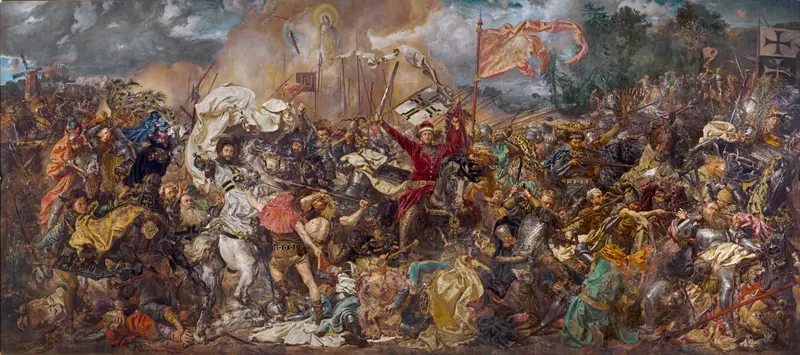
Battle of Grunwald
Jan Matejko

Stańczyk
Jan Matejko

Battle of Raclawice
Jan Matejko
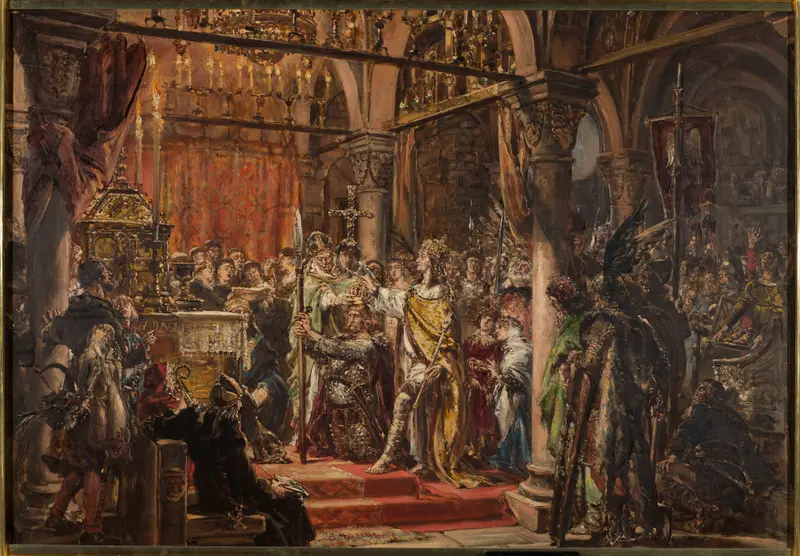
Coronation of the First King, 1001 AD, from the series “History of Civilization in Poland”
Jan Matejko
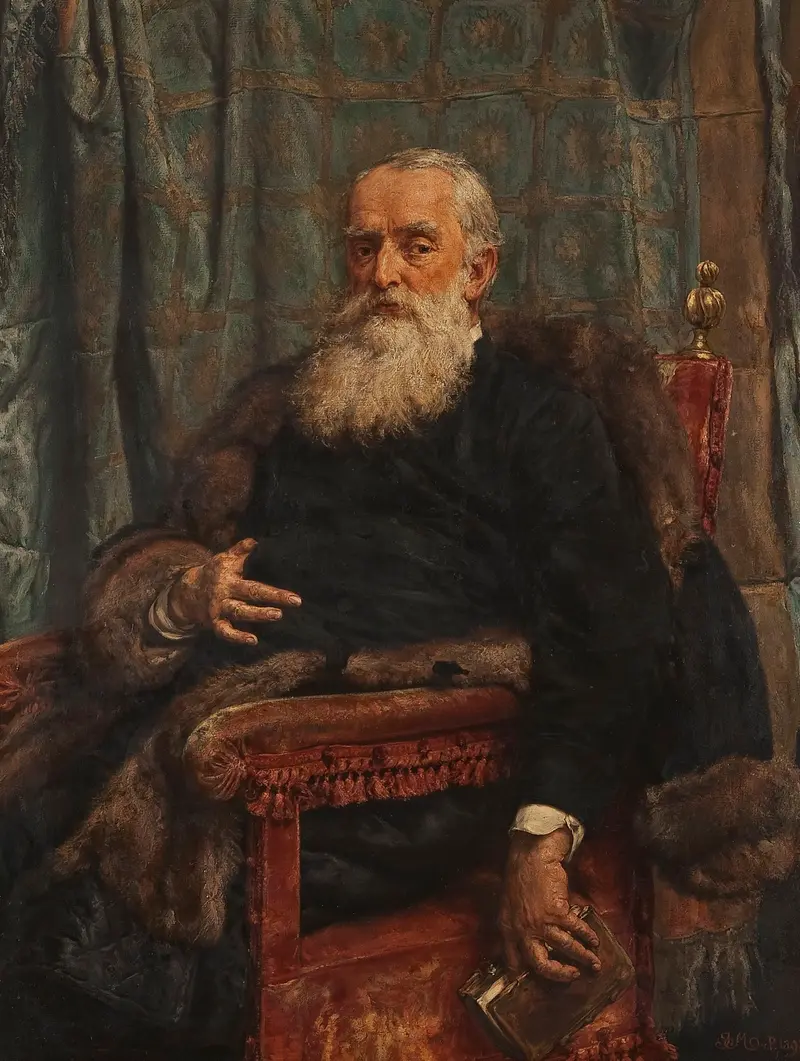
Portrait of Henryk Krajewski
Jan Matejko
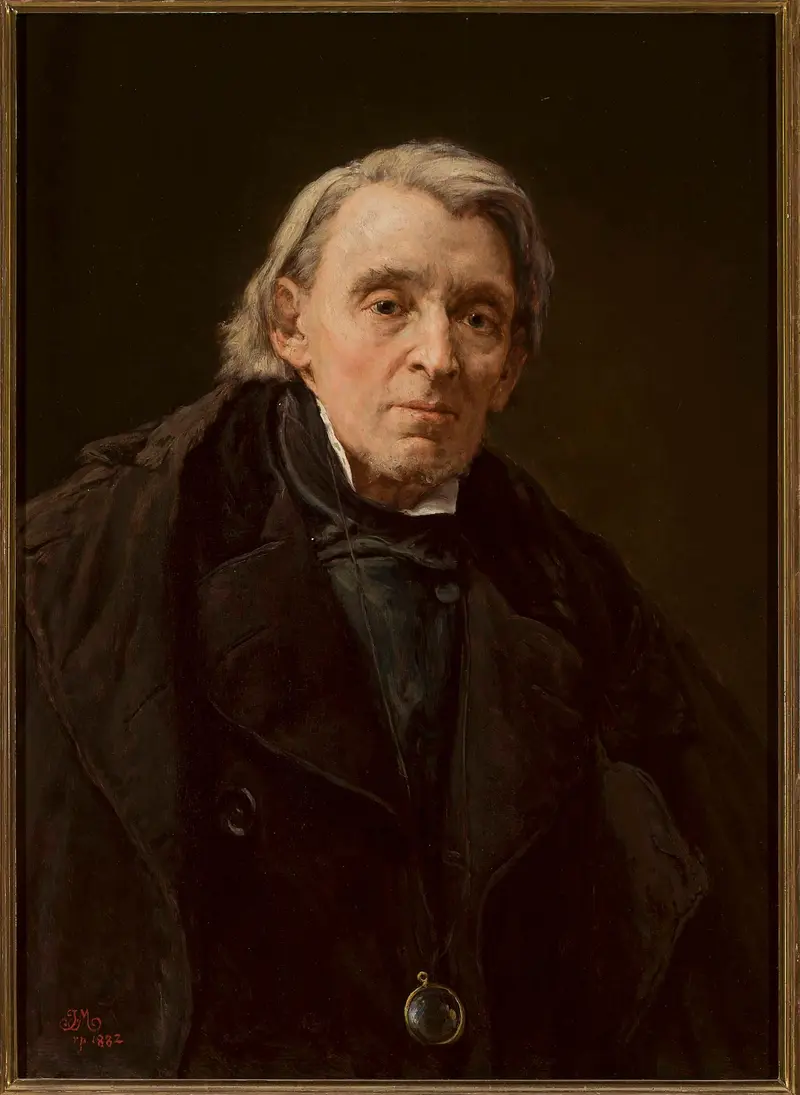
Portrait of Karol Podlewski
Jan Matejko
Portrait of Potocki and Poninski
Jan Matejko
Portrait of the artist's four children
Jan Matejko
Introduction of Christianity in Poland
Jan Matejko
Prussian Homage
Jan Matejko





